10 Upcoming Movie Reboots That Are Doomed To Fail

Dear Hollywood, don't.

Albert Einstein famously said that insanity was "doing the same thing over and over again and expecting different results." In that case, Hollywood must be one of the mentally sound places in the world. In what industry other than moviemaking can you repeatedly churn out the same product and be certain of a profit? Remakes, reboots, reimaginings, readaptations, redos, regurgitations; whatever publicist label they're slapped with, cinema screens are dominated by new movies based on what was once popular. If something worked once, it'll work again, right? That's the mentality behind shaving companies pretending that adding yet another blade will make a noticeably smoother shave and things have been going pretty well for them. After all, as much as we like to complain about the lack of originality coming from mainstream cinema, it's hard to not get taken in by it all. Who isn't excited for the seventh Star Wars? Or the twenty-fourth Bond? Or the fourth Alvin And The Chipmunks? OK, maybe not that last one. Still, for every series continuation garnering massive hype, there's plenty of remakes-by-another-name that beggar belief. Here are ten upcoming reboots of popular franchises that have already overstepped the mark. Don't worry though - there'll probably be another restart in a couple of years.


10. Blomkamp's Idea Just Enabled Fox - Alien 5

Neill Blomkamp's Alien 5 has taken the internet by storm (much more than his recent release Chappie). After Instagramming some concept art back in January, this vague idea's got traction, with the film now greenlit by 20th Century Fox and both Sigourney Weaver and Michael Biehn returning (despite the notable handicap of being dead). Why you should probably dial that excitement back for now has already been covered, but the main thing most people are missing is that this just another entry in a oddly long line of attempts to keep Alien culturally relevant. For while Alien 5 may have been initially born out of Blomkamp's ideas, it's being bank-rolled by a studio who would have thrown money at just about any concept that popped up and allowed them to make more films about the LVs. Consider this: the longest gap between two consecutive Alien films was the seven years it took to make Aliens after the success of Alien. Ever since, there's been a new spin on the franchise (Sequel! Clone! Versus! Whatever Prometheus was!) every few years meaning you're never quite safe from a xenomorph. They've tried to make the franchise continue to work and while there's been some successes (Prometheus worked when you stop thinking of it as a straight prequel) and minor box office hits, the series has never felt more than a throwback to a different era. It all leads back to the fact Aliens was a massive hit. Since then, Fox has been desperate to recapture that, without realising how unique the genre-bending was in the first place.

9. The Series Still Thinks It's 1991 - Terminator Genisys

Alien isn't the only franchise that's still moving along purely based off the success of a James Cameron-directed movie from over two decades ago. The Terminator was a cracking chase sci-fi whose self-named tech noir style served as a gritty alternative to the more garish eighties designs of the time, while its sequel upped the ante, offering up more daring action scenes and complex emotion. And that's where Terminator should have ended. However, T2 was a massive hit, far and away the biggest movie of 1991 (especially impressive by today's standards as it was an R) and thus the fact the story was over was thrown into the smelting champer and repeated attempts to restart the series began. Studio execs just couldn't accept that Judgement Day had just struck at the perfect time (the original had reached the point of modern classic, Arnie was at his zenith and toys for adult movies were yet to be outlawed), instead convinced the $500 million haul was down to something innate with the very idea of Terminator. And, despite Rise Of The Machines and Salvation barely breaking even, we're about to get another movie trying to recapture the second movie's uncapturable essence. It's not just the fact the franchise is chasing its own tail that's shot Genisys in the foot though, it's the idea at its heart. The film looks set to restart the timeline, setting up a blank slate for new adventures, but is doing so by relying heavily on the iconography of the original, something general audiences really don't have much affinity for.

8. It's Not Even Toy Story Any More - Toy Story 4

The way the toys hold their kid owner as some sort of deity is essential to Toy Story. The interaction itself was actually rather minimal, with the relationships between the different playthings driving the plot, but they were always motivated by the child. That seems so f**king obvious, but it's something the series has been slowly distancing itself from. The entire middle act of Toy Story 3 worked independently of children, and the run of shorts since has only furthered the distance, downplaying the importance of the toy characters being, well, toys. Instead, they're just a bunch of characters who go on crazy adventures; last year's Toy Story That Time Forgot was simply Woody And Buzz Go Prehistoric, (with a retread of the "toy doesn't realise he's a toy" schtick from the first film tacked on at the last minute). Fair enough, after twenty years strong personalities are going to become bigger than the original idea, but at what point does it all go too far and Toy Story just start being Story? Answer: the point we're at now. The recently announced Toy Story 4 will, according to Pixar President Jim Morris, "not put much focus on the interaction between the characters and children", essentially meaning the film (which the studio is so aware is unnecessary they're making clear it isn't a "continuation" of the trilogy) will jump the shark and focus entirely on the toys as independent characters. That's probably because Pixar has already covered all the key elements of toys (after favourites, kids who destroy them, collectibles and moving on, nothing's left to explore), but surely that's a sign it's time to call it quits?

7. It's Setting Up A Movie That Doesn't Need Set Up - Kong: Skull Island
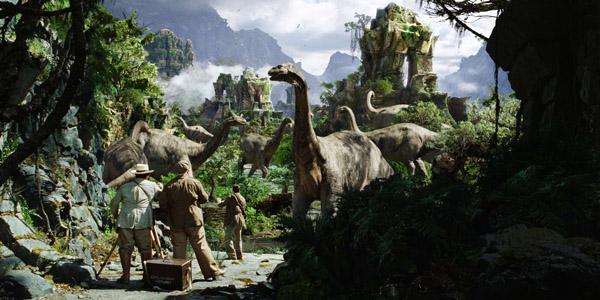
One of the big surprises of SDCC 2014 was the announcement of Skull Island, another King Kong movie that would ostensibly tell the giant ape's origins before he gets taken to New York and a film director confuses beauty for planes with machine guns (read: the interesting part about Kong). The first King Kong is an absolute masterpiece of early fantasy cinema, with visuals that, while inevitably dated (what do you expect after eighty years has passed?), are still impeccably constructed and a story that's endured to the point it feels like a generation-spanning legend. The film's reputation is so big that the two attempts to remake it - a cheap seventies retread nobody talks about because Kong climbs the World Trade Centre and Peter Jackson's fan-boy love letter that inexplicably ran almost twice as long as the original - never managed to get beyond their complete adoration of it. That's one hurdle Skull Island doesn't look like it'll have to deal with, and that's kinda the problem. The entire purpose of the movie is to build towards Legendary's proposed shared universe of monsters, seeing Godzilla show down with the Eighth Wonder of the World, but do we really need an origin story to get there? As already stated, Kong is legend. If you can throw relative unknown Mothra into Godzilla 2 carte blanche, you can have America's biggest monster this side of Michael Bay turn up without much set-up.

6. It's Not Relevant (At All) - John Carter
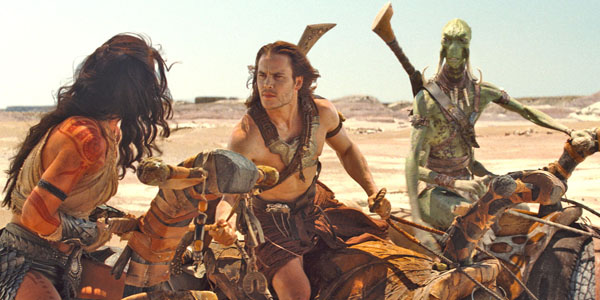
The notorious flop of John Carter, formerly of Mars, halted Disney's plans for a major space fantasy franchise (they bought Star Wars a few months later, so don't feel too bad for them), but that doesn't mean that's the last time Barsoom will be seen on cinema screens. In a reversal of how they normally act, the Mouse House sold the character rights back to Edgar Rice Burroughs, Inc, who are now planning to make their own movies based on the Tarzan creator's influential work. And that single word, influential, is the only reason over a hundred years on from its first publication we're still talking about John Carter. The books are ridiculous pulp sci-fi with none of the maturity gifted to the genre in the past century, but as it coined so many of the space fantasy ideas that are still regurgitated with little alteration to this day - no John Carter, no Star Wars - there's this idea that it's somehow relevant. How Disney unknowingly engineered the flat-out failure of their attempt should really go to prove this. The studio (and particularly director Andrew Standton) clearly thought John Carter was a name as ingrained in the popular culture as Luke Skywalker or Bruce Wayne, releasing trailer after trailer that hinged on his iconography; the first teaser treated the character reveal as if he was a Peter Parker. Carter has no place in modern culture beyond a footnote on the sci-fi genre; first isn't always best.

5. It's Even More Cynical Than Usual - Friday The 13th

If you thought all the rights wrangling that means Spider-Man's only now going to meet the Avengers was a mess of legal contracts, you clearly haven't looked into Friday The 13th. The series about the most violent hockey fan ever was originally Paramount's, before getting sold to New Line Cinema (now part of Warner Bros.) after the eighth instalment. But, then, for the 2009 reboot, the mountain-logoed studio returned to aid distribution, leading to Jason Voorhees being a shared property, bringing all the problems you expect with it. That's why there's been such a delay getting a sequel to the tat-but-successful reboot - neither studio wanted to invest at the time, but neither did they want to step away and risk losing profits down the line. Enter, of all people, Christopher Nolan. Part of the distribution deal for Interstellar meant Warner Bros. (Nolan's usual studio) would relinquish their share in the Friday rights to Paramount (who had the original script for the sci-fi epic), so now a reboot (rumoured to be using cost-saving found-footage) is already greenlit. The whole Platinum Dunes school of remaking "classic" slashers as identikit as jump-scare/tame gore-fest mash-ups is a blight on the horror genre, but this whole thing sees it go a step deeper into the muck. Whereas with The Texas Chain Saw Massacre, the previous Friday The 13th and even A Nightmare On Elm Street there was the pretence of making something worthwhile, here's it's just a case of throwing the movie together "as fast as possible" to make a quick buck.

4. Sony Still Don't "Get" Them - The Smurfs

It's hard to argue against The Smurfs coming back, in theory. There's something timeless about Peyo's miniature Blue Man Group and their classical European setting, while their cartoon has an innocence that makes it still a good watch for kids nowadays. While a resurrection isn't preferable to something new and equally creative, when the likes of Home are stinking up cinemas something with such nice origins is hard to rebuke. After two films of Neil Patrick Harris gurning at CGI things, Sony have finally realised what everyone else had before the first film - a CGI/live-action mash-up didn't really fit The Smurfs - and are now planning the second reboot this decade, hoping to turn the franchise's fortune's around by keeping things close to the mushroom home. The currently untitled reboot (put your money on The Spectacular Smurfs) due in 2017 will keep things totally in the computer and go full CG. Now that sounds like a step in the right direction, but it's really more of a slight shuffle. The show worked because it was imbued with the same visual style as the original cartoons and creatively overseen by its creator. It was, essentially, an extension of the original idea. Having a bunch of blue CGI characters running round a glade doesn't immediately guarantee that - what makes it distinct from Avatar Kids? Yes, 2D animation is costly and timely, but when that's the point of the whole thing isn't it worth it? Worst of all, like a disproportionate number of reboots on this list, this is purportedly going to be something of an origin story for Papa Smurf and co. Because the Batman Begins treatment is just what The Smurfs need.

3. It's An Artificial Extension Of A Finished Story - Fantastic Beasts And Where To Find Them
Quite why Harry Potter is a done franchise should be pretty damn obvious; it finished. After dragging out the final book into two movies (this was the semi-restrained, pre-Hobbit days), Warner Bros. wrapped up the whole thing with an explosion of CGI and fan tears, proudly claiming "It all ends" on the posters. Thanks to the source novels, Harry Potter ended in a way rare in franchise filmmaking; on its own terms and wrapping up the main story. To Warner Bros., however, that sort of narrative resolution isn't desirable if it reduces what was once their biggest cash-cow to a nostalgic property scraping in small change from DVD and Blu-Ray sales. Luckily for them, J.K. Rowling has been unable to move on from Hogwarts, returning time and again to expand the wizarding world. Although so far it's just been short context pieces for website Pottermore, it's only a matter of time before she starts giving Albus Serverus Potter some adventures of his own (in print the epilogue is set in 2016). Before that inevitability (and their all but required film adaptations), Rowling's scripting trilogy Fantastic Beasts And Where To Find Them, which dramatises the antics of schoolbook author Newt Scamander. Talk about scraping the bottom of the butterbeer barrel.

2. Nobody Cares - The Man From U.N.C.L.E.

Recognised property is studio exec shorthand for "people will come see this and we'll make a s**tload of money", but sometimes they can get confused in the distinction between something popular and something that simply existed at a previous point in time. Although the film itself was an utter trainwreck (that's a sly in-joke for the ten people who saw it), The Lone Ranger was fundamentally flawed from the start; it was based on a character the target audience would never heard of it and, as a big budget blockbuster, was far too removed from the original source to appeal to actual fans. The Man From U.N.C.L.E., which is also based on a sixties TV show that conjures up the same "I think I may have heard of that once" reaction from the general public, is very much in the same boat. It even has the Lone Ranger himself, Armie Hammer, as one of the leads. It's not just as a property that U.N.C.L.E. feels incredibly antiquated, however. The plot sees two spies, one American and one Russian, reluctantly teamed together by the titular organisation to take down. At the height of the Cold War, that was a great spin on the popular spy genre. Now it just looks like a desperate attempt to return to the days of old.

1. It's Not Franchise Material - Ghostbusters

If you've just agreed to share your one big franchise with a rival and you want a property of your own, who you gonna call? Now Spider-Man is sorted (read: taken over creatively by Marvel), Sony need a big shared universe that they can take all the profits from. And their pick is, inexplicably, Ghostbusters. On top of the already announced all-female movie directed by Paul Feig, there's going to be an all-male version (because gender equality now means total, but same numbered, segregation), with the plan being to have a massive series of ongoing movies about people fighting ghouls and insisting they're not just copying Bill Murray. Now, turning any random franchise into a "Cinematic Universe" is already a misguided approach - it works for Marvel because it's already proven to work in the comics - but it's the particular one that's getting the treatment here that's so bizarre. There is no franchise more utterly buoyed in modern culture by nostalgia than Ghostbusters (although TMNT comes close). You have one movie that's kinda enjoyable if you take a big bite "at the time" pie followed by a sequel so pointless it led to twenty years of umming and ahhing over the worth of making another. At least Terminator and Alien both have some knockout movies that still hold-up today. Outside of that song, there's really not much special about something that is painfully eighties, not just as a movie, but as an base idea. What other reboots look like a complete waste of time? Do any of these movies look like they'll be worth it? Share your thoughts down in the comments.

Contributor
Contributor

Film Editor (2014-2016). Loves The Usual Suspects. Hates Transformers 2. Everything else lies somewhere in the middle. Once met the Chuckle Brothers.