10 Villains That The MCU Got Completely Wrong
Let's hope Thanos is better than this lot.

The Marvel Cinematic Universe has done a lot of things right since Iron Man kickstarted it in 2008 - from its fan-pleasing casting of iconic superheros, to its ongoing efforts to diversify its output - but with a few notable exceptions, it drops the ball all too often when it comes to the villains.
It started off on the right foot in this regard as Tony Stark's nemesis Obadiah Stane proved a worthy adversary, but it wasn't until Thor introduced Loki and The Avengers flesh him out that the MCU had an antagonist worthy of the famous Marvel brand.
Since he took on Earth's Mightiest Heroes in 2012, it's mostly been downhill for the MCU on the bad guy front. Sure, there are exceptions, like Vulture and Hela, but on the whole, villains remains an area where Marvel must improve.
Constant failings in this area have put the studio under pressure in the run-up to Avengers: Infinity War. Marvel has to get Thanos right, or 10 years of universe building could topple under his weight. And these are the mistakes it must learn from...
10. Kaecilius (Doctor Strange)

The reason Doctor Strange's big bad Kaecilius underwhelmed is nothing to do with Marvel's casting choice, character design or the amount of screenplay he was given. It's because the movie failed to flesh out his motivation.
Mads Mikkelsen brought imposing gravitas to the role, but much of his characterisation was drowned out by a sea of dimension-blending imagery and convoluted lore concerning ancient powers.
What he wanted above all was to be reunited with his dead wife and son, but the movie forgets that midway through when it becomes a tangled web of betrayal and Dormammu shows up. The audience loses track of Kaecilius's motivation too, and thus virtually everything about him fades from memory after the credits have rolled.
9. Dormammu (Doctor Strange)

Although Doctor Strange failed to deliver a compelling villain with Kaecilius, director Scott Derrickson's decision to introduce Dormammu to the Marvel Cinematic Universe was bold and admirable. It's just a shame it didn't pay off.
The ruler of the Dark Dimension was always going to be notoriously challenging to adapt, which is probably why the film deviated from the source material by portraying him as a gigantic face made out of energy, rather than a fiery-headed demon.
Although this departure was disappointing, it wasn't an abject failure. Derrickson chose to present the villain as a dark reflection of the Sorcerer Supreme, and while this approach had merit, on the whole Doctor Strange squandered Dormammu.
He's a much bigger deal than the movie made him out to be. In the comic books, Dormammu is at least as powerful as Thanos, and would have been a strong candidate for the MCU's next big bad after the Mad Titan has been defeated, but Doctor Strange failed to reflect his stature and confined him to the final act.
8. Ronan The Accuser (Guardians Of The Galaxy)

It's a good job Guardians of the Galaxy's cast of heroes is so riotously entertaining and colourful, because its main villain Ronan The Accuser is exactly the opposite.
The Kree warlord is dour and dull, with little to no motivation beyond getting his hands on the film's McGuffin, and no interesting abilities besides wielding a beefy hammer.
Actor Lee Pace is given little to do throughout the film as its focus remains squarely on the Guardians, and his eventual defeat is the result of Star-Lord performing a stupid dance number in front of him. Hardly a downfall befitting of bad guy who's supposed to be a fearsome cosmic warrior.
Like Kaecilius in Doctor Strange, it's easy to forget what Ronan's motivations were after leaving the movie theatre, but at least the Thanos setup helped Guardians raise the stakes and increase the threat level in the MCU.
7. Abomination (The Incredible Hulk)

The Incredible Hulk's Emil Blonsky falls into a specific category of cliche villain: the kind who is consumed by his lust for power. There's nothing more to the character than his twisted obsession with the Green Goliath, which runs so deep that he willingly takes a serum to become just like him.
Tim Roth is serviceable in this one-dimensional role, but when he transforms into the Abomination, he really lives up to his name thanks to terrible CGI.
Granted, the rampaging villain is suitably destructive, but like the Hulk himself in this movie, the effects aren't quite strong enough to create the illusion of tangibility.
Marvel wouldn't deliver a convincing computer-generated Hulk until Joss Whedon's effects team got his hands on the character in The Avengers, so earlier efforts like this are merely a reminder that practical FX are often the way to go.
6. The Chitauri (The Avengers)

As cool as their massive space dragons were, the Chitauri were an underpowered let-down in The Avengers and served as little more than canon fodder during an unsuccessful war of attrition.
Although their sheer numbers were scary, the threat level plummeted once it was established how easily Hawkeye and Black Widow could take them out. What chance did they stand against the likes of Thor and Hulk?
Part of the problem is their lack of leadership. The Chitauri commander, known as The Other, serves only as a go-between for Thanos and Loki and doesn't get his hands dirty on the battlefield. He later died a pointless death in Guardians of the Galaxy.
Speaking of pointless, what good is an army of alien invaders if they all fall down dead when the mothership is taken out?
5. Malekith (Thor: The Dark World)

When a villain is wielding an Infinity Stone and still poses no threat to the hero, it's a really bad sign. Not only is Thor: The Dark World's Malekith underpowered, he's even duller than his ashen-skinned appearance suggests.
Marvel Studios wasted a great actor in Christopher Eccleston by giving him precious little to do beyond glare menacingly. Even after watching the Thor sequel several times, it's difficult to recall anything he does, or even says, afterwards.
As if his sheer mundanity wasn't enough, Malekith has the misfortune of meeting one of the most embarassing ends ever seen in the Marvel Cinematic Universe, killed when his own ship topples over and crushes him. Facepalm.
4. Red Skull (Captain America: The First Avenger)

Captain America: The First Avenger's depiction of the Red Skull is completely fine, more than fine, in fact, but Marvel Studios' handling of the character was flawed.
Hugo Weaving brought menacing screen presence to a bad guy who could easily have descended into a farce of pantomime proportions, but the movie simply didn't give him enough screen time.
This is an iconic bad guy whose actions in The First Avenger can still be felt in the present day Marvel Cinematic Universe, but the open-ended nature of his ultimate fate may never be addressed.
Although Weaving nailed the part, this casting choice is questionable because it's clear the actor has no interest in reprising his role. Red Skull is a character who needs more than one film to do him justice, so Marvel should have gone for somebody who was willing to be in it for the long haul.
Let's hope we haven't seen the last of Red Skull, because there's so much unfinished business for him to attend to.
3. The Mandarin (Iron Man 3)

Iron Man 3 director Shane Black had the audacity to turn the hero's greatest nemesis into nothing more than a ruse and a punchline.
Okay, so it's a really funny gag, but the diehards had every right to be miffed about this. Imagine if a Batman movie did this to The Joker, or a Superman film turned Lex Luthor into a walking joke (and that's not a reference to Jesse Eisenberg).
For the uninitiated, Ben Kingsley's take on The Mandarin isn't really The Mandarin at all. He's a washed-up actor named Trevor Slattery who's hired by Guy Pearce's Aldrich Killian (the film's real villain) to pose as a faux big bad.
You're enjoyment of Kingsley's portrayal likely hinges on how much of a purist you are when it comes to Iron Man lore, but there's no escaping the fact that Marvel Studios squandered an iconic villain here.
The Mandarin is Tony Stark's arch-enemy, and if Robert Downey Jr hangs up his armour without ever crossing paths with the real version, it will be a missed opportunity.
2. The Shocker (Spider-Man: Homecoming)
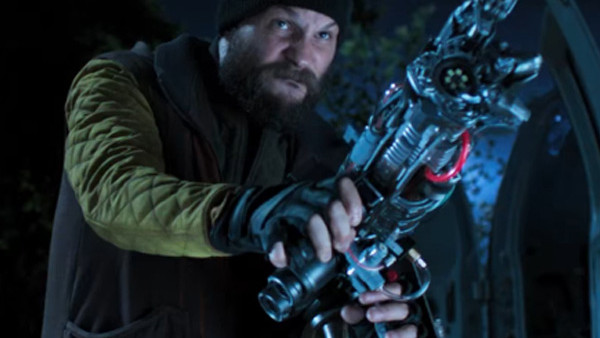
Spider-Man: Homecoming introduced a memorable villain to the MCU is the shape of Michael Keaton's Vulture, but it treated other famous baddies from the comic books like throw-away henchmen.
Jackson Brice has appeared in Marvel Comics since 1964 and is well known as a member of The Enforcers, a rag-tag group of assassins and extortionists.
Brice has always been a bit of a muppet, but this was doubly true in Homecome with Logan Marshall-Green playing him. The character has a brief stint as The Shocker before being vaporised by Adrian Toomes to make way for Bokeem Woodbine's improved Shocker 2.0 (the Herman Schultz incarnation).
That's the extent of his role, canon fodder for his vengeful boss. Is this really a productive way to use a character with over five decades of history behind him?
1. Whiplash (Iron Man 2)

Iron Man 2's Ivan Vanko was a weird amalgamation of Whiplash and Crimson Dynamo with a hint of Omega Red too, so is it any wonder he ended up a complete mess?
Part of the problem was the actor who played him, Mickey Rourke, who is said to have clashed with Marvel over the restrictions the studio placed on his creativity, which might explain why he refused to turn in anything resembling a performance.
Nothing about the character or Rourke's portrayal sat right with the fans, from his murky motivation to his parody of a Russian accent, and Marvel's catastrophic failure on the villain front is one of the factors that killed Iron Man 2.
Whiplash could have been a formidable foe for Tony Stark. Rourke was still riding high after The Wrestler had revived his career, and the villain had the potential to kick up the protagonist's daddy issues and match him in a battle of tech warfare, but everything about the character's execution tanked.