10 Visual Movie Masterpieces You've Probably Never Seen

Time to put your sins right.
Here at WhatCulture.com we recently took a look at some of the best looking movies released so far this year, covering everything from the crisp and bright animation of The Lego Movie through to the stark yet striking black and white cinematography of Ida. With Interstellar still to come, it looks like 2014 is shaping up to be a great year in the cinematic visuals department. While beautiful visuals aren't the be all and end all of great movies, they certainly help, and over the last one hundred years of cinema there have been plenty of eye-popping films full of impressive imagery which makes your jaw drop. Technological advances since the birth of cinema - the introduction of colour followed by wider aspect ratios and the birth of computer generated imagery in more recent years - have all added to the palette filmmakers can draw upon to realise their visions. But no amount of technical wizardry can compensate for raw, unbridled talent. The following list covers ten visual masterpieces from throughout cinematic history you may not have seen - movies with powerful, evocative imagery which you can't help but be impressed by. Sit back, relax and prepare to be amazed by the work of some greatest directors and cinematographers of all time.

10. Sunrise: A Song of Two Humans

When you think of old silent cinema, glorious imagery isn't often the first thing that springs to mind. The film stock is old and often the image is grainy and unclear, with constant blemishes appearing on the screen. This certainly isn't the case with the restored version of F. W. Murnau's classic, Sunrise: A Song of Two Humans, his 1927 film which tells the story of a man seduced by an evil woman into murdering his wife, but who balks at the task and ends up pursuing her to the city in order to win her back. Sunrise is the first and only movie to win the Academy Award for Unique and Artistic Production, and it's clear why within minutes of watching it. Murnau - whose background lies in the German expressionism movement - proves himself to be a master of light and shade, not to mention a pioneer of visual trickery utilising everything from enormous sets which play with perspective to long, detailed tracking shots (one which follows the two spouses through a busy city street is particularly impressive). The frequently beautiful imagery more than matches the tender and evocative story - Sunrise is an exemplar of early cinema with a fairy tale quality rarely matched.

9. The Thin Red Line

You'd be forgiven for having missed Terrence Malick's return to filmmaking after a 20 year hiatus, since The Thin Red Line was released around the same time as Steven Spielberg's World War Two epic, Saving Private Ryan, which inevitably overshadowed it. Yet while Saving Private Ryan certainly offered audiences plenty of visceral thrills - not least the stunning opening scene, surely one of the best depictions of battle ever committed to film - Malick's vision was altogether more poetic and understated. It was also a real visual treat, albeit it in an entirely different way to Janus Kaminski's blurred, dirt-flecked cinematography in Saving Private Ryan. With Malick approaching warfare from the perspective of its impact on both nature and man's soul, director of photography John Toll opted for a rich, lush palette which juxtaposed the gorgeous Pacific island with the mess of combat. For some, The Thin Red Line came across as more than a little pretentious (those abstract voice overs can feel a little forced from time to time) and it might have been better received by critics and other filmmakers than it was by the public at large, but most people were rightly bowled over by the grand vistas and graceful camerawork.

8. Ugetsu Monogatari

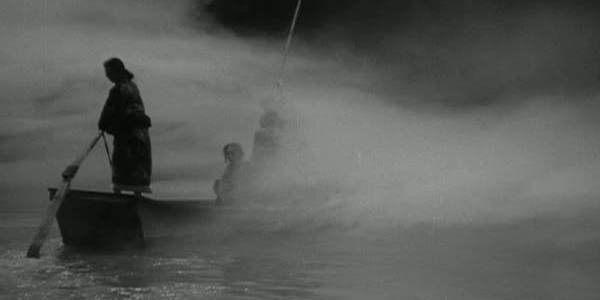
When most people think of the post-war Golden Age of Japanese cinema, the films of Akira Kurosawa immediately spring to mind. The success of Rashomon put Kurosawa in the international spotlight, and his subsequent films have won numerous awards around the globe. Less well known but equally significant in terms of Japanese cinema at its very best is Kenji Mizoguchi, whose 1953 movie Ugetsu Monogatari is one of his finest. A period ghost story, Ugetsu centres around the villages which surround Lake Biwa and tells of peasants uprooted by an ongoing civil war struggling to survive and thrive. Described by the late film critic Roger Ebert as "one of the greatest films of all time", its potency lies not just in the uniformly excellent performances but also the enigmatic, often haunting cinematography. Figures emerge from the mist like spectres, accentuating the fable-like aspect of the narrative, while Mizoguchi allows his camera to glide effortlessly from one stunning composition to the next. Also one of Martin Scorsese's favourite movies, it's fully deserving of its 100% Rotten Tomatoes rating.

7. The Assassination Of Jesse James By The Coward Robert Ford

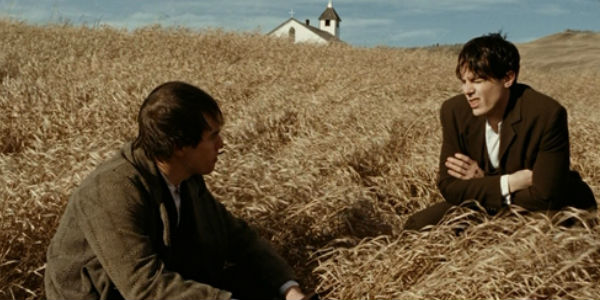
The title might give away the ending, although you'd have to be living under a cultural and historical rock to not be familiar with the tale of the infamous outlaw and his undignified fate. Andrew "Chopper" Dominik takes the directorial reigns for this interpretation of the events leading up to James's death, with Brad Pitt and Casey Affleck delivering sterling performances in the two main roles. That director Dominik initially took a cue from Terrence Malick is clear from the off - this is as much about contemplation as it is about action, adopting an unhurried approach to the narrative and allowing it to unfold naturally. Perhaps it is the slow pace which led to The Assassination of Jesse James... bombing at the box office - whatever the reason, it's a crying shame, since in addition to its intelligent screenplay the film boasts some of the best cinematography seen this century. Director of photography Roger Deakins uses sepia tones and lens gels to stunning effect, and why he didn't win an Oscar for his work is anyone's guess. That Deakins has yet to win an Academy Award throughout his entire career is nothing short of scandalous.

6. Soy Cuba

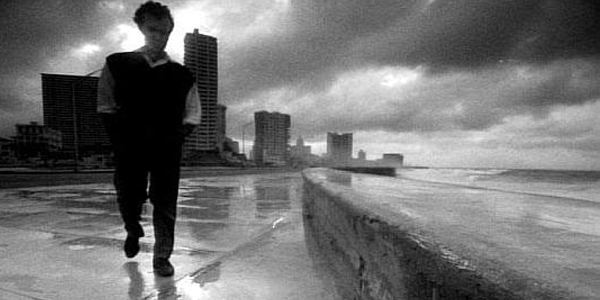
Ugetsu Monogatari's international reputation wasn't built upon an endorsement from Martin Scorsese (although it certainly helped) - the same can't be said for Soy Cuba, a movie which might never have reached a wider audience were it not for Scorsese's tireless campaigning in the early 1990s to get it restored and released. It's perhaps ironic that a movie shot on behalf of the Soviet and Cuban authorities was largely rejected by its intended audience, only to resurface thanks to an American filmmaker. We should be eternally grateful to Scorsese for his efforts, since Soy Cuba is a bold, visually arresting work of cinema which is hard to forget. Depicting life inside Cuba, from dancers in a casino to farmers toiling the land, director Mikhail Kalatozov practically reinvented the tracking shot, with extreme wide angle lenses performing miraculous feats, constantly gliding around the scenes and, in one jaw-dropping sequence, elevating from street level up to the fourth floor of a nearby building before drifting in through the window and into a room. Technically innovative in a manner which has to be seen to be believed, the excellent documentary I Am Cuba: the Siberian Mammoth examines some of the ingenious camera tricks used by this nearly-forgotten masterpiece.

5. Fallen Angels

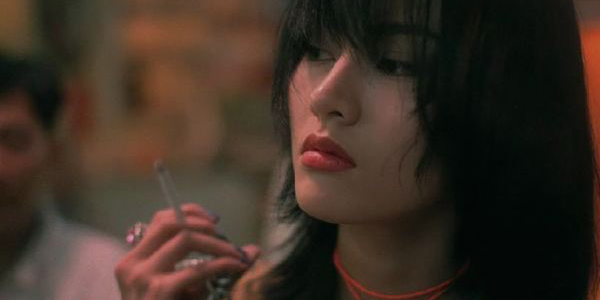
Wong Kar-wai has earned himself the status of something of a legend amongst fans of international and art house cinema. His films are noted for their idiosyncratic portrayals of lonely people living in big cities; characters who deliver solipsistic voice overs describing their existential angst. They're also noted for being absolutely gorgeous to look at, particularly those films shot by ace cinematographer Christopher Doyle. Fallen Angels is something of a companion piece to Kar-wai's hugely popular Chungking Express. It too features two interweaving stories about lovelorn twenty-somethings living in Hong Kong, their nocturnal habits wonderfully shot in vibrant, neon-soaked wide angle photography. Comparisons with early Jean Luc Godard are entirely apt, particuarly A Bout de Souffle - Fallen Angels whizzes along at a frenetic pace whilst never losing focus on the humanity of its characters. Doyle's camerawork is perhaps the real star of the show - rarely has a city and its inhabitants felt so alive.

4. Come And See

Whereas Terrence Malick's The Thin Red Line employed colourful, captivating footage of nature as a counterpoint to the brutality of war, Elem Klimov's Come and See takes an altogether different approach to the Second World War, depicting the experiences of teenager Flyora (a superb performance from non-professional Aleksei Kravchenko) during the Nazi occupation of Byelorussia in washed out muddy tones and a restless, roaming camera. The heavy use of Steadicams throughout give Come and See the atmosphere of an inescapable nightmare, as Flyora journeys into the heart of darkness, where German soldiers massacre men, women and children, burning them alive in village churches and barns. The imagery is often so striking and powerful that you can't look away, no matter how harrowing the film often feels, enhanced by an exceptional use of sound (a scene in which a shell lands nearby and Flyora's hearing goes is a masterclass in sound design). The atrocities have an almost dizzying, perverse carnival-like feel, in an unnerving, chaotic sense - few would dispute that it is one of the greatest war movies of all time.

3. Baraka

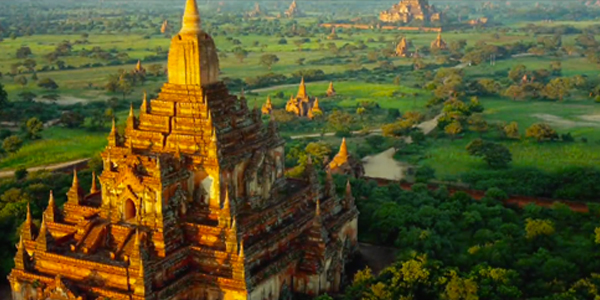
Ron Fricke, the director of Baraka, first truly demonstrated his ability to photograph incredible scenes when he worked as cinematographer on the Godfrey Reggio tone poem Koyaanisquatsi. For Baraka, he opted to film with the 70mm Todd-AO format, and the result is one of the most beautiful and emotional viewing experiences you could wish for. A documentary in a very loose sense, rather than impose a straight forward narrative on the audience it interweaves the awe and might of nature with the everyday activities of the human race, from commuting to religious ceremonies. Fricke had a special camera constructed which could track and pan perfectly whilst capturing time lapse footage, and the results are astonishing. Baraka was also the first film to be restored at 8k resolution, and fans can only dream of how amazing this would look when screened properly - after all, even the biggest blockbusters today are filmed with 4k cameras. At least we know 8k technology will be affordable sooner rather than later, although if you're thinking of investing soon you'll probably have to sell your house to afford it.

2. The Conformist

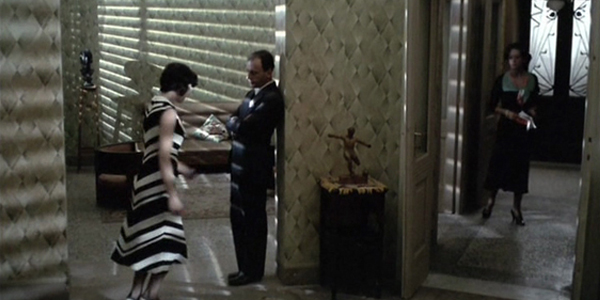
A film about an unprincipled man's attempt to fit into a fascist society by agreeing to assassinate his former professor hardly sounds like a premise for a sumptuous-looking film, but it is The Conformist's aesthetic beauty which makes the central character seem all the more ugly. Directed by Bernardo Bertalucci and photographed by Vittorio Storaro - who later went on to work on Apocalypse Now - The Conformist is widely considered one of the most influential films of the 1970s, providing a blueprint for a new wave of cinema, particularly the New Hollywood masters who were hugely influenced by art house and international movies. Each frame of The Conformist oozes style, its model-like actors lit with expressionistic shadows, followed by a camera which constantly reconstructs the space around them. Movies rarely look this sexy.

1. Mind Game

When Mind Game was screened at festivals in the US on its release, its truly unique visual style was one of the main aspects noted by the few critics who got to see it. Words like "virtuoso", "kaleidoscopic" and "enthralling" all went some way to trying to evoke just how imaginative this obscure animation from Japan really was. Yet amazingly, Mind Game has never been picked up for distribution in the West, and the only subtitled copies available (outside of the occasional rip posted on YouTube) is the Japanese region 2 DVD release. Perhaps it is Mind Game's quirky, avante-garde approach to animation that has made it difficult to find a distributor - there's no denying that nothing like it has been made before or since, and marketing such an unusual product could be problematic. Which is a huge shame, since its tale of a young aspiring artist who, after being killed by a Yakuza gangster finds himself facing God before choosing against all logic to defiantly have another go at life, is a sweet, heartfelt ode to the creative spirit and the importance of friendship. It's also perhaps the most radical feature length animation of all time, mixing a wealth of art and animation styles from one eye-popping scene to the next, while boasting one of the most adrenaline-pumping finales you're ever likely to see. And each time you watch it, it just gets better. What more could you ask for out of a movie? Have you seen any other visual masterpieces which seem to have passed people by unnoticed? Why not let us know in the comments below?

Contributor
Contributor

Andrew Dilks hasn't written a bio just yet, but if they had... it would appear here.