10 Ways To Make Star Trek V: The Final Frontier Not Suck
 Really, editors of WhatCulture.com Really? "10 Ways To Make Star Trek V Not Suck"? you have assigned me with today. Ten! You understand this means watching Star Trek V again, right? For reasons other than making fun of it? I've enjoyed my time writing for WhatCulture! But I'm concerned that, by publishing this article and encouraging anyone to voluntarily watch Star Trek V: The Final Frontier, we are in violation of some international human rights treaty. (I know the Geneva Convention specifically prohibits soldiers from showing odd-numbered Star Trek movies to prisoners of war. Hearings are currently taking place to see if Star Trek: Nemesis falls under the same statutes.) In the interest of safety and diplomatic relations, I've volunteered for this assignment so no one else has to jump on this cinematic grenade. Coming up with ten - ten! - justifications for polishing this turd will be a feat of stamina, patience, and ingenuity. If my brain doesn't go all Scanners by the end of this, it will be a miracle. A documentary crew could make a reasonably good film about the dark journey I'm about to embark on, à la Hearts Of Darkness. If you click on the last bullet point and the header photo is simply me covered in my own filth, with the only text on the page being "the horror... the horror...", you'll know I failed. Follow me, if you dare, into the toupee glue-addled mind of William Shatner as we examine his only feature directorial effort. We will focus exclusively on the story and characters, on making Star Trek V into a story worth telling. So let's get this over with, shall we?
10. Define Sybok And His Powers
 OK. I've waited until now to reveal my secret shame. I love this movie. Look, I know what this movie is. No delusions. I was ten when it came out, and I begged my parents to take me to the first showing they could (*), and I loved every minute of it. And I still love it - because, hey, it's Star Trek. But good gravy, is it a mess of half-baked ideas. Since the movie opens with Sybok, let's start there. What Vulcan clown college did Sybok attend to get his crazy psychic hippie powers? Apparently, Vulcans can hypnotize people into confronting their worst memories and finding peace with them - and this spiritual enema/lobotomy turns anyone who receives it into a bland, brainwashed cult member whose mellow can never be harshed. And the kooky cherry on top: Sybok can turn every spiritual enema/lobotomy into some kind of weird-ass street theater with audience participation. There's no explanation as to how or where Sybok obtained these powers, or how he gained the ability to commune with the "God" he's seeking by hijacking the Enterprise. I prefer keeping the metaphysical vague and mysterious in my sci-fi/fantasy, but a Star Trek story requires an explanation when the supernatural is introduced. As a villain, there's potential in an emotional Vulcan and a religious madman. Sybok's "gift" of a guilt-free life is the kind of allegory that Trek likes to explore, which The Final Frontier sadly fails to do. I have no idea what Shatner's trying to say about Sybok's beliefs - and faith in general, really - or why he equates emotional closure with the loss of free will. It's rare - and welcome - to have a villain that is simply misguided, that wants to avoid bloodshed at any cost. But a character like Sybok is nearly impossible to write for - these kind of characters make for interesting yet toothless foes. Sybok should either be sympathetic or formidable. As it is, he's neither. (*) A quick shout-out to my Mom, who took me to see Star Trek V. We can safely assume she did not enjoy it as much as me. Until recently, it never occurred to me that my parents, older brother, and wife could possibly not be excited by William Shatner or guys in capes or giant monsters. They weren't there for those things. They were there for me. If you've got someone like that in your life, say thanks to them now and again as the lights dim in the theater.
9. Shatner Falls Off A Mountain, Mimicking Star Trek V's Box Office Returns
 As filmed, Kirk's climbing of (everyone face palm with me) El Capitan - and his subsequent fall and bad-special-effect save by Spock - is on its way to a great idea. It never gets there because it fails to answer a question asked afterwards by McCoy: did it occur to Kirk that he could die while free-climbing a mountain? After the events of the last few movies - of the death of his son, David, in particular - is it possible that Kirk has a death wish? OK, Kirk wouldn't have a death wish. But there's a crisis of faith that's strangely lacking from Kirk throughout the film, since the movie is all about emotional pain, faith, and acceptance. Kirk's oddly relaxed and in good spirits when the film begins. Instead, the tension in these early scenes rests completely on Kirk, Spock, and McCoy's reluctance to admit how much they need each other. The bond between the three is what keeps the film going, and the already great character dynamics between them would only be strengthened by starting Kirk in a dark place. As I'll discuss later, Kirk never considers Sybok's offer of absolution. The movie is never concerned with taking Kirk through the grieving process - and the simple truth is that all of us, even Kirk, would want that kind of grief to be taken away. That story beat alone could have saved this film.
8. Nimbus III, The Planet Of Galactic Boredom
 It's weird looking back at Star Trek V and VI - at what they consciously said about their times. They now reflect a historic moment when the world's two largest superpowers stopped, looked at each other, and said, "Hey, why did we want to kill you again?" You could chalk it up to my youth, but after the coups and fallen walls, it seemed possible that western civilization was entering a more civilized and rational era. Yeah, that didn't happen.... Still, it's interesting - and disheartening - to watch films from this era like Star Trek V, when a lot of us thought that the world was finally getting its crap together. The creation of Nimbus III, The Planet Of Galactic Peace, is one of the most positive and forward-thinking creations in Star Trek's history. Too bad it's as boring as a Voyager episode... Again, dig the concept: a grand experiment of forming a colony comprised of Federation, Klingon, and Romulan citizens, in the hopes of successfully not killing each other. What we get is a boring Tatooine rip-off and the most underdeveloped characters that Trek has ever created in the delegates from each culture. The three characters start the movie not wanting to kill each other and spend the rest of the movie not wanting to kill each other. So, yeah... no drama there - with nowhere to go but boring. Also, Nimbus III has a three-breasted cat-woman for Shatner to fight. Again, I'm pretty sure toupee glue is hallucinogenic...
7. The Enterprise Shouldn't Be A Lemon
 I don't hold much stock in books about writing, or inflexible rules about how to write. I will say this: when writing a story, you can make a joke about something fans love, but you can't turn something fans love into a joke. You'll lose 'em every time. And the Enterprise is turned into one hell of a bad joke for the entire length of Star Trek V. Very little works on the newly constructed and poorly assembled Enterprise-A. This leads to a distinct lack of boldly going throughout the film, something that Star Trek V desperately needed. I'm not against the Enterprise leaving spacedock before it's ready. Mission Impossible: Ghost Protocol played with the notion of characters depending on technology in stressful situations, only to get a one-way ticket to entropyville. But that movie had interesting solutions to its technical problems. Here, it merely pads the movie with unnecessary jokes that Paramount requested after the success of Star Trek IV. Also, it removes the Enterprise's ability to use the transporters, which would've solved every conflict in the story. And yet, they handled the rules of beaming - and how Trek's writers have to bend them - better than Star Trek Into Darkness, where I'm pretty sure Sulu once said: "We can't beam Khan up, sir! He's in Europe and we don't have an adapter!"
6. Lose The Klingons, Or Make Them Allies
 Speaking of turning awesome things into jokes.... Here come the Klingons! Well, they're not a joke, exactly. Shatner sure finds a way to take the piss out of the Klingons, though - who are in this story because... Because... Because... um... they're Klingons? Klingons, might I add, who spend precious little time shooting at the Enterprise and missing wildly when they do. They're a problem in the story that exists, and they're only there to solve other story problems: the antagonist doesn't want to hurt anyone and the Enterprise can't fight the Big Bad at the end. Allow me to connect the dots the writers did not. Captain Klaa (again, feel free to face palm) and his crew are a rogue military unit, who commit an unauthorized attack on the Enterprise. Klaa's the Klingon equivalent of a crazy redneck - a member of the Michigan Militia or something. The only thing the guy is missing is a John Deere hat and a "Bat'leths don't kill people, Klingons kill people!" bumper sticker on the back of his Bird Of Prey. We never see the fear or paranoia or whatever the hell it is that drives Klaa, when he should be a man haunted by his past, desperate for glory. That would tie back to Kirk and his son and enrich the story's themes of whether we're better off leaving the past in the past. Luckily, Captain Klaa never put a dent in the Klingon's rep. At the same time of Star Trek V's release, we had Worf on The Next Generation, who would then transition over to Deep Space Nine - still the greatest source for Klingon badassery in all of Star Trek.
5. Treat The Supporting Cast With Respect
 Every time I look at the above picture, I imagine everyone in the back row is only laughing because they all peed a little into Shatner's champagne goblet. So, yeah... William Shatner. Never met the guy - but the man's entertained me more than just about anyone else. I can only hazard a guess as to who the man is behind the myth. To me, Shatner comes off as a man fueled by an odd combination of artistic passion, ego, and obliviousness. And believe you me, ego and obliviousness are all over this movie. This is Kirk's movie. Start to finish, it's all about Kirk - which means it's all about Shatner. Look at how Shatner treats the original series characters. Kirk is the hero. Spock and McCoy play a vital role - but they're still there to be a sounding board for Kirk. As for the rest of the cast - they spend the first half of the movie delivering jokes at their own expense, then everyone but Scotty (who's sometimes welcome in Kirk, Spock, and McCoy's secret clubhouse) spend the back half as brain-washed hippie zombies. That's just not cool, man. So much of Star Trek V is about how Kirk, Spock, and McCoy finally admit that they've become a family. It's a great sentiment, but it would mean so much more if Shatner had believed that the entire cast was part of that family. You know what's weird, though? I still love Kirk and I still love Shatner. Sometimes, you love the people who hurt you the most...
4. Don't Make It A Soap Opera
 OK, let's look at the score card on this one, Shatner. You want your movie to be taken seriously. But you just had Spock - a character that's recently come back from the dead, mind you - reveal that Sybok is his long-lost half-brother, the family's secret shame. (Come on, give yourself a face palm - you know you want to.) The only way this story could get more into soap opera land would be for Kirk to discover that Spock and Sybok have both been schtupping Carol Marcus behind his back, and that any one of them could be David's father. Again, you could get some story mileage out of a passionate Vulcan. He certainly shouldn't be related to Spock, though. Why not have a young Spock, the proverbial outcast, find solace in Sybok's belief in an emotional life? What if, after a time, Spock came to realize that Sybok was a madman, and it was Spock that was responsible for Sybok's downfall and exile? What if this was Spock's most painful memory, instead of the rather shallow idea that his daddy didn't love him? Besides being bad melodrama, Sybok is someone that Spock has to care about, instead of someone he chooses to care about. Spock not shooting his brother makes sense - it's easily forgivable. Spock declining to shoot an old friend - who represents a time he put behind him - that's something truly challenging. But this movie's not into challenging - something that Trek should constantly strive for.
3. Does Kirk Really Need His Pain?
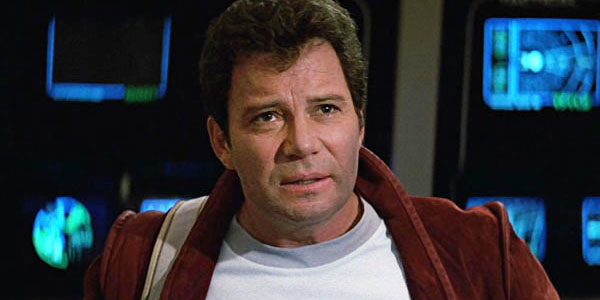 Star Trek V almost asks a fascinating question: do we need our emotional baggage? Do we need to be reminded of our mistakes so we don't repeat them? How do we accept those mistakes so we can move forward? Star Trek is all about a better tomorrow, and the only way to get to a better tomorrow is through bettering ourselves. It's not perfect - but there's a lot of good, old-fashioned Star Trek moralizing to be found in the "I need my pain!" scene. Sybok corners Kirk, Spock, and McCoy on the hijacked Enterprise and challenges them to examine their pasts. Sybok starts with McCoy, who relives his choice to euthanize his terminally ill father - only to discover that a cure was invented soon after that would have saved him. It's potent stuff - which fits perfectly with McCoy's character. Spock's deepest pain is a bit muddled. Either he regrets being born half-human or is scarred by a father who thought less of him because of his human qualities. Even if it's nothing new or poignant, the beat still works. Unfortunately, Spock's secret shame is deflated minutes later when he tells Sybok that he's made peace with his past. Finally, Kirk's refuses to take a literal trip down memory lane. Kirk gets a pretty great monologue going, that ends with the rather awesome: "I don't want my pain taken away! I need my pain!" On the surface, that sounds tough and deep and all that - but it's pure Shatner: big, obvious, simple-minded... yet strangely compelling. "I need my pain!" is supposed to be the moral of the story - and I can mostly get on its wavelength, because the past should hurt a little. It barely misses the mark because there's no window into Kirk's grief or how he's dealing with it. Kirk comes off like he's in denial - and gains nothing from answering Sybok's simple platitudes with a simple platitude. This scene should end with Kirk breaking down, admitting to his friends that he can't accept that his son is gone, while still telling Sybok to shove off with his Vulcan hippie powers. Oddly enough, Spock is the only one in this scene who handles his emotions in a healthy manner. (This further proves my friend's theory that Spock is the Jeeves to Kirk's Bertie Wooster.) Kirk's refusal of Sybok's powers is not about Kirk finding the right way to reach acceptance. It's about Kirk (and Shatner) being right.
2. Just Because You Don't Find God Doesn't Mean You Can't Find Something Interesting
 When the wide-eyed ten-year-old boy that was me back in 1989 knows that the Enterprise will never find God, you've got problems. I doubt anyone thought for a second that Star Trek would commit to answering the universal question of God's existence. Which meant that whatever was behind The Great Barrier (face palm, face palm, face palm) had be an imprisoned alien waiting to get out. Most Trekkers would point out that Kirk and company have already met a few gods in their time, who turned out to simply be aliens rocking that whole "indistinguishable from magic" thing - and this story was doomed from the start. I think you could make it work - but you'd need something more than a glowing head (why's it always a glowing head, by the way?) to do that. There's no drama or suspense to the film's climax. Even Shatner seems largely indifferent to this sequence - except when Kirk asks God why He needs a starship, which is pretty much the coolest thing Kirk has ever done. And the only thing more predictable than the failure to find God is Kirk's "maybe God's within us" speech. It's a trite and obvious message, inoffensive to both doubters and believers. The last moments of the film at least commit to a bit of a point of view on such matters, coming to a conclusion I like: why worry about God when we should be worrying about the people around us?
1. Keep The Ending
 You'll no doubt disagree with me - but everything after Sybok's sacrifice and Kirk's narrow escape from "God" can pretty much stay. Maybe lose the "God's within us" thing - that's it. Kirk being saved by the Klingons? Stay. Spock's reveal on the Klingon ship? Definitely stay. Nimoy kills in this scene. And damned if I don't get misty every time Kirk says, "I lost a brother once. I was lucky I got him back." And bringing it all back to the campfire scene with everyone but McCoy enjoying themselves (as it should be) is a satisfying ending to an unsatisfying film. As an adventure story, Star Trek V is barely adequate. As a philosophical journey, it's a dud. But it does one thing right that no other Original Series movie remembered to do: it keeps Kirk, Spock, and McCoy together. Despite Shatner's ego, he understood that these characters are why we still embrace a modestly successful TV show from the 1960's. Star Trek V nails the affection these characters have for each other and the affection we have for them. For that reason alone, I'm glad this film exists. Well, I made it. I'm still physically and mentally sound after writing this article. And how did I do it, you may ask? By confronting my deepest, darkest pain, which I will share with you, readers: Indiana Jones is not real, and I am not him. Agree? Disagree? Disappointed that the author didn't talk more about Kirk fighting a three-breasted cat-woman? Either way, Jeremy Wickett Will Return In "10 Ways To Make The Phantom Menace Not Suck".