10 Ways The Marvel Cinematic Universe Almost Turned Out Completely Different

Would calling it the 'Marvel Cinema Universe' have changed everything? Probably not.
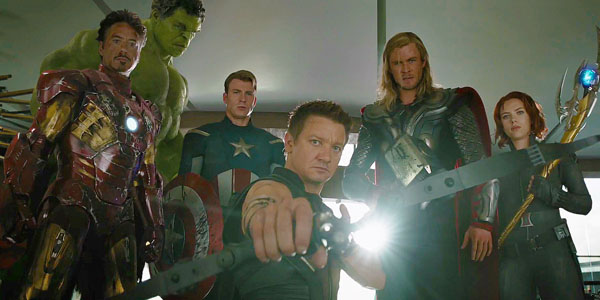
Marvel Studios' plan for world domination continues at a frantic pace; Guardians of the Galaxy and Captain America: The Winter Soldier are two of the five biggest hits of the year at the box office, the full slate of Phase 3 movies through to the summer of 2019 were recently announced and Avengers: Age of Ultron is all-but-guaranteed to become one of the biggest movies in history when it hits theaters next summer. Even on the small screen Marvel are increasingly busy; Agents of S.H.I.E.L.D. is in its second season, Agent Carter arrives early next year and four highly-anticipated Netflix shows are all in various stages of development. With all of this continued success the studio are making things look easy, forcing everybody else in Hollywood to play catch up and announce 'shared cinematic universes' of their own. While he can't be given all of the credit, the importance of Kevin Feige cannot be underestimated; the President of Marvel Studios is a figurehead that is both passionate about the source material and has a very clear idea of where everything is headed in the future. However, there have been more than a few occasions when the Marvel Cinematic Universe could have turned out completely differently, and this article will look at ten such instances. Unforeseen circumstances, changes both in front and behind of the camera, potential sequels that were never realized and those frequently-occurring contractual disputes all feature, with each entry on the list having the potential to point the entire Marvel Cinematic Universe in a completely different direction. So read on and find out what might have been. Do you agree that these would have changed the Marvel Cinematic Universe completely? Would any of them have been an improvement? Is there anything else that you would have included? As always sign off in the comments below.

10. Gulliver's Travels Got Scarlett Johansson The Part Of Black Widow
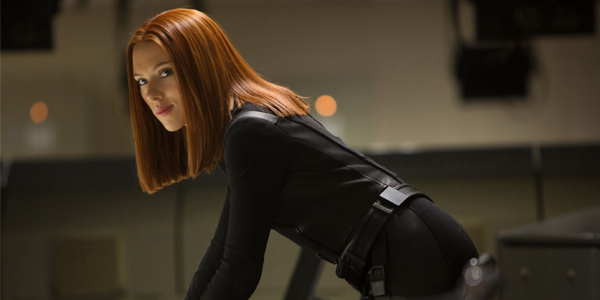
Since first appearing as Natasha Romanoff in Iron Man 2, Scarlett Johansson has become an important part of the Marvel Cinematic Universe, signing a multi-picture contract and landing more screentime in The Avengers and Captain America: The Winter Soldier. Although some fans are disappointed that a standalone Black Widow movie wasn't part of the studio's Phase 3 announcement, if it wasn't for a terrible Jack Black movie then Johansson wouldn't be a part of the MCU at all. Emily Blunt was Jon Favreau's first choice for the part of Natasha Romanoff in Iron Man 2 and was offered the role, but a combination of scheduling conflicts and contractual obligations forced the actress to turn down the part. Instead, Blunt appeared in Gulliver's Travels, which re-imagined Jonathon Swift's classic novel as a big-budget effects-driven blockbuster with Jack Black in the title role. A poor excuse for a comedy, Gulliver's Travels tanked spectacularly at the domestic box office while Iron Man 2 became one of the biggest hits of the year. Thanks to her role in the MCU, Scarlett Johansson's star has never been higher (and her earning potential, the actress is rumored to have earned at least $5m from The Avengers) and the ass-kicking credentials established as Agent Romanoff surely helped drive Lucy to almost $450m at the box office this summer. However, Black Widow's role in the Marvel Cinematic Universe may have turned out completely different had Emily Blunt been able to accept the offer, with her warrior woman in Edge of Tomorrow proving her credentials as a potential action star.

9. The Other Hemsworth Was Nearly Cast As Thor
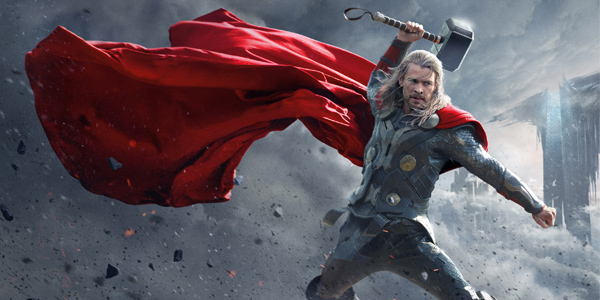
As a fledgling studio with only three movies under their belt, two of which featured Iron Man, Thor was an incredibly risky project for the relatively-unproven Marvel Studios. A $150m fantasy-tinged comic book movie with the unlikely choice of Kenneth Branagh behind the camera based on a title character that had little name recognition with general audiences, the stakes were only raised higher by the studio's insistence that a relatively unknown actor be cast in the lead role (although unconfirmed reports claimed that Daniel Craig had been offered, and turned down, the part). An open casting call went out in regards to Thor, with almost every up-and-coming young actor in Hollywood eying the potentially career-changing role. Charlie Hunnam, Joel Kinnaman, Tom Hiddleston and Alexander Skarsgard were all screen-tested, but the final choice came down to two unknown Australian actors that just happened to be brothers; Chris and Liam Hemsworth. Obviously, the older Hemsworth was eventually cast as Thor and nailed it, injecting the character with the requisite amount of charisma, charm and stoic heroism required. However, during the initial round of auditions the movie's casting director passed on the opportunity to put Chris forward for a screen-test before the young actor forced his way back into contention, finding himself head-to-head with his younger brother as the final two candidates for the role, with the man that became Thor recalling; 'We both came all the way over here from Australia and ended up battling against each other.' Despite coming agonizingly close to landing the star-making part and losing it to his elder sibling, runner-up Liam Hemsworth got his chance to star in a blockbuster franchise soon after by landing a supporting role in The Hunger Games.

8. James Gunn Had No Intention Of Giving Chris Pratt An Audition
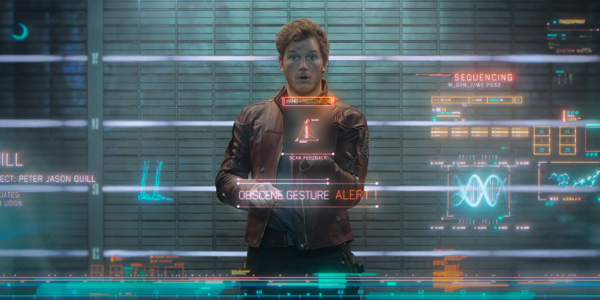
If anybody doubted the popularity of the Marvel Studios brand, then Guardians of the Galaxy definitively laid those arguments to rest. Long regarded as the studio's biggest gamble, the $170m space adventure was based on a relatively obscure comic book and featured little star power, yet turned out to be a critical and commercial smash hit and currently ranks as the second biggest hit of the year with over $750m at the box office. Guardians also featured a star-making turn from Chris Pratt, who led the ensemble cast with a hugely charismatic lead performance that established him as a bona-fide Hollywood leading man. However, during the audition process for the role of Peter Quill director James Gunn had no intention whatsoever of even considering the idea of casting Pratt, revealing during an interview that 'when somebody first suggested him to me, I thought, you got to be kidding me. This chubby guy from 'Parks and Rec'? There's no way I'm going to make that guy the star of my movie.' The likes of Joel Edgerton, Garrett Hedlund, John Krasinski, James Marsden, Jensen Ackles, Joseph Gordon-Levitt and countless others auditioned for the part, and when the director was finally convinced by his assistant to give Pratt a chance he 'knew within 20 seconds of his audition that this was the guy.' And after winning the coveted role and losing 60 pounds, Chris Pratt proved any doubters wrong by delivering a brilliant performance in one of 2014's best blockbusters.

7. Guillermo Del Toro Came Very Close To Directing Thor

Guillermo Del Toro Guillermo del Toro is a filmmaker that always seems to have dozens of projects on his plate across all forms of media, and it comes as little surprise when many of them fail to come to fruition. As well as having the plug pulled on At the Mountains of Madness and dropping out of The Hobbit after spending over a year on pre-production, the Mexican director also seriously considered directing Thor when the project was still in the development stage. After Matthew Vaughn dropped out of the director's chair, Marvel were on the lookout for a replacement to tackle the God of Thunder's big-screen debut and approached del Toro, with the director confirming that he was offered the project following Vaughn's departure in early 2008, stating in an interview;
'I came very close to doing Thor because I really wanted to bring the Norse mythology€ It€™s something I€™m very attracted to. Create the giants and create the more fantastical version of that. The way I imagined it was like really, really dingy Valhalla, Vikings and mud.'
In the end, del Toro decided against making Thor in favor of signing on to The Hobbit instead, with Kenneth Branagh being handed the reins to kick-start Marvel's newest franchise. While Branagh delivered a solid Shakespearean-tinged fantasy, the prospect of a Guillermo del Toro-directed Thor is a tantalizing one. Given his penchant for practical effects and creature design the movie had the potential to be a visually jaw-dropping and gritty take on the character, even though its highly unlikely that his singular vision would have worked within the confines of the Marvel system.

6. Zak Penn's Avengers Script

Marvel continued their track record for choosing unlikely directors for their big-budget blockbusters by hiring Joss Whedon, known primarily for his work in television and director of just one $40m feature film, to write and direct the studio's $220m epic superhero ensemble The Avengers. Whedon's script delicately balanced the multitude of characters and subplots, marrying the huge-scale action scenes with plenty of character moments and no shortage of witty dialogue. However, The Avengers would likely have been a much different movie without the input of a writer/director with as much knowledge and grasp on the source material as Whedon. Zak Penn was originally hired to write The Avengers in June 2007, and as the events of Phase 1 of the Marvel Cinematic Universe unfolded onscreen the script went through constant revisions, with Penn saying in 2009 that 'my job is to kind of shuttle between the different movies and make sure that finally we're mimicking that comic book structure where all of these movies are connected.' However, by the time Joss Whedon signed on to write and direct the movie he decided on a complete overhaul of the script, dismissing Penn's work by stating 'there was a script... there just wasn't a script I was going to film a word of.' In the end, Zak Penn received a story credit on The Avengers with Joss Whedon the sole screenwriter. While little is known about Penn's version of the script (although it was rumored to include the Red Skull), its probably for the best that his draft was completely abandoned. After all, this is the guy that wrote Elektra and X-Men: The Last Stand and was essentially replaced on The Incredible Hulk by Edward Norton, not the most encouraging track record for someone tasked to write one of the most highly-anticipated blockbusters of all time.

5. Agent Coulson Was Originally A Minor Character

After an extended cameo in Iron Man that introduced the concept of S.H.I.E.L.D. to audiences, Clark Gregg's Agent Coulson quickly became a fan favorite character in the Marvel Cinematic Universe. Appearing in multiple movies in an effort to provide connective tissue across the studio's shared mythology, Coulson established himself as an increasingly important part of the ever-expanding franchise. However, Agent Coulson was initially only slated to have a small number of lines in Iron Man, with no designs on turning the character into a recurring part of the MCU. In fact, in early drafts of the script the character didn't even have a last name and was simply referred to as 'Agent'. Gregg only took the bit-part due to his friendship with Iron Man director (and former neighbor) Jon Favreau and the opportunity to work with the movie's talented cast. Generating plenty of chemistry with his co-stars and giving the character a personality and dry wit, Coulson quickly turned into a role that Gregg described as 'the gift that keeps on giving'. Positive reception to Gregg's portrayal of the S.H.I.E.L.D. agent led to the actor signing a multi-picture contract with the studio, and Agent Coulson soon became an almost ubiquitous part of the Marvel Cinematic Universe. The character was given increased screentime in Iron Man 2 and Thor, starred in two Marvel One-Shots and was killed off to the horror of many fans in The Avengers, only to mysteriously return to lead the cast of television's Agents of S.H.I.E.L.D. Not a bad return for what was initially intended to be little more than a background role in Iron Man.

4. Samuel L Jackson Almost Didn't Return As Nick Fury After Iron Man
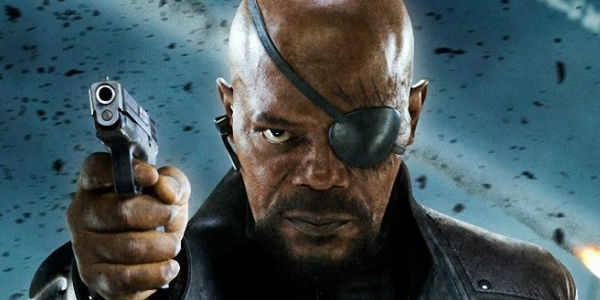
Seeing as the Ultimate Marvel version of Nick Fury was modeled after Samuel L Jackson, it only seems fair that the actor receive the opportunity to play the character on the big screen in return. Ever since appearing in Iron Man's post-credits sequence to namedrop the Avengers Initiative and lay the groundwork for the epic superhero team-up, Nick Fury has become an integral part of the Marvel Cinematic Universe. However, following his cameo at the end of Iron Man there was a time when even Jackson himself seemed unsure of whether or not his eyepatch-wearing super-spy would return. As befitting their reputation when it comes to contract negotiations, it seems that money was the issue that drove a wedge between Marvel and Jackson. Before signing an unprecedented nine-picture deal with the studio to provide the connective tissue across the cinematic universe with his role as the assembler of the Avengers, the actor had this to say in an interview;
"There was a huge kind of negotiation that broke down. I don€™t know. Maybe I won€™t be Nick Fury. Maybe somebody else will be Nick Fury or maybe Nick Fury won€™t be in it. There seems to be an economic crisis in the Marvel Comics world so they're saying to me, €˜We€™re not making that deal'."
Obviously Jackson and the studio resolved their differences, presumably with a truckload of cash, and Fury has since appeared in Iron Man 2, Thor, both Captain America movies, The Avengers and even television's Agents of S.H.I.E.L.D. However, if these negotiations had fallen through then the part of Nick Fury would have needed to be recast, or removed entirely from continuity, which would have drastically altered the face of the Marvel Cinematic Universe.

3. Chris Evans Turned Down Captain America Three Times
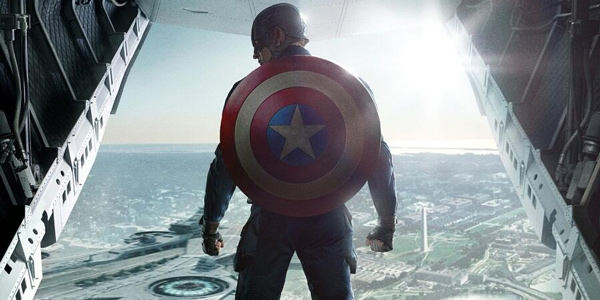
After already playing The Human Torch in Tim Story's two Fantastic Four movies, its easy to understand why Chris Evans was reluctant to sign another multi-picture deal to star as a Marvel comic book character, with the actor repeatedly turning down the role of Captain America before finally signing a six-picture contract with the studio in early 2010. However, despite Marvel screen-testing a huge number of actors for the part it seems that they were intent on casting Evans in the title role, and it was the actor's reluctance to commit to such a lengthy contract that stalled negotiations. After turning down a nine-picture deal Marvel reduced the offer to six movies, and following a meeting with the producers the actor finally decided to sign on the dotted line. Referencing the lukewarm reception to the Fantastic Four, Evans explained that he initially turned down the role because 'if you're going to get locked up in a long-term contract, you've got to make sure the movies you're making are movies you'll be proud of.' It turns out that the actor had nothing to worry about, as the two Captain American movies so far have delivered great blockbuster entertainment thanks in part to Evans' portrayal of Steve Rogers giving charm, warmth and humanity to a character that seems to be the least interesting Avenger on paper.

2. The Incredible Hulk Sequel That Never Was

The Incredible Hulk has almost become the unwanted stepchild of the Marvel Cinematic Universe; despite being an established part of the franchise's canon, the movie suffered from a lukewarm critical reactions and disappointing box office returns, currently ranking as the lowest-grossing entry in the MCU. Comic book blockbusters are almost always designed with sequels in mind, and if The Incredible Hulk turned out to be a massive success then any potential follow-ups could have drastically altered the continuity of the studio's cinematic mythology. Even though the movie features several references to future Marvel movies and includes a post-credits cameo from Robert Downey Jr's Tony Stark, the events of The Incredible Hulk are never directly referenced by the characters of the MCU either in dialogue or hidden Easter Eggs, bar Mark Ruffalo's quip in The Avengers that he 'broke Harlem' the last time he was in New York. Things could have been very different had Louis Letterier's blockbuster been more of a critical and commercial hit; Edward Norton, Ty Burrell and Tim Blake Nelson were all contracted to return for a sequel, with a brief scene in the first movie all-but-confirming that the latter would transform into The Leader and play the main villain. Of course, Marvel's well-publicized dispute with Edward Norton led to Kevin Feige announcing that the role of Bruce Banner would be recast with someone who 'embodies the creativity and collaborative spirit of our other talented cast members', with Mark Ruffalo signing a six-picture deal to take over the character. With the studio recently announcing a full slate of movies through to 2019 with no sign of a standalone Hulk feature on the horizon, it seems that the studio is unwilling to expand the adventures of Bruce Banner beyond Avengers movies. The future of the Marvel Cinematic Universe could have turned out very differently had The Incredible Hulk turned out to be a smash hit.

1. Len Wiseman Almost Directed Iron Man

As well as being the first feature from Marvel Studios and the genesis of the Marvel Cinematic Universe, Jon Favreau's Iron Man was also instrumental in establishing the general tone of the studio's output. Wisely going in the completely opposite direction from Christopher Nolan's grounded and serious Batman movies, Favreau established Iron Man as a more light-hearted and humorous kind of blockbuster, which has greatly informed the way the rest of Marvel's movies balance laughs alongside the action. However, before Favreau officially signed on to direct in April 2006 the studio had entertained the notion of handing the reins to Len Wiseman, director of the two generic and soulless Underworld movies. Wiseman revealed in an interview that he was involved with the project for about seven months but the dark and violent nature of his work had deterred Marvel from continuing negotiations, with the studio looking to make their movies more family-friendly. With the studio now known for picking their directors from slightly out of left-field, Wiseman would have been a massively uninspired choice; since dropping out of the running for Iron Man the director has delivered Live Free or Die Hard and Total Recall; two bland, generic and ultimately forgettable blockbusters. While the director of Elf and Zathura may have seemed like an unlikely choice to direct a $140m comic book movie, Favreau delivered a stylish and entertaining blockbuster that got the Marvel Cinematic Universe off to a strong start. Even more importantly, Favreau was instrumental in getting Robert Downey Jr cast as Tony Stark and fought for the actor to land the part despite the wariness of the studio executives given his well-publicized personal struggles. If Marvel had given the job to Len Wiseman, then Robert Downey Jr would likely never have gotten the chance to create one of the most iconic movie characters in recent memory and the makeup of the Marvel Cinematic Universe would be completely unrecognizable from what it is today.

Contributor

I don't do social media, so like or follow me in person but please maintain a safe distance or the authorities will be notified. Don't snap me though, I'll probably break. I was once labelled a misogynist on this very site in a twenty paragraph-long rant for daring to speak ill of the Twilight franchise. I stand by what I said, it's crap.