10 Ways Movies Blew Your Mind Without You Even Realising
Filmmaking ingenuity at its finest.
The sheer amount of blood, sweat, and tears that go into making even a terrible movie is unmistakable.
From getting the script written, to having the actors perform it, lighting the set appropriately, cutting it all together, and ensuring the sound is mixed correctly, it's a multi-disciplinary art-form where even the most basic film is comprised of thousands of smaller creative decisions and details.
And often filmmakers are ingenious enough that their crew's work is on full display even while audiences are absolutely unable to fathom the true graft that went into achieving it.
These 10 films all pulled off mind-boggling feats in ways that were totally inconceivable to audiences at the time, and still today in most cases.
Every single one of these scenes boasts a conceptual flourish, be it a subtle work of practical effects or an ingenious piece of subliminal sound design, which audiences took thoroughly for granted.
Viewers likely assumed in each case that the filmmakers took the easy way out, or in the very least totally underestimated the insane work that went into making these moments of movie magic truly come alive.
And so, we tip our hat to the ludicrously talented crafts-folk across all cinematic disciplines whose hard work allowed these scenes to land as brilliantly as they did...
10. Kevin's Home Was Actually A High School Gym - Home Alone

Holiday classic comedy Home Alone features one of the most iconic and immediately recognisable houses in all of cinema, given that the vast majority of the film takes place inside Kevin McCallister's (Macaulay Culkin) spacious abode.
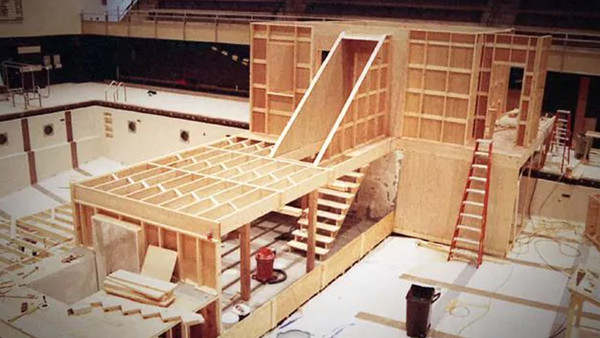
But as was recently revealed in Netflix's series The Movies That Made Us, the interiors of Kevin's home weren't actually those of the real house featured in the film's exterior shots, but in fact a custom-built house constructed inside a nearby high school gymnasium.
Though director Chris Columbus loved the house which had been selected for exterior scenes, the crew quickly realised that the interiors were too narrow to practically shoot a movie with heaps of equipment and dozens of personnel, and so the decision was made to simply build their own version with far wider hallways to facilitate easy shooting.
This even extended to building the basement of the house in the gym's swimming pool, allowing for it to be easily flooded at the end of the movie.
And despite the potential for there to be an obvious disconnect between the exterior shots and the artificial interiors, the end result is absolutely seamless. Bravo.
9. Tobey Maguire Caught The Lunch Tray For Real (On His 156th Take) - Spider-Man

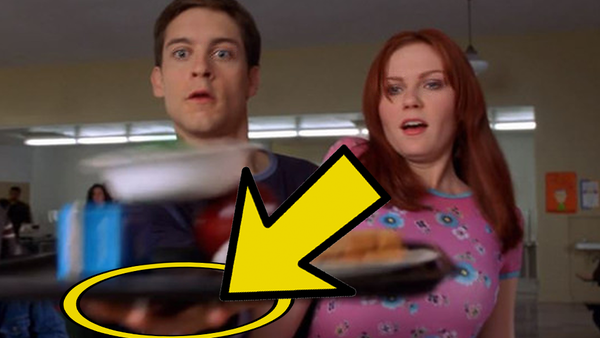
Perhaps the single most visually remarkable moment in Sam Raimi's Spider-Man isn't a bout of mighty superheroism, nor is it even that iconic kiss in the rain, but an early gag where a recently-bitten Peter Parker (Tobey Maguire) uses his advanced reflexes to catch Mary Jane's (Kirsten Dunst) tray of food after she slips and catapults it into the air.
Conventional filmmaking logic would dictate that the various food items on the tray were simply added digitally in post-production, and so Maguire simply had the not-terribly-challenging task of catching the tray itself.
Except, that's not the case at all. The effect was executed entirely in-camera, with an adhesive applied to Maguire's hand to help him keep hold of the tray, while if you look closely, the falling apple appears to have a magnet on its underside, presumably helping it cling to the apparently metal tray.
But even with these aids, pulling off a successful take took Maguire 156 attempts over a reported 16-hour shooting day. The final result is fantastic, admittedly, though most everyone in the audience surely assumed it was a simple VFX shot, no?
8. Linda Hamilton's Twin Sister Was Used For Her T-1000 Double - Terminator 2: Judgment Day
Terminator 2 is one of the greatest "visual effects movies" of all time, precisely because James Cameron understood the importance of allowing CGI to enhance the practical, human elements of a story, rather than ever letting them supersede the vital tactile element.
Yet T2 is such a well-aged triumph of VFX mastery that any remotely complex sequence can be easily dismissed as another feat of ahead-of-its-time visual wizardry.
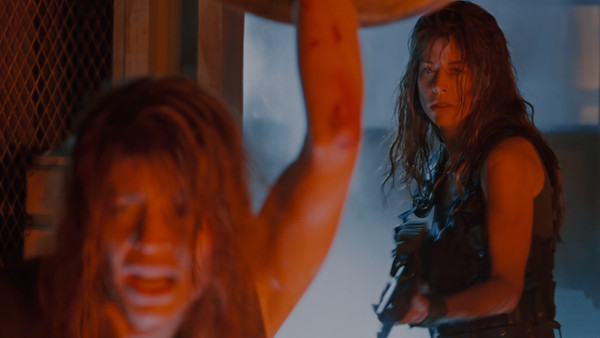
This is especially true with the climactic sequence where Sarah Connor (Linda Hamilton) faces off against a doppelganger of herself created by the T-1000 (Robert Patrick).
Though most would assume that some sneaky split-screen trickery or primitive face-replace tech was responsible for the scene, Cameron instead took full advantage of the fact that Linda Hamilton had a twin sister, Leslie, who could be used to create a practical double of Sarah.
If you look at the two actresses in the same shot, as above, it's actually relatively easy to tell the two apart, but in the thrall of the movie itself, you'd never have a clue.
In fact, Leslie is also used for the nightmare sequence featuring two Sarahs, and most ingeniously of all, she also doubles for her sister during the incredible Special Edition sequence where the T-800 (Arnold Schwarzenegger) has its chip reconfigured in front of a "mirror."
7. Hans Zimmer's Musical Score Marks The Passing Of Time On Earth - Interstellar

Christopher Nolan is nothing if not a stickler for the finer details of his movies, and he took this to a ludicrous extreme on his 2014 sci-fi blockbuster Interstellar.
When Coop (Matthew McConaughey) and his team arrive on an unstable water planet mid-way through the movie, Hans Zimmer's track "Mountains" begins to play, underscored by a potent ticking motif.
These ticks occur in the track once every 1.25 seconds, and while that might at first seem like a typical metronomic measure for a beat, it also not-so-coincidentally lines up with the film's own time dilation narrative.
It's explained that an hour on the water planet accounts for 7 years passing back on Earth, and as people who did the maths realised, that would mean 1.25 seconds on this planet covers an entire day back on Earth.
The tick already does a fantastic job of enhancing the scene's desperate urgency, but once you know what it truly symbolises, of days slipping away back on a dying Earth, it's even more intense.
6. There's WAY More CGI Than You Think - Zodiac
David Fincher is a rare perfectionist filmmaker who is also totally unafraid to use extensive visual effects in his movies, and often it's deployed in subtle ways you wouldn't ever notice.
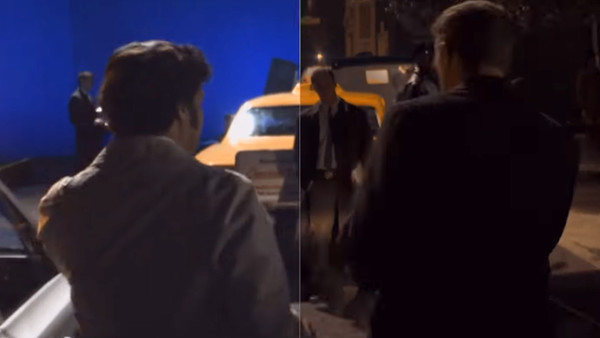
This is no truer than in his masterful 2007 thriller Zodiac, where VFX are employed in countless scenes to evoke the maximum period authenticity and ensure Fincher gets the exact look for the film he desires.
While the gorgeous shots of the digitally transformed Port of San Francisco are easy enough to spot, far more cleverly concealed are the various on-the-ground sequences which, believe it or not, were actually shot with plentiful blue screens.
Though mismatched lighting is the primary cause of unconvincing compositing, Fincher smartly shoots these scenes at night with low-key lighting, allowing the digital environments to blend seamlessly into the practical shooting.
And you'd never guess without seeing a VFX breakdown, demonstrating how much work really went into making the film as era-convincing as possible.
5. Forced Perspective Was Used To Depict Scale - The Lord Of The Rings

Of all the effects-based challenges facing Peter Jackson's Lord of the Rings movies, one of the toughest was surely depicting the differing scales of the series' characters, namely the diminutive, four-foot Hobbits compared to everyone else, especially the towering Gandalf (Ian McKellen).
Even back in 2001, it's fair to say that most audiences simply assumed the effect was achieved entirely by shooting the actors in separate takes and then sneakily compositing them into the same shot later on, but Jackson boldly opted to go mostly practical instead.
Though body doubles were used for shots which didn't require the actors' faces, Jackson relied primarily on forced perspective techniques to achieve a believable size differential.
Jackson simply placed actors at different distances to the camera, but through strategic shot selection, this distance wasn't apparent to the audience, who would assume the two actors were simply stood or sat next to one another.
Most insanely of all, Jackson even dared to do this during moving camera shots, requiring his crew to create a motion control camera rig that would rotate props around the actors in perfect harmony with the camera movements to keep the sense of scale consistent.
Though Jackson did use clever editing and CGI for some shots, he did it the old-fashioned way wherever possible. Yet as impressive as it is, the overwhelming majority of viewers never had a clue that so much practical graft went into it.
4. The Freeway Chase Was More Practical Than It Seems - The Matrix Reloaded

The Matrix sequels get plenty of justified flak for their over-indulgence in goopy visual effects at the seeming expense of a coherent story, but there's little arguing with the technical brilliance of the second film's jaw-dropping freeway chase sequence.
The lengthy chase does of course feature plenty of CGI, and you'd be forgiven for assuming that the majority of it was just shot in front of green screens or a small chunk of fake freeway built inside a warehouse.
But the "bones" of the scene, if you like, are entirely practical, with the Wachowskis having a 1.5-mile freeway built at the cost of $2.5 million at a disused Californian naval base.
General Motors donated more than 100 cars to be totalled during the sequence, and aside from the action beats which would simply be too dangerous for actual stuntmen or actors to perform - typically those set on top of vehicles - the rest were largely done in-camera.
Not only are the car crashes all practical, but Carrie-Anne Moss actually rode a Ducati, with no helmet no less, along the freeway. For the sequence where she drives into oncoming traffic, though, the other vehicles were of course digital.
It's easy to watch the scene and just assume it was largely cobbled together in a VFX house somewhere, but the practical shoot took seven whole weeks after an entire year of planning, not to downplay the considerable post-production job making it all come together seamlessly.
3. A Stuntwoman's Face Is Replaced With CGI - Jurassic Park

It never ceases to amaze just how well Steven Spielberg's Jurassic Park has aged, for while its CGI isn't quite as remarkable as it was almost 30 years ago, it's still an extremely impressive technical achievement, smartly melding practical filmmaking with cutting-edge visual effects.
But everyone's so busy being distracted by the CGI dinosaurs that nobody actually noticed an incredibly sneaky, state-of-the-art visual effect hidden in plain sight.
When Lex (Ariana Richards) falls through an air duct near the end of the movie, it won't surprise anyone that we're actually looking at a stunt performer: her toned arms and general body type are clearly that of an adult woman rather than a child.
But when Lex looks up at the camera for maybe half-a-second as she's pulled back to safety, Spielberg actually used CGI to paste Richards' face over that of the stunt double.
No matter how many dozens of times you've probably seen Jurassic Park, this is incredibly easy to miss, in large part because of the low-key lighting and how nobody's actually looking for it.
After all, photo-realistic "face replace" CGI was virtually unheard of back in 1993, and the only effects audiences were primed to look out for was the dinosaurs themselves.
Though it's ultimately a primitive stab at the now-commonplace effect, it still holds up shockingly well if you're not examining it in finer detail.
2. The "Impossible" Mirror Shot - Contact
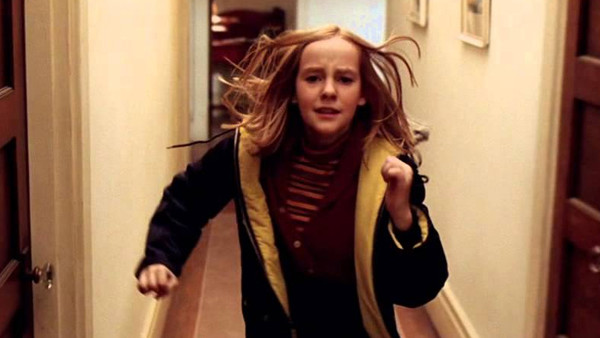
Robert Zemeckis' 1997 sci-fi cult classic Contact opens with one of the most technically impressive shots in film history, albeit one that lets its genius flash by so quickly it's easy for audiences to take it entirely for granted.
The scene in question is the "impossible" mirror shot early in the film, where a young Ellie (Jena Malone) runs upstairs to get her father's medicine from the bathroom cabinet, concluding with the reveal that we've actually been watching Ellie's run in the reflection of the bathroom mirror the entire time.
It's still brain-breakingly brilliant today, even if the relatively subtle and fleeting nature of the transition makes it easy for viewers to gloss over it completely.
In actuality, Zemeckis executed the shot by filming three different takes which were then digitally stitched together: Ellie running towards the camera, Ellie opening the cabinet (with a blue screen taking the place of the mirror itself), and the picture of Ellie and her father for when the cabinet closes again.
Of course we all know that this shot couldn't be achieved practically, but in the moment while you're watching it, especially back in the late-90s, it's easy not to appreciate just how much work it took to bring the final result to fruition.
1. Rear Projection Was Subtly Used In Many Scenes - Citizen Kane
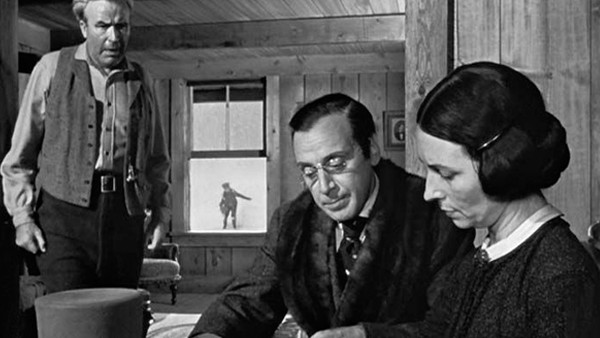
Orson Welles' Citizen Kane gets plenty of justified praise for Robert Wise's landmark editing and Gregg Toland's incredible deep focus cinematography, but Welles' masterpiece is also far more of a special effects movie than its reputation would have you believe.
Welles made extensive use of rear projection technology - that is, having scenes performed in front of a painted or video backdrop - in order to give the film a subtly heightened and totally unique aesthetic.
Notable examples include the matte painting background of Kane's (Welles) Xanadu estate, an entire dance sequence being rear-projected while Thompson (William Alland) interviews Leland (Joseph Cotten), young Kane playing in the snow as projected behind a window (above), and most amusingly, the exotic background of the swampy picnic scene.
In the latter case, Welles actually opted to rear-project jungle footage previously used in 1933's The Son of Kong, and in an hilarious mistake, didn't even try to disguise the pterodactyls visible in the footage, which can be briefly seen flying around in the background of the picnic scene.
And yet, these moments are so astonishingly subtle, and so counter to what audiences expect from how Citizen Kane was made, that they're basically invisible effects.