10 Ways Star Trek 3 Could Fix The Franchise

New director hopefully means new vision.
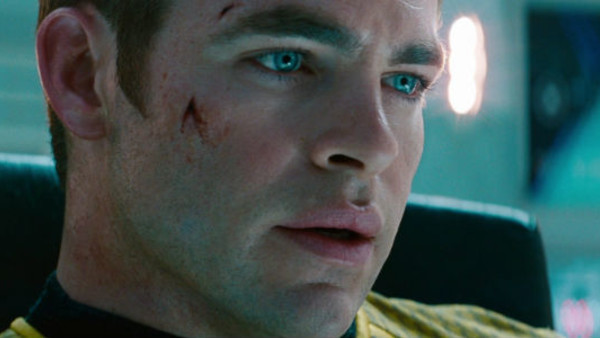
In terms of the fabled €œgood film, bad film€ tradition of Star Trek, the third instalment in the rebooted series should be a good one. In truth though, it needs to be a whopper. The first J.J. Abrams movie did relatively well at walking the tightrope between being true to the original ethos and striding out on its own. The second instalment, however, was much more divisive with many fans feeling it had strayed too far from the characters of the crew. Others were frustrated at the constant references and the far too obvious tinkering with history. Oh, Kirk died and Spock screamed €œKhan!€, genius. Yet a whole new audience didn€™t care and were quite happy with the €œbang, bang, pew, pew€ nature of the film. With the 50th Anniversary in 2016 and Robert Orci originally taking over the directorial duties, expectations were high but guarded. John Cho recently claimed Orci€™s knowledge of Star Trek is unsurpassed, though many fans were concerned with his track record. But the news that Justin Lin of Fast and Furious fame is to direct in Orci€™s place after he recently pulled out will strike fear into the hearts of those who hoped for a more cerebral approach. There is a middle ground between making the next film more €œStar Trekkie€ and retaining the more visually appealing style of the last two films. Justin Lin may or may not be a fan of the franchise, but it is to be hoped that he will treat it with respect. Let€™s have a look at some points of interest that Mr Lin would do well to take note of.

10. Captain, My Captain

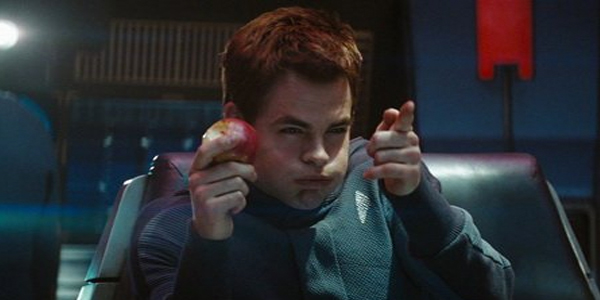
Chris Pine is a good actor but he needs to get himself some No More Tears shampoo because he seemed to spend a lot of the first two reboot films looking like he was about to cry. His Kirk was impulsive, childish and the character didn€™t seem to have grown up from the kid who threw his step-Dad€™s car off a cliff. The Captain of the flag-ship should be calm, measured, thoughtful and have a confidence that inspires others to follow them. Serious Starfleet officers wouldn€™t follow that guy to the shops never mind into battle. The next movie will reportedly see all or most of the action take place away from Earth while the Enterprise embarks on the historic five year mission into the unknown. Jumping into the middle of that mission with a more experienced and believable Captain will start to make amends for the mistakes of the first 2 films. Sufficient time has passed, and enough experiences have been had, that Kirk can now step into his big boy shoes.

9. Spock's Brain

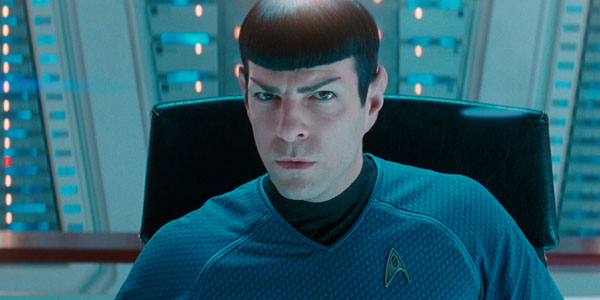
Spock in the original series was always very much aware of his human side and constantly fought to keep it under control. Releasing emotion was painful and shameful for him, it took extreme situations for him to show flashes of genuine humanity. Zachary Quinto was an excellent choice and his Spock is almost there but not quite. The relationship between him and Kirk in the original series was built on trust and shared experience. Spock advised his Captain and recognized him as a friend, but he also understood his place in the chain of command. In the new films so far the relationship has been one of friction, mistrust and subterfuge with belated, and slightly unbelievable, reconciliation. What is needed in the next film is a sense of this shared history and mutual respect. There was always banter and Spock was by no means a robot, but despite the death of his mother and the loss of his planet the character needs to get back to his roots. Captain Kirk had to beat the Vulcan back into Spock in the original series and beat the emotion out of him in the first reboot film. Spock needs to stop beating himself up and get back to being the controlled and sarcastic green blooded hobgoblin we all know and love.

8. Engage Brain

The biggest complaint of all about the reboot films is that they were more action movie than Star Trek action movie. There was no heart and little brain, most notably in the second instalment where completely unbelievable and impossible events converged in a mass of explosions. The third film needs to tell a story. It needs to have relevance to the world around us and give a bit of hope that humanity can find a better way. Into Darkness was supposed to be about terrorism yet it failed to address any potential solutions. The federation and humanity it presented was not the advanced society to aspire to as shown in the original timeline. Audiences are not as stupid as some studios think they are and there is a desire for a more cerebral form of sci-fi adventure. A well plotted, intelligent character piece to cement the crew€™s relationships is called for more than yet another popcorn blockbuster. The 50th anniversary deserves better than that.

7. Klingons On The Starboard Bow

Klingon The brief introduction of the Klingons to Into Darkness was welcome and exciting, but the fierce warriors were slain all too easily. The make-up and prosthetics were excellent and the ancient enemy had never looked so scary. It would seem a fair bet they€™ll get a bigger outing in the third film and that should be welcome news. In the original timeline there was no state of open war between the federation and the Klingon empire, but Into Darkness clearly sets the next film up for a conflict. Perhaps the third film could take a slightly different tack and have an uneasy peace in place with the Enterprise coming upon some apparent Klingon plot. Seeing more of the Klingon species, culture and internal relationships would be fun, as long as it doesn€™t stray too far into Star Wars trade federation nonsense. But it€™s certain that more screen time should be given to the warrior race to show the juxtaposition in approaches. Seeing a mature and confident Captain Kirk negotiating his way through a problem could be just what the doctor ordered.

6. Enemy Mine

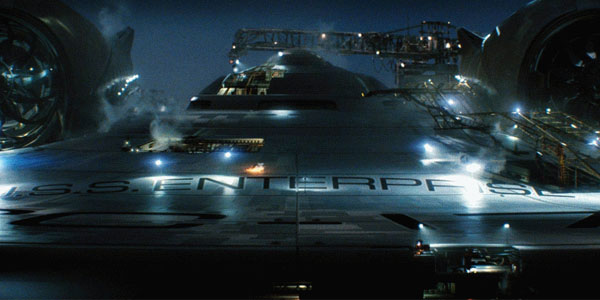
Star Trek Into Darkness Peter Weller Into Darkness was based around the idea that hundreds of Starfleet crew built the biggest ship in history and nobody noticed. This was of course ridiculous, but the idea of a mole inside Starfleet is an interesting one. Perhaps a Klingon sympathizer or undercover agent, perhaps some character that shows what humanity is like now and hold a mirror to society. This would have to be handled delicately or it would risk being a pantomime, but done properly it could help to show how greed and distrust can be overcome. Star Trek was always at its best when it reflected society in a post referential way, mocking our current barbarism and relative immaturity as a species. The expectation is that the 5 year mission will be well underway so there is plenty of scope for home-sick, fatigued, traumatised crew members to rebel against Starfleet. Perhaps an insurgency of peaceniks who feel that Star Fleet is nothing more than a military, empire building organization with vaguely communist overtones. Or, in a more human vein, perhaps a character who feels wronged by Kirk€™s fast rise up the ranks, a jealous ex-classmate or previously superior officer intent on bringing him down. This may be too close to the Albert Finney story though, and one thing to be avoided in the next movie is the constant references to previous incarnations. Speaking of which€

5. Go Boldly

While stripping back is needed, the next film really needs to carve its own path and stand on its own merit. Once the characters are better established and more fully formed, it is the story that must take centre stage. There is no reason why action and cerebral story telling cannot co-exist, being brave enough to make an engaging and exciting film will allow Lin to set his movie apart. While many will cry for a return to old foes, old characters and referenced future history, a bolder approach would be to carve a whole new path. As previously mentioned, the character of the main protagonists does need brought closer to those of the original series, but new experiences would, obviously, lead to different personalities. We are all a product of our genes and our environment so asking for Kirk and Spock to be given more recognisable dispositions does not mean they shouldn€™t be able to stretch in new directions. The rabbit hole has been well and truly gone down so it makes sense for the team to just go with it. Yes, have the Romulans and Klingons, but the dynamics can be completely different due to Nero altering history. The rule book has not quite been thrown out, but most of it has, and should, be shredded.

4. It€™s Life Jim, But Not As We Know It

Star Trek Into Darkness trailer red running In the original series, and to an extent the Next Generation, there were a plethora of species introduced with a new one almost every week. It would be good to have a completely new, powerful and dangerous species to add to canon. As previously noted, the indications are that the next film will take place out in deep space. It is entirely unlikely the new crew would head out in exactly the same direction and meet exactly the same species as their original series€™ counterparts so there is plenty of scope for imagination. In keeping with the tradition of seeking out new life it would be fun to do just that. As noted previously, the Klingons have to have their place but they do not have to be the entire focus. Perhaps the new species poses a threat to both species and they have to work together, perhaps the Klingons are attempting to double-cross the federation, maybe both vying for control or diplomatic relations with the new power in the sector. There are many options but a new species is a must, the biggest shot in the arm Star Trek had since its return in the Next Generation was from the Borg. That is not to suggest that they should make an appearance, more to articulate that thinking boldly (or boldly thinking) can lead to great things.

3. Space, The Final Frontier
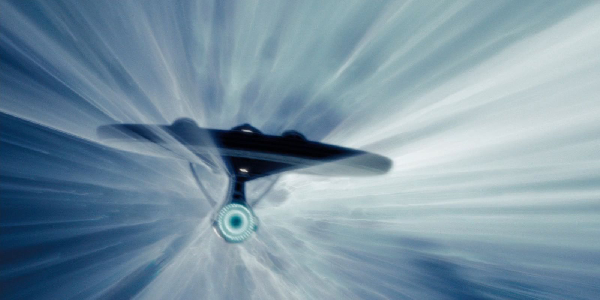
Too much of Star Trek of late, and science fiction stories in general (looking at you Doctor Who), has been spent with the Earth in peril. Being off on a mission out in deep space should allow the film to breathe and deal with issues that affect humans instead of humanity. With all the wonders of science that we have discovered since the days of the Next Generation series and the nature of Star Fleet being to explore, there is potential for a flavour of Interstellar style grim reality of space travel, as well as expounding on the beauty of the universe. Get away from Earth, have a journey in space and show the vulnerability of being out in the vast, black, unending emptiness. A €œDas Boot€ for the Sci-Fi world? Lost out in the farther reaches of explored space with only science, wits and training to help our plucky crew survive? The claustrophobic battles of Wrath of Khan were reminiscent, on occasion, of submarine dramas and the analogy is a sound one. Justin Lin has a chance here to take a Trek in a whole new direction and he would be mad if he didn€™t ask Ronald D Moore to at least take a look over the script. What he did with Battlestar Galactica was nothing short of genius and it€™s no secret he was a little frustrated at not getting to do the Trek he would have wanted. Moore knows Star Trek, he knows Sci-Fi and he knows how to take something kitsch and make it awesome.

2. Alas Poor Star Trek, I Knew It Well
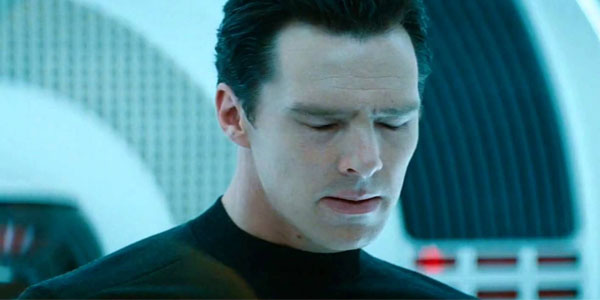
It is no secret that the original series was more fiction than science and it wasn€™t until the Next Generation that a conscious decision was taken to bring the Sci back into Sci-Fi. But one thing that was consistent across the various incarnations of the show was the quality of the dialogue. From having experienced Broadway and Shakespearean actors, to writing that referenced the Bard himself, there was an ethos of high-brow vocabulary and loquaciousness. With the very odd exception though, the new movies so far have been more hammy than Hamlet. The initial signs are not exactly encouraging given the writing staff and their previous credentials, but one can at least hold on to a sliver of optimism that the third instalment in the newly revamped franchise will return to a more eloquent story telling paradigm. It is to be hoped that a suitably compelling, engaging and science driven story can be constructed in a manner befitting such auspicious origins, while maintaining the drive and visually arresting style of the first two J.J. Abrams films. Such a film would no doubt placate the fevered masses of Star Trek fans who were disenfranchised by the nearly criminal, in their views, bastardisation of their once beloved future history. It would also entice those who had enjoyed the previous two films and introduce yet more new viewers to the world of Gene Roddenberry€™s making. A strong tale will stand alone and live long in the memory. But the producers pass this opportunity in favour of frivolous and fleeting riches at their peril, for the fans will not tarry in perpetuity.

1. It Was€.Fun

The first reboot film got many, many things wrong, but it was forgiven its faults for two reasons; one was the simple fact of it being a new Star Trek film, but the second was that it was hugely enjoyable. Yes, there was the small matter of killing nearly every Vulcan in existence but what€™s a film without a little drama and jeopardy. Into Darkness though was far too, well, dark. Thousands killed in terrorist attacks, countless bodies crushed by falling buildings, there was almost no joy to be had in the whole thing. Karl Urban did his best but there was just too much animosity and anger in the film for his good old Southern one liners to save it. Yes, there must be drama and peril, but going to the cinema to see a Star Trek film should be an entertaining experience, not a traumatic one. As noted, there must be drama and suspense, but that does not necessarily come with indiscriminate killing and a complete lack of empathy for the dead. There was a definite air of cold indifference to the loss of life during the first reboot films and that was an unwelcome addition to the milieu. Walking the tightrope of hitting all these points and keeping old and new fans happy cannot be an easy task, but a good film with a decent story shouldn€™t be too much to ask.

Contributor
Contributor

I.T. Consultant, technophile and Doctor Who fan. I like to talk about tech, take films apart and make excuses for Doctor Who's continuity errors. No other show has the power to make me feel like a big kid.