10 Ways Star Trek Just Isn’t Star Trek Anymore

Glossy, entertaining and good contemporary sci-fi films. But they just aren't Star Trek.

When the first Star Trek reboot came out in 2009 it brought a mixed reaction from the fans. There was no doubting that J.J. Abrams had put together a fun and entertaining movie, but something didn't sit right. It was good, it just wasn't quite Star Trek. But then Into Darkness came out and everything fell apart. Where there was a whole universe of stories to be told the producers decided instead to reference old characters and old scenes but without respecting the source material. It was like a French and Saunders pastiche. There were lines given to other characters, personalities changed and whole sections of canon thrown out the airlock. Some may be necessary if the intention is to go in a completely new direction, as previously written about, but you still have to be respectful to the source material. There are those, even among the biggest fans of the original series and the various spin-offs, who will absolutely love both of the new films. They are fun blockbusters with high production values, good actors and impressive CGI. Glossy, entertaining and full of all the plot points you would expect from a modern sci-fi film. Except it's just not Star Trek. The characters may have some similarities to their original incarnations but the world they inhabit is not the one of Gene Roddenberry's imagination. This is not the utopian future of a peaceful society we were promised and Star Fleet has something rotten at its core. Not everyone will agree with this list and some might prefer the new movies so feel free to sound off in the comments. Let's have a look at 10 ways this just isn't Star Trek anymore.

10. Jim!

James Tiberius Kirk. The youngest Star Fleet Captain in history, assigned to the USS Republic at 17 as a first year cadet at the rank of ensign, promoted to lieutenant four years later and given his own ship 10 years after that. He was a man of principle with intelligence, charm and assuredness borne of experience. He witnessed thousands killed when only a child on Tarsus IV and survived a massacre on the Farragut. He got into the academy early, taught advanced classes from the age of only 20, knew every part of his ship and led his crew with authority. At least that's the original history. Then we get the reboot where, for no good reason, the writers decided to turn the character into some rebel without a clue. This new Kirk is arrogant, cocky and insolent with no good cause. He has neither the experience nor the training to back it up. William Shatner's Kirk had over 14 years in the field where this new version is given the keys to the fleet's flagship after barely getting off with a court martial. Where the original Kirk was given a commendation for his Kobayashi Maru solution due to his exemplary record, the new version was within seconds of being kicked out because it was clearly the last straw. Kirk in the reboot movies is impulsive, child-like and insubordinate. He violates the Prime Directive without even caring, ignores orders with no good reason, makes dangerous decisions and seems to be devoid of the tactical awareness and dedication that the made the original Kirk the man he was. Look at the dressing down Kirk MK 1 gives to MacGuyvers in Space Seed, can you imagine Chris Pine's man-child Kirk doing anything other than flirting with her? In "Into Darkness" Star Fleet took his ship off him and he was to be sent back to the academy only for it to be given back to him some 15 minutes later and the whole thing forgotten about. The new guy is not only nowhere near half the man William Shatner's Kirk was, he is not a Captain anyone would follow.

9. Spock!

It's no secret that Leonard Nimoy is a huge fan both of Zachary Quinto himself and also of his portrayal of Spock. So who are we to argue? Well, we're fans and we have every right to comment. Where Spock of the original series would rather die than show emotion, this new version will fly into a rage if you dare say anything nasty about his mommy. In the 60's incarnation, the time of the reboots, we see several instances where Spock's emotions are drawn to the surface and on each occasion this emotion threatened his life in some way. This was a man who once killed his own Captain and best friend, or thought he had, and showed nothing more than calm acceptance and a mild despondency. Upon finding Jim alive he allowed himself a brief flash of emotion only to instantly return to Vulcan logical analysis. Other episodes include the Captain's supposed demise and on each occasion Spock is logical, calculating and emotionless. And this is when it's his long-time friend. The delivery of Nimoy's lines is invariably perfect in tone and inflection with the odd eyebrow flick saying more than most actors could manage with a monologue. Not to say that Spock couldn't be funny or sarcastic, but he was very rarely emotional. Then we get to the floppy haired, whiny, greetin' faced Spock of Zachary Quinto. On some occasions and in some scenes he does well but as usual it is not the fault of the actor, it's the writers and director who are to blame for this emotional wreck. In "The Immunity Syndrome" a ship carrying hundreds of Vulcans was destroyed, Spock felt this and it affected him but he got over it. New Spock seems to be so affected by the loss of his planet and his mummy that he has become markedly more human than our original hero. What happened to Vulcan's controlling their emotions? Spock's struggle with his human half seems to have been lost. "Into Darkness" contains scenes of Spock being angry, insubordinate with an Admiral, having arguments with his girlfriend in public as well as explaining his emotions to Uhura in front of others. He reacts correctly to his own impending death but when Jim Kirk, a man he has known for about half an hour and doesn't even like or respect, dies, he starts crying his eyes out, screams Khan's name and runs off to get revenge. Can any fan picture Leonard Nimoy's Spock of the original series doing any of that? He's not Spock anymore, at least not as we know it.

8. Bones!

Karl Urban does a good DeForrest Kelly, but the character is given very little room to breathe in the new films. If you cut out the metaphors and the one-liners he is reduced to little more than comic relief and a part of the MacGuffin that saves the Captain from death. Quick aside on that, why would they need Khan alive if all that was needed was his blood since they had about 70 other people with the same type of blood sitting right there? Anyway. Bones was the final part of the trifecta of friends who would travel the stars together. He was Jim's confidant, advisor, counsellor and friend. He had a love/hate relationship with Spock but always had a grudging respect for him. The new McCoy is more of a caricature of the original providing neither influence nor a sense of deep friendship with either of the other two protagonists. There is just about enough there to give the impression that the character is the same person we know but it is nothing more than a decent impression of a once great character. Kudos has to be given to Urban who seems to revel in the performance but it is disappointing to see the doctor reduced to not much more than a cameo.

7. Rest Of The Crew

From Uhura being ridiculously unprofessional to Chekov being an engineer the rest of the crew are different in small and not so small ways. One of the things about doing a reboot is that you have the right to change certain things but when dealing with a property like Star Trek, especially when using the characters from the original series who were so beloved, you have to be careful. One of the worst offences of the reboot is what they have done to Scotty. Why would his life and timeline have been any different than the original history? Why would he have been assigned to some random station in the middle of nowhere when he was already an engineer of renown at that point? He originally served on many freighters, cruisers and starships yet we find him exiled on a moon on an inexplicably placed Star Fleet base. Finding him in a bar in "Into Darkness" after leaving the Enterprise, something he would never have done, was just the last straw. As anyone who knows, Scotty's favourite way to relax is reading a technical journal. Uhura is painted as being emotional and a little petulant as well as slightly over-bearing in her relationship with Spock. She speaks to superior officers in an inappropriate manner and discusses personal issues in public while on duty where Nichelle Nicols' portrayal was full of dignity and professionalism showing her engineering skills as well as her intellect. This was famously toned down in later series to "hailing frequencies open Captain" but she was restored to her former glory in the films. This whole crew seems inexperienced, undisciplined and not fit to be on the Federation's flagship. Quite why they have been written this way is perhaps to be in line with Kirk's inexperience rather than having a crew who have several years' more experience that their Captain. But it just doesn't make sense when the crew of the original series were seasoned professionals who were chosen to serve on the best ship in the fleet.

6. Canna Change The Laws Of Physics Cap'n
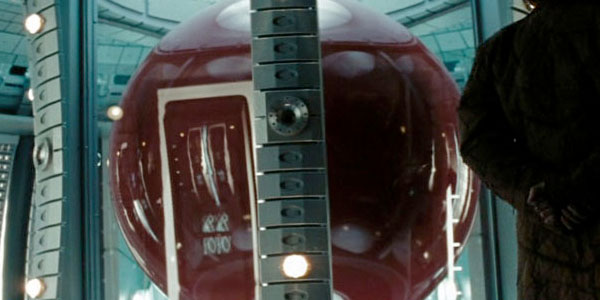
There are engineers and scientists all over this planet who attribute some part of their reasoning for joining their fields of expertise to Star Trek. They were inspired both by the technology on show and the scientific accuracy that the show aspired to. There were scientific advisors who would write lines of dialogue in the Next Generation. In the original series way back in the 60's we had communicators (precursors to mobile phones), talk of ion drives (which now exist), transporters, warp speed, shields and cloaking devices. Almost all of these either exist now or are theoretically possible. The new films though take artistic license to a whole new level. Let's look at teleporting from Earth to Quo'nos. What a load of utter pish (as Scotty would say). Quo'nos is approximately 80 light years from Earth and would take around 4 days at warp 4.5 by old school speeds. 1 light year is 9,460,528,412,464 km, transporter range at the time of the original series is about 40,000km. The "trans-warp beaming" is supposed to be about being able to transport from one ship at warp to another, not hopping across distances that would take the information making up your body 80 years to traverse. There is an excellent article on this site concerning the times when Star Trek really did break the laws of physics and everyone should read it, including the writers of the next film. From a fundamental misunderstanding of what it is to travel at warp speed to the ridiculous and unnecessarily large ball of Red Matter the new films throw science to the wind with an abandon that would make Gene Roddenberry weep if he were still alive. Internal consistency is all we ask. We already know that artistic license must be taken in the service of a good story, but when the story is as bad as that of "Into Darkness" adding fuel to the fire by taking all semblance of reality and trashing it is criminal. This reboot may be fun, but it's unlikely to inspire the next generation of scientists and engineers.

5. Uniforms, All Uniforms?

This may be an odd or minor point to bring up but the uniforms of Star Fleet in the second J.J. Abrams movie seemed completely incongruous with a hopeful and peaceful society. Gene's vision was of a people who had removed the shackles of violence from their world, who had come to terms with their more animal urges and bigotry and had overcome them. The grey, SS style uniforms and caps looked military in a way that the uniforms of the original series never did. Star Fleet was supposed to be an organisation of exploration and peace but we're expected to believe that after the attack by Nero in the first reboot movie they completely abandon their entire ideology. In the original timeline Star Fleet had ways of dealing with the Klingons, Romulans and other species and they started with diplomacy. The uniforms are an extension of the ideology. The colourful and hopeful uniforms of the 60's series were a reflection of the message of peace that was to be spread throughout the stars. This message has been lost in the reboot and that is probably the biggest shame of all. Yes, the ship uniforms retain their colours but even dress uniforms at the time of the original series were colourful and bright. What really made Star Trek the hit it became was the message of peace, without that it's just not Star Trek.

4. Khaaaaaaaaan!

The Five Year Mission hasn't taken place yet but they have managed to locate Khan's ship as though they were looking for it despite there being no records of The Botany Bay until it was accidentally found in Space Seed. Humanity is supposed to have evolved beyond mindless violence but the portrayal of Admiral Marcus is not that of a man who needs any help in being a savage. Why would he need Khan in the first place? To design weapons, so we're told. A man who is from 300 years ago, the 1990's. Seriously? The Khan Nunian Singh of the original series was a genetically enhanced Sikh, so why is he suddenly a white guy with a British accent? Not to take anything away from Benedict Cumberbatch, a fantastic actor and without doubt the best thing about "Into Darkness", but he's not Khan, nor did he need to be. There is absolutely no reason why Khan had to be brought back, the character could just as easily have been some alien being or any number of other options. The entire character of Khan is different, sitting in the brig crying like a big baby. He has gone from super-human to Superman taking out a whole troop of Klingon warriors single handedly, jumping his way off the Dreadnaught without a scratch and still able to fight Spock. He might as well have been the Terminator.

3. Bang Bang Pew Pew

The original series and films may have contained their fair share of space battles and phaser fights from time to time but nothing like what we've seen in the reboot movies. Gone are the cerebral stories examining humanity and the human condition, in their place is bang bang, pew pew. Lots of spectacle but very little substance. If we examine the story of the first J.J. Abrams film, written by Roberto Orci and Alex Kurtzman, it is about a bad guy who wants to destroy the Federation, he kills Kirk's father along with a few hundred other, changes history, destroys Vulcan and tries to destroy Earth. Kirk stops him, gets handed the Enterprise. The End. It's a fun film, easy to watch and brings a smile to the face, but it doesn't make you think. Into Darkness was about a rogue Admiral who somehow manages to build a ship 12 times the size of the Enterprise around one of the moons of Jupiter without anyone noticing because he wants to start a war with the Klingons. He wants to use Kirk to start his war and in the progress destroy one of the Federations newest ships, one that would no doubt be useful in said war. This he fails to do despite having ridiculously large guns that for no apparent reason he doesn't use first time. In fact, the story of Into Darkness doesn't really bear thinking about too deeply as the majority of it falls apart as soon as you do. A hodge podge of tropes, plot points and rehashed lines held together with the aforementioned bang bang, pew pew. Contrast this with the original films; a story about an artificial intelligence trying to understand its place in the universe, a film about revenge and loss, one of redemption and rebirth, a tale of humanity's destruction of its own planet, one of friendship and faith, then a final journey through racism, environmental damage, politics and peace-making. All with dialogue and themes far in advance of the nonsense Damon Lindelof puts on screen. More on that in the final section.

2. Earth, The Final Frontier

In the original series and movie outings we spend very little time on or saving Earth. This is about space, the final frontier, seeking out new civilisations etc etc yet the two new films have concentrated almost entirely on Earth. The first film can be forgiven for this since it was an origins story but the second film had an entire universe to explore and we got a five minute glimpse of the Klingon home-world and a colourful but pointless scene on Nabiru. While we're at it, can anyone explain why you would submerge a starship with transporter capability? Seriously, what was that about? We joined the story in the reboot before the historic Five Year Mission, but Earth is already part of a Federation and there are many alien species and planets we could have journeyed to, instead all the action in the latest film was on home soil with the exception of the two scenes noted previously and the ship/space scenes. Somewhat contrived too since we see the Enterprise knocked out of warp, or what looks more like a slip-stream in this, completely ignoring what warp drive is, on the way back from Klingon space. The ship has flown for all of a few minutes yet comes out of warp near Jupiter then five minutes later crashes into Earth's atmosphere. Ignoring Jupiter's gravity, which you can't do, at sub-light speed it would take months to get from Jupiter to Earth, never mind just falling on your own inertia. It's worth noting that the human death toll in two reboot films and the apparent lack of any empathy has been nothing short of shocking. Quite aside from the whole Vulcan home-world being destroyed at a cost of billions of lives in the first film, crew-members have been blown into space, buildings blown up, massive office buildings razed to the ground at a cost of countless thousands of lives. Gene Roddenberry would not have approved.

1. Sometimes A Feeling Is All We Humans Have To Go On

That title isn't just any old quote, it's a quote from the original series. Watch any episode of the original 60's show and quite apart from the poor effects, something recently remedied with the excellent BluRay releases, what strikes one most is the quality of the writing. Yes, there are some poorer quality episodes but throughout the series and the films we have poetry, examination of consciousness and humanity, quotes from Milton and Shakespeare, and a general sense of intelligence as well as an expectation of an intelligent audience. This has been completely lost in the most recent films. Kirk says of the Federation "They were humanitarians and statesmen, and they had a dream-- a dream that became a reality and spread throughout the stars. A dream that made Mr. Spock and I brothers" William Shatner said "those ideas came to us, I believe from great science fiction writers" and went on to speak about how the concept could carry the show. "if the viewer grabs a hold of that concept you're carried on that wave" Gene himself said he wanted to make a show that would enable you to say to children "be like Mr Spock, be like Captain Kirk, they never lie, they never cheat, they show you that perhaps there are things worth giving your life for if necessary" Star Trek was a science fiction series. They brought in science fiction writers to make stories that made people think, that explored concepts of philosophical importance. John D.F. Black, writer and associate producer, said "the primary thing as a science fiction writer, never ask your audience to believe more than one extraordinary thing." It was important to the writers and producers to write stories that were consistent internally and had something to say. The new films are overly 'complex' and ask the audience to believe far more than one extraordinary thing at a time. By doing so they don't stand up to scrutiny and as science fiction stories they fail as a result. Damon Lindelof shouldn't be allowed near a pack of crayons never mind a film script, look at the mess he made of John Spaihts' original Prometheus script. He tends to have a decent core idea that he throws a whole bunch of other ideas at hence hiding the core story. He might think that's complexity but in fact it just makes a mockery of the Star Trek franchise. These are not the same types of stories or the same type of science fiction as the idea from which they came. They are fiction fantasy films with the same character names as the Star Trek series, they have appeal to wider audience and are accessible to people who never watched an episode in their lives. They are many things to many people, but they are not Star Trek.

Contributor
Contributor

I.T. Consultant, technophile and Doctor Who fan. I like to talk about tech, take films apart and make excuses for Doctor Who's continuity errors. No other show has the power to make me feel like a big kid.