10 Wildly Underdeveloped Subplots From Batman V Superman
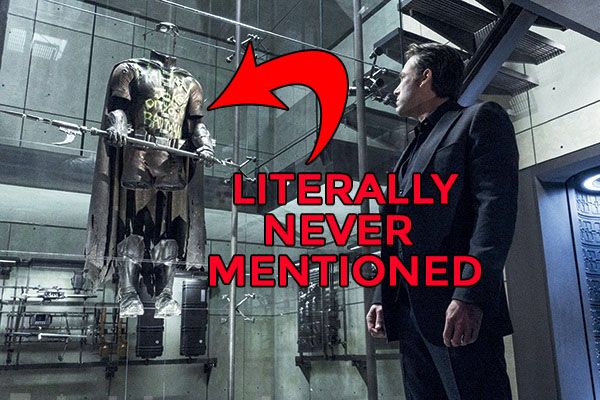
So... about Robin...
The monumental showdown between Batman and Superman has hit theatres across the globe. Critics have ravaged it, comic fans have celebrated it and Warner Bros. is reaping the rewards to the tune of $400 MILLION internationally. It is a smash hit, that looks likely to dominate the box office for weeks (barring a major negative response to the reviews) and will provide the emphasis for the Justice League films going forward.
As entertaining as it is - and it most certainly is - the movie is not without its flaws. For every awesome bit of dialogue shared by Bruce Wayne and Alfred Pennyworth, intense battle between Batman and Superman, nod to comic history and Lois Lane bathtub scene (just kidding... not really) , there is a notable subplot introduced and suddenly dropped without any explanation, further development or suitable conclusion.
It is a habit of many blockbusters and the latest DC Comics offering is no different.
While fans of The Dark Knight and Man of Steel will understandably support the film, these are 10 instances of unanswered questions and underdeveloped subplots that prevent it from entering the stratosphere of the greatest comic book-inspired films ever.
Again, the SPOILERS that follow will probably ruin your life if you don't want to know what goes down in Zack Snyder's latest flick. Do not proceed if that is the case.
10. The African Tragedy

Early in the film, Lois Lane is transported to a secluded area of Africa to meet with an unidentified warlord. Things go awry, a Daily Globe photographer is killed after being exposed as a CIA agent (this was Jimmy Olsen, by the way in case you missed it). Moments later, Callan Mulvey's character Anatoli Knyazev betrays several of the warlord's associates, kills them and rides away with his own group of assassins. Superman comes to save Lois from the aforementioned warlord and then... nothing.
Holly Hunter's Senator Finch repeatedly references the Africa incident as the reason for her senate committee meetings on Superman, but there is never an explanation as to what it is Superman actually did. A witness describes him swooping in and taking out her husband, and it sounds like there are countless others killed, but the writers never bothered to tell us what it is that he is accused of.
Sure, it could all be in vague reference to the men killed by Knyazev, but who really cares about a few low-level thugs working for an oppressive warlord?
Lane later describes to Harry Lenix's General Swanwick that what happened on the continent kept her awake at night. While it was likely unimaginably tragic, the audience is left blind to a major plot line early in the film.
Considering the fact that the events of Africa are the emphasis for the Senate hearings that would play a much bigger role later, the filmmakers did viewers a great disservice by introducing the subplot and not actually describing what happened there.
9. The Death Of Jonathan Kent And Its Effect On Clark
Remember when Jonathan Kent died in Man of Steel and was essentially glossed over in acts two and three while Martha became the moral center for Clark? Pepridge Farm remembers.
In all seriousness, the death of Superman's earth father should have been a major turning point in the development of our hero. The aftermath of his passing was never really presented in that film, but it was briefly touched upon in Dawn of Justice. The moment, one that could and should have grounded Clark's character a bit in the otherwise massive blockbuster, was a sentimental moment between father and son at a time when the hero was most in need of one.
His emotions a mess after a bombing at the Capitol building in Washington, D.C., Clark treks up an unnamed mountain where he finds his father stacking rocks. He delivers some fatherly advice and Clark admits how much he misses him and the scene is over. Just like that.
The effect Jonathan's death had on Superman is a subplot that was absolutely worth delving into, particularly given how important the death of Bruce Wayne's parents was to him. Where as Jonathan's death motivated Superman to become earth's greatest hero, the murder of the Waynes turned Bruce into a vengeful vigilante determined to ensure that no one ever endured the same thing at the hands of crime.
The dichotomy alone would have made for a more interesting and psychological look at the differences between the heroes. Instead of contrasting them throughout the film, too much time and effort was put into creating overly complicated beefs.
8. Wallace Keefe: From Victim To Suicide Bomber

What must happen to a man to turn him from a loyal office worker to a suicide bomber, a pawn in Lex Luthor's plan to be the world's most powerful man? If Dawn of Justice is any indication, one must only lose his legs and be bailed out of prison by an eccentric billionaire madman.
The Wallace Keefe character is a huge part of the first act of the film, a man permanently disabled by the destruction caused in Metropolis at the end of Man of Steel. His legs gone, his life seemingly ruined, he sets out to prove that Superman is more of a problem than a solution. How does he strike out at the alien that he holds responsible for his handicap?
He spray paints "false god" on an enormous statue of The Man of Steel. He is not violent. He is more frustrated and heartbroken over the circumstances dealt to him.
Which is why the moment in which he is essentially a suicide bomber, blowing up the Capitol building in Washington, D.C. is so startling. There is no build, no suggesting that he will take such drastic measures to make Superman pay for his handicap. He goes from zero to sixty in short order, apparently feeling as though he owes Lex Luthor his life for bailing him out of prison.
It is a major leap the writers ask the audience to take without ever giving us a reason to.
Is it possible that Luthor rigged the new and improved wheelchair that he gave Keefe without telling him? Of course, but at least pay it off by showing us.
Even then, one cannot help but feel as though the Keefe was incredibly hollow, devoid of any development, a plot device rather than a character befitting the underrated talents of Scoot McNairy.
7. Lex Luthor's Daddy Issues
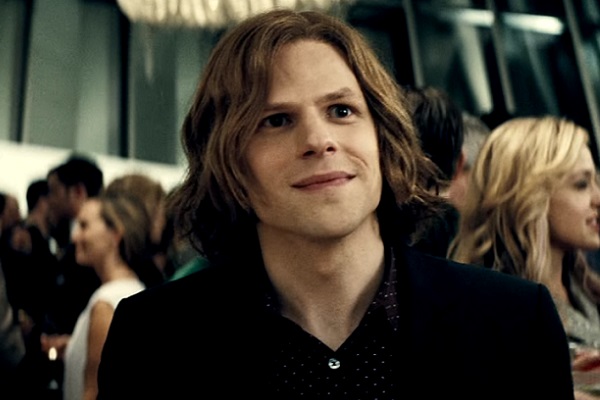
On more than one occasion throughout the two-plus-hour run time of Batman vs. Superman, Lex Luthor makes reference to a childhood of fear and terror under his father. It clearly drives him, obviously has resulted in him being the man he is when we meet him. His father and his treatment of young Alexander Luthor is yet another subplot in the film that is introduced but never followed up on, developed or paid off in any satisfying way.
At one point, Lex tells Senator Finch that he has not changed a single thing in his father's room. While part of that is undoubtedly out of respect for him, the other is almost assuredly out of fear, as if the memory of the family matriarch is somehow hanging overhead like a dark cloud.
Later, during a rant in the film's third act, he outright blames his dad for the way he turned out.
That is all well and fine, and opens up the potential for a much more interesting story, the writers ignorantly dropped it.
Thus, instead of using family drama to help tell the story of Luthor, something that would have fit so perfectly given the Wayne legacy and the closeness within the Kent family.
6. Bruce Wayne: Alcoholic
Bruce Wayne has been through a whole lot of s**t by the time the audience is introduced to him in Batman vs. Superman. He has seen loved ones die, proteges killed and the world descend into madness around him. He is a shell of the proud young hero that fans were introduced to in Christopher Nolan's Batman Begins or even the charismatic billionaire playboy portrayed by George Clooney in the god awful Batman & Robin. He is, to put it bluntly, a miserable bastard.
And justifiably so.
There are numerous scenes that suggest the demons of Wayne's past may be adversely affecting him, some of which we will get to in a bit. But there is one scene in particular that suggests the man behind the cowl is an alcoholic. After Bruce endures a night of sleep plagued by nightmares, Alfred enters his room to find an empty bottle. The accusation that the next generation of Waynes may not have a wine cellar to frequent smacks of sarcasm but also a harsh reality: this Wayne is far from perfect.
Never before had Wayne been presented as so flawed on film. Sure, Nolan's Bruce was an angry and rebellious young man initially, then went into seclusion following the death of his beloved Rachel, but that character still had a nobility about him. The Wayne in Snyder's film is bitter and chooses to befriend the bottle.
It is a fresh take on an old character and one that should have been followed up on far more than it was. Instead, it was but another subplot introduced, then dropped in the name of the bigger, the badder and the more explosive that would proceed it.
5. Alfred Pennyworth
Jeremy Irons is a phenomenal actor whose work has been appropriately awarded countless times over his acclaimed career. That was why the announcement that he would play Alfred Pennyworth in Dawn of Justice was met with open arms, a rare talent capable of following up the great Michael Caine in the role.
It should have been no surprise, then, that the Brit completely stole the show whenever he appeared on-screen. Unfortunately, his role in Bruce Wayne's crime-fighting life was so underdeveloped fans really did not fave the opportunity to grasp what it was he did, nor did they have the chance to emotionally connect with him in the way that they did Caine's rendering of the character in the Nolan trilogy.
It is clear that he is some sort of tech genius, something no other film incarnation of Pennyworth has ever been. He is Batman's eyes and ears and can even be seen correcting the microphone that disguises his voice. But how did he assume that role? How did a butler, advanced in age, become so advanced in technology? What job did he have before coming to work for the Waynes?
These are questions that the writers never bothered answering.
Other than an instance or two of him carrying a tray, the signs of him being the family butler are gone.
4. The Justice League
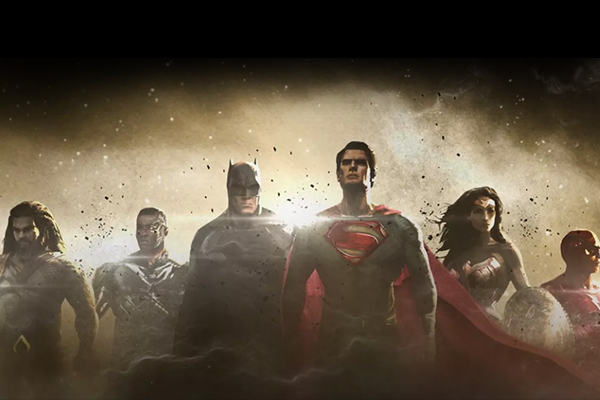
Both Bruce Wayne and Diana Prince viewed encrypted files belonging to Lex Luthor that introduced the audience to other members of The Justice League, including The Flash, Cyborg and Aquaman.
That is all well and good. In fact, introducing them in any other fashion likely would have further muddled what was, at times, an already jam-packed mess. So why did The Justice League make this list? Simple: Bruce Wayne's sudden acceptance of meta-humans.
The entire reason for Batman's war with Superman was the fact that he did not trust the meta-human, alien from another planet, to always do what was best for humanity. He thought he could manipulate, that his weapons could be used against the people he vowed to protect. The damage and destruction facing earth was the proverbial blood on his hands and the Caped Crusader was not willing to let anyone else die as a result of the unknown entity's recklessness.
So why, after so much damage had been done to the city as a result of Superman's existence and Lex Luthor's determination to destroy him, was Wayne suddenly okay with partnering with the newly discovered heroes to fight evil? "I have a feeling," he told Prince when she asked him why he was so sure they would fight. What she really should have asked is, "why the hell did we just go through all of that, then?"
It is already a stretch to suggest Wayne suddenly feels perfectly fine with partnering up with superheroes. At least develop a reason for the audience to buy into the shift in philosophies greater than, "I guess they aren't so bad."
3. Bruce Wayne's Increasing Psychosis
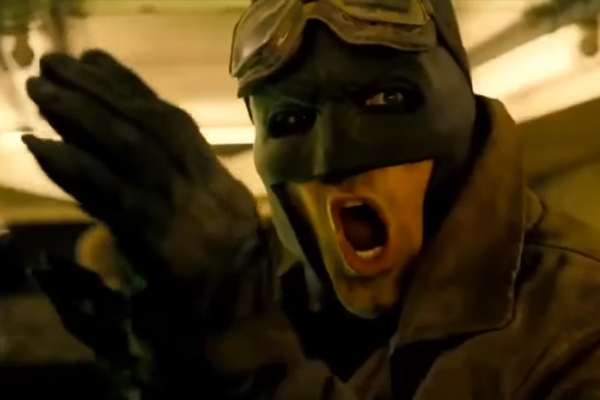
The nightmares that Bruce Wayne has throughout the film are not that of a normal person. They are the stuff of horror films and apocalyptic science-fiction. They are horrifying, puzzling and downright strange. From imagining that his mother's corpse is a demonic bat breaking out of her tomb to attack him, to attempting to purchase kryptonite from an arms dealer then resorting to killing with guns as he is confronted by the Superman Army (or whatever the hell it was), Wayne's years as a crime fighter and the toll it took on him mentally was on full display.
Some of the most memorable and startling moments of the entire film are based in Wayne's subconscious. The problem is, director Zack Snyder and the writing team abandoned it for a bombastic battle in the third act. It was never again mentioned, they had little effect on Wayne when it came time to suit up and kick !*$%, leaving this writer to wonder what the hell the point was.
What could have been a great way to further the plot was, instead, a gigantic waste of time that allowed DC and Warner Bros. to market some admittedly badass "Knightmare" Batman merchandise.
2. Lex Luthor Knows How To Create Doomsday... How?
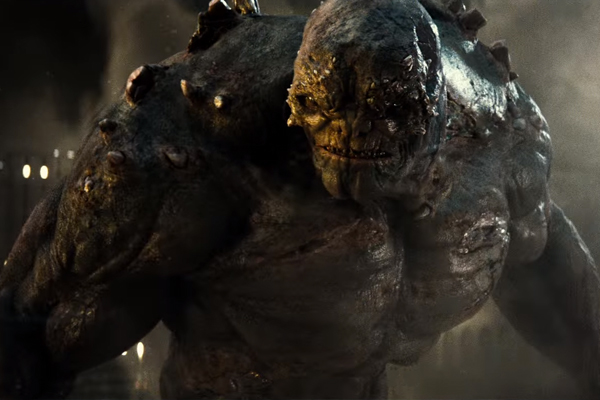
Regardless of whether or not one thinks Doomsday looks like the bastard child of a Teenage Mutant Ninja Turtle or not, there was something very cool about seeing the longtime fan-favorite villain from the DC Universe on the big screen. Unfortunately, he came about as the result of a wildly underdeveloped subplot regarding Lex Luthor and his commandeering of the ship previously captained by General Zod.
Luthor just walked onto the alien spaceship and, upon inserting a key, was asked if he wished to take command.
Crack security system there, Krypton. No wonder your planet basically killed itself.
Worse yet, at least from a developmental and logic standpoint, was the fact that Luthor just suddenly and inexplicably knew how to turn the corpse of Zod into the monstrosity that would eventually kill Superman.
We, the audience, had been introduced to the bit of news that krpytonite would cause massive cell disintegration and ultimately kill anyone from the planet. What was never discussed, at least not until Luthor just walked aboard the ship and made it his bitch, was how he knew that his blood and the ship's living (?) organisms would result in the birth of the madman's monster.
That is a major lapse of judgment on the writer's part. They asked audiences to take it at face value and while that works with a few of the underdeveloped subplots on this list, that one is unforgivable.
1. A Death In The Family
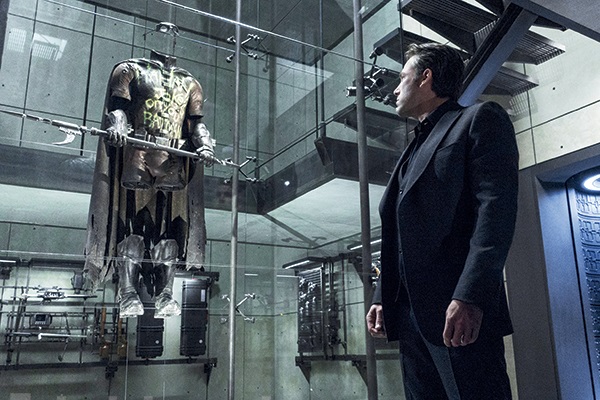
"A Death In The Family" is one of the most iconic Batman stories ever. In it, The Joker savagely beats young Jason Todd (Robin) to death in one of the most ruthless scenes in comic book history. The readers voted for the murder, making it an even bigger and emotional moment in Batman lore. In Batman v. Superman, fans are greeted with a nod to that moment, a subplot hinted at but never delivered upon.
"Ha, ha, ha! Joke's on you, Batman," the graffiti on the tattered, torn Robin costume on display in the Batcave reads. The way Bruce Wayne stares at it clearly indicates that he is haunted by the death of his protege. It suggests that it is one of the ghosts of his past that continues to affect the way he lives everyday life. It is, it seems, integral to the older, angrier, more bitter and miserable Wayne/Batman we are watching.
And even thought the press clippings proclaiming "you let your family die" that are mailed to Wayne Industries seemingly point to the disaster in Metropolis rather than the infamous killing, it is difficult not to associate them with Wayne's past failings as a leader of the Batman family.
A major tease when the first photos were released to the masses, it settles for being an underdeveloped subplot and a fan-pleasing Easter egg more than anything else.
Which other subplots do you wish were given more time in Batman V Superman? Share your thoughts below in the comments thread.