10 Worst Directing Decisions In Comic Book Movies

Those facepalm-inducing moments that someone really should have gotten the sack for.
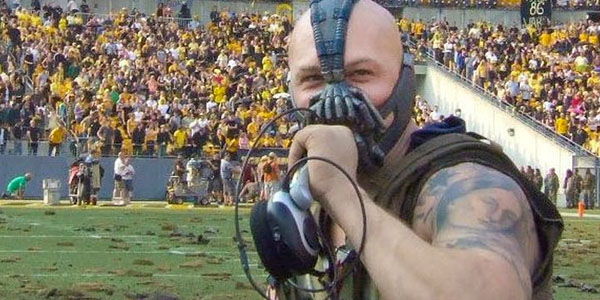
We all have them: those moments in movies that just epitomise exactly why the film isn't working, or which - worse still - ruin a film that was doing perfectly fine on its own before the talking animal sidekick got introduced or the troubled lead's kindly parents got murdered by the British assassin. Some audiences can let them go, but when it comes to films based on comics properties the fans tend to be far more scrutinising and critical. It's the kind of moment that just screams to the audience, "I don't understand these characters/this story/I just want to make you tear your hair out and yell while I bathe in money!" The thing is that the viewers know exactly who to blame and it is invariably the person who gets their name first at the end credits. After all, every single brush stroke that ends up on screen has been given the green light by the director (minus some occasional studio meddling) - which is why most are so happy to add their name to the product. Blue spandex or red? Crippled orphan buddy or trusty, optimistic dog? A supervillain who fires green or blue flames from his nose? All the kind of questions the director of a comic movie gets faced with on a daily basis on his or her set. So now that you know exactly who to blame, let's take a look at 10 of the most egregious crimes committed by comic book filmmakers in the name of their art...

10. The Amazing Spider-Man: Making Peter Parker A Selfish Douchebag

One of the best things about Spider-Man is that he's always trying to do the right thing, no matter the cost to himself. It's a lesson he learned the hard way when he allowed that thief to get away and subsequently became responsible for Ben Parker's death. It's stayed with him throughout all he does, in the comics, the cartoon series and Sam Raimi's movie trilogy. Basically, he's not an irredeemably selfish d*ck. Except that in the first film of Sony's reboot of the franchise, the Peter Parker that Andrew Garfield plays is not one that fans of Spider-Man can really recognise. Everything he does is motivated by self-interest, even after Spidey's humbled by his uncle's death. He mopes around, being a sullen teenager who does whatever he likes and barely considers those around him unless they're Emma Stone. Director Marc Webb chose to make his Peter Parker just as self-involved as any other privileged teenager. Two things illustrate this better than anything else. The first is during the 'climactic' fight between Spidey and the Lizard, when Parker chooses to save the villain as a giant crane falls from the building towards the street below. Saving the dozens, possibly hundreds of police and bystanders that we know are down there isn't that important, is it? But doing right by that mad scientist who caused all the mess is just fine. The other instance comes at the very end of the film, when Stone's Gwen Stacy is grieving over her recently-deceased father. He specifically tells Peter to stay away from his daughter to keep her out of danger, which he promises he will. But he instantly breaks it, putting his horny teenage desires above honour, propriety and sticking to words given to dead men. He's a real class act, that Peter Parker. As such, he's no Spider-Man at all.

9. Hulk: Panel Splitscreens

Despite the ambition and strangeness of Ang Lee's attempt at successfully bringing the Jolly Green Giant to the big screen, it never really works in any conventional sense of the word. Many put that down to stilted dialogue or wooden performances, or simply the fact that there just wasn't quite enough HULK SMASH-ing in the film. However, the sorest thumb is probably Lee's decision to shoot and edit Hulk in splitscreens that are made to resemble comic book panels, which doesn't work for a plethora of reasons. Chief among them being that the audience doesn't know where to look or what's important at any given moment. Despite both being visual mediums, movies and comic books are wildly different art forms. There are no time restrictions placed on how long a comic should take to read, as opposed to a film's objective and unchanging running time. As a result, viewers of Hulk are missing half of what Lee's trying to show them when looking at one panel instead of another. It was an admirable but foolish attempt as comics are designed to be read a panel at a time, not as a whole. While many comics creators have done interesting work with panel layouts that make the page itself part of the story, the cinema screen is too rigid a canvas to get anywhere close to replicating the experience of reading a comic.

8. Man Of Steel: All Steel, No Substance
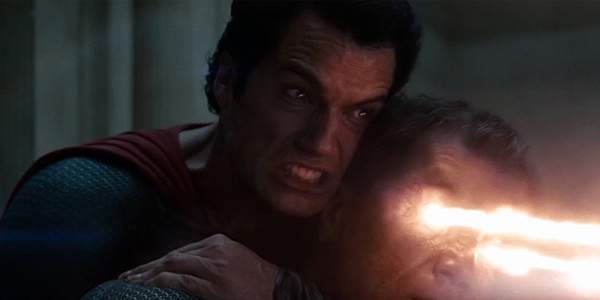
The charges laid at Zack Snyder's feet are too numerous and well-documented to name them all here, but it's always worth throwing in one or two for good measure. Warner Bros' recent Superman reboot helmed by the 300 director went great guns at the box office but floundered critically with many fans of the character accusing Snyder's Superman of having nothing in common with the 'real' Kal-El. That might well be true - as the furore over Supes' murder of General Zod at the end of the film can attest to - but the thing is that we're never actually able to get into the character's head for long enough to know. Synder is primarily concerned with prettifying destruction and his work is the epitome of style over substance. When we see moments from Clark Kent's childhood that might shine a light on his personality, all we're really given are sepia-toned images meant to fill us with nostalgia and echo the iconography of Superman that we're all well aware of. It lends the film an empty, airless feel that's about as far from Clark Kent's learned humanity as you can get.

7. Watchmen: Too Close For Comfort

Why waste time on other directors when you can rag on Zack Snyder all day? His Watchmen certainly isn't the greatest of his cinematic crimes, and there are plenty of audiences who'd consider it a fine film adaptation of Alan Moore and Dave Gibbon's superlative comic, and a very close one to boot. But therein lies the problem. Snyder's film glues far too closely to the plot and even the look of Watchmen's pages, recreating iconic image after iconic image in much the same way he does in Man of Steel. That may lend the film some associative thrill and a sheen of authenticity but also it begs the question: if all the filmmaker's doing is putting exactly what's in the comic onscreen, then what's the point exactly? To his credit, Snyder does add his own ideas into the mix, albeit sparingly, and his time-hopping opening credits sequence is a rightly celebrated piece of the film. Unfortunately this just makes the director's slavish devotion to his source all the more frustrating. He could have made a much more interesting and surprising film if he'd just let Watchmen go. Alan Moore did.

6. Spider-Man 3: Going 'Dark'

Sam Raimi's first two Spider-Man films (along with the X-Men movies) really set the bar for the past fifteen years of comic features, proving that complex characterisation, sympathetic villains and a huge sense of fun can all have places in superhero movies. Which makes it all the more upsetting that his Spider-Man 3 was such a mess. It's by no means a complete disaster of a film, but the studio meddling and significant shift in tone to the previous two films meant that people were alienated from a franchise they had previously become comfortable with. We could list each and every bad decision made in the making of Spidey 3, but there's one that stands greasy head and black, oily shoulders above the rest, and that's Peter Parker's dark side. The emo haircut is bad enough on its own, but Raimi's decision to overplay the douchebag effect that the Venom symbiote has on Spidey was one of his poorest. And the table-dancing, audience-winking sequence was almost certainly the final nail in the coffin for the Raimi/Maguire iteration of Spider-Man movies.

5. Thor: The Dark World: Mixing Tones
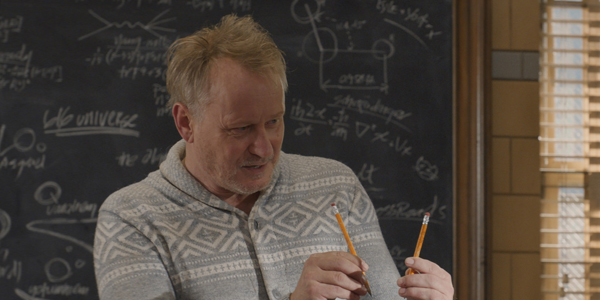
The first Thor was a pseudo-Shakespearean romp that knew exactly how silly it was and delighted in that fact. Consider Chris Hemsworth's Norse god demanding horses in pet stores in between flattening a small town in New Mexico and hamming it up with Anthony Hopkins in Asgard worked to great success. Unfortunately, the sequel didn't do as great a job at marrying the silliness of the first film to the darker plot and tone of The Dark World and Christopher Ecclestone's dark elf Malekith was the most obvious symptom of the film's main problem. Veteran Game of Thrones director Alan Taylor attempted to inject the franchise with far more seriousness and darkness than it could really take and Malekith's one-note characterisation (EVIL) didn't really resonate with the periods of the film involving slapstick comedy, Loki being an incorrigible cad and Kat Dennings making out with an intern. Despite some refreshing action sequences like the climactic portal-jumping fight and Taylor's eye for great composition, the film just doesn't hang together as a single piece the way that Thor does.

4. Batman & Robin: Bat-Nipples!

There are a great deal of things wrong with Joel Schumacher's second Batman feature, and it might seem hard to narrow down the list to the absolute worst offences. Hell, just trying to single out the worst piece of casting is a challenge all by itself. Well, until you remember that the director made a conscious choice to allow nipples to be placed on Batman's suit. It's not that the nipples actually make Batman & Robin a bad film (the campy acting, hyper-neon colour palette and godawful writing do a fine enough job of that on their own), but it illustrates just how far off the mark Schumacher was in trying to recapture the spirit of the tongue-in-cheek comic adventures of the Adam West TV show for a modern audience who really couldn't connect with it. Schumacher wasn't making a film he was passionate toward about a character he had affection for. He was making a film he thought people wanted to see about a character that was always popular. It wouldn't be until 2005's Batman Begins before fans got a movie that depicted the kind of serious Bats that people were champing at the bit for. And that was likely both because and in spite of the supreme silliness that is Batman & Robin.

3. X-Men: The Last Stand: Kill, Kill, Kill

This issue may have just recently been rectified by the timeline-changing events of X-Men: Days of Future Past, but the fact that it took eight years, several other movies hobbled by continuity problems and a whole movie to resolve it says a great deal about what a huge mistake killing off so many characters in the same movie was in the first place. Now, Brett Ratner isn't the kind to give a flying toss about what fans think of his movies, and that certainly shows in his callous disregard of the first two X-Men films directed by Bryan Singer. Charles Xavier and Jean Grey were two of the most crucial elements of those films, and although Jean did in all fairness cop it at the end of X2, it seems trite to repeat the trick in the very next movie. Not to mention Rogue, whose powers are unceremoniously taken from her and her story all but disregarded in her half-hearted subplot. Thankfully, as mentioned above, all of these deaths have now been kind of resolved in that they never actually happened in the new continuity offered by DoFP. That might be a head-scratcher to some but a cause for celebration for others. Hooray!

2. Fantastic Four: Rise Of The Silver Surfer - Galactus Is A Cloud

If most of the films populating this list seem like easy targets, that's probably because they are, but some films are just unfortunate enough to have quite a lot going for them only to have that goodwill ruined by a terrible decision thrown in that turns the whole movie into a mockery. Now, nobody's claiming that either of the Fantastic Four movies are works of art or even particularly good films, but Rise of the Silver Surfer definitely edges its predecessor out for a number of reasons. Chief among them being the cool-as-hell Surfer himself and a genuinely world-threatening plot that amps the peril way up from last time. Alas, even those elements couldn't save the film from remaining as utterly predictable as Fantastic Four or from having the least climactic climax in blockbuster history. That's thanks to the decision to turn Galactus - one of the most iconic and recognisable villains in comic history - into a vague cloud-shaped object that isn't so much fought off as puffed away. (See also: Green Lantern.) With a villain as patently without personality and intangible as RotSS', it was small wonder that audiences left cinemas feeling disappointed and like they'd been cheated in some way. Hopefully Josh Trank's upcoming reboot of the franchise will remedy this problem by actually having a supervillain with a face and/or body for the characters to face off against.

1. The Dark Knight Rises: Making Bane Unintelligible
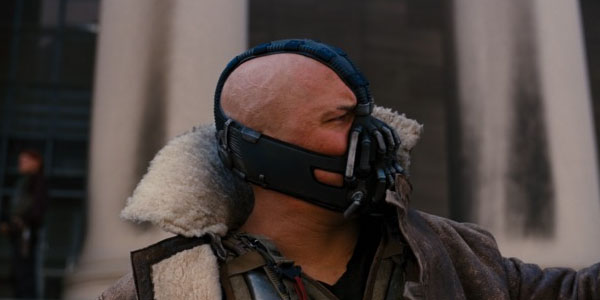
Way back in 2011, a young, would-be pop culture writer and some friends attended an IMAX screening of Christopher Nolan's latest opus, The Dark Knight Rises, and boy was he excited. By the spectacle, the mystery of the plot and the thrill of seeing a tiny fraction of a film that would prove to be almost 30 times the length of that sequence. But not by the dialogue. Why not? Because he couldn't make out a word of it. You couldn't tell from watching the final cut of TDKR, but that initial screening seemed to be a proving ground for just how intelligible Bane's voice would be to the general public. The answer: not even a little bit. Everyone leaving the screening was asked to fill out a survey regarding the minutes they'd seen. It'd be a safe bet that the reaction that Warner Bros. got from those select screenings made them tone down the gruff Sean Connery impersonation emanating from the cowcatcher on Tom Hardy's face. But see, the thing is...they didn't go nearly far enough. Perhaps Nolan was attempting to make a statement about the separation of evil from the rest of society, or maybe even parodying his own movies by giving another character an even sillier voice than Christian Bale's Batman growl. But all he ended up with was a character audiences had to strain to understand properly lest they had to grab the DVD remote to rewind. And that's about as irritating a crime as you can commit in a film. But what do you think? Are these some of the worst crimes in comic book cinema, or can you name some bigger offenders? Or are we totally off base and these are actually the bravest, boldest artistic decisions since the creation of film? Let us know in the comments thread below.

Contributor

Film history obsessive, New Hollywood fetishist and comics evangelist.