11 Best Things The MCU Did Differently To The Comics
How to make Civil War genuinely interesting? Add some depth.

Since being introduced in 2008, the Marvel Cinematic Universe (or MCU for short) has been adapting storylines from the pages of Marvel Comics, some famous, others not so much. Either way, like most adaptations things have to change, and while it's fair to say that not every change has worked for the better, some undoubtedly have - so much so that they've even gone on to influence the comics themselves.
With alterations to key storylines, costumes, and even characters themselves, it's fair to say that, while the MCU owes a great debt to Marvel Comics, it has also managed to build a lore all of its own, taking into account dozens of different interpretations to impart a definitive image of the House of Ideas in a way no other adaptation really has.
Its achievements go without saying, really, and though nothing can truly compare with the source material itself, it's worth pointing out those occasions where the MCU managed to genuinely innovate on a premise, character, or something else entirely.
They may have gone unnoticed at first, but when you look back on over ten years worth of cinematic history, it’s easy to find examples of where the MCU changed comics for the better.
11. Making The Skrulls Heroes - Captain Marvel

Captain Marvel’s biggest twist wasn’t that Goose clawed out Nick Fury’s eye, or even that Carol Danvers Air Force callsign inspired the Avengers. No, it actually lies in the film’s depiction of the Skrulls, who are about as far away as what fans could’ve expected, given how they’ve been depicted in the comics.
The Skrulls were introduced in Fantastic Four #2 all the way back in 1962, and were created by the formidable duo of Stan Lee and Jack Kirby. They were originally intended to be something of a Cold War analogue, a metaphor for Soviet subversion, and they were about as far as you could possibly get from the depiction seen in Captain Marvel.
Talos in particular is considered quite the villain in the comics, and though fans may bemoan the possibility of there no longer being a Secret Invasion to look forward to, Captain Marvel’s treatment of the Skrulls as victims of Kree imperialism was a welcome move.
To begin with, the Kree-Skrull War was rooted in the Cold War milieu of the early seventies. Both species were basically intergalactic versions of the USA and USSR, while Earth was caught in the middle. It was a great way of forcing readers to reconsider the various proxy conflicts taking place at the time, but in 2019, something else was needed.
The decision to make the Skulls a diaspora pursued by a tyrannical opponent works perfectly, as it mirrors the very real and very serious crises currently occurring in the 21st Century. Add to that Ben Mendehlson’s charming performance as the charismatic Talos, and you have all the justification necessary for making the Skrulls heroes, rather than villains.
10. Tony Stark's Entire Character - Iron Man

While the basic story of Iron Man was translated beat for beat from the page to the screen (war-mongering industrialist travels to conflict zone, is maimed by own weaponry, becomes superhero), there are a lot of differences between the Iron Man of the comics and that of the movies. Well, that used to be the case at least, as Robert Downey Jr.'s performance ended up influencing the comics Tony to such a degree that the two are now practically indistinguishable.
Yes, both versions of Tony were uniquely arrogant before their warzone encounter, but there's a compromising wit to RDJ's performance that sets - or at least used to set - them apart. That element of vulnerability was scarcely there before the film, and though storylines like Demon in a Bottle aimed to show the human side of the character, the Iron Man of the comics remained serious and - dare we say it - almost one-dimensional.
Of course it's worth noting an arc of redemption was already there with the character, one that drew real life parallels to the one Downey himself faced prior to his acting comeback, but it was his performance that truly made Iron Man the compelling figure he is today.
9. Changing The Hulk's Exile - Thor: Ragnarok

Planet Hulk's fingerprints are all over Thor: Ragnarok, but only the best bits.
Revolving around the same basic premise of the Hulk leaving Earth, but for a different reason, the Planet Hulk comic saw the jolly-green-giant fight as a gladiator in a far-flung alien world. Unfortunately for Marvel, at the time, it was decided that Hulk leave the planet and be banished by his superhero cohorts; he's literally expelled from Earth because his former teammates grow sick of his antics.
Ragnarok's exile is more self-imposed this time, and while it's no less tragic, it's certainly more enjoyable than a storyline where most of Marvel's heroes elected to boot the Hulk off-world. There's also the added bonus of the arc with the Grandmaster, the Revengers, and all the rest, which blends together Planet Hulk's interesting premise with the sense of wonder that pervaded Jack Kirby's original Thor comics.
8. Steve And Bucky's Friendship - Captain America: The First Avenger
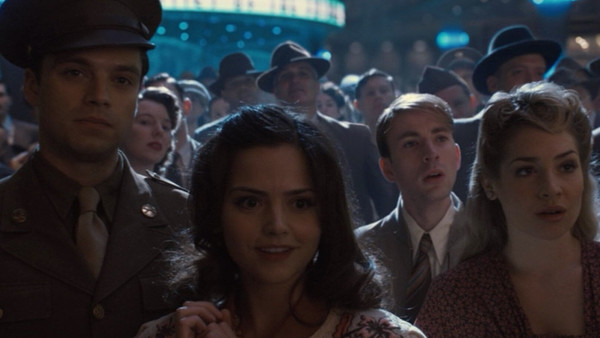
Of all the things the MCU did differently to the comics, the portrayal of Bucky Barnes is right up there with the very best.
In the comics, James Buchanan Barnes is only a teenager when the war breaks out. He encounters a still-skinny Steve Rogers during boot-camp, where he acts as a mascot of sorts, before discovering that he and Captain America are one and the same. Wanting to join the fight, 'Bucky' undergoes an extensive training regimen until he eventually accompanies the Captain to the European Theatre, at which point he follows in Steve's footsteps, until they're separated and... well, the Soviets find him.
The rest, as they say, is history. Bucky becomes the Winter Soldier, and it's this particular incarnation (Ed Brubaker and Steve Epting's) that the Captain America films drew their inspiration from.
In any case, the decision to make Bucky a capable soldier, and the more confident of the pair, is one of The First Avenger's best legacies. It makes their friendship more believable, and is a major step-up from the Robin-esque caricature that followed Steve around the fields of France in the comics.
7. The Mandarin - Iron Man 3

It shouldn't have to be repeated at this stage, but the original version of the Mandarin was a racist, Fu Manchu-esque caricature who had no chance of appearing onscreen - at least not in his original incarnation. The fact that people not only expected, but actively demanded that he appear in Iron Man 3, was just absurd - he just shouldn't exist.
And to that end, it's even more frustrating that Iron Man 3 was railroaded by fans for divesting from this interpretation. It's easily one of the best films of Phase 2, and one of the best MCU films on the whole actually, and while the Mandarin twist was originally played for laughs, it makes much more sense than the version seen in the comics.
Subsequent changes have been made to the Mandarin identity since Iron Man 3, with it having been revealed that Aldrich Killian had acted as one of several different 'Mandarins' throughout history, but it's doubtful Marvel Studios will ever approach the original version seen in the comics.
6. Ultron's Creation - Avengers: Age Of Ultron

A few eyebrows were raised when it first emerged that Tony Stark and Bruce Banner - not Hank Pym - would create Ultron in the MCU, seeing as how Ant-Man was heading to theatres just a few months after the film anyway. However, given how the origin of the being plays out in the comics, it's easy to see why Marvel opted for a change.
For starters, neither Hank Pym nor Janet van Dyne were established in the MCU by that point, whereas both Bruce and Tony were already two of the most popular Avengers in the franchise. There was also the added wrinkle of both scientists dealing with the fallout of the Chitauri Invasion, and while Banner himself is initially reluctant to manufacture the Ultron AI, both he and Stark are equally culpable for its creation.
Say what you will about the villain's portrayal, but having Banner and Stark be the ones to create it made for a much more compelling story, and one that was much easier to stomach, as opposed to seeing Pym gradually lose his mind and turn into an abusive old cad as his robot terrorised his teammates.
5. The Sokovia Accords - Captain America: Civil War

Civil War (the comic) is considered one of the biggest comics of last decade, but just because it was big doesn't mean it was good.
The story, penned by Mark Millar and drawn by the always-superb Steve McNiven, was written as a critique of post-9/11 US politics, particularly the policies of the Bush Administration and the enforcement of the Patriot Act. Given that Marvel has always been about 'reflecting the world outside our windows', Civil War looked as though it could genuinely make for compelling reading.
Unfortunately, by the time Millar wrapped things up 2007, the story was anything but. The message was ham-fisted, it was unnecessarily cruel, and the characterisations of Iron Man and Captain America in particular felt like a far cry from their usual selves. This is why the actual Civil War film is so impressive, because it takes the bungled concept of the comic and does something genuinely interesting with it, providing an actual voice to both Steve and Tony and playing the conflict out in a much more captivating manner.
In this case, it's not the switch from the Superhuman Registration Act to the Sokovia Accords that proves to be the best change, but rather the depiction of the story's two chief protagonists. They both have their own, completely understandable motivations, and it's what makes Civil War (the movie) the success it is.
4. The Vulture - Spider-Man: Homecoming

While there's certainly nothing wrong with the comic book version of the Vulture - a decrepit old man who preys on the young and innocent - there's a lot to be said about the tradition of sympathetic Spider-Man villains, which is what Homecoming's version of the character plays into.
Both versions are equally compelling in their own unique way, but Keaton's performance - combined with the added backstory of a life spent exploited by society's elite - just takes it up a whole notch altogether. It's what cemented Vulture as a top-tier supervillain in the public eye, joining the likes of Killmonger and Loki as the franchise's most complex antagonists, and it's highly doubtful that he would've done the same had Marvel opted for the original comic book interpretation.
With further appearances set to come given Homecoming's ending, it's still possible that Keaton's Vulture could get even better. That's really exciting, and while there's room for both Vultures out there, if one had to stay, it has to be Keaton's.
3. Making Nakia A Hero - Black Panther

For all the amazing things Christopher Priest did on Black Panther, the characterisation of Nakia - a member of the Dora Milaje in the comics - was not one of them. She starts out as one of T'Challa's bodyguards hoping to eventually wed him, and when her advances are eventually spurned, things take a turn for the worse.
Nakia eventually rebrands as the villain Malice, who works alongside Killmonger to conspire against the Wakandan government. To say that such an arc would've wasted the talents of Lupita N'yong'o would be putting it lightly, and by the time Black Panther released in 2016, audiences were relieved to find that not only had the Dora Milaje changed, but so too had Nakia.
The ceremonial wife angle was dropped, but the Milaje continued as Wakanda's elite Special Forces. Nakia fought as a spy, while figures like Okoye headlined the military unit.
It just works better, and with calls for N'yong'o's Nakia to get her own spin off, it's clear that Marvel's fans agreed.
2. Nearly Everything About The Guardians Films - Guardians Of The Galaxy

James Gunn was to the Guardians of the Galaxy what RDJ is to Iron Man - a pivotal influence that impacted not only Marvel's films, but their comics too.
Prior to 2014, to say that the Guardians were an obscure property would be the understatement of the century. They'd floated in and out of mainstream Marvel continuity for several decades, and while their 2008 comics reboot curtesy of Dan Abnett and Andy Lanning was important, their respective characterisations were still a far cry from the ones audiences became accustomed to in Gunn's films.
While Rocket Raccoon mostly stayed the same, as did Gamora and Groot, Star-Lord and Drax underwent several key changes. Peter Quill now has a tremendous arc revolving around his mother and the classics of the sixties and seventies, and Bautista's Drax boasts an oblivious quality that makes for one of the team's most hilarious dynamics.
Then there's Yondu. In the comics, Yondu was an OG Guardian and rocked a design that differed drastically to his onscreen counterpart, played to great effect by Michael Rooker. Throw in the father-son dynamic between him and Quill, as well as that of Kurt Russell's Ego (who was literally a living planet in the comics), and it becomes clear as day why Guardians owes so much of its success to Gunn, Nicole Perlman, and the cast themselves.
1. Thanos' Motivations - Avengers: Infinity War

While Thanos himself is a verifiable tyrant, war-criminal and out and out awful being, one thing there's no denying is that writers Christopher Markus and Stephen McFeely made the right decision to drop 'Death' from his backstory.
In the original Infinity Gauntlet storyline, Thanos embarks on his mad quest to end half the life in the universe in a vein attempt to woo the living embodiment of Death. The act of wiping out half of existence is equally cruel - there's no denying that - but knowing that it was done to impress a spirit just makes Thanos feel less intimidating.
The onscreen Thanos, on the other hand, boasts a fanaticism that - when taken alongside his power - makes him genuinely terrifying. His dogmatic streak bears the echoes of real-life tyrants, and rooting the Mad Titan in that context makes him twice as scary as his comic book counterpart.