11 Distressed Movie Characters Who Couldn't Kill Themselves To End Their Pain

When suicide isn't an option.
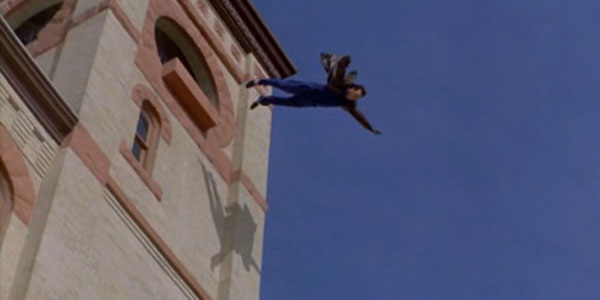
Somewhat curiously, throughout film history there's a surprisingly virile thread of bungled suicide as comedy, whether it's played for outright laughs, as in Bachelor Party and The Man In The Iron Mask (with added grotesque male nudity,) or for touching pathos, as in The Full Monty and Little Miss Sunshine. Apparently the utter despair of central characters is appropriate content to inspire a few disposable chuckles. But what about the tragic examples when characters are driven to suicide, and find themselves impotently unable to carry out their singular, morbid intention. They aren't convinced to change their minds, per se, (not in the majority of cases, anyway) or overcome by the necessary moral arc of their narrative (as in the case of Travis Bickle,) instead they are the grim personification of Tantalus, compelled by desire, but restrained by tragic circumstance. In the immortal words of the almost immortal T-1000 at the climax of Terminator 2, this tragic band of characters cannot "self-terminate," regardless of how much they want to. They are the damned, doomed to live half lives, and unable to bring it all to an end thanks to circumstances, logistics or the unhelpful, unrequested assistance of Good Samaritans.

Honourable Mention

Hancock
Though it never ended up on screens, the original version of post-superhero comedy of two halves Hancock was far darker than the horribly sanitised final version we got to see that took a wonderfully engaging concept and pushed it through a pulveriser until very little worked by the end. As part of the original ending, Hancock can't get over his obsession with Mary (Charlize Theron,) who wasn't intended to be his super-beloved originally - and just a random hottie he encounters, kidnaps and plans to rape. Cheerful. The darker tone would have been much better, but the studios clearly thought Will Smith and rape didn't go together so well, and the second half of the film was toned down, including the removal of Hancock's attempted suicide scene, when he is overcome by self-loathing and decides to end it all, only to discover that his immortality also covers suicide attempts.

11. David Kessler - An American Werewolf In London
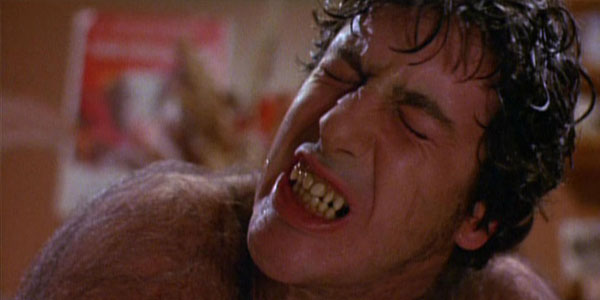
In John Landis' classic horror, lead character, and hairy killer David Kessler (David Naughton) is told not once, but three times to kill himself to end his potential misery, as well as removing himself as a threat. He is firstly instructed to do so by the reanimated corpse of his unfortunate friend Jack, who attempts to plead with him to stop him transforming, and killing others, and thus creating more of the undead ghosts that will haunt him (despite the fact that Jack isn't actually killed by David.) David ultimately ignores the simple instruction to off himself, and instead attempts to uncover the conspiracy that covered up the attacks around the Slaughtered Lamb, which leads him nowhere, but does score him a relationship with the probably unhinged nurse who cared for him in hospital (who becomes attached way too quickly.) Later, as David enjoys his new girlfriend's London apartment, Jack appear again, even more decayed than before to warn him that he will turn the following day and telling him he must kill himself. Again, he ignores the plea and becomes the werewolf at the full moon, killing six Londoners and having a sleep over at London zoo with the wolves, and then comes to his senses, and realises, after more prompting from Jack and his new victims, in a porno theatre, naturally, that he should probably kill himself, not only for his own sake, but also for the safety of London. But David is denied the sweet release of suicide, as night falls while he's being coerced into suicide and he transforms again and goes on another rampage, despite his rampant guilt. There's no doubt that David - the good guy that he is - would have killed himself to prevent further suffering, but he was duped by sexy films into thinking he still had time to do so.

10. Louis De Pointe Du Lac - Interview With The Vampire

Louis Gif Brad Pitt's mooning vampire, who decides to tell the world about the existence of his world is a portrait of suicidal urges: he first lives with a death wish when his wife and child are killed, but ultimately requests life when Lestat (Tom Cruise) bites him and offers death. At that stage it is fear that keeps him alive, but later, when he attempts to take his own life after killing his servant Yvette, he is foiled by Lestat's successful rescue attempt. Quite why he never attempts to kill himself later remains unclear, though he seems more intrigued by the nature of vampires, and ultimately resolved that he is bound by his fate to be the "very spirit of preternatural flesh; detached, unchangeable, empty." Interview With The Vampire might be Brad Pitt's movie, but all of the scene-stealing comes from the darkly charismatic Lestat, who should have been given his own movie by now (and who probably would have if Warner Bros hadn't been overcome by stress, the poor dears.) Cruise's visceral performance as the vampire is deeply affecting, both when he is in the ascendancy and when he is suffering the half-life given to him by Claudia's attempt to kill him for changing her. Even when he loses his early swagger and lives in shadows for hundreds of years, he remains an entirely charming character, though he too is marked by the same inability to kill himself during his despair as his former charge.

9. Martin Riggs - Lethal Weapon

Lethal Weapon is obsessed with the idea of death: Roger Murtaugh (Danny Glover) is eaten up by the idea of growing old and the impending, ominous icy grip of the reaper (or more specifically, being redundant when he can no longer do his job, which is presented as the same thing in the film's logic,) the central case is a particularly grisly murder/suicide, and most importantly the lethal weapon of the title is also suicidal. Sergeant Martin Riggs (Mel Gibson) is the epitome of the loose cannon, driven by an unquenchable thirst to close the case, and undeterred by trivial obstacles like being "killed" or horribly tortured by Gary Busey. But his story is defined by the shadow of his wife's death: he is reckless beyond redemption because he has nothing to live for, and he is lethal precisely because he combines his special forces training with a complete lack of a self-preservation mechanism. And the film takes a heart-wrenching turn at the climax when Riggs and Murtaugh close the case and foil the drug/porn ring and Riggs presents his partner with a token of his appreciation, the bullet he had saved for his own suicide, which he was never able to go through with. Riggs' behaviour is given even more specific contextual basis, and it completely changes how we view his behaviour, adding a touching note of tragedy that he cannot give himself the release he needs to join his wife in death.

8. Tolian Soran - Star Trek Generations
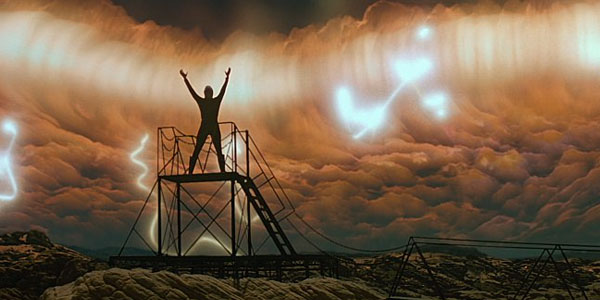
Ironically for a man whose only fear is death itself, he spends most of Star Trek Generations on what amounts to a death wish to get back into the Nexus, which for all intents and purposes is an utopian after-life. Despite the spectacular failings of the property's flirtations with spirituality in Star Trek V: The Final Frontier, Generations again plum the same mine (albeit in a less obvious way) to explore notions of death and the afterlife. The worst revelation for McDowell is that he does get his wish twice - first before he is rescued by the Enterprise B, and then when his plan actually does come off and he is transported back into the Nexus, along with Picard who had been doing his best impression of Winnie The Pooh stuck in the rabbit hole, he is screwed by a technicality that allows Picard to reverse the Nexus rules, and go back in time. All Soran wants is to "die" and enter the Nexus and taste his own personal Heaven again, alongside his killed family, and he is robbed of his suicide by Picard and Kirk wanting to save everyone on Veridian III and the Enterprise D from being burned up in a giant interstellar fireball. Spoil sports.

7. Hugh Jackman - The Wolverine

Throughout The Wolverine, Hugh Jackman's clawed weapon is tormented by the image of Jean Grey, who he was forced to kill at the end of X-Men: The Last Stand when she let herself go to the dark side, and became the Dark Phoenix - despite the fact that there was very little left of the Grey Logan knew and loved by the time she bought the big one. Still, guilt is a cruel mistress, and it is obvious that Wolverine's torment is enough for him to crave death - which is particularly obvious when he is tempted by Yashida's offer to take his healing factor away from him. Though he refuses, Logan sees his immortality as a curse, particularly as he wears the scars of his past so profoundly (or at least those he can remember) and there is certainly a note of tragedy about his being trapped in perpetual life as others around him die. Logan never actually tries to kill himself, but the implication is that he seeks death as a release, but recognises that it would be impossible, given his powers.

6. Ripley - Alien 3

Though the bald-headed heroine of the Alien franchise effectively chooses death on her own terms to a more bloody, but inevitable death thanks to the alien queen about to burst out of her, her death is undoubtedly a glorious suicide. By the time Alien 3 ends, Ripley has been through the grinder on multiple occasions: she has seen her original crew cut to ribbons, including genuine friends, and was then forced to watch a band of military hulks meet the same fate, before her happy ending escape with Newt and Hicks is smushed into tiny pieces and she ends up on a planet of stark raving lunatics with a penchant for sexual violence. So when she ultimately embraces her fate and throws herself, and her alien queen embryo into furnace, the odd contented look on her face isn't just her vengeance over the species attempting to use her as an egg-casing - it's also the triumphant release of death. But then, thanks to the miracles of cloning, and the idiocy of Hollywood, Ripley was dragged back from her grave resting place and cloned from a blood sample that noone saw anyone take from her in Alien 3, that somehow also included the alien queen's DNA, all against the backdrop of scientists around the universe banging their heads off hard surfaces. Not even after all of her ordeals is Ripley allowed to die, which is clearly all she wants as she plummets towards her death in Alien 3, and instead she was brought back to smear mud all over the Alien franchise.

5. David Aames - Vanilla Sky

Vanilla Sky isn't exactly the most cheerful of movies, given that it deals with bodily obsessions, suicide and a sci-fi utopia that (surprise, surprise) doesn't turn out to be as perfect as the label says. David Aames (Tom Cruise) effectively kills himself twice in the movie, first, when he took an overdose after having a drunken fight with Sofia, and then at the end of the film when he decides to end his altered reality and open his eyes. In the first instance, he is so distraught at the idea of not getting to love Sofia that he loses hope and attempts to end it all, but ends up unknowingly trapped in his Extended Life dream that quickly becomes a nightmare. Later, when his nightmare turns even worse, and it is revealed that he's in the Extended Life programme, he chooses to take the leap of faith and wake up - effectively killing himself in the dream world in order to return to reality, where he will be faced with the numbing revelation that everyone he loved is gone, including Sofia - which is exactly the context that lead to his first attempt to commit suicide. So, not only is David denied death when he sees it as his only option, when he is allowed to commit "suicide," it's unlikely he's going to be happy in the future world he knows very little about, without anyone he loves, and crucially without a penny to his name.

4. Herbie: The Love Bug

Herbie Suicide Gif Believe it or not, the beloved haunted car, which should probably have graduated into a Stephen King movie, and not an over-stuffed child's franchise decided to take its own life, but was thwarted by its own miserable physiognomy. When the Lovebug learns that his owner Jim has replaced him with a Lamborghini, and sold him to pay the installments on it, having decided he needs a "real car" for the upcoming El Dorado road race. Naturally, like the jealous little devil he is, Herbie takes exception to the very suggestion and decides to kill the Lamborghini in a dark turn of events: he smashes the car to pies, and then flees only to almost be killed by Thorndyke's goons and then wreck Chinatown. Naturally, Herbie then runs away again with the intention of throwing himself off the Golden Gate Bridge like a spurned lover, only to see his attempts foiled by his clumsy, undercarriage that stops him climbing over the edge of the bridge. Jim then arrives in the nick of time to pull the car back to safety, because apparently he has latent superhuman abilities, and to compound the little car's misery even further, he is impounded like a common criminal.

3. George Bailey - It's A Wonderful Life
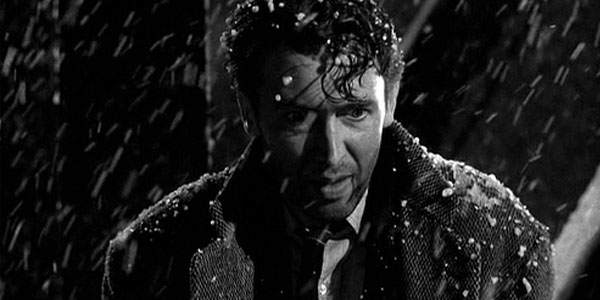
The most famous tragic hero in all of cinema was not only deprived of the release that his intended suicide would have given him, but he was also effectively convinced to go on living the same life that had lead him to feel suicidal in the first place. Bailey has every right to feel like his life isn't worth living, he is a selfless man trapped in a universe that never really rewards him for his good deeds, apart from to send an angel to stop him killing himself right at the last minute, and at the behest of everyone else in his life. George asks for help himself, but his reward is a crash into a tree, which seals his suicidal decision, and then as he embraces that grim decision he is basically guilt tripped into turning his back on his decision. The moral of the story is not how great George Bailey's life is, but rather how awful he would make everyone else's should he not exist. By the end of the film George Bailey's life hasn't changed: yes he has been saved from jail and financial ruin, but the villain of the piece gets off scott free and George has to go back to the life that he always felt was a betrayal of his hopes and dreams. He isn't happy, aside from his euphoric prance through the streets of his hometown, he is merely given a sugary injection and told to get on with it, without any more naughty thoughts about suicide. And to top it all off, he owes his friend $25,000.

2. Phil Connors - Groundhog Day

Groundhog Day 2 Gif Once you learn just how long Phil Connor (the inimitable Bill Murray) spends trapped in the perpetual nightmarish loop of Groundhog Day (and we've done the maths,) it is understandable why he would have chosen to attempt to kill himself. Phil is self-centred, believing the world revolves around him and that he is above the small-time gig that he is forced to go on every year: basically, he believes himself a big fish in a small pond, and quickly marks himself as a morality tale waiting to happen. That he crumbles at the first hint that he is stuck in his trials forever and attempts to end it all says everything you need to know about his personality and his perseverance before he has his moment of epiphany and dedicated decades to having the perfect, selfless day. But thanks to the cruel reality of his entrapment, Connors cannot kill himself, and he is forced to live out every time he attempts to kill himself, before waking up the next day. He knows ultimate pain, both emotionally and because he's taken a bath with a toaster, and yet he is denied the sweet release of death, despite the fact that when he does die, he's probably going to Hell for committing the mortal sin of suicide. Groundhog Day 21 Gif

1. Hulk - The Avengers

After two failed attempts to channel the inherent darkness of Stan Lee's muscular green man, Marvel finally got it right in The Avengers by astutely casting Mark Ruffalo and making his condition both a tragic curse and a powerful weapon, as opposed to making him no more than a giant green emo in ripped shorts. The Hulk is the key to the Avengers film - he is the only one with enough of a physical threat to take down Loki and indeed most of the invading alien forces, and he represents the key to the final question relating to how the Avengers should be regulated - hopefully teasing a forthcoming adaptation of the Civil War comics run. And Ruffalo offered a nailed on performance as both Bruce Banner and the Hulk, catching the emotional vulnerability and darkness to the former, and the outright physical prowess of the latter (obviously with some significant CGI assistance.) And in the most effective scene of the film, which gave Banner his most relatable trait, we discover that Banner found his curse too much and chose to put a bullet in his mouth, only to see the Hulk spit the bullet out as if nothing had happened. Therein we see the definition and the prison of Banner's condition and it is an oddly haunting refrain in the otherwise rip-roaring actioner.

Contributor
Contributor

WhatCulture's former COO, veteran writer and editor.