11 Film Endings That Didn't Solve Anything
"Surely they're not going to end it ther... oh."
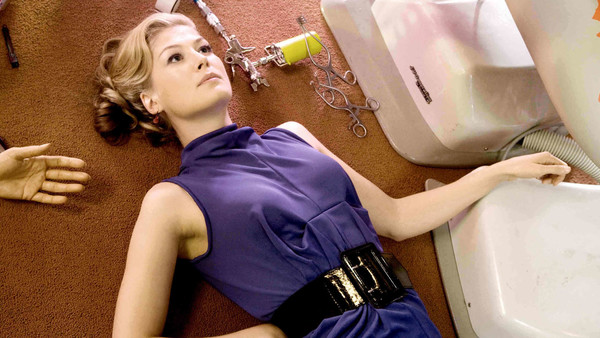
There's nothing quite like that feeling when a film is wrapping up and you've got far more questions than answers; the shots start to get wider, the characters seem to be delivering less dialogue, the score rises from underneath... but something feels completely off.
"If they end this here, then f**k this movie" reverberates around your subconscious, and as scientists proved there's actually a very thin line between love and hate in terms of how our brains compute such things, so all the positive thoughts you held dear are quickly replaced by a stream of unending, future keyboard-rant-producing vitriol.
What about that character we only saw halfway through? That lingering shot on a certain item or part of the scenery that seemed to suggest so much, or the fact that the protagonist's mission isn't really finished? Surely they're not going to end it her... oh.
It's up for debate whether or not this feeling is better or worse than realising after the fact that the film you initially enjoyed is actually holier than the Pope's cheese sandwich, but the fact remains that some director/screenwriting combos just can't stick the landing, no matter how graceful and perfectly planned the vast majority of the film was beforehand.
11. (500) Days Of Summer

On the face of it, (500) Days Of Summer is a traditional narrative with three acts that follow a romantic entanglement between a boy (Joseph Gordon-Levitt) and a girl (Zooey Deschanel), which charts their relationship blossoming and then stagnating and then, like all things, dying. Cheerful, right?
In the end, the point seems to be that Tom finally gets over his obsession with Summer, who he both idolises and unfairly castigates for not sharing his idealised vision of love. The reality is that he’s a bum and a toxic influence and that she’s precious and wonderful and deserves better. Which she gets in the end. That’s the satisfying finale in there, if you’re looking for one - Summer gets free of Tom.
But for Tom, there’s absolutely nothing solved. He starts the film as a love-lorn sad sack who listens to indie songs and becomes obsessed with good-looking girls who pay any attention to him. He’s destined to have his heart ripped out over and over, because he’s the one doing it to himself. And just because he supposedly meets his new love and “moves on” means precisely nothing. All that’s going to happen is he’s going to live that destructive loop again having learned absolutely nothing.
10. Changeling

Clint Eastwood’s 2008 crime mystery isn’t exactly one for the faint-hearted - particularly if you’ve just had kids and are terrified that they’re literally seconds away from sticking their tongue into a plug socket or wandering into some sort of room filled with sharp objects (newsflash THEY ARE) - but it’s a great and chilling watch.
The true story follows Angelina Jolie as a mother whose son is kidnapped and then replaced by a corrupt police force looking to appease her and escape the negative publicity borne out of their incompetence. As she seeks to uncover the truth and prove the impostor is not her child, she’s locked up until it all finally comes out and a serial killer is implicated in her son’s disappearance.
When he’s found guilty of several more murders, the killer tells her he’ll admit to her son’s killing if she visits him, but then promptly refuses and she’s given extra hope of his survival when another surviving victim is found and tells her he escaped along with her son. DEEP BREATH! That’s an awful lot of story there, but in the end, she never actually finds her son and ends up just as clueless about his whereabouts as she was when he initially disappeared.
9. American Psycho

Seriously, what actually happened in American Psycho? Living up to the chaotic, rambling structure of Brett Easton Ellis's book - though thankfully sparing us its excesses - any semblance of plotting is thrown out the window early on. Arguably, the bones on which Patrick Bateman's parade of murder and narcissism rest are something resembling a murder-mystery plot, albeit from the perspective of the murderer.
To recap, Bateman murders Paul Allen, a colleague who had the temerity to pick up restaurant reservations easier, and possess a mildly snazzier business card. Willem Dafoe then turns up to creepy-face his way through proceedings as a private investigator tasked by Allen's wife with finding him. And that... that's sort of it.
The incident serves as the jumping off point for Bateman's insanity, with director Mary Harron deftly skewering the male ego by taking everything up to the next level. So while normal folk would sit and stew, Bateman butchers women in response. However, we're then blindsided by the twist: it's all in his head. Or is it? Hell, who knows?
But the finale's twist does make one thing apparent: all that's gone before has been pretty much irrelevant, because as the twist so deftly shows, the entire animus of the plot is actually a lie. Bateman has merely been applying his fantasies to already-occurring events, meaning that where we thought we were watching a film, we were in the minds-eye of a man doodling foul things in his monogrammed notebook.
8. Zodiac

Just to be clear, Zodiac is great. It's a meticulous mystery thriller, and one of the more underrated films in David Fincher's incredible oeuvre. However, by tackling the story of the Zodiac killer, it also means there's an inherent issue with regards to the ending. Again, not that it's bad, but rather that it simply cannot end with its story solved.
To this day, the mystery of the Zodiac Killer - a person who went on a killing spree in California during the late 1960s and early 70s, leaving clues and cyphers to taunt the police with - remains unsolved. Fincher and his team conducted an almighty amount of research to go alongside the existing case, which results in an enthralling movie as Robert Downey Jr's reporter Paul Avery and Jake Gyllenhaal's cartoonist Robert Graysmith attempt to unpack the case.
The hope, for anyone unfamiliar with the case, as the film moves along is that it's building to the big reveal of who the Zodiac Killer is. Except, of course, it can't, because no one knows who the Zodiac Killer is. Which means the film is forced to just sort of come to a close with nothing wrapped-up. You can argue that it's not necessarily the point - the joy of the film is in the investigation itself, and the compulsion to investigate - but it does also mean there aren't any answers, despite over two-and-a-half hours spent looking for them.
7. mother!

One of the most divisive movies of the decade (how could a flick that features a scene where a new-born baby is snatched away from its mother, killed and then eaten by a group of a manic cultists be anything but?), mother! is all about symbolic cycles.
Ostensibly about a fractured couple bonding over the impending birth of their first child, the two are driven apart when the man (who has no actual character name) cares more about the attention he gets from other people than his lover, inviting more and more people into his house who adore him, but shun his wife.
And then the house descends into an apocalyptic hellscape (literally), Kristen Wiig comes in and starts executing people (literally), and the wife burns the whole thing down with everyone inside (literally). Of course, Aronofsky intends for audiences to bring their own interpretations to the story, whether that's viewing it in the context of religion or celebrity fame, but even with all of those ideas in mind, the ending still solves very few of the mysteries the film poses beforehand.
Not only does the ending render everything pointless, as it implies the whole thing will just repeat anyway and none of the actions actually effected anything, but a lot of previous plot points never come into play The mysterious golden substance the mother drinks is never explained, the gaping wound in the house never fully comes into play, and there's no easy answers for WTF you just watched.
6. Kick-Ass 2

The first Kick-Ass was exactly what the genre needed following Batman Begins, as the inevitable influx of 'serious' superhero films that would forgo self-awareness for the sake of some husky voices and moody posturing was begging for a reprieve. Here we had a realistic setting that would let Aaron Taylor-Johnson take on crime in the titular role, yet throughout he retained enough humour for his actions to be taken in a way that made the whole thing a huge cult success.
Flash-forward to part two though, and what was previously a pretty well tied-up tale had to delve back into its comic book origins to find more threads to pull. And pull they did, but not in a way that tied back up come the credit roll, instead we were left with something of a mess that may or may not be addressed in part three, should it ever happen.
There's a very good reason that when all was said and done, KA2 just felt completely phoned in, and in retrospect did anything really get solved or progressed? Sure antagonist The Motherf***er had a certain part of him forcibly removed, but as we zoom out away from Kick-Ass starting another training routine and watch Hit Girl speed away to another city, there was zero character progression outside of our heroes just doing more of the same.
5. Oldboy (2013)

The less said about this ill-fated remake, the better. Rarely has a film been worth less than the sum of its parts: between the oddly subdued Josh Brolin, the tragically wasted Elizabeth Olsen and whatever the hell Sharlto Copley was up to, this should've been better even before you realise it was Spike Lee behind the camera.
Yet one of the most egregious slights in translating this Korean classic came in the ending: seemingly unhappy with the original's ambiguous close, writer Mark Protosevich deviated from the established material. So while we still get the earth-shattering twist concerning Joe and Marie's relationship, the remake takes it a step beyond. Instead of submitting to hypnosis to help forget the family incest, Joe instead chooses to lock himself back in his old cell in penance, paying for his captivity with the diamonds he took from Copley's Adrian.
Wishing to be a good father (under the circumstances, anyhow), he charges his jailer (incongruously played by Samuel L. Jackson) with giving the remainder of the diamonds to his daughter. It seems odd, but it's still a resolution, right? Well, not really.
It may seem as if everything's all wrapped up, but there's still one rogue element in play: Sam Jackson. Joe is relying on him to carry out the bargain, but what if he got cold feet? Newly re-incarcerated, Joe couldn't lift a finger to stop him. While the jewels made it to Marie, she's still very much vulnerable to attack - indeed, Jackson came close to raping her earlier in the film. And hell, it's not as if the guy has a grudge to bear against Joe, right?
Oh wait, he totally does - the guy painfully tortured him earlier in the film, and money or not, he'd probably be itching for vengeance. If he decides to off him and take the prison payment for his own, that'd be brutal enough. But remember, this guy's a sadist who locks people up for a living, so - you can bet your bottom dollar he's going to find Maria and make her suffer. Worse still, he'll probably let Joe know he's done it.
4. Inside Llewyn Davis
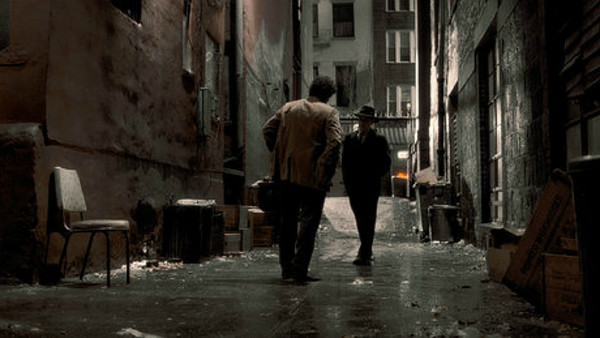
When you sit down to watch a film, you're usually of the mind that whatever occurs on-screen will be significant. The audience must be thrown a bone, and a movie without a plot would be naught more than attractive people going about their daily lives. Sure, there's experimental and auteur projects out there, but if your film's released into the multiplex, it's usually got to be structured in a certain way and come ripe with pay-offs of some sort. Yet apparently, someone forgot to tell the Coen Brothers. But make no mistake, this isn't a cause for complaint.
The brothers sit among only a handful of filmmakers who would not only have the chutzpah, but the backing to do such a thing - ensuring their films always have the capacity to surprise. However, the true genius lies in the fact that for the longest time, you think that the week you're spending with the eponymous Llewyn Davis is an extraordinary one. Hell, it certainly looks extraordinary: he ends up accidentally owning a cat, informed he's impregnated his friend's girlfriend, hitchhikes eventfully to Chicago to fail an audition, inadvertently screws himself out of royalties on a novelty single, and decides to jack in his music career for a failed stab at being a merchant seaman.
But then the rug is pulled under our feet with an incident outside the Gaslight. Earlier in the week Llewyn is beaten up by a shadowed figure for an unknown slight. You take this with a pinch of salt - Llewyn is thoroughly unlikeable, and it's well within character that someone would want to hurt him. But as you wind a week on and events unfurl, this exact incident happens again, albeit now with context. Llewyn is being beaten up because he unfairly belittled an old lady performing at the Gaslight. It's then that the penny dropped: for all the turmoil Llewyn undergoes while the camera is fixed on him, this is but an ordinary week for him in a cycle of disappointment, despair and failure. It's a crushing realisation that the events you've just watched were wholly unremarkable, but it certainly provides an excellent dramatic punch.
3. Surrogates

Bruce Willis' sci-fi social commentary thriller was a surprise hit back in 2009 thanks to some wider audience-baiting explosions and set-pieces, but also in having a rollicking could script at its core that really made us ask questions about the world we live in, and the increasing dependence on technology that's emerging every day.
The core narrative is that in the future we're all plugged into the titular 'surrogate versions' of ourselves, living out our daily lives outside, all the while being jacked into these cyborg beings at home. There are upsides and downsides to this whole idea, and many viewers fall on two sides come the end of the film when Willis' character makes the decision to actually let surrogate creator Dr. Lionel Canter's virus take effect and wipe them all out.
However although we do get to see Willis reunite with his wife with their real bodies, the only comment that references the outside world is that it is free of the surrogate bodies "for now". Being that people have been so utterly dependant on this way of living for so long, and the fact that things like war, disease and crime are at an all-time low, the film leaves everything open to interpretation as to the direction society is going to take from here on out.
2. Warrior

No film's final act sucked like Warrior's, and that's not because what's shown is terrible. Indeed, it's what isn't shown that's the problem. The film's narrative threads are varied and interesting. Joel Edgerton delivered a terrific, earthy performance as a teacher and family man struggling to make ends meet, Nick Nolte brings the crazy as only he can as his repenting, recovering-alcoholic father, and Tom Hardy threatens to steal the film from under them with his portrayal of the damaged and dangerous Tommy Riordan.
But great performances aren't complete without great plotting, and this is something Warrior sorely lacks. The point goes thus: while the film does a terrific job of making us care about these men, the fact still remains that these threats are cut short by the script. While we'd love to know what the after-effects of the tournament are - the plight of Brendan's family and his continued employment, Tommy's pending incarceration, the development of both men's relationship with their estranged father - this is all hastily cut short in favour of a vignette of the brothers leaving the arena draped across each other. And that's it.
Soon after, the credits roll, and the audience is left baffled by whoever made such a daft decision to cut the film this early. So while this entry might stand out as a cheat - you do learn who would win in a fight between the two brothers, after all - it really isn't, entirely because we were denied the finale that would've solved everything. As is, and in its absence, nothing is solved.
1. The Birds
One of the most talked-about psychological horrors in history, Alfred Hitchcock's masterpiece is still to this day regarded as such, thanks to the fantastic idea of taking an everyday occurrence such as that of seeing a flock of birds and making you think twice. A far cry from a bump in the night to that of making you wary just when taking a stroll in the sunlight, that jolt of fear whenever a bird flies too close overhead or a group of them take flight all at once is something many of us have already felt, it's the idea that something far sinister is about to happen that is slowly embedded in your mind as the film rolls on.
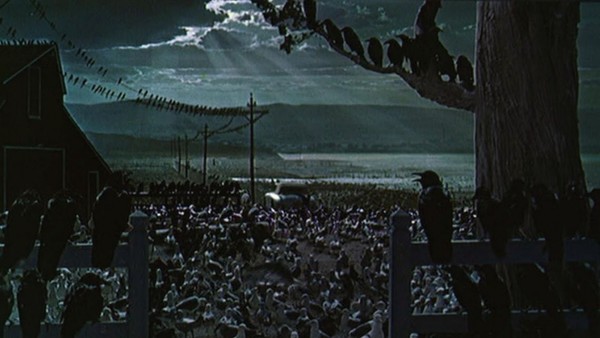
However, come the end of the flick as our four protagonists become holed up in a house trying in vein to shield themselves from the ornithological onslaught, main character Tippi Hedren's Melanie ends up opening a door to one of the upstairs rooms, only to get half her face pecked off. Naturally it's decided that the gang take her to get some medical attention, but after they navigate a garden of seagulls and crows - all ominously staring at them - and pile into their car, the following wide-angle shot is the last we see before the credits roll.
What was the cause of the birds' sudden hostility? What role did Melanie's lovebirds play in the whole thing? Did she even survive that initial attack, and what of the radio reports coming in stating that other cities were under attack too? Many say that a film that gets people talking about such things can only be good, but for many this abrupt ending to a film that was one gigantic question left an eternally sour taste.
Which films left you pondering on what you'd just watched, and what could have been done to really make them work? Let us know in the comments!