11 Films So Politically Incorrect They Would Be Banned Today

We've come a long, long way since cinema began.
As a century old art form, cinema, like any industry, has it's fair share of dirty laundry. As times have changed so have the attitudes of film makers and movie goers alike, and those attitudes will continue to change over time. Some of the most revered and beloved movies of our age will probably become offensive in one way or another as time ticks by, making our ways and habits seem dated as it does. With that in mind, it's still hard to imagine just quite how some of these movies were allowed to be released unedited, or, in many cases, even released at all. Not to suggest that political correctness doesn't still sneak its way onto cinema screen in 2015, it's only that those wishing to express such views are far more mindful of changing public opinion, that's all. That didn't seem to be quite as high up the list of priorities in cinema's formative years and the golden age that followed. Face paint was used, eyes were slanted, women and homosexuals were degraded in ways that wouldn't make it past the drawing board of a modern day producer. Here are 11 movies so politically incorrect they would undoubtedly be banned today...

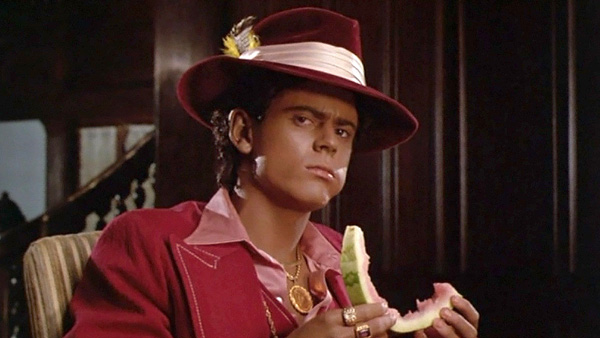
11. Soul Man (1986)

While race relations in America had improved markedly in the forty five years between Dumbo and Soul Man, the latter still got away with a lot more than it ought to have. The concept is a simple one €“ a white student who cannot afford to attend Harvard Law School after being cut off by his rich father decides to overdose himself on tanning pills so as to be able to apply for a scholarship reserved for African American students. This could well have been a film that attacked the prejudices that black students in the United States faced in the 80s (and still face today), and it does scratch the surface of the debate at times, as Mark Watson discovers that his fellow students are less lenient than he imagined when it comes to accepting African Americans at the school. What you cannot get away from it this €“ C. Thomas Howell in black face. Heavily smothered in boot polish, you simply cannot take the film seriously, even as a comedy. The overt racism aside, the film is awful, the early promise of a decent, thought provoking story fading away as it heads down the low-brow, money making route.

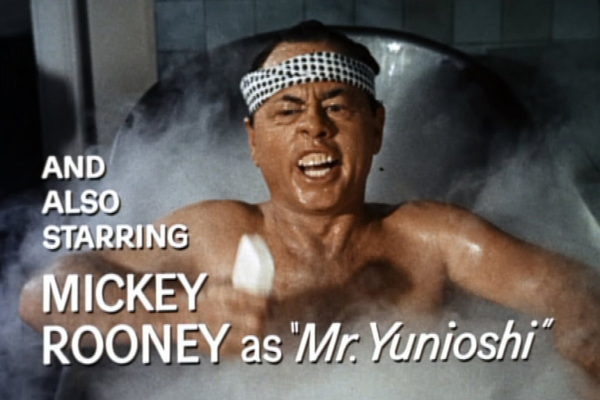
10. Breakfast At Tiffany's (1961)

As a man it€™s hard to dislike anything with Audrey Hepburn in it, though Blake Edward€™s classic adaption of Truman Capote€™s novel does leave a sour taste in the mouth. A wistful, romantic comedy at heart, the movie is undoubtedly an entertaining success on the whole, showcasing Manhattan as we all imagine it to be, though more recently it has been marred by controversy that was largely ignored at the time. Described by the New York Times as €œbroadly exotic€ in 1961, Mickey Rooney€™s portrayal of Japanese man Mr Yunioshi isn€™t borderline racist, it€™s fully blown racist. Kitted out with ridiculous buckteeth, Rooney€™s cringe-worthy, stereotypical performance as Yunioshi really would have offended had it been played by an Asian actor, never mind a white man with yellow-face makeup. Despite the scene being brought to the attention of the modern media in 1993€™s Dragon: The Bruce Lee Story, Rooney maintains that people loved Mr Yunioshi: "Blake Edwards wanted me to do it because he was a comedy director. They hired me to do this overboard, and we had fun doing it. Never in all the more than 40 years after we made it €“ not one complaint. Every place I've gone in the world people say, €˜God, you were so funny€™." I wonder how many of those people were Japanese?

9. Freebie And The Bean (1974)

Named the best film of 1974 by Stanley Kubrick, you could have expected Freebie And The Bean to offer a little more than racism and homophobia, and it does €“ there€™s a good dollop of sexism in there, for good measure. Starring James Caan as all action American cop Freebie and Alan Arkin in (you guessed it) brown-face make up, playing his Mexican partner The Bean. With a title like that, you can assume that it only gets worse, and you wouldn€™t be wrong. The film€™s villain is a cross dressing hitman who the duo refer to as the €œsicko tranny€ throughout, until finally gunning him down in a woman€™s bathroom, saving the Super Bowl (which was under threat, obviously) for good honest Americans everywhere. Bigotry aside, the film is a dud. A pre-runner to the Buddy Cop films that would dominate the 80s, Richard Rush€™s film is a mishmash of car chases and low-brow gags that leaves you with a bad neck from all the head shaking. At least Arkin didn€™t harbour any ill-feeling towards his co-star, the pair returning to the screen together in 2008€™s Get Smart.

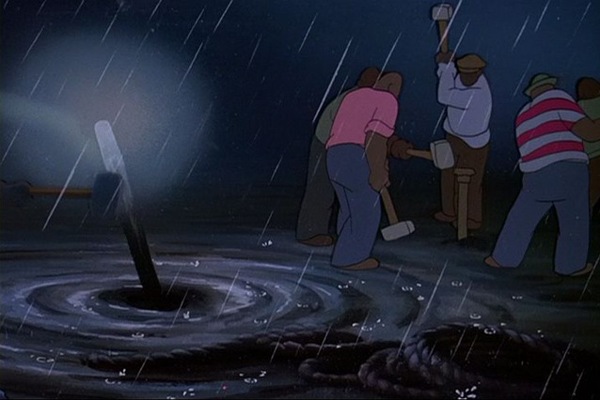
8. Dumbo (1941)

Disney€™s Dumbo, the story of a big eared elephant who shows all the nay-sayers who the man is when he uses them to fly, is an early classic in the Disney canon. Based on a story that was actually written to coinside with the release of a toy, Dumbo was actually made as a way of recouping the losses made by Fantasia. It€™s a simple, short film designed to generate cash, and generate cash it did. The trouble is, in their search for simplicity Disney succumb to stereotype, and on more than one occasion in this hour long animation. The film is heavy with exaggerated black vernacular €“ as were many Disney films at the time €“ with the crow characters proving particularly uncomfortable viewing upon re-watching. It doesn€™t stop there, however. Perhaps one of less famous songs (and for good reason) Song of the Roustabouts makes you wonder how the scene was ever allowed to be included in later releases of the film, with dark skinned circus workers singing: "We slave until we€™re almost dead, we€™re happy-hearted roustabout. Keep on working, stop that shirking, pull that rope, you hairy ape."

7. Gone With The Wind (1939)

Yup, that great classic of American cinema, the poster boy for classic Hollywood, Gone With The Wind is remembered for all the wrong reasons. Adapted from Margaret Mitchell€™s Pulitzer winning novel of the same name, it set records at the 12th Academy Awards, winning eight Oscars including Best Picture. The response to the film, which was seen by many as a glorification of the African slave trade, was split among the black audience, with some claiming that it was a "weapon of terror against black America", while others saw the critically acclaimed performance of Hattie McDaniel as Mammy as progress towards equal rights. McDaniel became the first African-American to win an Academy Award for her portrayal of a typical black maid, though she was racially segregated from her co-stars at the ceremony when she and her escort were made to sit on a different table at the back of the room.

6. Song Of The South

Whilst holding your hands up at his obvious genius, you have to admit that nobody quite knew how to trivialise the slave trade like Walt Disney. His first foray into live action follows a former slave named Uncle Remus as he sings his way through African folktales for the amusement of a group of American kids. The film was panned for its glorification of the master-slave relationship even back then, something the film€™s publicist Vern Caldwell predicted might happen in a letter to producer Perce Pearce: "The negro situation is a dangerous one. Between the negro haters and the negro lovers there are many chances to run afoul of situations that could run the gamut all the way from the nasty to the controversial." Despite condemnation from The National Association for the Advancement of Colored People, it was still released and went on to win many awards, with the song Zip-A-Dee-Doo-Dah receiving an Oscar for Best Song at the 20th Academy Awards.

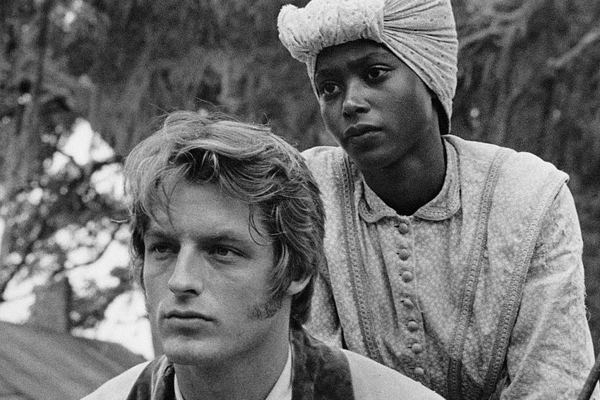
5. Mandingo (1975)

This movie set in the run up to the American Civil War is pretty much racist on every level as it takes the black slave and white master stereotypes to their most cringe inducing extremes. Taking place on a plantation named Falconhurst, Mandingo is something like a pre-War Deep South version of Wife Swap. A healthy serving of interracial sex and all the complications that came with it at the time is sandwiched with racism and brutality that goes beyond the borders of an exploitation film, something veteran Roger Ebert thought of the film upon release, calling it €œracist trash€ and awarding it a zero star rating. The film was not universally hated, however, and has even inspired film makers of later generations. Mandingo was a huge influence on Quentin Tarantino€™s Django Unchained, calling it one of the only films in over 20 years to €œmake a full-on, gigantic, big-budget exploitation movie€.

4. The Mask Of Fu Manchu

€œKill the white man and take his women!€ That€™s Fu Manchu in a nut shell. Played by horror legend Boris Karloff of Frankenstein fame, this maniacal Chinaman is on the hunt for the tomb of Mongolian war lord Genghis Khan where he hopes to find a mask that will unite the people of Asia against the white race. It€™s a good job that Secret Service Agent Sir Denis Nayland Smith and Egyptologist Sir Lionel Barton, two fine chaps of white British stock, are out to stop him. In actual fact you end up really rooting for Sir Lionel because you€™re so desperate for the film to just end already. Both the Chinese government and the Chinese embassy in Washington filed complaints againt the studio upon Fu Manchu€™s release, citing its hostile depiction of the Chinese as offensive and inflammatory. This resulted in some scenes being cut from the VHS release, but Warner Brothers have since released the film in its entirety on DVD.

3. The Birth Of A Nation

It€™s a little dizzying to think that this film was made 100 years ago, but upon watching it you€™ll soon realise why none quite like it have been made since. Another epic with the American Civil War as a backdrop, The Birth of a Nation (previously titled The Klansman) is quite possibly the most racist film ever made. The film was already bogged down in controversy when the New York premiere came around, with protesters calling for censorship being largely ignored by the predominately white Los Angeles film board. D.W. Griffith€™s movie actually glamorises the Ku Klux Klan, making a romance of group€™s origins and championing Southern white supremacy unashamedly. While this three hour epic (the likes of which were a new concept at the time) riveted white audiences across the country, the NAACP were left astounded that the film was not to be banned. In fact, this was the first film ever shown at the White House.

2. Goodbye Uncle Tom

This piece of Italian trash stands apart from the rest in that large scale racism actually took place off the camera, not just on it. Addio Zio Tom masquerades as a documentary when in fact it€™s more of a mockumentary or a docudrama or whatever you want to call it €“ fact is, it€™s all made up. An exploitation film in every sense, directors Gualtiero Jacopetti and Franco Prosperi chose to make their slavery film on the island of Haiti, where they were welcomed with open arms by then dictator Papa Doc Duvalier. Duvalier gave the directors diplomatic cars, had them over for dinner every night and gave them as many extras as they needed for whatever they needed them for. The film was met with disgust, written off as cruel exploitation of the locals who were paid a pittance to degrade themselves on camera in supposed re-enactments. Some critics went as far as to accuse the film makers of inciting race war, though to this day they assert that their intentions were to draw attention to racism and poverty. And they did that by paying penniless Haitians next to nothing to get beat on all day.

1. The New York Ripper

Another shocker from an Italian director, Lucio Fulci effectively put the nail in the coffin of the once great Italian horror genre with his critical and commercial flop The New York Ripper. Banned in countless countries upon release, it finally came out in a heavily edited form, and even that was too much for most to stomach. This is Jack The Ripper in Brooklyn was none of the gory stuff cut out. As the hand of a prostitute is found by a dog walker, detective Fred Williams begins to put together a picture of a vicious serial killer on the loose in the city, but it€™s not the amount of viscera to come that make this film so unwatchable. Obviously, woman have been getting chased and tortured by madmen in horror since cinema began, but the treatment of his female characters crosses so many lines that it quickly goes from uncomfortable to torture porn to just straight up hating on women. The infamous breast slashing scene is really just the tip of a seriously depraved iceberg.

Contributor

Phil still hasn't got round to writing a profile yet, as he has an unhealthy amount of box sets on the go.