11 Horror Remakes Better Than The Original
Although these horrors were great, the remakes are on another other level.
Remakes have been marred in skepticism almost as long as they've been around. Not only does it seem lazy to rehash a recognised story, redoing a movie poorly feels like an insult to the original.
Although there are plenty of retellings that turned out well, the bad outweighs the good, especially when it comes to horror. Even if a slasher or psychological thriller had masterful tension and shocking twists, doing it all over again won't necessarily recreate the same result (as the shot-for-shot remake of Psycho proves).
Modern remakes frequently rely on jump-scares or heightened gore to appeal to contemporary viewers, potentially undermining the subtle aspects that defined the one that started it all. Also, there are certain horrors that were executed so perfectly, it doesn't seem feasible for a remake to improve on them.
But stranger things have happened. Whether they preserved the original's essence or took the haunting story in a bold new direction, these do-overs didn't just match their predecessors but surpassed them.
CBS Media VenturesIt doesn't occur that often, but these horror remakes pulled off the impossible and improved upon what came before.
11. Mirrors
It can be aggravating when a horror remake strips away the nuance of the original, replacing it with an in-your-face approach. Although Mirrors falls into this bracket, it's perceived more favourably than the South Korean original, Into the Mirror.
Both versions follow an ex-policeman who starts working as a security guard in a department store. When the former detective notices a string of mysterious deaths in the area, he suspects a malevolent force is responsible.
Into the Mirror unfolds like a slow-burn mystery with paranormal elements, blending the detective drama with a ghost story. Unfortunately, this approach is sluggish, especially when the characters are dealing with the procedural investigation. Mirrors trims these aspects and ramps up the supernatural encounters early, keeping tension high from the get-go.
The remake also finds more innovative ways to incorporate mirrors and reflections into the kills (especially the nightmarish bathroom scene).
Into the Mirror's lead is decent, but lacks the charisma of Mirrors' Kiefer Sutherland, who injects an ample amount of believability into an otherwise incredulous story.
On top of that, Mirrors concludes with a shocking ending that even the biggest horror veterans don't see coming.
10. Willard

Based on Stephen Gilbert's Ratman's Notebooks, both film adaptations of Willard centre around an awkward loner who trains rats to exact revenge on those who've wronged him.
Although the concept is creepy, the 1971 version plays out like a tragic drama with sprinkles of horror. The 2003 version however embraces gothic scares, with surreal set designs, exaggerated shadows, eccentric pacing, and warped camera angles. As a result, it feels like a twisted fable, not a realistic drama. The remake leaves little to the imagination, showing up close what happens to the poor souls who get on the titular character's bad side.
But if there's anything that elevates 2003's Willard, it's Crispin Glover's performance. Due to his off-kilter line delivery and insect-like physicality, this Willard is more compelling and unpredictable. He mightn't be physically imposing but you're constantly left on edge, since it's impossible to tell what Glover's Willard is going to do next. However, the Back to the Future star never goes too cartoonish, constantly teetering between enraged and pitifully vulnerable.
Though the first adaptation pushes the revenge aspect, 2003's incarnation highlights Willard's obsession and madness, creating a more personal and depressing tale.
9. The Crazies

George A. Romero is directly responsible for launching the zombie sub-genre, which is why he's hailed as one of the most influential directors in horror.
So, when unknown director, Breck Eisner, decided to revitalise Romero's underrated sci-fi thriller, The Crazies, expectations weren't exactly high (especially since the only film he helmed at the time was the box-office bomb, Sahara).
Against the odds, Eisner's version knocked it out of the park.
As before, 2010's The Crazies begins with a small town being contaminated by a bioweapon, turning the locals into psychotic murderers. The remake substitutes the various subplots of the original for one clear-cut narrative, focusing on a sheriff called David and his wife, Judy. A lot of time is dedicated to the duo's relationship with one another and the community, grounding the story. You really care when the pair are in danger, making the overarching threat scarier. The political subtext is still present but subtly woven in, allowing the narrative to remain front and centre.
Most importantly, 2010's The Crazies is thoroughly unsettling, blending slow-burn dread with bursts of grisly violence. Although Romero's classic is enjoyable, Eisner is a better horror.
8. Red Dragon
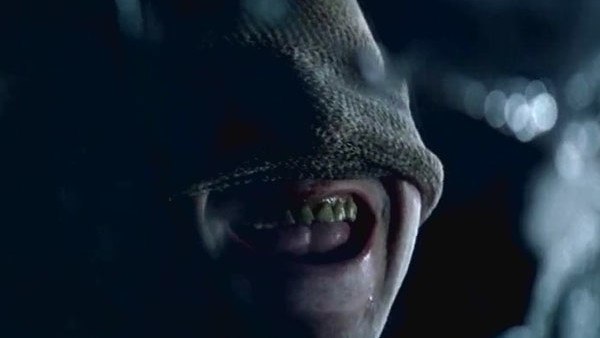
Though Silence of the Lambs turned Hannibal Lecter into an icon, it wasn't the first film adaptation of Thomas Harris' work. That honour belongs to Michael Mann's Manhunter, based on the novel, Red Dragon.
Despite tanking at the box office, it's remembered fondly, thanks to its brooding atmosphere and solid performances, especially Brian Cox's understated depiction of Hannibal.
With that said, 2002's Red Dragon has a leg up on its predecessor for a number of reasons. Unlike the first adaptation, the remake maintain's the novel's structure almost scene-for-scene, including the memorable capture of Lecter in the opening. Cox is great as Hannibal but he cannot compare with Anthony Hopkin's scene-stealing portrayal.
Although Manhunter did away with the novel's subplots, Red Dragon embraces them, so there's a better understanding of the characters. It doesn't tone down the violence like its predecessor, keeping the tension permanently elevated.
Ralph Fiennes is magnificent as the villainous Dolarhyde, making the character surprisingly sympathetic, even when he's biting people's jaws off or setting them on fire.
Despite the fact Mann's version deserves more respect than it initially received, it's understandable why the later adaptation made a larger impression.
7. Maniac

Released in 1980, William Lustig's Maniac revolves around a mentally unstable man called Frank (Joe Spinell) who murders women and keeps their scalps as trophies. As disturbing as Maniac is, it's incredibly bare-bones, to the point where you have to wonder what would incentivise anyone to remake it.
However, Franck Khalfoun's reimagining is dramatically different since it's told from the point of view of Frank, portrayed by Elijah Wood. For this reason, you get a front row seat to Frank's wicked deeds, creating a deeply personal experience.
Despite the fact we follow Frank from beginning to end, he's rarely seen, making him come across as an inhuman force. The violence is brutal, but it's the POV shots that's likely to rattle you, since it puts the audience in the killer's head, making it feel like you're the ones committing murder.
Although Spinell plays Frank like a by-the-numbers psychopath, Wood injects humanity into the character, depicting him as a soft-spoken and socially awkward man. This decision makes Frank more intimidating since it's only a matter of time before the timid persona dissolves and the animalistic side is unleashed.
6. The Blob

As a concept, The Blob is so creatively simple. In the 1958 creature feature, a gelatinous alien invades a small town and consumes eveything it touches, causing it to grow to immense proportions. The Blob lacks any intelligence and personality, meaning it can't be reasoned with, making it scarier than the average monster.
Be that as it may, the original isn't exactly nerve-shredding, due to the goofy effects and underwhelming acting. (Even Steve McQueen is surprisingly wooden.)
The 1988 remake, on the other hand, is pretty freaky. Special effects designer, Tony Gardner, utilises a mix of puppetry, animatronics, elaborate make-up, and stop-motion to, not just bring The Blob to life, but to depict it as a global threat. Unlike the original, you see the titular fiend corroding its victims to the bone, which looks realistic and gross.
Another reason why the 1988 version tops the original is because the Blob isn't depicted as a mindless mass. This time around, the amorphous being has some level of intelligence since it repeatedly outmanoeuvres and corners its prey.
Even though the best monster movies can be formulaic, the remake has a surprisingly clever twist which is sure to catch anybody off-guard.
5. Invasion Of The Body Snatchers
In Jack Finney's novel, The Body Snatchers, the residents of a small town discover extra-terrestrial pods are replacing humans with emotionless doppelgängers. As paranoia spreads, the townsfolk try to resist and expose The Pod People.
Finney's outlandish tale was frightfully relatable, since it explores social anxiety and mob mentality, which was fervent during the McCarthy era at the time. Despite being released in 1956, Invasion of the Body Snatchers lost none of its power, due to its brilliant writing, nerve-wracking atmosphere, and powerful performances.
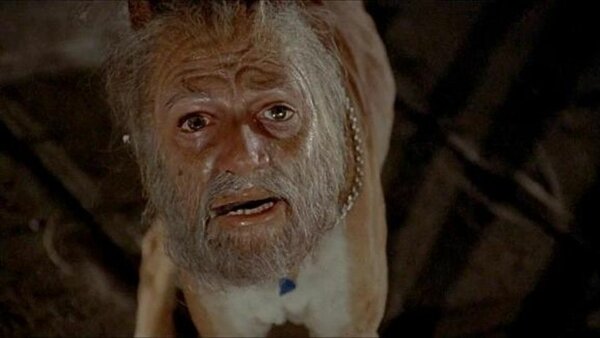
And yet, there's no doubt the 1978 one is superior. Though the Communist subtext is apparent in the 1956 film, the 1978 one deals with paranoia in a general way, making it timeless. It masterfully implements haunting visuals without relying on excess gore (especially the Man-Dog shot). The Pod People emit an animalistic cry upon locating a real human, accentuating the terror every time the characters are in danger.
Above all else, it perfectly demonstrates the futility that humanity experiences when faced with an overpowering threat. Each Invasion of the Body Snatchers showcases the characters suffering from pangs of hopeless, but it never hits as hard as in this adaptation.
4. Nosferatu

Despite Nosferatu's litigious origins, the 1922 Dracula rip-off had an unparalleled influence on horror. While cinema was firmly rooted in the silent era, F.W. Murnau crafted arguably the first true horror feature, showcasing the genre's potential. A hundred years later, Nosferatu is still a wonder to behold.
Although Robert Eggers 2024 remake couldn't possibly have the same cultural impact, it was a roaring success, financially and critically. Now, it seems unfair to compare a century-old movie with a modern revision, especially since the cinematic medium was in its infancy at the time.
Having said that, everybody involved in Eggers' project poured their heart and soul into it. Bill Skarsgard's is utterly petrifying as Count Orlok, despite being regularly depicted in shadow. Nicholas Hoult, Willem Dafoe, and Lily-Rose Depp, and the rest of the ensemble flawlessly convey fight-or-flight dread, making the Transylvania bloodsucker even more skin-crawling.
Instead of saving the scares for the vampire, almost every shot oozes dreamlike terror, whether the scene is highlighting a decaying castle, a war-torn village, or a carriage's door opening by itself.
Helming the film must've been daunting, but Eggers devised one of the most bone-chilling vampire stories we've seen in a long time.
3. The Invisible Man

Although it can be frustrating when an adaptation doesn't respect the source material, 2020's Invisible Man is leagues ahead of the 1933 version, despite not following HG Wells' novel at all.
Though the first adaptation centred around the titular antagonist, the remake revolves around the invisible man's victim. The movie opens with Cecilia leaving her abusive husband, Adrian, hoping to start a new life. When Adrian turns himself invisible, he begins tormenting Cecilia, intending to drive her insane.
Instead of playing up the sci-fi elements, the remake plays out like a domestic abuse drama, with Cecilia being gaslit by her tormentor, causing her to question her own reality.
It's worth mentioning Adrian doesn't rely on the cover of darkness or wait for Cecilia to be alone to attack her. Since he cannot be seen, Adrian can prey on Cecilia in a crowded room in broad daylight, making him significantly scarier than the average horror villain. Even though the plot seems formulaic at first, The Invisible Man has a few surprises nobody sees coming (literally).
Despite the fantastical narrative, The Invisible Man is astoundingly relatable, which makes it more unnerving than expected.
2. The Fly

1958's The Fly revolves around a scientist who enters a teleportation chamber alongside a fly, causing their heads to swap. The Fly stood out over films in the genre, as it played out like a mystery drama and focused on psychological torment instead of outright scares.
Although the original is a great B-movie, David Cronenberg's version is a work of art. Even though it's easy to focus on the horror elements, the 1986 remake should be applauded for its airtight structure. The film introduces the protagonist, Seth Brundle, his love interest, Veronica, and the concept of teleportation... within the first five seconds.
Despite the fact Cronenberg's The Fly popularised body-horror, it rarely features until the third act since Brundle's mutation is gradual. This decision is incredibly impactful, since Brundle initially believes his boosted strength and reflexes are due to the teleporter, oblivious he's turning into a monster. As such, watching Brundle come to realise he's living on borrowed time isn't just scary but tragic.
Although the 1958 version has creepy moments and thought-provoking ideas, it cannot compete with Cronenberg's magnum opus.
1. The Thing

John Carpenter’s The Thing and The Thing from Another World are both adapted from the 1938 novella, Who Goes There?, which centres around a team of Antarctic explorers encountering a hostile alien. The Thing from Another World may be a serviceable monster flick, but it pales compared to John Carpenter's adaptation.
Although the prosthetics and animatronics are sublime, it's the relentless atmosphere that makes The Thing iconic. Rather than battling a generic extra-terrestrial like the original, our heroes face a shapeshifter that can imitate them perfectly. When the ensemble realise this, the paranoia skyrockets since they (and the audience) have no idea if the characters are who they claim to be. Due to each scene's tight structure, the claustrophobic vibes, and the phenomenal acting, The Thing is still riveting on a rewatch, even when you know who the alien is.
Although the best special effects can become dated, the visuals here put most modern CGI to shame. Though visual effects guru, Rob Bottin, deserves most of the praise, the lighting and camera crew should also be recognised since they had to position everything perfectly to make each shot of the titular beast look convincing.
Even though there's nothing wrong with The Thing from Another World, it feels like a footnote in cinematic history while John Carpenter's The Thing is revered as a masterpiece, even after 40 years.