11 Most Tragic Movie Deaths Of 2013

Spoilers for everything ahead. Tears too.

2013 was a good year to be a good guy in movies. There were a great many deaths on TV last year (on Breaking Bad and Game of Thrones specifically), but there were comparatively few character deaths in movies. This is particularly true if you don't count the bevies of nameless and faceless victims that are killed in action movies (you could argue that the majority of Metropolis died in Man of Steel). But just because there weren't a lot of movies that killed off major characters this year doesn't mean that there weren't deaths that hurt to watch. And so we look back at the most tragic movie deaths of the past year, feel free to play music from any of the Oscars "In Memoriam" segments while you read along. This list is comprised exclusively of characters that actually died. This means no fake-out deaths (Iron Man 3), no quasi-deaths that result in resuscitation (Star Trek Into the Darkness) and no movies that made us wish we were dead (The Lone Ranger, After Earth). This is pretty obvious, but this list is full of SPOILERS so just skip to the next page if you haven't seen the movie in which the character whom made the list died in yet. And now onto the list.

11. Pretty Much Everyone - This Is The End

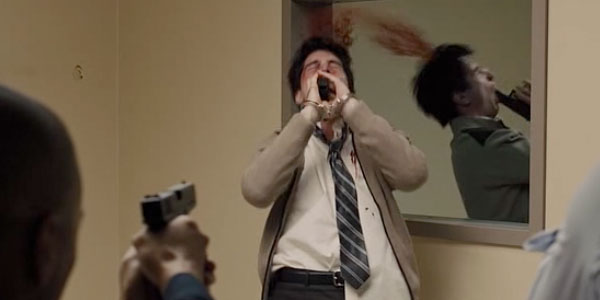
We start off with deaths that weren't necessarily heartbreaking to watch. In fact, they were actually pretty funny. Watching the people who attend a house-party at James Franco's place die in horrendous fashion is probably a fantasy many ticket buyers shared before they even saw the movie. Watching bad things happen to petty and vain people because they are petty and vain is pretty hilarious, so this movie decided to capitalize on our desire for schadenfreude. But although actually watching people die in the movie wasn't necessarily tragic (thankfully they spared us from seeing Emma Watson die, Hermione lives), the implication is still pretty sad. All the people who didn't make it long enough to have a redemptive act were doomed to eternal suffering. The film's primary message is "Don't be a dick," but poor Aziz Ansari, Martin Starr and Jason Segel died not because they were dicks but because they were in the wrong place at the wrong time. While the movie is still pretty funny, the implications of its staggering death toll are pretty sad to think about. If the guy who was primarily responsible for the joyous experience that was the most recent Muppets movie died, it would be pretty damn sad.

10. Emma - The Wolf Of Wall Street

If you haven't seen The Wolf of Wall Street yet you can go to the next page, but chances are even if you have seen the movie you are still asking, "Wait, who was Emma?" Emma was the aunt of Naomi (Jordan Belfort's second wife) who acted as the executor on the Swiss bank account Belfort uses to funnel his illegal cash flow. We aren't given much backstory or character information on her, we pretty much just know that she is English and Belfort mistakenly thinks that she is flirting with him leading to one of the movie's more uncomfortable smooches. Her death isn't particularly tragic within the context of the film, in fact it occurs offscreen and we only hear about it through a crying Naomi. Belfort learning about her death is some of Leonardo DiCaprio's best acting in the movie (perhaps only eclipsed by the extremeness that is the Lemmon Quaalude scene) because the audience can almost instantly gauge that his upset reaction is not due to the fact that she is dead but that he might not have access to his money anymore. So the audience is forced to view her death the way Belfort does, with a mixture of annoyance and fear rather than genuine empathy. The fact that a literal relative dying means less to Jordan than his money does represents the film at its most satirical: the tragedy isn't necessarily that Emma dies, it's the way Belfort feels about it. Like the earlier throwaway line that one of the men who works at Stratton killed himself, the excess and debauchery at the core of the film distances the characters (and the audience) from the tragic undercurrent in the film. The Wolf of Wall Street is incessantly barking, but it still has a bitter bite.

9. Colonel Stars And Stripes €“ Kick-Ass 2

Jim Carrey's performance as Sal Bertolinni/Colonel Stars and Stripes was one of the few positive things that Kick-Ass 2 had going for it. One of the few actors who truly embraced the kitschy nature of the movie, Carrey wasn't given the best dialogue, but he made good with what he was given. The problem with his character was that he was a clear replacement of the absent father-figure superhero after Big Daddy's death in the first film. And just like Big Daddy, he was murdered by the bad mafia guys so the good guys would have the proper fear of their enemies and the motivation to take them on. So why is Colonel Stars and Stripes on this list rather than Mr. Lizewski, the main character's dad? Because Mr. Lizewski's death broke from the earlier film's desire to point out the cliche of superhero movies, and instead ran to embrace it. Do you remember the scene in which Dave feigned righteous fury at his mother's funeral in a quick cutaway scene in the first movie? Well, they pretty much do that for real in Kick-Ass 2. Colonel Stars and Stripes death wasn't tragic in the straightforward sense, like the death in Wolf of Wall Street, but it was tragic because it signaled that Kick-Ass 2 was doomed to stay stuck in its self-imposed rut. The death of Carrey's character may have stayed true to the comic, but that didn't make the movie any more enjoyable.

8. General Zod €“Man Of Steel

Yet another death that wasn't tragic because of the character who died, but rather what it meant in the context of the movie; General Zod had to die but it was tragic that Superman had to be the one to kill him. As a pertinent disclaimer, I enjoyed Man of Steel. Sure, it had too many overt product placements and advertisements and wasn't the most tightly constructed film, but it was a more than serviceable action flick and was worthy of inclusion into the ranks of Superman movies. And Michael Shannon's General Zod was deliriously loopy, in a very good way. Shannon has a way of conveying the chaos in his psyche with his eyes, and his portrayal of Zod as an overly-loyal military man was inspired. Superman's decision to ultimately end Zod's life after he threatened to kill more people was a sign that the franchise wants to head in a more complicated direction with Superman, which I think is a good sign. Superman stands for truth, justice, and the American way, but that doesn't mean the same thing that it did post-WWII. After the release of Nolan's Dark Knight trilogy, people said that Superman is the way America sees itself and Batman is the way the world sees America. Well, America is developing a more complicated view of itself, and that loss of innocence manifests itself tragically when Superman breaking Zod's neck. Sometimes being a benevolent force of good is harder than its cracked up to be.

7. Mags - The Hunger Games: Catching Fire

Hey, it's not only kids that shouldn't be trotted out to kill one another in futuristic dystopias either. Kindly old ladies deserve better. Mags, the mute former victor of District 4, helps Katniss and Peeta in their attempt to survive yet another Hunger Games but ultimately has to sacrifice herself for the benefit of the group. But what a terrible way to go! Embracing the fog of a poisonous gas, Mags succumbs so Finnick can escape. Mags' death perhaps isn't as traumatizing as Roe's (the memory of the little girl's death continues to plague Katniss throughout Catching Fire), but Mags' graciousness and chivalry in volunteering for the games makes her death especially painful. It's also worthwhile to mention the bravura performance given by Lynn Cohen. She makes her character memorable despite the fact that she is only on screen for a limited time and has no verbal lines. The closeness between Mags and Finnick, something that is given greater detail in the book, is immediately recognizable due to Cohen's wonderful acting.

6. Stacker Pentecost And Chuck Hansen €“ Pacific Rim

These are technically two deaths, but they occur at the same time and in the same machine, for the purposes of this list they will be bundled into one. Stacker Pentecost, played by Idris Elba, and Chuck Hansen, the young firebrand Australian played by Robert Kazinsky, decide to detonate the nuclear bomb they were planning on throwing down the portal to clear the way for Gipsy Danger, the other Jaeger. Idris Elba was the best (non-robot-fighting) part of Pacific Rim, and although his character was already doomed, his fate was a tough pill to swallow. It's also unusual for a movie to kill off the younger half of a father-son duo, and although Chuck was shown to be a bit of a jerk, his death was tragic because we were reminded that a father had lost his son. And it's also tragic because it means Elba will likely be left out of any sequels, but if Hannibal Chau can escape from the belly of a baby Kaiju then we might still have hope yet.

5. Najee - Captain Phillips

Paul Greengrass' shaky-cam laden ode to the tragedy that was the Maersk Alabama incident in 2009 was notable for its even-handed portrayal of the Somalian pirates who were responsible for the hijacking. It would have been easy to make this movie as a real-life Die Hard, with the charismatic Tom Hanks leading a rag-tag team of shippers away from intrusive pirates, but that's not what Captain Phillips is. Najee, played by Faysal Ahmed, is perhaps the most antagonistic pirate in the group. Unlike Abduwali Muse, played with remarkable depth by Barkhad Abdi, Najee doesn't seem like a good person caught in a bad situation. He is shown to use drugs, be the most violent, and he loudly suggests that the group of pirates should kill Phillips. But despite all of the things he does wrong, he is still a human being. Scared, aggressive, and angry, he takes over as the leader when Muse leaves the group, but his essential humanity shines through. His violent death at the hands of the Navy SEALs leaves Phillips shell-shocked, and although he was responsible for his actions his death was still tragic nonetheless.

4. Bob Taylor - Prisoners

Prisoners, directed by Canadian Denis Villenueve, is one of the more under-appreciated films of 2013. A thriller with outstanding complexity and more twists and turns than one of its elaborate mazes, it packs quite a punch. If you haven't seen it yet, I highly suggest that you should, but meanwhile skip to the next section because this is obviously going to be very spoilery. Bob Taylor is the suspect played by the admittedly creepy-looking David Dastmalchian, a man who has the abducted children's clothing in his house along with several snakes in lockboxes. But it turns out that Taylor isn't the abductor after all €“ the real criminal is the seemingly innocuous Holly Jones, played by Melissa Leo. But before that information can be parsed through, as the main suspect in the case Taylor is taken in for questioning. Under some unorthodox, beating-havy interrogation techniques from Detective Loki, Bob manages to steal a policeman's gun and shoot himself with it. His death is immediately shocking, but in the context of the movie up to that point it isn't entirely tragic. He still seems to be at least complicit in the crimes. But later it is revealed by a profiler that Taylor was actually another victim of the Jones family of abductors, and therefore his obsession with the mazes and inability to move beyond the suffering of his youth makes his death particularly tragic.

3. Robert - 12 Years A Slave

All of Steve McQueen's film (adapted from the real-life memoirs of Solomon Northup) is a tragedy that merits consideration. Obviously thousands of slaves died or were killed by vicious slave owners in the United States. But despite the film's ability to engross the audience into the suffering of its characters, 12 Years A Slave is ultimately a triumphant story about a man who overcomes his suffering. So for a story largely about brutality, there are surprisingly few deaths. This is not to say that somehow diminishes from the immeasurable wretchedness witnessed in the film, but a comment on the outstanding resilience of the human spirit and body. But the movie has no misconceptions surrounding the fatalism of slavery. Robert, a slave being transported in the same ship as Solomon, discusses with Solomon an attempt to escape. They ultimately decide against it, but when Robert attempts to save a woman from being raped by one of the white men on the ship he is abruptly stabbed and his life is over. Solomon and another slave are then forced to throw his body overboard, which establishes the stakes for the film and reminds you of the abject cruelty of the institutionalized nature of slavery. The fact that Robert is played by Michael K. Williams (known for playing Omar on The Wire) foregrounds the indiscriminate discrimination present in the film: it doesn't matter if a well-known actor is playing a brave character, the reality of being a slave means that your life is constantly hanging in the balance.

2. Matt Kowalski - Gravity

Alfonso Cuaron's special effects extravaganza Gravity was one of the best movies of the year not only because it looked amazing but also because it invoked a real sense of dread at being stranded in space. The incredibly long and continuous opening shot is the film's best sequence, and it capitalizes on the charm of George Clooney and his character Matt Kowalski. For a movie that only has three actors in it (not including the voice of Ed Harris in a neat nod to Apollo 13), it's remarkably humanistic. While the second half drags somewhat due to its by-the-numbers plotting, the harrowing shot of Lieutenant Kowalski floating away without a hope in space is one of the year's best scenes, and certainly one of the most tragic. But while the second half doesn't quite live up to the promise of the first, it would have been entirely unsuccessful without the very real possibility that Sandra Bullock's Dr. Ryan Stone could die. Kowalski's tragic death untethers Stone both literally and metaphorically from any other human being. Watching her struggle to survive only means something if we recognize death as something that is seemingly inescapable. Kowalski reappears in an act of near-divine intervention, but just as a mirage. Death is real, but Gravity is a movie about finding the will to stay alive. For every kid who grew up wanting to be an astronaut, this movie was scary enough to make that dream a nightmare. And that is in no small part due to one of the hardest death scenes to watch in 2013.

1. Oscar Grant - Fruitvale Station

This last entry isn't really a spoiler, or at least it shouldn't be. On New Years Day in 2009, Oscar Grant was shot and killed by a police officer at the Fruitvale Station stop on the BART train in the Bay Area. The movie does not hide this; in fact, the first thing you see in the movie is the footage of the actual event taking place. It is at once horrifying and surreal watching the final moments of a real human being. The film is a day-in-the-life story of his final day, showing his tremendous capacity to care for his daughter as well as the short fuse of his temper. Those who say the movie depicted Oscar too positively were not only nitpicking the story, they also missed the point. Even if Oscar wasn't exactly the same good guy he was in the movie (although basically every report on his personality says that he was) he was still a human being, and at age 22 he deserved the chance to continue to grow. Michael B. Jordan plays Oscar with tremendous grace, at age 26 he is already one of the best working actors in America. The entire time you're watching the movie you hope that it doesn't end, not only because it is incredibly well-made but also so the story doesn't reach its heartbreaking conclusion. But first-time feature director Ryan Coogler doesn't shy away from depicting the actual event, the sequence at the BART station takes its time to build on the audience's knowing sense of dread. By the time the movie finished, there wasn't a dry eye in the house. It's an incredibly affecting story, and although it deals in tragedy it doesn't rest its laurels on the injustice of what happened in reality. It's a measured take on something that is at once deeply personal and strikingly bigger. The tragedy is that Fruitvale Station is one of the only movies that we are seeing about people like Oscar Grant, and we are only watching it because Oscar Grant was killed. The tragedy is that so many other people like Oscar are killed without anyone ever hearing their story. But Fruitvale Station tells Oscar Grant's story beautifully, and it is deserving of the accolades it did (and will) receive.

Contributor

Bryan Hickman is a WhatCulture contributor residing in Vancouver, British Columbia. Bryan's passions include film, television, basketball, and writing about himself in the third person.