11 Wildly Inaccurate Movie Science Tropes
Never let the facts ruin a good story.

Yeah yeah, we get it, movies are supposed to be an entertaining bit of escapism. If they were exactly like real life then what would be the point in going to see them?
All very valid, but it doesn't mean that we're not allowed to be equal parts smug and outraged at the travesty that is scientific accuracy in Hollywood.
There are some things that we can reasonably suspend disbelief for, but when sci-fi directors start firing nuclear weapons into the sun to "restart" it (looking at you, Sunshine) it becomes perfectly reasonable to start throwing handfuls of popcorn at the screen.
Whilst it's obviously unfair to expect filmmakers to all get PhDs in astrophysics before shooting a good old space romp, there are some tropes out there that have been so thoroughly overdone that it's beginning to look a bit like laziness. If we have to sit through one more dramatic climax that involves just nuking the baddies, regardless of the proximity to an innocent population, then we might start throwing things heavier than popcorn.
Everybody knows by now that that spaceships don't go "whoosh", silencers don't actually silence, and neutrinos most certainly don't mutate, but try telling that to a director with a "vision".
11. Dodge And Roll

Dogfights in outer space are always exciting stuff. Those pilots have got to have super sharp reflexes and nerves of steel to be able to dodge the (admittedly inaccurate) incoming lasers like that.
Except they don't.
The common movie scene of space battles, with the little ships swooping around like futuristic fighter planes, is sadly just not how it works.
To be fair, we can see why they do this one. It's because the reality is inescapably lame.
Things don't fly the same way they do in space. Without an atmosphere to provide resistance and lift, it just doesn't make any sense for spaceships to "bank" when they turn.
The way you change direction in the vacuum of space is by firing a thruster in the opposite direction to where you want to go. This produces a motion more akin to Space Invaders than Star Wars and is a world away from the slick manoeuvrability that we're used to seeing both on screen and off it.
On second thoughts, maybe they can keep this one.
10. Slow Lasers

Sci-fi directors love a little bit of pew pew pew action. How better to show that your battle is taking place in The Future than with a couple of handily colour-coded lasers? Blue for the goodies, red for the baddies, aim them at the weak underbelly of a spaceship and make it go BOOM (which in itself is a whole other can of worms).
Those space-faring soldiers are missing a bit of a trick though, seeing as their laser weapons fire the slowest beams of light known to man. Light travels at 299 792 458 m/s, which would allow an essentially instantaneous hit as soon as you pull the trigger - a pretty big advantage in battle, you would think.
Instead, space gunners would rather fire a helpfully bright and slow light-bolt that can be easily dodged by the target. This makes as much sense as picking up a bullet and throwing it, rather than firing it out of a gun.
Also, at the risk of repeating the sentiments of many other angry moviegoers: Light. Is. Invisible. You can't see lasers until they reflect off something.
So, instead of using silent, deadly, invisible, undodgable weapons, the scientists of the future seem to have put their time and effort into developing one that lights up like a Christmas tree and gives their target fair warning of its imminent arrival.
9. Cool Guys Don't Look At Explosions

Everybody knows that cool guys don't look at explosions, but can they outrun them?
No. Almost certainly not.
Your everyday, run-of-the-mill C-4 explosion will blast outwards to its maximum reach almost instantaneously, moving at speeds of over 8,000 metres per second and devastating everything in its path. As far as we know, there isn't a human alive that can run at 8,000 metres per second.
So if you were to find yourself in range when the bomb goes off, even if you ran as fast as you could or, even worse, just launched yourself into a dramatic dive, then we're sorry but you're as good as red mist.
To put it in a bit of perspective, the fastest man on Earth, Usain Bolt, can run at just over 10 metres per second which, you may have noticed, is not quite quick enough. If Bolt can't do it then what chance does Bruce Willis have?
It is possible to outrun an explosion if you are already practically at a safe distance anyway which, most of the time, is pretty impossible for the guy that's cutting the wires.
8. Aliens Are Just Blue Humans

"Right, we've gotta come up with a race of beings that look like they evolved on a totally alien world, in a totally different eco-system."
"But people are frightened and revolted by things that are different to them. Heck, we can't even handle different levels of melanin in our own species."
"How about we just give them weird eyebrows and a cute speech impediment then?"
"Perfect."
Granted, the idea that all intelligent alien life has a few limbs and a face is probably largely due to budgeting reasons. But the repeated insistence that a being that evolved on a different planet is just going to look like a hot, blue version of you is frankly a bit insulting.
Just look at the biodiversity on our home planet and you quickly realise that the human form is the exception rather than the rule.
Even if a species evolved to be bilateral, bipedal copies of humans (bonus: who speak English), there are plenty of other ways that evolution could have made them virtually unrecognisable to us. What if low light levels meant that they never evolved eyes? What if their entire body was covered in slime to protect them from a harsh, dry climate?
That's probably less sexy than a leggy lady-alien with galactic side-boob.
7. Conditions On Alien Worlds

That said, maybe the reason all these aliens look some much like us is down to the fact that seemingly every habitable planet in the universe is a carbon copy of Earth.
It's a wonder anyone ever bothers with environment checks at all, seeing as our heroes will almost always be able to stroll out of their spaceship, taking deep, invigorating breaths of alien air and not immediately crumpling to the floor like a paper bag full of jelly due to the difference in gravity.
They will invariably set off into a lush green jungle with a few token similar-but-not-quite animals in it, possibly heading for a big, shiny, gravity-defying city in the distance.
Alternatively, they might find themselves in a barren desert in which the people will live in adobe-style mud huts (probably wearing robes because trousers are for Earth losers) despite being a supposedly space-faring society.
For bonus points, the planet will usually consist of a single biome, whether it's an ice planet or a desert world, despite that fact that most planets have an axial tilt (the "wobble" that is responsible for seasons) - particularly the ones that are likely to produce complex, spaceship-building life.
6. Magical Healing
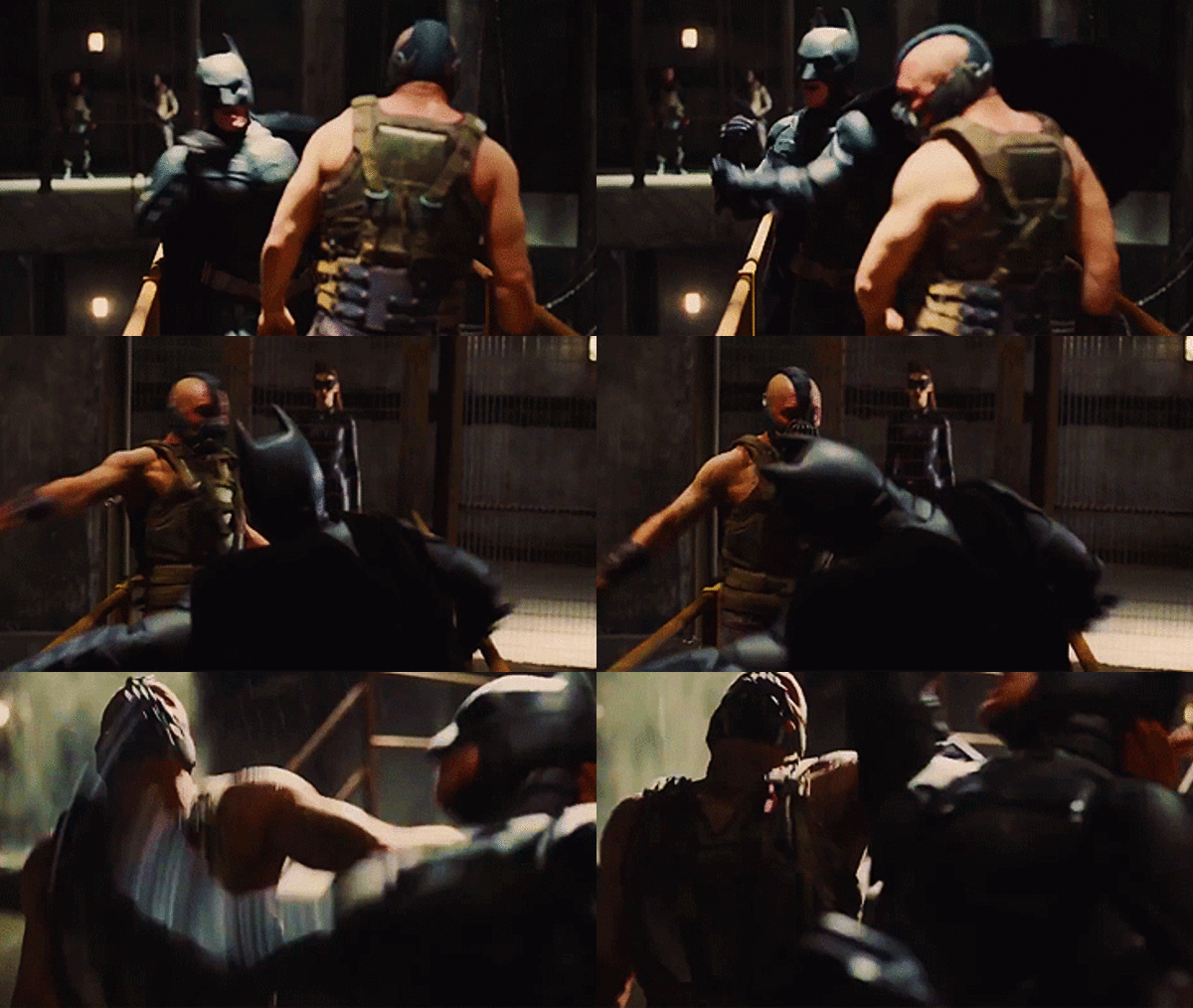
You generally can't get through more than 15 minutes of most action movies without somebody taking a heavy blow to the face and, more often than not, they'll just bounce back up and keep killing bad guys with barely a scratch on them.
Whereas anyone who has ever walked into a door will attest to the fact that the human body actually bruises like a peach.
If the hero ends up getting his face rearranged, all it takes is a quick patch up in a stairwell (preferably with the help of a tasty lady person) and all that will be there to show for it is a sexy little cut on his cheekbone and maybe the odd stoic wince if he exerts himself too much.
Hollywood rarely shows just how much stuff hurts (and, no, that knowing little "ouchy" shake of the hand after throwing a punch at someone's jaw doesn't count), let alone the amount of visible damage taking a fire extinguisher to the face is going to leave.
A broken nose will give you two black eyes, minimum. These will bloom almost immediately and will be there in all their unsexy glory for at least a week or two, and that's just the tip of the iceberg.
Unfortunately, a hero with a swollen, wonky nose, several missing teeth, and massive internal bleeding tends to take the shine off of a film's dramatic climax, so we'll all just have to accept that they've all got special healing abilities.
5. Gigantic Moons
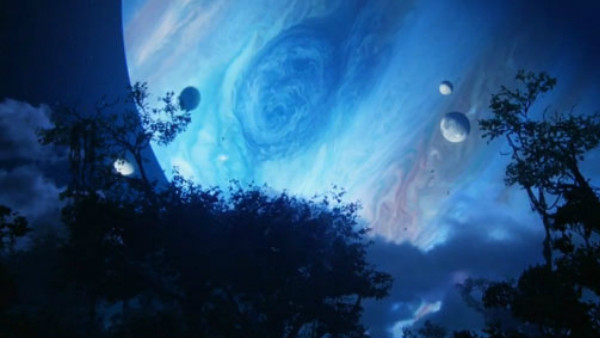
Look up to the sky on pretty much any alien planet and you'll probably see at least one enormous, looming moon taking up about half of it. You might even be able to pick out features, rings or the odd moon-mining colony.
It makes our little, thumbnail-sized moon look positively boring.
The inhabitants of these lunar-dominated planets, however, almost always fail to acknowledge the effects of having such a large gravitational object so close to their planet.
They never even mention the enormous tidal flooding that would destroy everything in its path, forcing them to either constantly rebuild, or somehow live above the flood level. They are similarly silent on the subject of the regular, devastating earthquakes and the constantly erupting volcanoes caused by the moon's effect on the planet's geology.
Nobody even bats an eyelid at the lengthy eclipses that would plunge the world into darkness on a regular basis, or even the fact that their weight would fluctuate wildly as the moon's gravity pulls them towards its surface.
Not to mention the fact that, if the planet is anything like the Earth (and as we have already established, they almost always are) it's own gravity would rip the moon apart, reducing it to rubble arranged in Saturn-like rings. Which would, admittedly, look just as cool.
4. Nuclear Power Station = Atom Bomb Waiting To Happen
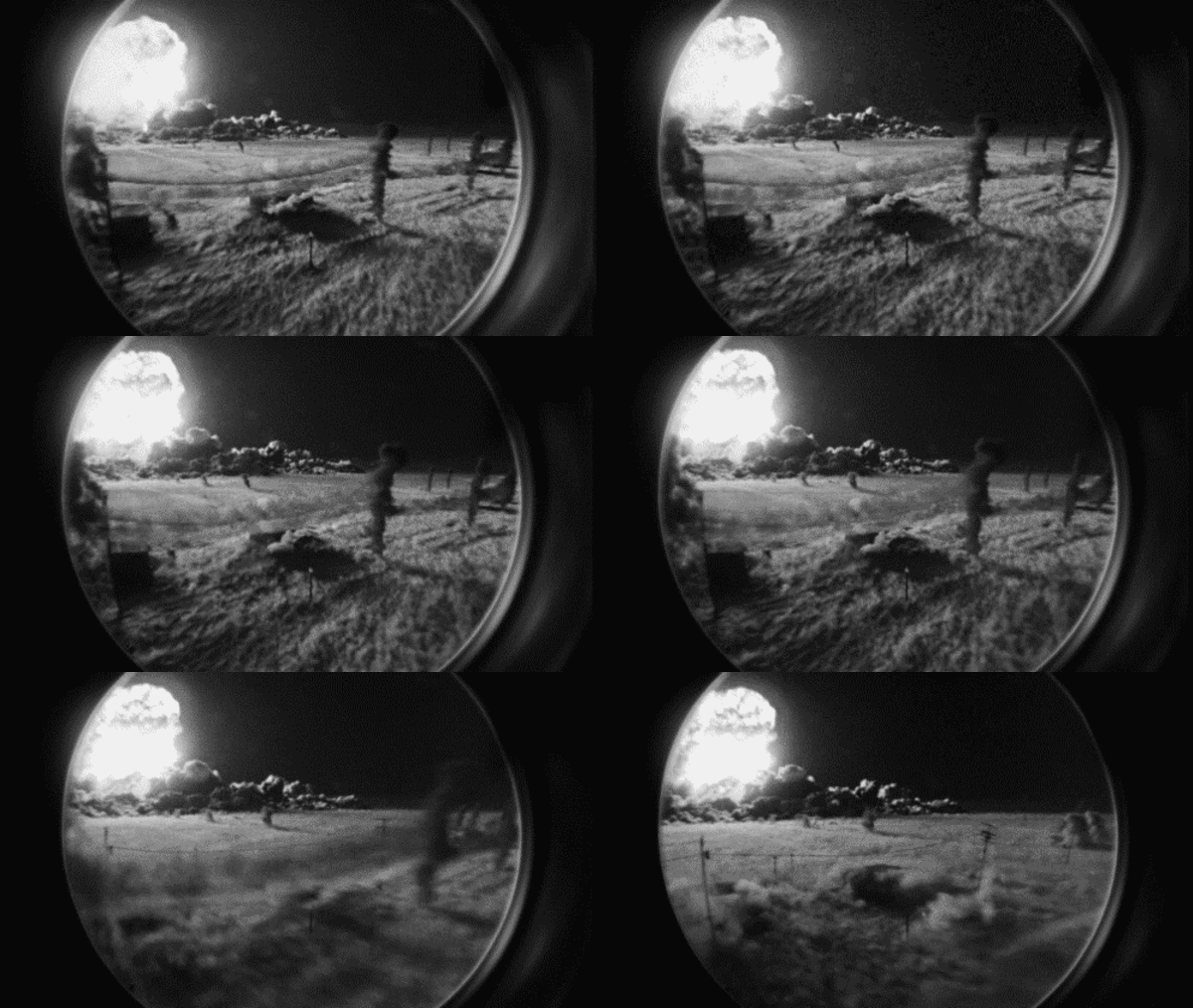
A little bit of knowledge is a dangerous thing. The fact that "nuclear power" and "nuclear weapon" use the same word is enough for most writers and the two things are largely interchangeable or at least easily transformed from one to the other.
According to Hollywood, a nuclear reactor of any kind is always mere seconds from going up in a mushroom cloud and blowing everyone into their own shadows.
In reality, setting off an atomic bomb is an incredibly complex and precise process that is more likely to fail than go off accidentally. Any interference with a nuclear weapon is much more likely to disable it than cause any damage, and that's a device that's designed to explode.
A nuclear power plant is designed to do the exact opposite of explode (that's not explode rather than implode for all the pedants at the back) and much of its bulk is made up of failsafe after failsafe to ensure that nothing ever goes bang and, if it does, it is always well contained. Even if it did go into meltdown, that's all that would happen. It would melt into a gooey pile of slag, not explode. Expensive but not exactly deadly.
Oh yeah, and nuclear reactors are supposed to be "going critical". That means it's working properly, not that it's about to meltdown.
3. Asteroid Belts
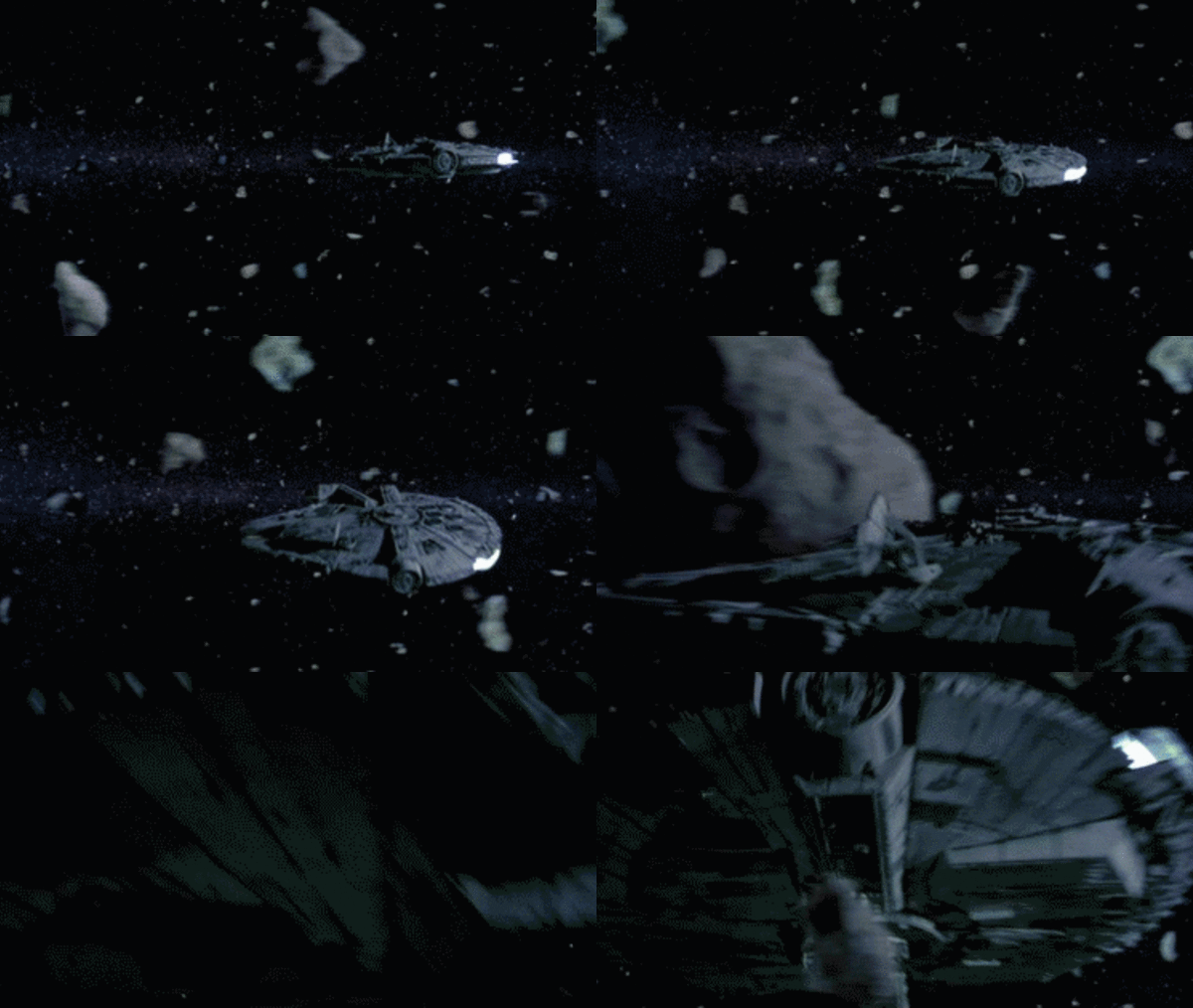
Asteroid belts in sci-fi films generally seem to either take on the persona of a minefield or a thickly wooded area depending on what our hero is using it for.
The idea that an asteroid belt is a highly dangerous region of space that needs to be carefully and skilfully navigated is pure unadulterated poppycock.
No matter how cool it looks, you probably won't have to do any of that nifty dodging and diving because asteroid belts are mostly made up of empty space (and don't even get started on the idea of "losing them" in an asteroid belt as though it's some kind of maze).
On average, most asteroids in a belt are spaced at 93 million miles apart, that's pretty much the exact distance between the Earth and the Sun, so your little ship is going to be absolutely fine.
In fact, you could probably cruise right on through the belt without ever coming across an asteroid and, even if you did, you'd see it coming a mile (give or take a few million) off and would be able to calmly adjust your course.
Granted, this is less exciting than dodging around a celestial minefield, but it's a hell of a lot safer.
2. Star Fields
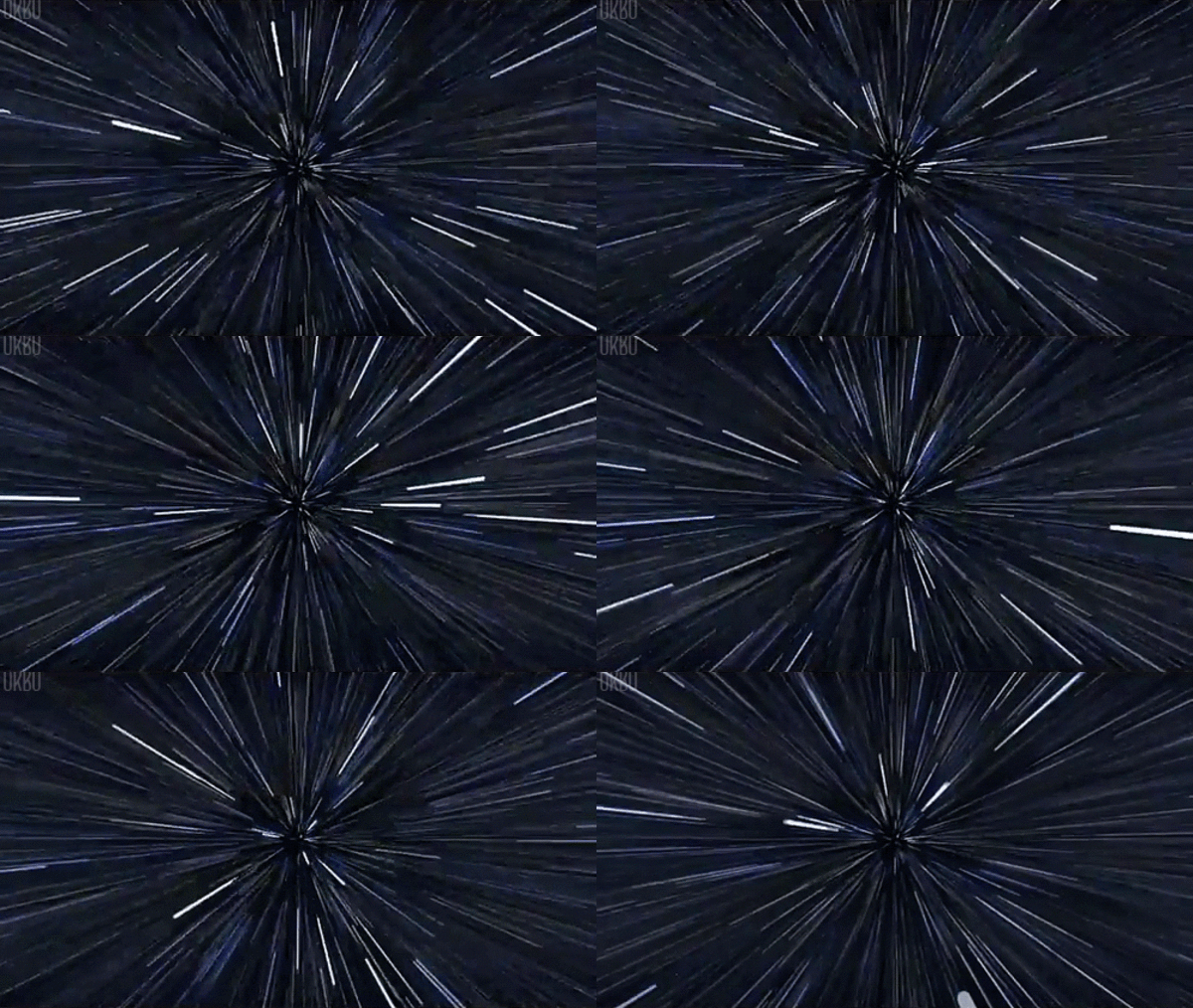
According to filmmakers, if you put your foot down in space then the stars will go streaking past you, possibly blurring into bright white lines.
All very exciting, but about as realistic as the plot of Made In Chelsea.
This effect is generally put in by directors to indicate movement such as we earthlings are used to on our tiny little planet, seeing as what you would really see is a big fat nothing.
As Douglas Adams so concisely put it, space is big. Really big. So big that you could travel a million miles in a straight line and feel as though you haven't moved at all. With everything literally billions of miles away from everything else, there would be nothing to produce a parallax effect, meaning that the stars will not appear to move in relation to you.
A good way to think about it is to imagine you're driving through a desert at high speed. The features at the roadside will appear to fly past you very quickly, but the mountains in the far distance will barely seem to move at all.
This is you in space, but instead of a roadside, there is a vast and empty void, and instead of distant mountains there's just the ancient light from impossibly remote galaxies that may or may not even still exist. Cheery thought, isn't it?
1. Climate Change Happens All At Once

Thanks to the flood of apocalypse films to hit our screens of late (no pun intended), you'd be forgiven for thinking that one day the arctic ice is all going to fall into the sea, asteroids will rain down from our polluted skies and we'll all go the way of Atlantis.
The stern advice behind these films is that we've all been very bad to Mother Nature and now she's going to make us pay in one fell swoop. Glaciers and tidal waves will roll irresistibly over our arrogant little cities (preferably destroying some well-known landmarks) and it's all going to be very dramatic.
Unfortunately, that's not quite how it works. It can take a thousand years to enter an ice age and, considering the fact that a thousand years ago we thought that the sun went round the earth, that's more than enough time for us to either adapt, escape or prevent it.
That's the glass-half-full viewpoint, but there's also a much more pessimistic side. The actual effects of man-made climate change are not going to be nearly so exciting as tsunamis and sudden ice ages. What is more likely to happen is that we will simply pollute and waste our way back to the Middle Ages, over an imperceptibly long and drawn out period of time.
Basically, the world really does end, not with a bang, but a whimper.