11 Worst Ideas George Lucas Ever Put On Film

"No George, that's a terrible idea," said no-one ever. Unfortunately.

Despite the many criticisms he tends to attract, George Lucas is smarter than any of us. He has an encyclopaedic knowledge of things that you couldn't actually find in any encyclopaedia, and was a film scholar back when that meant long days tracking down obscure theatres or film prints in university basements rather than pouring half-heartedly over the internet and wading into forum debates. He is also one of the smartest advocates of popular film as art - hence his commitment to blockbusters and epic scale - and lest we forget, he invented Star Wars. Only a genius could have created Tatooine, or conceived the Death Star, and only a genius could have made millions upon millions of people care about the adventures of a charming smuggler, his hirsute sidekick, a war-weary princess, and a farm boy with a destiny as if generic boundaries didn't even matter. It's just a shame that that self-same genius has to be considered one of the worst decision makers in the history of modern cinema. It is no contradiction to say that George Lucas has proven time and again that he can generate great ideas, it's just that these ideas are culled from thousands of really bad ones; it's very much a case of sifting through tonnes of mud to find the elusive gold nuggets. For every Darth Vader there's a boring Mace Windu, or a green, gilled Han Solo, and there's a reason that Lucas had to do go through four radically different drafts before a studio would accept his script. Luckily, a lot of people stopped most of Lucas' worst ideas from making the leap from page to screen, but then, unfortunately (and rather brilliantly, it has to be said), Lucas engineered a position of power for himself that meant he basically had complete creative control, and was unquestionable, because of his past achievements. And that's when people started saying no to his bad ideas a lot less frequently, and the graph of success took a serious nose-dive. As far as we now know, Lucas will not be making films ever again, and had he not made so many missteps, we might well have seen a lot more of his projects on the big screen. As it is, it was the kind of mistakes listed within this article that ultimately put a black mark against his reputation...

11. Jar Jar Binks

Let's just get this one out of the way right away. Many a well-meaning white man has tried to create characters and storylines depicting the trials of indigenous people throughout the world, sometimes with allegory and sometimes with actual portrayal, and have ended up creating characters who are unintentionally racist. And with his alien patois, his goofy ineptitude, and his astounding lack of dignity, Jar Jar Binks' more stereotypically racist characteristics are particularly reductive. But that's not the most worst part about him: those factors are not merely problematic, they're annoying. Binks is regularly cited as the standard-bearer for George Lucas' intent to pander to kids; the character seemingly serves no other purpose than to entertain children with his wacky antics and funny voice, and the idea of a character like that appearing in the Original Trilody is mostly an abomination. His entire plot at times seems badly shoehorned in, merely so the character can follow the action around and do the world's most obnoxious physical comedy routine to distract from the routinely tedious discussions on intergalactic trade. Unfortunately, this wasn't the first time George tried to flirt with the youth market.

10. The Ewoks

By most accounts, Return Of The Jedi was supposed to be an incredibly bleak film: characters were supposed to die, romances were to be doomed, and innocence lost, and some of this still shows through, especially in the Tatooine sequence that begins the film. The move to lighter fare was apparently decided early in the scriptwriting process as darker, more intriguing ideas were dropped in favour of a "family-friendly" bent - allegedly, in order to sell more toys. You see, George Lucas gave up much of his salary from the first Star Wars to convince the studio to make the film, and in exchange, all he asked for was the merchandising rights. He then turned that around when the film was a success and started to produce a myriad of action figures, playsets, and PVC lightsabers, and ensured himself a giant, pretty much unprecedented pay day. The Ewoks were seen as the most egregious play for children's hearts and piggy banks: they hijack the story for the better part of an hour, get into all sorts of hijinks playing with our heroes' complicated technology, and unthinkably manage to defeat the Empire's best troops with goofy, Rube Goldberg-esque forest contraptions. And the less said about the spinoff the better, quite frankly. George Lucas has defended the Ewoks as an allegory for the relatively "primitive" Viet Cong defeating the advanced American troops, which is not only problematic in the same way as Jar Jar Binks, but also reflects an enduring problem with the Prequel trilogy.

9. Turning The Prequels Into Political Allegory

As the years have passed, the perception of George W. Bush among his critics has shifted from war-hungry megalomaniac to doltish patsy, which makes Lucas' casting of future evil emperor Senator Palpatine as a thinly veiled fictionalization of the U.S. President ridiculous at best. Even at the time it seemed to be a poor fit for a universe built around adventure and grand spiritual struggles: it immediately dated the films, and alienated them even further from people who just wanted to go on a swashbuckling adventure to the stars. On top of all that, Lucas tried to have it both ways with his pet stories; he wanted to have the clearly evil Separatist forces being clearly evil, but at the same time have them separating from a government that was clearly turning very evil. You can see why it didn't exactly succeed.

8. Too Many Bad Guys, Too Little Evil
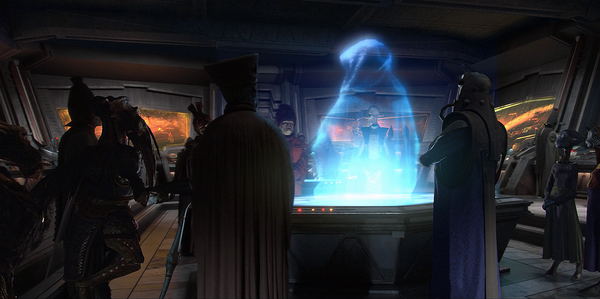
One of the powerful things about Stormtroopers is their uniformity: they are legion, they act as one, and for every one you kill, another will take its place. So what do you get when you replace them in the Prequels with a bunch of goofy droids, fragile bug-people, and a cast of leaders and generals more motley than the Dirty Dozen? That doesn't really need answering, but let's plough on anyway... You get a group of bad guys who don't really get enough time to distinguish themselves besides some pointless bickering and who never demonstrate exactly why they're a threat at all. The Prequel villains are actually members of a confederation bent on leaving the Republic for vaguely greedy reasons, and most of them seem to be vaguely incompetent, and any actual leader among them spends more time directly confronting our heroes than actual leading. Darth Vader, they are not. And it doesn't help that the most incompetent ones seem to survive until the very end of the second trilogy. Honestly, it seems like the sort of problem a little editing could have handled: condensing some characters here or there, managing confrontations differently, but that's a rare thing when there's only one guy making the decisions...

7. Writing And Directing The Prequels Himself

Each of the prequel films is about 20 minutes longer than A New Hope. That doesn't seem like too much when you consider that each Transformers movie averages about 2-1/2 hours. But that's 20 minutes of extra film that needs to be absolutely justified. Which Lucas does a horrible job at. Out of the original trilogy, only the first was directed by Lucas, and the last third of the film was split between him and two others to finish the film on time. During his time as director, he hardly spoke to the actors and his only directions then were "Faster" and "More Intense." Now, take that director, add 25 years of megalomania, millions of dollars, and the righteousness that those things give people, and you get someone who isn't going to listen to suggestion and can create a situation where he doesn't have to. Unfortunately, sometimes that even prevents Lucas from utilizing the work he had done previously.

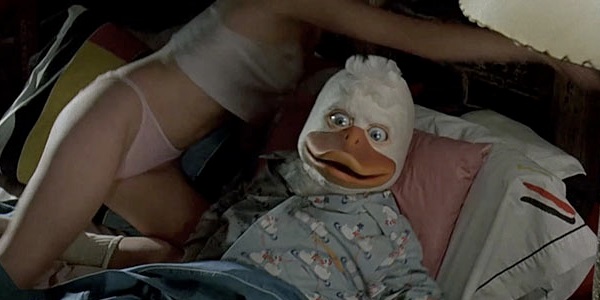
6. Howard The Duck

In the grand history of comic book movies, one film and one film alone regularly tops (or bottoms) the very worst films the genre had to offer, and George Lucas was the man who brought it to screen. It is perhaps unfair to suggest that Lucas as producer was responsible for the creative stupidity that derailed the film, or the story, but it wasn't merely the execution of the wayward comic book movie that made it fail, it was its very conception. Even now, with a strong foundation of comic book movie success behind it and a guaranteed audience for the genre, the decision to adapt Howard The Duck would be met with derision and outright humour. The character might work as a comic book character, but he is not an adaptable property in the same way as the superheroes, and eventually you just have to concede that some properties that work in one medium will not see their popularity translate to another. Lucas was the man behind the film, and as such he is to blame for that decision: it was he who introduced the character to writer/director Willard Huyck and writing partner Gloria Katz, and it was because of his influence that Universal came on board, because the studio had passed on previous projects that Lucas was involved in, and which had subsequently been successful.

5. Killing Padme

There's a rare quiet and bittersweet moment in Return Of The Jedi between Luke and Leia, where Luke asks Leia what her mother was like, and it's a really loaded moment, with one person trying to broach a theory and live vicariously, while the other is recalling a place they can never go back to: https://www.youtube.com/watch?v=MDYX_PgorRY In the Prequel Trilogy, Lucas didn't even try to honour that moment, sticking instead to his original idea that Anakin's love had to die immediately to help his progression to the Dark Side on. Even though it made Leia look like either a liar or a fantasist. Someone who put as much time and effort into generating an entire universe such as Lucas could have a specific explanation for every choice, with the ultimate goal to preserve the 'reality' of said universe and to make choices that work for the characters in the moment, but there are so many times in the prequels where that sort of fidelity to his original ideas undercut great emotional moments in the chronologically later films. It's almost forgivable, though, in comparison to George Lucas' most famous moment of cultural amnesia...

4. "Reimagining" The Original Trilogy (After Pretty Much Decrying That Sort Of Thing)
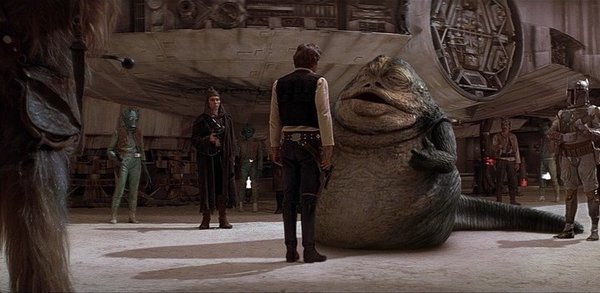
In 1988, George Lucas testified in front of the U.S. Congress against the continued digitization, colorization and re-editing of black and white film classics. In his own words:
"In the future it will become even easier for old negatives to become lost and be 'replaced' by new altered negatives. This would be a great loss to our society. Our cultural history must not be allowed to be rewritten."
It would be foolish to deny the rights of creators to alter their works: Blade Runner would not be nearly as adored as it is now without Ridley Scott's Director's Cuts, and the original Star Trek remastering actually added to the creative vision of Roddenberry and Co, but the hypocrisy of George Lucas lies in the excess of his changes. Whole scenes were added that were rightfully cut in the first place, and worse still, many of ILM's original effects were replaced with new digital renderings (though credit to ILM for multiple, harmless uses of their signature "Praxis Effect") which erased much of the beat-up charm of the original. Contrary to what most would think, sometimes charmingly antiquated effects contribute to a picture that feels lived-in and helps with the suspension of disbelief, rather than hindering it. Or maybe all these new effects were a warm-up for one of Lucas' biggest excesses.

3. Pod Racing

George Lucas' first love was car racing, and his first student film was dedicated to that love. In that respect, it's nice to see that he involved one of his earliest passions in the prequels, but it's not something that really should have taken up the middle third of a 2-1/4 hour-long film. There are several problems with the pod racing sequence in Episode I, from the artificially raised stakes to deferring dramatic blame, but easily the worst part about it is something endemic to the prequels: we are introduced to a bunch of characters the audience has no time to care about, who are then killed to create a false sense of danger. Certainly, this happens all the time with the original trilogy, with so many rebel fighter pilots getting blown out of the sky, but there's cinematic precedent for this: many of those scenes were shot-for-shot homages to classic cinematic dogfights, bringing us into the cockpit to get that sense of fear and focus that sort of combat inspires. Looking at a CG alien hit a stalactite just doesn't have the same effect. But sometimes the smallest things are the biggest deal-breakers...

2. "Only Imperial Stormtroopers Are So Accurate."
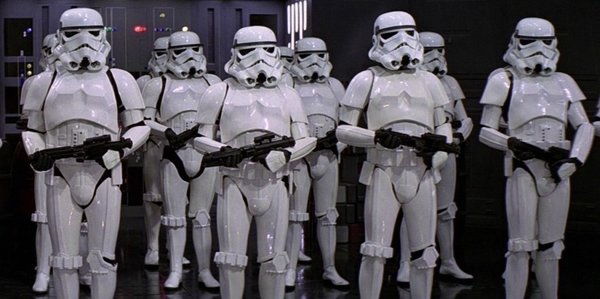
Without this line, no one would have had a problem with our heroes running around the Death Star unscathed; no one would have noticed how often these allegedly elite soldiers missed their mark, and not an eyelash would have been batted at the idea of a farm boy, a princess, a carpet, and a low-level criminal stacking a body count three times their number when their highly-trained enemies have bigger guns and regularly walk around in groups of twenty. All it would have taken is George Lucas saying to himself, "you know George, maybe you should cut that part, or have Alec Guinness re-record the line in the booth about some other piece of evidence of the stormtroopers' evil, rather than leave in that part where he points at imaginary blast points and makes everyone look like an idiot." But, as we well know, George doesn't even listen to George. Even when, considering every single one of his faults, he really should have.

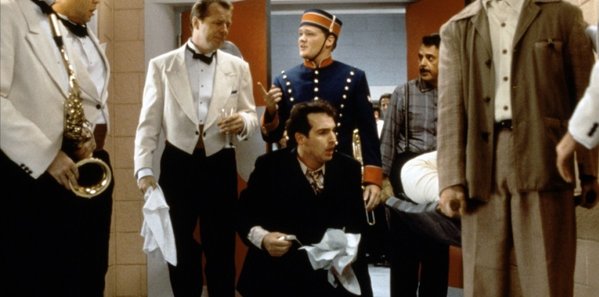
1. Radioland Murders

it would have been easy to make this list a totally Star Wars focused series of gripes, or to give the top spot to Indiana Jones 4, but too many people share the blame for that film and Howard The Duck was too bad to miss out. And in Radioland Murders, we have a film that was all Lucas, and which plays like a highlight reel for all of his greatest faults: A passion project born out of an obsession that takes precedent over telling a coherent story. Attention to all the wrong details. A ridiculous number of characters that are impossible to differentiate. A plot that is more about moving from set-piece to set-piece than developing believable moments. Trying to pitch the film to a generation that he knows nothing about, instead of honest storytelling. Radioland Murders was Lucas paying tribute to both classic radio dramas and Abbot and Costello films, but unfortunately, it languished in development hell for 20 years until Lucas was able to convince the studio that CG technology had developed to the point that they could digitally insert all of the backdrops. The studio agreed to develop it on the condition that Lucas rewrite the script for the MTV generation, which in the history of misconceptions, has to rank pretty highly. What we got was Lucas at his most tone deaf, with a film that looked like garbage, and, in the words of the late, great Roger Ebert, "It's all action and no character, all situation and no comedy." It is to all of our cultural shame that we ever allowed him to make a second set of Star Wars movies after this one. Which of these do you think are the worst ideas George Lucas ever put on screen? Share your thoughts below in the comments thread.

Contributor
Contributor

I am a writer and musician born and raised in Montana. I have done everything from fixing fences in Glacier National Park to curating the music library at KBGA Missoula. I am also a lazy jerk.