12 British Horror Films You Need To See

Terror to delight fans of the macabre.

Prior to the 1950s, British horror consisted mainly of Tod Slaughter melodramas and the occasional vehicle for Boris Karloff or Bela Lugosi. A pair of truly notable films €“ Alfred Hitchcock€™s The Lodger (1926) and Dead Of Night (1945) €“ broke the mould, but the genre met with disapproval from the UK censor, who banned Freaks and Island Of Lost Souls (both 1932) for decades. The change came when Hammer released The Curse Of Frankenstein in 1957, which gave punters a home-grown monster movie with unprecedented levels of gore. The film played to packed houses and as Hammer€™s success continued, rival studios sprung up and their output made it very clear that there was much more to British horror than watching Christopher Lee and Peter Cushing putter around a gothic castle. From anthology films to zombie movies, there€™s a certain consistency to horror pictures from the UK, an atmosphere and a tongue in cheek attitude that sets them apart from slick mainstream fare. A low budget Brit flick can achieve more with a well-chosen location and a few good actors than any $200 million blockbuster you care to mention. The following films are available on DVD or streaming services and you really should attempt to track them down.


12. Cockneys Vs Zombies (2012)

If Shaun Of The Dead was a quaint British film that just happened to feature walking cadavers, Cockneys Vs Zombies is its East End cousin, the ruder, cruder and decidedly lewder relative that€™s more interested in exploding heads than romantic sub-plots. When the dead start to rise, Andy (Harry Treadaway) and Terry (Rasmus Hardiker) immediately fear for the safety of Ray (Alan Ford), the grandfather that raised them after their hippie parents unwisely took on police marksmen with machine guns (long story). They decide to set off on a rescue mission, little realizing that Ray€™s safely ensconced inside a retirement home with Richard Briers, Honor Blackman and a cache of assault rifles. This is The Walking Dead scripted by Ricky Gervais, and your enjoyment will depend upon watching British TV veterans portraying octogenarian zombie killers (with walking frames and AK-47s). Gone are Shaun Of The Dead€™s cricket bats and polite humour, and in come decapitations, raucous jokes, plus one-time Bionic Woman Michelle Ryan as a leather-clad, samurai sword-wielding locksmith (why not?). It€™s not gentle or genteel, but it is loads of fun.

11. The Legend Of Hell House (1973)

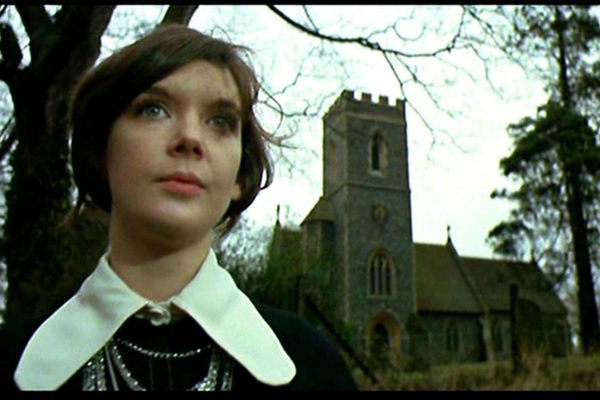
The Legend Of Hell House boasts a fine script (by Richard Matheson, based on his novel), good direction by John Hough (Twins Of Evil) and a cast that includes Roddy McDowall, Pamela Franklin, Clive Revill and Gayle Hunnicutt. It€™s a spin on Shirley Jackson€™s The Haunting Of Hill House, with a team of paranormal researchers sent to €œthe Mount Everest of haunted houses€ to collect evidence of life after death. Once inside, the crockery starts to rattle, furniture moves by itself and there€™s a black cat that leaps out at nicely-timed intervals. Also, the movie employs a number of plot devices not normally seen in PG-rated fare. Overcome with €œautoerotic phenomena€, the lead investigator€™s otherwise dull wife attempts to seduce McDowall while, later on, Franklin has an erotic encounter of her own with a spirit €“ a scene that was later spoofed, none too well, in Scary Movie 2.

10. From Beyond The Grave (1974)

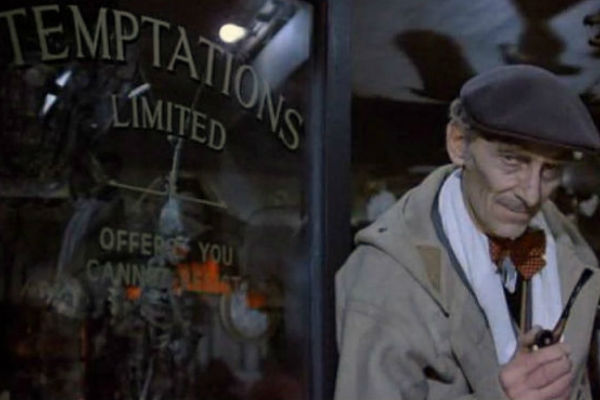
According to Hollywood, anthology films never work and fail commercially, so it fell to Amicus to make the pictures that came to define the genre (Dr Terror€™s House Of Horrors, Torture Garden, The House That Dripped Blood etc.), the most fun of which is From Beyond The Grave. Clever, atmospheric and (at times) very funny, the film comprises four stories (based on the work of R Chetwynd-Hayes) linked by Peter Cushing€™s antique shop, Temptations Ltd, which has €œlots of bargains. All tastes catered to €“ and a big novelty surprise comes with every purchase.€ The guest stars include David Warner (who purchases a haunted mirror), Donald Pleasance (who shows a child €œan act of kindness€ by murdering his parents) and Ian Ogilvy (who installs a door that opens on another that opens on another dimension). Special mention, however, must be made of Margaret Leighton as Madame Orloff, a flaky clairvoyant who specializes in exorcising elementals.

9. Witchfinder General (1968)

Witchfinder General is one of the most downbeat horror films ever made in Britain, so it follows that its central character, real-life witch hunter Matthew Hopkins, should be one of the most coldblooded people Vincent Price ever played. There€™s no underlying campiness to Hopkins, no sassy one-liners and certainly no nudge-wink acting from Price (in one of his most commanding performances) to let you know that it€™s all in jest. Whether inserting needles into the back of a suspected witch (in order to locate €œthe Devil€™s mark€) or allowing his assistant to torture a young woman (after raping her first), Hopkins is not someone you take lightly. The approach to the character reportedly caused tension on the set, with Price telling director Michael Reeves, €œI€™ve made 87 films €“ what have you done?€ To which the 24-year-old filmmaker replied, €œI€™ve made 3 good ones.€

8. The Wicker Man (1973)

If you€™re only familiar with this film through the 2006 remake with Nicolas Cage, please be aware that the 1973 original features neither an American cop haunted by visions of a girl he couldn€™t save nor an island of tyrannical women. Also, at no point does the hero perform kung fu or steal a bicycle at gunpoint. Quizzed about the remake on its release, director Robin Hardy said it removed all the songs, sex, and atmosphere from his movie and substituted nothing worthwhile. A remake was never going to work because the plot requires the audience to believe in the existence of a Pagan cult on a remote Scottish island that lures an outsider to their commune. Without giving too much away, there€™s a reason why the character has to be an adult male virgin. With a cast that includes Christopher Lee, Edward Woodward, Ingrid Pitt and Britt Ekland, The Wicker Man is both uniquely British and one of the most thrilling films ever made in the UK, as well as a fine example of what can be achieved on a low budget.

7. The Descent (2005)

The Descent has a shot at being the best British horror film since 28 Days Later, with which it bears comparison €“ it€™s a grim, unrelenting survivalist drama, very different from director Neil Marshall€™s earlier Dog Soldiers (2002). Released in the UK shortly before The Cave, The Descent tells a very similar story about trapped explorers, but does so with more verve and conviction. Here, the characters don€™t have €œcannon fodder€ written all over them, and since we care about whether or not they live, Marshall€™s able to ratchet up the tension to almost unbearable levels. In the US theatrical cut, the film ended abruptly and bizarrely, with Shauna MacDonald escaping the cavern and returning to her car, only to run into one of her supposedly dead friends. The original British ending, where MacDonald€™s escape was revealed to have been a dream, makes more sense, even if it borrows heavily from Ambrose Bierce€™s An Occurrence At Owl Creek Bridge.

6. Don't Look Now (1973)

Don€™t Look Now opens with the most terrifying thing imaginable €“ the death of a child, which establishes the film€™s grim, downbeat tone. It€™s also the plot device that causes Julie Christie and Donald Sutherland to uproot and leave for gloomy-looking Venice where, for a variety of reasons, the tragedy continues to haunt their new life. To reveal more would be unthinkable, because this is a movie that audiences have to experience for themselves, armed with as little knowledge as possible, which is equally unthinkable in the age of Rotten Tomatoes. The less you know, the more enjoyable the journey, and the more satisfying the ending (unless you€™ve already read Daphne Du Maurier€™s short story). Sure, you can dismiss Nic Roeg€™s direction as arty and pretentious if you wish, but doesn€™t his handling of the material add to the overall dreamlike quality of the narrative? You decide.

5. Quatermass And The Pit (1968)

Originally created for a 6-part BBC TV serial, Professor Bernard Quatermass is a pioneer of the UK€™s space programme who, in the manner of all TV scientists, finds himself confronting alien forces on a weekly basis. In Quatermass And The Pit, those forces explain how mankind evolved on Earth, and the answer holds up remarkably well, especially for a 1967 movie made on a meagre budget, featuring no major stars. There are several familiar faces, though: Julian Glover (For Your Eyes Only) is a pompous Colonel, while Hammer regulars Barbara Shelley and Duncan Lamont also appear. Literate, fiercely intelligent, yet also capable of appealing to a mass audience, this is the ultimate filmed version of Kneale€™s work (he was considerably less enthusiastic about Hammer€™s The Quatermass Xperiment) as well as one of Hammer€™s best films.

4. The Abominable Dr Phibes (1971)

If you had to explain to the uninitiated exactly what it is that makes Vincent Price such an icon, hopefully you€™d direct them to his portrayal of Dr Anton Phibes, a demented Biblical scholar (and organist) who, following injuries sustained during a car crash, wears a rubber face mask and drinks through a hole in the side of his neck. It€™s unlikely that anyone other than Price could€™ve pulled the character off €“ capable of speaking only through an electronic voice box he created, Phibes€™s voice is seldom heard, meaning Price has to bring him to life via body language. In even his more sympathetic roles, the actor appears menacing, but here he really pulls out the stops to create a flamboyant supervillain. He€™s also conducting a vendetta against the surgeons who failed to save his wife Victoria (Caroline Munro) on the operating table. Not just any old vendetta, mind you €“ this one involves recreating the 10 plagues of Egypt from the Old Testament. So one character is attacked by rats, another is eaten by locusts and, representing a plague of hail, one surgeon encounters a machine that spews ice.

3. Hellraiser (1987)

In the mid-80s, almost a decade after Hammer€™s demise, British horror consisted mainly of would-be spoofs (Bloodbath At The House Of Death) and unwise attempts to compete with American exploitation fare (Don€™t Open Til Christmas). At least, it did until Clive Barker came along. After writing the scripts for Underworld (1985) and Rawhead Rex (1986), Barker stepped behind the camera for Hellraiser, which offered an Old Dark House gothic nobody had seen before, full of twisted sexuality and grisly violence. The film€™s antagonists, the Cenobites, looked like demons in fetish gear, and as they pursued a skinless creature that had escaped their clutches, it was clear that British horror had entered a new era. Their leader, originally named Priest and called Lead Cenobite in the script, became such an iconic figure that he returned in 7 sequels, making actor Doug Bradley the first new British horror star since the heyday of Hammer.

2. Peeping Tom (1960)

Peeping Tom opened shortly before Psycho in the UK €“ and promptly wrecked the career of its director. In 1960, Michael Powell was the much-lauded co-director of The Tales Of Hoffmann, A Matter Of Live And Death and The Red Shoes, but here he was directing a sleazy film about a photographer who murders women and captures their expressions on film. Had he lost his mind? It may involve a psychopathic killer, but Powell€™s film couldn€™t be more different from Psycho. It€™s a cold, clinical film, that never skimps on the portrayal of London€™s seamier side. The first scene shows the main character picking €“ and then murdering €“ a prostitute, which is very different from Psycho€™s €œcontroversial€ shots of Janet Leigh in her underwear. Grim and unrelenting, this is by no means a €œfun€ picture, but it appears to have influenced Hitchcock€™s later career. Returning to London in 1972 to shoot Frenzy, Hitch not only cast Anna Massey, Peeping Tom€™s lead actress, but when it came to staging the first murder, Hitch showed it in full close-up, just like Powell.

1. 28 Days Later (2002)

Many pictures claimed to be the €œbest British horror film since Hellraiser€ but 28 Days Later is the real deal, and just like Clive Barker€™s film it€™s a landmark picture that ushered in a new era of horror. Taking its inspiration from George Romero€™s zombie films (though without a single walking cadaver in sight), the film offers one of the most uncomfortable (and uncomfortably believable) accounts of social collapse ever seen in a British film. Working from a script by Alex Garland (Ex Machina), director Danny Boyle remains true to the spirit of Romero€™s films while eschewing their humour and pseudo-scientific explanations. The result impressed Stephen King so much that he bought out a showing of the picture in New York City. The film achieves its extraordinary effects by dropping many of the traditional motifs associated with zombie films in favour of playing on the more modern fear of disease. The movie will remain the ultimate apocalyptic vision for some time €“ until our fears change, anyway.

Contributor

Ian Watson is the author of 'Midnight Movie Madness', a 600+ page guide to "bad" movies from 'Reefer Madness' to 'Poultrygeist: Night of the Chicken Dead.'