12 Great Movies That Are Visually Flat
Gotta love Pulp Fiction's TV-movie style directing.
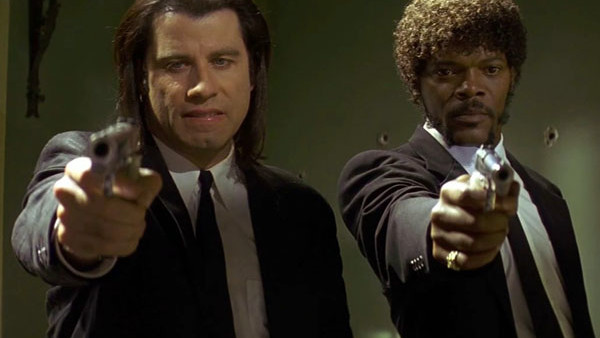
Film is a visual medium. Therefore, the quality of the directing, cinematography and editing are essential to a film working at all. Additionally, films being visually striking is often what will elevate a film to a higher level of quality.
So in that case, surely being visually stunning is absolutely essential for a film being great, right? Actually, no. Since film is constructed from so many different moving parts - such as acting, screenplay and story - a film can still be absolutely awesome if it gets those other things right, even if the visuals are flat.
These following twelve movies are great examples of this. They are disappointingly weak on a visual level but they do still offer a well-rounded and strong viewing experience overall since they were so on-point in terms of their writing and performances. That they managed to overcome this major flaw so well is a testament to their overall strength.
12. Hoodwinked!

Hoodwinked might be the most underrated animated film of all time.
A mystery story featuring Red Riding Hood's characters and told in a similar style to Akira Kurosawa's Rashomon, Hoodwinked is a hilarious, genuinely clever and superbly-written low-budget animation that's also got a collection of terrific vocal performances.
It is a criminally under-appreciated movie - which is arguably better than Shrek (Editor's note: it's not) - and the critical scores are unfairly low, but one thing critics were bang-on right about was that the animation is truly awful.
Partly because it's far more low-budget than most animated films, the entire thing looks like it was made for TV; it is truly rare to see such unappealing visuals in a commercially-released animated film. The atrocious CGI is pretty distracting, but the film is still very much worth seeing and if you can overlook this, you're in for a treat.
Just don't go anywhere near the sequel.
11. Ant-Man

With the Marvel Cinematic Universe, flat visuals are an occasional problem. This problem has affected a few of the franchise's films and Ant-Man, in terms of the genuinely good MCU films, is probably the worst offender.
Ant-Man is a very fun and underappreciated superhero movie with a cracking script and some terrific performances, but the underwhelming cinematography is somewhat distracting throughout the film's run-time.
What makes it all even worse is that Edgar Wright was originally going to direct it and since he is a Brilliant visual stylist, this no doubt would've been one of the most visually striking MCU films had he not eventually departed the project (to the disappointment of just about everyone). Instead, Peyton Reed, a director of mediocre studio comedies, helmed the film.
Reed's direction isn't the worst ever; rather, it's just very uninteresting and one can't help but feel like he was out of his depth, since this isn't his normal genre at all.
Still, when he came back for the film's sequel, in spite of that film's overall mediocrity Peyton Reed's direction had improved quite a bit, indicating he'd found his footing in regards to directing outside of his normal genre.
10. Xala
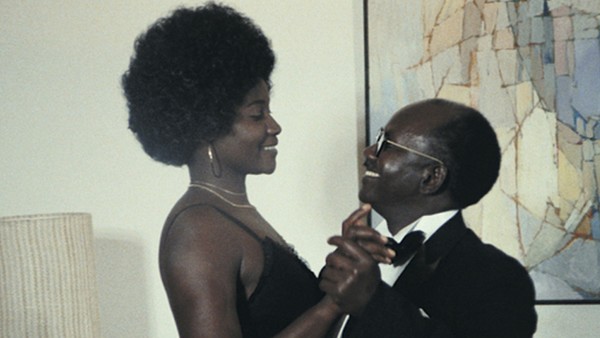
A 1975 Senegalese film made by Ousmane Sembene, who is one of Africa's most significant directors, Xala is a classic of African cinema and a darkly funny, truly scathing satire of corruption in Africa's post-independence governments.
Xala is a very interesting movie and the story - a corrupt businessman is cursed with erectile dysfunction on the day of his marriage to his third wife - is right on-point, but the cinematography and visuals are pretty awful.
With uninteresting camerawork and a low-budget, TV-movie vibe to the whole thing, Xala is certainly not a pretty picture. This is a clever film which is still an enjoyable, stimulating watch and a very good work of writing (aside from some poorly-written female characters) but on a visual level it underwhelms. It's certainly not something you should feel any particular need to catch on the big screen.
9. The Guilty

This gripping Danish thriller is set entirely within a police call centre and follows a police officer (Jakob Cedergren) as he tries to help an apparently kidnapped woman over the phone.
The Guilty is a very smart movie with an excellent script and a truly great mid-film plot twist, so it is 100% worth seeing, but the drab, somewhat TV film-like cinematography is a little distracting.
The film's lack of visual panache isn't entirely surprising. Films set entirely in one room can be quite difficult to make particularly cinematic and while some films - such as 12 Angry Men (1957) and Locke (2014) - have done this very well, plenty of others have struggled and this is one of them. Still, it more than compensates for this.
8. Doubt

Doubt, written and directed by John Patrick Shanley, is based on Shanley's play of the same name. It tells the story of a nun (Meryl Streep) who becomes convinced a priest (Philip Seymour Hoffman) in her parish is sexually abusing a boy.
Doubt was obviously a very good play, since the film's screenplay is undeniably strong, and the acting from Streep, Hoffman, co-lead Amy Adam and Viola Davis (in a small but scene-stealing turn) is completely magnificent. All four of them were, deservedly, nominated for Oscars.
Unfortunately, in spite of the best efforts of cinematographer Roger Deakins, Doubt still very much feels like a filmed play and thus falls into the same trap that plenty of other stage-to-film adaptations do. On a cinematic level it never really comes to life and while the film is still a good one, there is a sense that it could've been more had it moved away from its theatre roots a bit more.
7. Room

Room is in the same category as many Best Picture nominees are these days. It's a strong bit of writing that tells a very good story with some powerhouse performances included too. Those elements are focused on at the expense of its technical qualities.
As a result, Room doesn't offer an awful lot on a visual level. Director Lenny Abrahamson does an absolutely solid job (even if his Oscar nomination for Best Director was rather odd), but if you're looking for something that's visually striking, Room might not be your thing.
Still, as with the rest of the movies on this list, the lack of visual flair doesn't matter all that much in the end. The writing and acting were the more important elements of the film and since they are so on-point, it's easy to overlook the film's somewhat flat visuals.
6. A Streetcar Named Desire

This legendary 1950s Hollywood drama is one of the best film acting showcases out there, with all of its stars - especially Marlon Brando and Vivien Leigh - delivering masterful performances.
It adapts Tennessee Williams' play of the same name. The script is phenomenal and backs up the performances very well, but this does have the same problems as the aforementioned Doubt: it's just a filmed version of a play that never feels especially cinematic. As a result, the film isn't very interesting visually.
Nevertheless, A Streetcar Named Desire is still a strong affirmation of director Elia Kazan's status as one of, if not the best, directors of actors of them all and the film remains a classic despite the technical flaws.
5. Dallas Buyers Club

An excellent Oscar-Bait movie, Dallas Buyers Club tells the true story of Ron Woodroof (Matthew McConaughey), an AIDS patient in the 1980s who started illegally distributing drugs to help himself and other sufferers of the disease.
This one is very much a message movie where the focus is on telling a very interesting true story and offering up some amazing performances in the bargain too. Due to this focus, there's a sense that the technical elements were somewhat neglected and visually, Dallas Buyers Club is a little dull.
This focus on characters and story was great but nevertheless the visuals could've been better, especially since director Jean-Marc Vallee is pretty talented overall.
If you want to see a well-written, superbly acted drama than Dallas Buyers Club is a perfect pick for that, but those who want a film that's more interesting on a cinematic level you might enjoy something else more.
For example, 12 Years a Slave and The Wolf of Wall Street - two of the other Best Picture nominees that year - offer character dramas with a lot more visual oomph.
4. Double Indemnity

Classical Hollywood cinema was never exactly known for its striking visuals; it was always more about the acting and screenplays. Since this period of Hollywood history emphasised clear, transparent visuals, many American films from this time aren't especially exciting on this level.
Double Indemnity is very much an example of this. It's pretty much the quintessential Film Noir and it boasts an amazing script and some terrific performances, but its cinematography is fairly mundane.
There's more than enough in this legendary movie to compensate for that several times over, but considering the brilliance of director Billy Wilder and the often stylish cinematography found within this genre, the lack of any true visual flair within Double Indemnity is a little disappointing.
3. L.A. Confidential

LA Confidential is one of the most enduring films of the late 90s. An excellent tribute to Film Noir, LA Confidential benefits from a brilliant screenplay, an endlessly suspenseful plot and phenomenal performances from Russell Crowe, Kim Basinger, Kevin Spacey, James Cromwell, Danny DeVito and the always underrated Guy Pearce.
It's a shame about the flat visuals though. Pretty much everything else in LA Confidential is superbly executed, so as a result the direction lacking in flair is rather jarring. Director Curtis Hanson did a solid job with the action scenes, but much of the time the rest of the movie is just straightforward, uninteresting shot-reverse shot cinematography.
There is no denying that LA Confidential is a great movie, but with stronger direction it could've been an all-time masterpiece.
2. Pulp Fiction

Pulp Fiction is pretty much the definitive post-modern film and there are few other movies which have had a more widespread cultural impact. It's also got a round-up of flawless performances and a phenomenal script with some of cinema's best dialogue.
Still, Pulp Fiction isn't perfect and although much of it holds up just fine, age has made some of its flaws more glaring. The single biggest issue with it is its flat, TV movie-style directing (as in, back when that was still an insult).
Quentin Tarantino's never been the strongest visual stylist and most of his movies aren't that spectacular direction-wise (the Kill Bill films, The Hateful Eight and Once Upon a Time in Hollywood are exceptions). Pulp Fiction is definitely the worst example of this and while it has a few nice shots here and there, for the most part Pulp Fiction is a great movie to listen to but a rather dull one to look at.
1. Spotlight

Spotlight is a brilliant drama film and one of the best Best Picture winners of the last thirty years. It tells the story of a journalistic investigation that exposed child sexual abuse by Catholic priests in Boston.
Spotlight has a great script and terrific performances, but it does have basic, mundane cinematography. This could put some viewers off, but ironically enough, this lack of visual flair arguably adds to the film in many ways.
One of Spotlight's biggest strengths is that it never sensationalises, manipulates or becomes exploitative. It allows the facts and story to speak for themselves and this transparent visual style contributes to this a lot. Besides, Spotlight is also very well-edited and this distracts from any issues with Thomas McCarthy's direction.
Overall, Spotlight is a real anomaly in that its lack of visual oomph actually enhances the entire movie. It offers conclusive proof that not every film needs to be visually stunning in order to be great. Sometimes, a stunning cast and script are all you need.