12 Harry Potter Theories Better Than What We Got
Harry's greatest sacrifice was not of his life, but of his death...
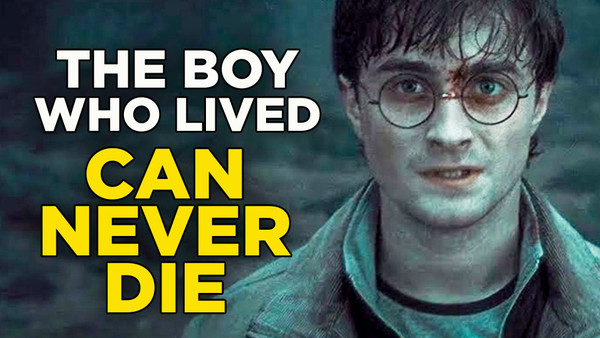
Harry Potter will never wane in popularity as long as the community continues to engage with it at the level they do. Even aside from JK Rowling's attempts to capitalise on the fanbase by releasing the Fantastic Beasts movies or expanding the Wizarding World's lore through Pottermore and her social media... exploits, the fans are a perpetual machine under their own power as well.
Even more than a decade after the release of the final book in the series, new theories, new interpretations and new appreciations of the text continue to pop up. We are such an engaged fanbase who make returning to the texts and the films a frequent event that it's possible to read something new from intelligent, knowledgable fans almost daily.
And sometimes, crucially, fans come up with better ideas than the original source material to explain missing story details or to further expand key backstories. So much so, in fact, that you sometimes wish the keys to the Wizarding World were in someone else's hands...
12. Voldemort Is A Combination Of Tom Riddle And Salazar Slytherin

The idea of Tom Riddle starting out relatively "normal" - at least according to Horace Slughorn's assessment that "if a monster existed, it was buried deep within" - and then transforming into the greatest Dark Wizard of all time (hat-tip to Grindelwald) never quite sat right. Sure, he went through a tough ordeal and there is a lot of trauma in his family's past, but the jigsaw pieces never quite fit together - particularly when you consider that a half-blood wizard would be The Wizarding World's chief exponent for blood purity and magical might.
More compelling is the theory that Voldemort is a construct of two parts - Tom Riddle and the spirit of Salazar Slytherin. Harry Potter himself and Professor Quirrell both proved that two souls can share a body, after all.
The Hogwarts founder had infamously sought immortality and we know that the magic for Horcruxes already existed when Riddle came across it. The fact that it was forbidden suggests a dark history of practical application, but also Slytherin having sought the knowledge to use himself in order to preserve some of his soul would also explain why the books were kept in a school library. Otherwise, you have to accept that Hogwarts' teachers are all just REALLY irresponsible.
Even more pertinently, he rather symbolically stowed a basilisk inside the Chamber Of Secrets as his legacy that even more symbolically emerged from his literal face when awoken. What if Slytherin left a piece of himself in the creature too and it laid in wait for a parseltongue to lure into his Chamber in order to fuse himself with the child and be reborn?
That would atone for Riddle's dramatic change while he was at Hogwarts and Slughorn's uncharacteristic idiocy in believing him to be good enough for his Slug Club. Not only that, but it could also go some way to explaining a little better why Voldemort has such notably serpentine features rather than it simply being a matter of "well, he's evil and snakes are creepy, aren't they?"
11. Dumbledore Didn't Lie About What He Saw In The Mirror Of Erised

Albus Dumbledore is one of the most unreliable heroic figures in story-telling history, by design. He's liberal with the truth, his intentions and his past because he's playing a long-game designed to save the world from its most grave threat. To that end, he tells some lies, not only to remains mysterious but also to protect Harry and his other charges.
The strangest one he tells always seemed to be when he told Harry that all he saw in the Mirror Or Erised was a nice pair of wool socks. It appeared an enigmatic fib, designed to protect something even potentially ominous, because there could be no way someone as complex as the headmaster could have such simple designs. The solution to that conundrum was never actually offered, but in hindsight, if you read between the lines, what Albus saw was probably what he saw in the past too - Gellert Grindelwald.
Even more fitting than that explanation is the theory that Dumbledore didn't lie at all. Hand-knitted items are presented in Harry Potter's world as true treasures, because they are tokens of love where money isn't necessarily available. They're also knitted without magic and used by Molly Weasley to signify acceptance (she refuses to "waste one" on Fleur), so it's not too much of a stretch to imagine that Dumbledore might himself have been given knitted gifts from his sister Ariana, who struggled with magic.
Now imagine that he rejected those gifts as silly trinkets from a sister he wished he didn't have because of his beliefs in magical supremacy. Imagine he threw them away in disgust.
Perhaps Dumbledore's eventual deep regrets at what happened to Ariana and his embarrassment at her condition led his greatest desire to be to have her around to give him something as simple as a pair of socks she'd knitted.
10. Neville Was The Real Chosen One

Though the movies chose to avoid the unspoken conflict between Harry Potter and Neville Longbottom - in terms of them both fitting the prophecy - the idea of there being two possible Chosen Ones is an intriguing idea that should never have been dropped.
Even further, the theory that Neville was indeed the real Chosen One would have been a better outcome too. The evidence is all there in the text, because as Dumbledore says the prophecy could have applied to "two wizard boys, both born at the end of July that year, both of whom had parents in the Order of the Phoenix, both sets of parents having narrowly escaped Voldemort three times."
The theory improves the revelation that Harry was simply the Chosen One because it adds even more poignancy to the fact that Voldemort chose him as his equal and his destroyer and the message that is firmly planted in the stories that your destiny can be what you make it.
Neville was a poor wizard, unable to conjure even the slightest hint of a spell until he was 8 and yet once it came, he took to it with incredible flair. Don't let his forgetfulness confuse you, Neville's ability to cast a Patronus, his Herbological skills and everything that sets him apart as a key member of Dumbledore's Army suggest that there's far more to him than the have-a-go-hero that kills Nagini.
It also adds an even more tragic note to Harry's story - imagine the horror of knowing that the trauma that defined your entire existence to the point of physical deformity was based on a mistake! - and suits the underdog to Chosen One archetype even more.
9. James Potter Turned Wormtail Against The Marauders

Here's a question for you: why did Peter Pettigrew betray his friends so easily? The young man was effectively well in with the In Crowd (the Marauders were about the most exclusive club going) and he could count on popularity and the schoolyard equivalent of power. So why did he turn so rotten?
The novels establish fairly vaguely that the reason Harry Potter's backstory so tragically started with death is that Pettigrew was simply so self-involved that he turned to the Death Eaters out of fear. He saw no sense in not allying with Voldemort because he was "taking over everything."
But look a little deeper at the dynamic between the Marauders - particularly Syrius and James - and Peter and you can theorise that they caused their own downfall by treating him as the runt of the group. Syrius' challenge of Pettigrew when he returns reveals that he never really liked him and James Potter in particular had set a precedent in his bullying of Snape. So what if he unwittingly weaponised Pettigrew by making him feel more like a fan than a friend and turned him away?
That idea would definitely improve the books, because James Potter might have been a fundamentally good man, but the image of a flawed hero (just as Sirius and Dumbledore are to Harry too) fits Harry's arc way better. That Harry chose to avoid the mistakes of those who formed him is a rich thread that absolutely adds even more welcome complexity.
8. Nobody Helps Magical Britain Because They WANT It To Be Destroyed

You'd be forgiven, at times for thinking that the British Wizarding World is the only one of any real note in JK Rowling's universe. After all, other than a brief visit from Beauxbatons Academy of Magic and Durmstrang Institute, we get basically no insight into the world outside of Harry Potter's immediate vicinity. Even when Harry, Hermione and Ron go into hiding, they don't think to simply go abroad to get out of Voldemort's grasp.
But what if the theory that Britain's cry for help was ignored by other international wizarding communities wilfully because they looked down on Britain? In the absence of any sort of real explanation in the books, it would make sense that Britain was left to fend for itself as a liability.
After all, this was the setting for the rise of TWO magical terrorists in three incidents in a matter of decades and the Ministry of Magic is rotten to the core with corruption. The very reason Harry can't get anyone to take his warnings about the rise of the Death Eaters - and why they're allowed to remain free even despite how much everyone knows they were involved with Voldemort - is the same reason the country cannot hope for outside help.
That would also explain why Cornelius Fudge is so keen to suppress the news of Voldemort's rise - not merely out of fear or the hope of maintaining order, but because it would be ANOTHER global embarrassment.
It's all very extreme, but a cleansing of Britain by Voldemort may not have been seen as the worst possible thing by other countries' magical governments. Because new life can be born most easily out of destruction.
7. There Are Other SECRET Magical Schools In Britain

How many wizards are there in the world? By the hints established in the books, there are ten times more Muggles than wizards, which suggests something like 500 million. That would certainly explain how 30 million of them turned up to Barry Winkle's 755th birthday party in 1991, particularly as they were only people Winkle had KNOWN in his life. So basically, there's a lot.
If any population is roughly a tenth magical, then Britain in the 1990s had somewhere between 5 and 6 million wizards. How on Earth would one Wizarding school be able to cope?! It's never explained in the books and all we know is that there are roughly a few hundred students at Hogwarts at any one time. The maths does not work.
So, what if the theory that Hogwarts is not the only magical school in Britain is true? After all, Hermione refers to the school as "the very best school of witchcraft there is" and Neville suggesting that his family were surprised that he managed to get in both establish that there MUST be alternatives. You can't be the "best" of something if there is nothing to compare to and Neville being allowed in thanks to magical aptitude has to surely mean those less magically gifted or less suited must go somewhere else. Because untrained, unregulated wizards wandering around like weapons would be a national crisis.
So why suppress knowledge of the schools? Well, because Hogwarts is in the competition business for a start - they want to be the best option for gifted wizards and witches. And the idea of schools set up for less gifted individuals rather unfortunately establishes a class hierarchy based on inheritance and skill. That's not something the elitists would want anyone to know about...
6. Amos Diggory Was Mind-Controlled By The Ministry Of Magic

Think back to the first time you read the end of The Goblet Of Fire and how much Amos Diggory's reaction to the sight of his dead son ripped your heart out. It was profound, disturbing and utterly heartbreaking...
...Which made the fact that he never appeared again - not even in a notable passing reference, really - all the more difficult to understand. After all, in normal narrative circumstances, a Dark Lord murdering your child is the kind of thing Hero Origins are made of, but for Mr Diggory, it was a devastating emotional cul-de-sac.
Instead, the fifth chapter of the Potter series opens with Harry isolated and nobody believing that Voldemort is back. Despite the fact that Harry is widely discredited thanks to the mud-slinging propaganda campaign by the Ministry, it seems that Amos' belief that Harry was not responsible for Cedric's death holds true. If it didn't, he would surely have come after Harry to take him to task for murdering his son, wouldn't he?
And by the same token, if Amos DID believe Harry, why wouldn't he have been fighting the tide of misinformation leaked by the Ministry to discredit Harry? That he would simply disappear can sort of be hand-waved as a reaction to his grief, but it's in way as fitting as the theory that the Ministry's suppression of the truth also meant dealing with key witnesses.
Unable to remove Harry from the picture and happy that the Quibbler was unwittingly discrediting the truth by association thanks to its track record of nonsense stories, the Ministry's only real issue would have been with Amos Diggory. They had to silence him and using the Imperius Curse to keep him out of the public spotlight - and removing the useful propaganda of his grief - can be the only way they managed it.
That's certainly a better answer than no answer at all.
5. Hogwarts Was Pressured By Dark Wizards Thanks To Financial Requirements
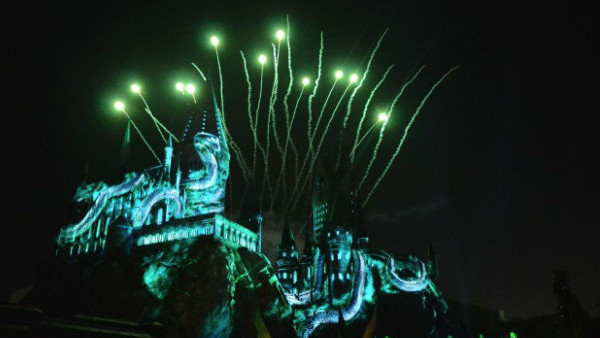
One of the most disarming, worrying statements made in the entire history of Harry Potter comes right at the start of the first book. As a means to explaining the house system, JK Rowling has Hagrid tell Harry that there was "not a single witch or wizard who went bad who wasn't in Slytherin."
And yet, Hogwarts - an apparently wholesome institution of learning - continues to have a Slytherin House, which might as well be called Evil Club. Surely, if you had a repeated problem that you knew at least one cause of, you'd seek to deal with that problem? Rather than, you know, continuing to stigmatise Slytherin as the House of Evil to the other students and making the kids sorted in there sleep in the dungeon. Even just watching out for the students who seem rather over-enthusiastic about being sorted into that House might have been an idea...?
Once more, it looks like Dumbledore and his teaching staff being incompetent ignoramuses.
Or maybe Hogwarts' neglect in fostering such a dangerous environment was by design? One theory suggests that because Hogwarts doesn't charge fees, it relies on the donations of benefactors. And it would fit that the students most suited to greed and power - Slytherins, in other words - would go on to become wealthy enough to become benefactors.
Given the pure-blood preachings of Salazar Slytherin, those benefactors might have a vested interest not only in preserving his Hogwarts legacy but also in secretly encouraging an environment in which more students could be groomed to share his and their beliefs. After all, the Malfoys hold way too much sway for a family of bigots with links to a genocidal maniac and you can only think their continued patronage of Hogwarts is allowed because they offer something in return.
Otherwise, it really is just negligence.
4. Salazar Slytherin Was Never A Villain

Or, alternatively, maybe the fourth, most notorious Hogwarts founder was not the bad apple he was always painted as?
Look. maybe it's hard to not immediately think that someone who builds a Chamber Of Secrets with his own face as the centre-piece isn't a big, old-fashioned pantomime villain, but it's a far more acceptable line of thinking than the idea that the other founders tolerated a monster among them.
Think about it: Hogwarts was formed by a committee of four who opted into working with one another partly because of their brilliance but also because they each represented an aspect of personality that they wanted to bring out in new students. So, if you take that to its logical conclusion, the other founders admired the fact that Slytherin was a big old bigot. That makes no sense.
Far better is the theory that Slytherin's supposed evil was actually well-intentioned and ended up being twisted over the years by opportunistic extremists. There are two ways to look at him not being a bad guy: either he was the product of a society in which Muggles persecuted wizards (with things like the Salem Witch Trials) and wanted to keep half-bloods out to protect his own kind, or he heard a prophecy suggesting that one of his own descendants would grow up to be Voldemort.
His pride in his name and status could have meant he didn't share the prophecy, instead attempting to deal with it himself by bringing in a rule that no half-bloods could be taught there. What sounds like prejudice could have been preparation and security.
It's even possible that Slytherin had built the Chamber Of Secrets prior to that prophecy as a vanity project and something secret for his House. It's not like it's inherently a murder chamber and there's even the suggestion that he added the Baselisk to try and protect the world from his nefarious descendant.
Again, that all offers a better answer to why Slytherin was allowed to be a founder and teacher at Hogwarts despite his beliefs.
3. Arthur Weasley Was Under The Control Of The Imperius Curse

Arthur Weasley is an interesting case in the Harry Potter world because his involvement in the Ministry Of Magic seems curiously uncharacteristic both of that institute and of him as a person. After all, the Ministry is presented as a haven for corruption, self-interest and suppression of difficult truths. He might work in a fairly non-threatening department, but Arthur's alliance at all with the Ministry is a little troubling. It also makes no sense, because despite him being a supposed expert in the Misuse of Muggle Artefacts, he knows less than nothing about Muggles.
There could be an explanation though and one that adds even more depth to a practice of the Death Eaters during the first war with Voldemort. Because one very compelling theory suggests that Arthur was one of the victims of the Imperius Curse who were unwittingly used as instruments by the Dark Lord and his followers.
There is actually a significant amount of evidence in the texts to suggest this was a possibility: we know that Voldemort actively looked to infiltrate the Ministry using the Imperius Curse and coercion because he did it after his return and he had turned Rookwood who worked in the Department of Ministries to his side before the first war. We know that there were genuine victims of the Curse first time around (otherwise the fake claims by Death Eaters would have no credence). We also know that the Weasleys appear more susceptible to suggestion than anyone else and that Arthur was more aware of the Curse than most thanks to Barty Crouch disguised as Mad-Eye Moody in his Defence Against The Dark Arts class.
When you consider that Arthur was a victim of the curse, the fact that "Moody's" response to Ron telling him his father had mentioned the Curse to him is "you father WOULD know that one" gets a whole new meaning.
This could all also explain how a wizard as woefully unqualified as Arthur was able to get the job he did. If he was sent into that department as a mind-controlled agent of Dumbledore in order to investigate criminals using Muggle artefacts to try and recruit them and also to explore Muggle artefacts as potential weapons, that makes more sense than him simply bumbling into a job.
And the whole theory would also add necessary weight to the tragedy that ANYONE could be turned to Voldemort's side, which is missing from the Harry Potter books.
2. Harry Can Never Die
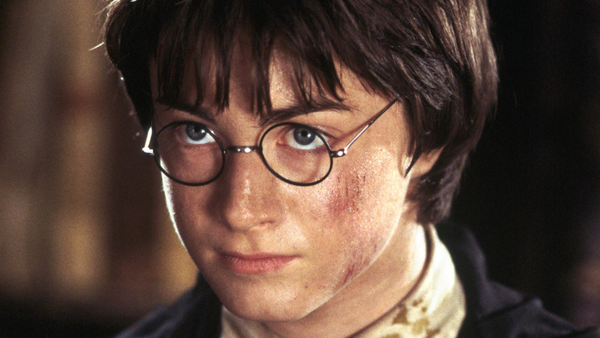
Here's a tragic idea for you: what if Harry Potter's biggest curse is that he is The Boy Who Lived, but not because of what earned him that title, rather because he was robbed of a death that would have united him with his family?
And what if, actually, Harry is robbed of that potential gift of reunion forever because he is the Chosen One? That might sound strange, but there is one theory that suggests that Harry's sacrifice at the end of The Deathly Hallows to defeat Voldemort isn't actually a sacrifice in death, it's a sacrifice OF death.
The basis for this theory is a different reading of the prophecy that defines everything for Harry and Voldemort and one line in particular:
"Either must die at the hand of the other, for neither can live while the other survives..."
While that is widely interpreted as meaning one would have to kill the other, what if it actually means that the ONLY way for them to die is if killed by the other, such is the power of their magical link?
When you consider that, Harry's sacrifice becomes even more heartbreaking, because death would have been the only way he could be reunited with his family. This was a child defined by the loss of his parents so much that the Mirror Of Erised revealed them reunited as his most compelling desire. For him to give that chance up and be shackled to the mortal coil in order to rid the world and everyone else of Voldemort would be so achingly fitting that it's a shame that Rowling has never adopted it as canon.
1. Harry Accidentally Poisoned The Dursleys Against Him

This is one of the most interesting theories that was ever adopted by a good deal of the Potter fandom and the subject of one of the most frustrating Word Of God affirmations from JK Rowling.
So, after years of speculation on why the Dursleys were such awful people, Rowling took to Pottemore in 2015 to confirm the real reason was that when Vernon and James Potter met for the first time, they clashed horribly because Vernon, fundamentally, was not a good person. He tried to patronise James and cast aspersions on him and wizarding kind as perpetually on unemployment benefit and when James revealed the secret of his wealth in Gringotts, Vernon believed he was being mocked and stormed out of the restaurant.
It sort of fits what we know of Vernon, but it's nowhere near as good as the theory that the Dursleys were not bad people until they were poisoned through proximity with Harry because he was a Horcrux. You can see why Rowling would want to preserve the idea that some people were just bad, but Petunia was Harry's blood and so was Dudley and they're somewhat thrown under the bus in a world where some of the most evil or misguided wizards get a chance of redemption.
It would have been so much better if the influence of the locket Horcrux on Ron was extrapolated to explain the Dursleys' relationship with Harry, but instead we have to just accept they were neglectful, stubborn monsters who refused to forgive the perceived sins of a father of the orphaned child entrusted to them. All over a meal that went wrong. It's stupid.
Which other Harry Potter theories interest you? Share yours below in the comments thread.