12 "Important" Movies That Are Actually Terrible
Take a deep breath; look at it again. Oh, it's garbage.
We've all had those moments when we feel like that old German guy in The Avengers. You remember the scene: Loki has told the crowd to kneel, and every last one of them does as they've been told, but then one elderly gentleman gets back to his feet, refusing to play along just because everyone else is.
Now, that is not to suggest that popular opinion is tantamount to a fanatical would-be dictator demanding your complete subservience. Even so, there are times when we're being told everywhere we look that something we know to be mediocre is actually incredible. It's easy under such circumstances to feel like the sole voice of reason, the one person pointing out that the emperor has no clothes, or screaming that Soylent Green is people.
They may have their strengths and they may have made their mark on popular culture - but does this make them masterpieces? Not quite...
12. The Girl With The Dragon Tattoo (2009)
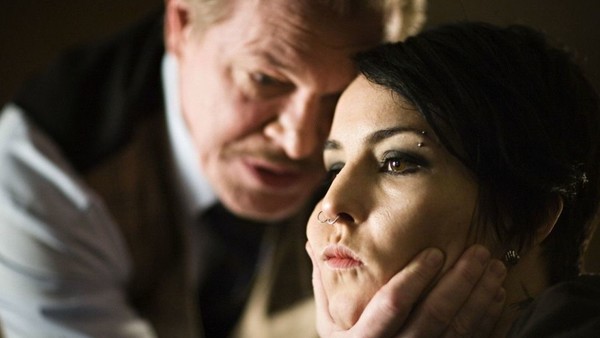
Worthy subject matter can go a long way to proving the importance of a movie, but it doesn't count for everything.
Niels Arden Oplev's adaptation of the best-selling novel may well have contemporary significance given the widespread resurgence of feminism in recent years, and it may have launched the great Noomi Rapace in a big way. However, none of this makes it a great film.
Okay, so it has an unconventional heroine in a tattooed, pierced Goth, and it takes an unflinching approach to the ugly matter of sexual violence. Beyond this, however, The Girl With The Dragon Tattoo is little more than a bog-standard detective story, delivered with no more creativity or energy than any given episode of a TV cop show; boringly photographed, overlong, and - Rapace aside - blandly performed.
As much as it may attempt to address a serious issue with the rape-revenge angle, more than anything the film has helped revive the use of rape as a lazy plot device in subpar exploitation films such as the I Spit On Your Grave remake trilogy. Perhaps a message of female empowerment was intended, but all The Girl With The Dragon Tattoo would seem to have achieved was convincing unimaginative filmmakers that all they need to do to make their work seem edgy is to throw a bit of rape in there.
11. Robin Hood: Prince Of Thieves (1991)

There might not be too many calls for Kevin Reynolds' take on the mythic hero to be classed as one of the greatest films ever made. Even so, it was a huge hit on release, and remains well-regarded as a family-friendly blockbuster that has stood the test of time.
However, Robin Hood: Prince of Thieves really isn't any of those things. Quite apart from being an absurd Americanisation of an English legend, it's also a grimy, sadistic, mean-spirited piece of work that should never have been shown to children. It's bad enough that Kevin Costner doesn't even attempt to speak in an English accent (whilst Christian Slater seems to keep changing his mind every few lines as to whether he will or not), and that the film takes ridiculous geographical liberties (walk from Dover to Nottingham in a single day, by way of Hadrian's Wall? If you say so).
Suspension of disbelief means we can forgive such matters. Rather harder to forgive is just how po-faced and nasty it all is. Costner takes himself and the material far too seriously, whilst Reynolds often shoots it like an episode of NYPD Blue with a constantly roving camera, as if to push how 'real' and 'edgy' it all is; hardly the appropriate tone for what should be a good-natured swashbuckler.
Thank goodness for Alan Rickman, who treats the whole enterprise with the respect and decorum it deserves: i.e., none whatsoever. (And Costner should count himself lucky this is the only one of his films listed here).
10. Stir Crazy (1980)

Richard Pryor and Gene Wilder are one of the best-loved big screen comedy double acts of all time, and with very good reason. Individually, they were both among the most gifted comedic actors of their time; together, their chemistry was tremendous. And heaven knows they needed it, because as great a team as they were, they made some pretty poor movies together.
Sadly, this is very much the case with 1980's Stir Crazy, which casts them as a pair of failing showbiz wannabes (Wilder a writer, Pryor an actor) who take a job dressing up as woodpeckers advertising a bank on the streets of LA, but get framed for robbery when the bank is hit by a pair of criminals in identical bird suits. They wind up serving life sentences in a maximum security prison, until they hatch an escape plan which hinges on Wilder's unexpected skill as a rodeo rider.
It's a fine set-up for a comedy, and with Wilder and Pryor, it's hard to see where Stir Crazy could go wrong... but it simply isn't funny, and considering the cast, there can be no greater crime than that. One or two scenes aside (notably Wilder and Pryor 'getting bad' when they first enter prison), laughs are painfully thin on the ground, and by the final act it's played largely like a straight prison break thriller; just not a very interesting one.
Still, it's better than See No Evil, Hear No Evil, if that's much of a compliment.
9. Interview With The Vampire (1994)

When people talk about the changing face of the vampire in popular culture, Anne Rice's name will inevitably come up. Whatever we think of her writing, there's no denying the author played a major role in forging the more romantic, tragic image of the undead that has prevailed since Interview with the Vampire first hit bookshelves in 1976.
It was inevitable, then, that the novel would be adapted for the screen, and few filmmakers could have been a better choice for the job than director Neil Jordan. Unfortunately, the resulting film is a bloated mess.
There's simply far too much going on to fit into a 2 hour movie; the century-spanning storyline might have worked in a TV mini-series, but in this format no plot strand gets the breathing space it really needs. Worse still is the overall tone of Interview with the Vampire.
Despite the obvious high camp overtones, it's all largely played straight (no pun intended), which gives the whole thing an air of unintentional humour. Small wonder that many of the key players, Brad Pitt in particular, just look a bit embarrassed to be there.
8. The Raid 2 (2014)

2012's The Raid was one of those rare, wonderful instances in which the hype proved entirely justified. Gareth Evans' brutal action film was a true tour de force of martial arts filmmaking, whilst also boasting a genuinely gripping story, told in a nicely understated manner.
When its sequel arrived two years later, many were quick to declare it just as great if not better than its predecessor. I'd have to respectfully disagree. I have to question whether Evans and company really wanted to make a sequel to The Raid in the first place, as The Raid 2 is pretty much everything the original wasn't.
While it makes sense that they decided against revisiting the single day/single location format of the original, the overlong, overindulgent crime saga plot (more or less a direct retread of Donnie Brasco) is so far removed from what went before that it's really a sequel in name only.
Worse yet, the fight scenes feel completely incongruous. All the hand-to-hand combat of the first film made sense in the setting; here, you have to question why the gangsters stand idly by and don't just get their guns out when the fights start. Where in the original the action served the narrative, here it all just feels like a diversion, not there advance the plot but simply to keep the fans happy.
This is also true of the overlong and utterly inconsequential cameo from the original's Yayan Ruhian; and the cartoonish new characters Hammer Girl and Baseball Bat Boy belong in a different movie entirely.
7. American Beauty (1999)
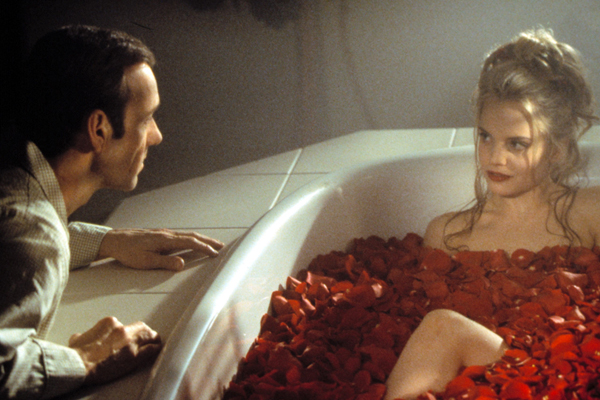
Oh, how the world went bananas for debutante director Sam Mendes' peek behind the curtains of middle class suburbia, exposing a hotbed of deceit, sexual frustration and shattered dreams, but hinting at an underlying spiritual unity that meant everything was okay, no matter how bad things might seem.
Beautifully shot with a Kubrickian eye for symmetry, there's no denying American Beauty paints a pretty picture. But while the poster blurb urged us to 'look closer,' is there really much more to it when we scratch the surface?
The main thread of Lester Burnham, a cog in the corporate machine who, in a moment of revelation/mental breakdown, breaks free to reclaim his manhood (blackmailing his boss in the process) is simply a more upbeat, middle class take on the same journey Edward Norton took in Fight Club earlier that same year.
As for the rest; well, it's all a bit soap opera. Teen seductress is really a virgin, military homophobe is secretly gay; are these really particularly surprising character developments? Admittedly, it might be a bit much to call American Beauty 'terrible,' but it's nothing like the groundbreaking masterpiece it was widely declared to be.
6. Empire Records (1995)
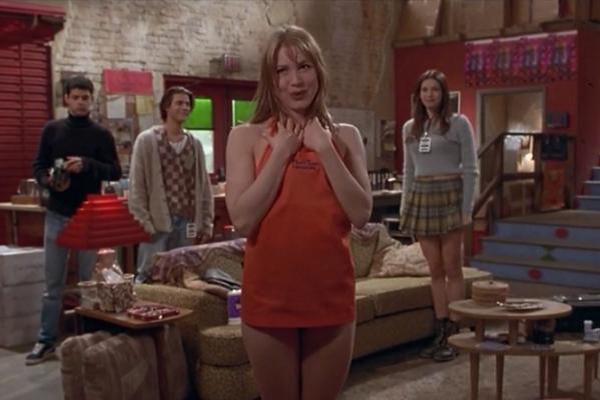
Adolescent nostalgia can be a treacherous thing. This coming of age comedy drama, which gave breakthrough roles to Liv Tyler and Renee Zellwegger, seems to be dear to the heart of many who grew up in the 1990s, taking them back to the emotional rollercoaster of their own teenage years. Thing is, oftentimes it isn't until you reach adulthood that you look back on yourself as a teenager and realise that... well, you were a bit of an idiot.
Empire Records is such a moronic film on so many levels. It presents an idyllic workplace that just about any young person would kill to have as their Saturday job, where everyone blatantly ignores their responsibilities and the ludicrously lenient boss always lets them off; and yet at the same time, they're all gazing off into the sky complaining about how hard life is, whining about whether they'll ever achieve their dreams, and (notably in Zellwegger's case) going into absurdly melodramatic meltdowns over trivial nonsense.
It's like Breakfast Club, but even more annoying and implausible, with a teen cast in even greater need of a clip around the ear.
5. The Blair Witch Project (1999)

Any time a new horror movie arrives with massive aplomb, declaring itself the scariest thing ever made, the sensible reaction is to lower expectations immediately. Thousands upon thousands of cinemagoers learnt this the hard way when the Eduardo Sanchez and Daniel Myrick's low-budget cause célèbre opened in cinemas everywhere in 1999 after months of hype.
First of all, the notion that the film invented the found footage style is completely fatuous; Cannibal Holocaust took much the same approach two decades earlier. That said, The Blair Witch Project did succeed in popularising the approach, which has since become painfully ubiquitous in contemporary horror. As a result, horror audiences have endured endless hours of nausea-inducing shakey-cam and tedious improvised dialogue, whilst little to nothing of interest actually occurs on screen. And this isn't simply a matter of Blair Witch inspiring lesser imitators; it's that the material being imitated really wasn't much good in the first place.
It's little surprise that the film's stars Heather Donahue, Josh Leonard and Michael Williams haven't been seen much in the years since, as their antics make for tedious viewing here. Given that the lack of special effects or supporting actors mean that basically everything hinges on the core trio, it really doesn't help matters that they're dull, unlikeable and hard to care much about, even when things go south for them.
There's plenty to be said for a less-is-more approach in horror movies. But for goodness' sake, there has to be something. The Blair Witch Project is nothing but a carrot being dangled on the end of a stick for 81 minutes, with no final reward.
4. Dracula (1931)

The first official big screen adaptation of Bram Stoker's classic novel is iconic for many valid reasons. It was the first horror movie with sound, and the introductory scene of the title character, played by the great Bela Lugosi, boasts some of the most unforgettable imagery in film history. However, these early scenes are pretty much all anyone ever remembers.
Beyond that point, it's a very different story. Director Tod Browning may have been a master of the silent movie form, but in his first attempt at a talking picture, he clearly didn't know what he was doing yet. The gloriously atmospheric opening scenes are notable for their lack of sound or dialogue, but once the action shifts to London it all turns into a lifeless recreation of a stage play. It's bad enough that, beyond the opening 20 minutes or so, the title character is hardly ever seen; the film almost seems determined to show as little as possible.
Witness the moment in which David Manners looks out of a window and tells his co-stars he just saw a wolf run by, yet the camera remains trained on the cast in a stiff proscenium arch standpoint. Hadn't they figured out that film was a visual medium yet? The similar lack of fangs and blood may have been at least in part down to censorship issues, but this doesn't excuse the dullness of what was left over.
Lugosi made his moments in the spotlight count, and he quite rightly lives on in legend, but Dracula remains a real chore to sit through.
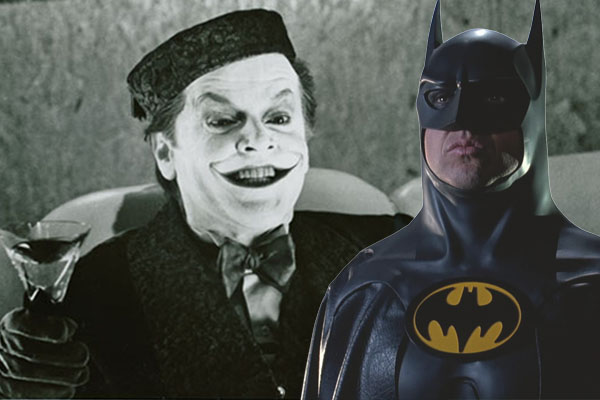
3. Batman (1989)

There's no denying that Tim Burton's Batman was exactly what the character needed at the time, with the Adam West model still so prevalent in the popular consciousness despite the huge advances made in the comics. Even so, there's also no denying that time has not been kind to Burton's film, and when held up alongside today's superhero movies it simply pales in comparison.
Establishing the key problem that all Bat-movies would take until Christopher Nolan, the villain gets far too much of the spotlight. Jack Nicholson's as entertaining as ever, but he's doing his standard routine of basically playing himself, albeit with more make-up than usual. The new backstory cooked up to accommodate the actor result in a take on the Joker that's considerably less interesting than we've seen since, and the character's evil scheme is always a bit on the vague side.
As for Batman himself: happily, Keaton's interpretation still stands up as one of the best, though by modern standards the fight scenes look very awkward, and - yes, this old chestnut again - the hero seems way too happy to kill his opponents. And of course, there's simply no excusing that ludicrously out-of-character moment when Bruce Wayne screams at the Joker, "do you wanna get nuts?"
2. Braveheart (1995)
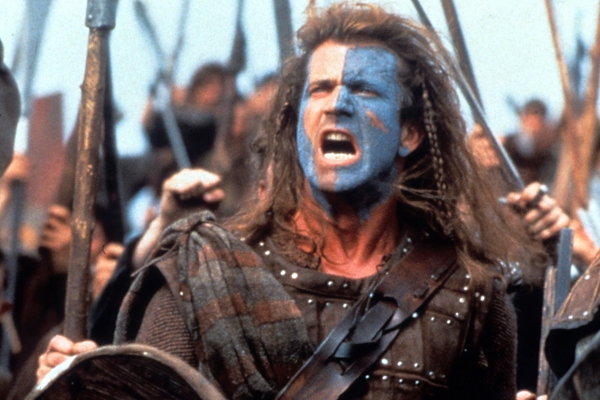
In many ways, it really does beggar belief that this extraordinarily pompous, overblown, inaccurate historical epic came to be embraced so lovingly by so many. Okay, so it's very a clear-cut case of good guys vs bad guys, and features a burly leading man dishing out righteous vengeance; there's always some joy to be taken from that. But when it takes itself as seriously as Braveheart, and gets showered with awards the way it did, it's screaming to be taken down a peg or two.
Even putting to one side questions of how true to history it all is, Braveheart veers so wildly between extreme sadism and masochism as to make any grindhouse revenge movie seem positively conservative. The characters are so two-dimensional it's not even funny, with the dastardly English portrayed as the absolute scum of the earth, and Mel Gibson's William Wallace as - well - Jesus in a kilt with a broadsword. And on the Jesus connection, the film's suitably overdone climax clearly paved the way for the two hour torture porn movie that was Gibson's The Passion of the Christ (not listed as here as, well, it isn't generally regarded as important).
Wallace's climactic cry of "freedom" may be very impressive considering he has a crushed larynx at the time, and it may be carefully designed to give the audience a similar lump in the throat - but surely the only sensible response is to stifle a laugh.
1. Watchmen (2009)

It's the movie they spent more than 20 years failing to make. Alan Moore and David Gibbons' groundbreaking graphic novel was simply un-filmable, many notable figures declared (Moore included). Terry Gilliam couldn't do it. Darren Aronofsky couldn't do it. Neither could Paul Greengrass. It's understandable, then, that director Zack Snyder and studio Warner Bros were quite proud of themselves when Watchmen finally made it to screens, made with a blockbuster budget in an unflinchingly adult-oriented adaptation which adhered closely to the graphic novel, its harsher beats included. However, in making a film which so slavishly recreates the visual element of the source material and follows its narrative structure so precisely (the altered ending notwithstanding), Watchmen is a film with no personality of its own.
It's an entirely surface-oriented facsimile, demonstrating little understanding of what Moore and Gibbons' book was really all about. This isn't a film in which superheroes are shown committing deplorable acts in order to question their supposed heroism, draw attention to their human frailty, and critique the power structures they serve. This is a film in which heroes viciously beat up bad guys and have athletic sex because it looks cool.
An R-rated adaptation of a mature readers' comic it may be, but it still comes off utterly juvenile, appealing to pretentious adolescent notions of what constitutes depth and edginess. Worst of all, though, is that all concerned truly seem to think they're making high art. This was hammered home by the poster declaring the film to be "from the visionary director of 300."
Few things warrant scorn and ridicule more than such flagrant self-importance.