12 Incredible Slow Burn Movie Scenes With Killer Pay Offs
Don't forget to breathe.

The slow burn scene is practically a staple of cinema. They can come at any point, in practically any kind of film, but it's how they end which makes them special. There are, of course, countless scenes that utilise the slow burn method, only to squander it on a lazy or clichéd ending. These scenes tend to avoid obvious cues or signals like overbearing music, high-octane action or obviously aggressive dialogue. Instead, slow burns come from the subtleties in any given scene, ratcheting up tension through visual cues, tonal shifts and engaging settings, often delivering a different flavour of anxiety than the one that we might have been expecting.
Creating suspense is one thing, but knowing what to do with it is something else entirely. What makes these types of scenes so exciting is the knowledge that something, at some point, is about to go horribly wrong - not knowing exactly how disastrous things are going to get is part of the joy. Some filmmakers opt for this kind of pacing because it makes the scene stand out as hugely significant, placing greater dramatic emphasis on the importance of the events depicted within it.
Whether their aim is to haunt, engage, satisfy or sadden the viewer, directors have employed this form of suspense to brilliant effect, and often the most vital component is a dazzling pay off...
12. Heat - Runway
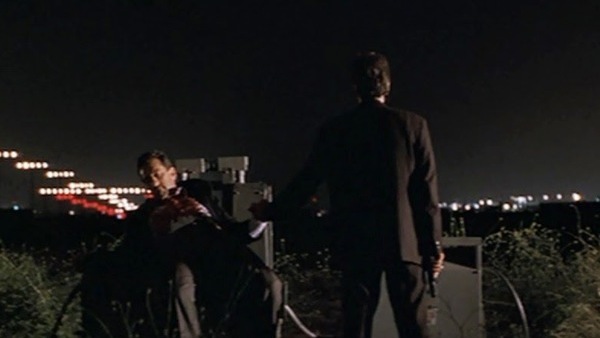
Possibly Michael Mann's best film, Heat combines an outstanding cast with visceral cinematography and a stunning score, in what is undeniably one the best crime dramas ever put to screen. One of the film's greatest strengths comes in the form of its two leads, Al Pacino and Robert De Niro, the honest cop and the likeable thief respectively.
Fittingly the film's final scene features a heart-wrenching shootout between these two imperfect leads, both characterised by their loneliness and their commitment to their respective occupations. We know from very early on that these characters' paths are going to collide at some point, and after a few meetings and clashes the audience is convinced that it's all going to end in tragedy.
Vincent Hanna (Pacino) chases Neil McCauley (De Niro) onto a field adjacent to an LAX runway, where McCauley takes refuge by an array of electronic control buildings. A silent game of cat-and-mouse ensues, lit only by the lights of the runway and occasionally interrupted by the roar of a jet flying overhead.
Eventually, after two unsettling minutes, McCauley is given away by his shadow and Hanna manages to get the first shot away, before hitting McCauley a few more times, wounding him mortally. Hanna sympathetically wanders over to McCauley and holds his hand as he dies.
The final shot of their linked hands is not just a fitting end to a brilliantly drawn-out finale, it's about as close to visual poetry as you're ever going to find.
11. Army Of Shadows - Escape
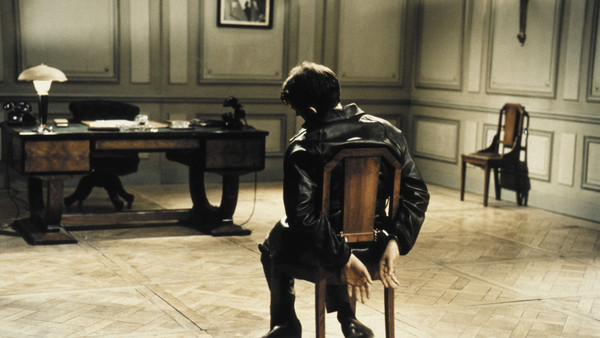
Jean-Pierre Melville's classic 1969 tale of espionage in occupied France is something of a forgotten masterpiece. A film adaptation of Joseph Kessel's novel of the same name, Army of Shadows (or L'armée des ombres) is partially based on Kessel's own experiences as a member of the French Resistance.
The film presents us with a small band of Resistance members as they chase down informants, work with Allied groups and attempt to gather information while evading capture by German soldiers. It's a harrowing piece, and certainly more bleak about its content than it is celebratory.
Towards the end of the film, our main protagonist, Philippe Gerbier (Lino Ventura), is captured by the Vichy police and handed over to the Germans. He and his fellow cellmates are taken to be executed, and in a sadistic effort to make things more interesting, the SS officer's offer them a chance of survival, provided they can make it to the other end of a long hall without being sawn in half by German machine gunners. It's an incredibly sombre scene - Gerbier is marched towards his fate, as shots of his actions as a member of the Resistance are interposed continually, showing the brutal nature of this war.
Finally, the men are lined up and told of their chances before being told to run, but Gerbier initially refuses to move, hoping to keep some dignity. The scene has built up to this moment over a few minutes and finally Gerbier runs, and out of nowhere, a smoke bomb explodes in front of him, and soon after a rope is lowered through the roof, rescuing him.
10. Drive - Motel
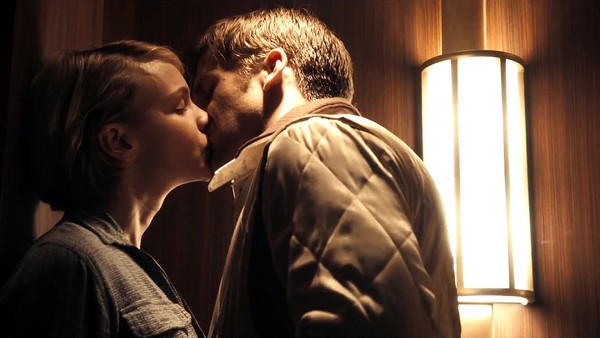
There were many scenes from Nicolas Winding Refn's Drive that would have been excellent in this list; not least the infamous elevator scene in which Ryan Gosling goes certifiably nuts on some bloke's cranium. However, the scene in which Christina Hendricks' head gets turned into a fleshy paste by way of a shotgun is a far better choice.
The scene takes place in a motel room, and sees Ryan Gosling's Driver in a very bad situation, as his accomplice, Blanche (Christina Hendricks), is clearly withholding information from him following a simple heist gone wrong. The scene comes quickly after a tense chase sequence, and the change in pace, backed by the knowledge that they are on the run, creates an anxious atmosphere that penetrates the viewer. Violence is then introduced as the Driver coldly beats information out of Blanche, which reveals that both of them are quite unaware of what they have got themselves into.
The scene slows down and things turn palpably silent, as Blanche goes into the bathroom and the Driver mulls his situation over by the bed. The Driver looks at Blanche's phone while she is in the bathroom, and his expression suddenly drops as shadows dance across the room and the scene slows once more.
Meanwhile in the bathroom, Blanche is applying her cosmetics while a figure can be seen through the window, readying a shotgun. A deafening blast rings out as Blanche's head is effectively turned inside out, and things get really gory as the Driver coolly and brutally deals with the men attempting to kill him.
9. No Country For Old Men - Coin Toss

A sort of neo-Western thriller with classic Coen brother humour thrown in, No Country for Old Men is a relentlessly suspenseful film from start to finish. The story follows Llewelyn Moss (Josh Brolin), an ordinary man who comes across a drug deal gone awry, and makes the decision to try and get away with the money. He's pursued by a hitman named Anton Chigurh (Javier Bardem), a sociopathic gun-for-hire whose every action challenges our preconceived notions of morality and rationality.
The system by which Chigurh justifies his actions (a simple coin toss) comes into play when he is irritated by the questions of a friendly gas station proprietor. The questions are merely conversational, but it is clear that for whatever reason, the proprietor has put himself in a mortal situation when Chigurh challenges him to a coin toss.
It's only through excellent performances and precise dialogue that we know how serious this could be for the poor proprietor, and when the result of the coin toss is revealed, we find ourselves suitably nervous. Thankfully the proprietor called it correctly, and Chigurh congratulates him and wanders off, making this the most positive exchange in the film despite its inherent danger.
8. Audition - Telephone

Considering that for its first few scenes, Audition feels like an offbeat romantic comedy, it's quite commendable how quickly it transforms into one of the most unsettling horror films ever made and it's all thanks to one shockingly disturbing scene.
Shigeharu Aoyama (Ryo Ishibashi) is hosting auditions for a fake film, hoping to meet a girl to cure the loneliness he's experiencing as an ageing widower. He instantly falls for one girl in particular: a beautiful, tall and quietly intelligent ex-ballerina, dressed all in white.
Eventually, Aoyama goes to contact her by telephone, and after a couple of reversals on his decision, he finally starts dialling. Director Takashi Miike has carefully constructed a sense of anxiety leading up to the phone call, through claustrophobic cinematography and eerie silence. This is then combined with interior shots of the girl's apartment, which is totally empty save for a burlap sack and a telephone, between which the girl sits, hunched over and motionless.
The phone finally rings in the girl's apartment, breaking the silence with its ominous echoes, before the burlap sack suddenly rolls over in the background, making a deeply unsettling gargling sound as it moves. In that single scene, we go from comfortable to completely disturbed in about two minutes, and it's all through subtle suggestion.
7. Kill List - Basement
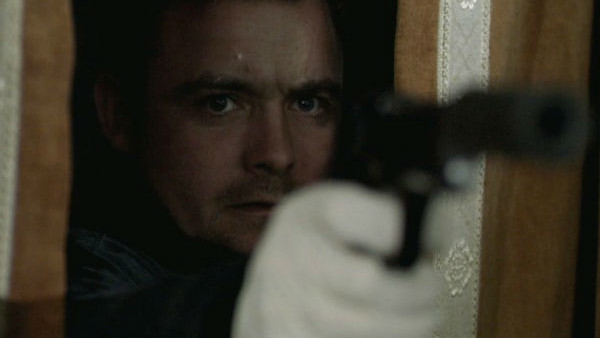
Ben Wheatley is quickly making a name for himself as the king of all things creepy, whether it's A Field in England, Sightseers, or his short contribution to The ABCs of Death, Wheatley never fails to disturb his audiences. Kill List, however, is in a league of its own where uncomfortable viewing material is concerned.
The film follows two hitmen as they go about their business, working through a list of targets, as the job spirals out of control with each kill. In this scene, one of our killers strays away from the list of specified targets to murder someone for personal reasons. While Jay (Neil Maskell) goes off into the darkness to do the deed, Gal (Michael Smiley) waits patiently in the car for his return, before finally caving in and heading off in pursuit of his colleague.
What ensues is three minutes of brilliantly choreographed tension, as Gal wanders through an eerily quiet construction site, attempting to track down his maverick partner. Eventually, Gal finds a lit building and slowly makes the descent into its basement, where he finds Jay brutally attacking a man.
The two hitmen nonchalantly break into an argument while Jay's victim twitches about erratically at their feet, before he is finally silenced with two shots from Jay's handgun. It's a horrific ending to the scene, but one that effectively goes against the conventions of the horror genre.
6. Road To Perdition - Silent Shootout
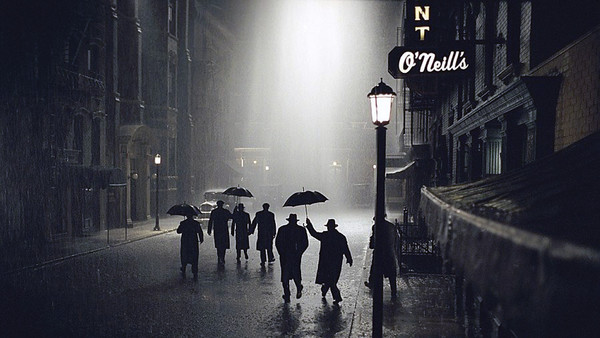
Sam Mendes' 1930s American crime drama is a thing of utter beauty, from its precision cinematography to the mesmerising performances given by its cast; every detail is presented with jaw-dropping zeal. This is most evident in an almost silent scene that features one of the most visually stunning shootouts in cinematic history. As mobster John Rooney played masterfully by the late Paul Newman and his bodyguards make their way to his car, they are gunned down in the rain by Rooney's adoptive son, Michael Sullivan (Tom Hanks).
The combination of pathetic fallacy and eerie silence warns the viewer of an impending tragedy. Shot in slow motion and backed by a sombre orchestral piece, we see each of the guards silently mowed down in the street, as rain trickles off the brims of their fedoras.
Michael finally emerges from the shadows, before reluctantly pulling the trigger on the only father figure he ever had. The shot lingers on Hanks' expressive face, which is enough to draw tears from even the most stone-hearted of viewers.
5. The Godfather - Restaurant Assassination
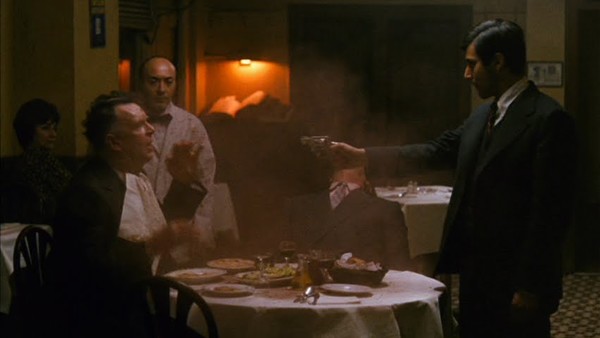
Francis Ford Coppola's legendary American crime drama is rife with suspense and intrigue, but it's the scene in which Michael Corleone sits down for a dinner with two men that he plans to assassinate that's arguably the most memorable scene in the film.
The scene works wonderfully, as the audience is aware of the plan from the very beginning, making for an incredibly taut atmosphere as each potential issue comes into play. But in its early stages the suspense is limited by the fact that it's taking place in a brightly lit, public venue, which allows the tension to build up slowly over the course of their meeting.
When Michael finally stands up and executes Sollozzo and McCluskey, the blend of stunned silence and realistic violence makes for a fitting end to a masterfully constructed scene.
4. Inglourious Basterds - Nazi Balls

This list could easily have been a compilation of scenes from Tarantino films, given his penchant for drawn-out, dialogue driven, suspenseful confrontations that take place in ordinary and often public settings. Heck, there are numerous slow burn scenes in Inglourious Basterds that could have made this list: the opening interrogation scene, the strudel scene and the introduction of the Bear-Jew would all be worthy entries to this list. But in terms of delivering a satisfactory ending, it's the scene that ends in a ludicrously violent bar shootout, which wins.
Three of the Basterds are trying to make a rendezvous with their German informant in a local bar. An incredibly lengthy series of dialogues ensue as the Basterds attempt to brush away a group of drunken German soldiers, before things turn truly worrisome as an SS Major invites himself over to join the group. Things quietly and calmly escalate as the Major unravels the Basterds' lies, and the bar rapidly turns into a shooting gallery. In true Tarantino style, the first shots are fired directly at the Major's testes, accompanied with the line: "Say 'auf Wiedersehen' to your Nazi balls.
3. The Shining - Bathtub

The bathtub scene from Stanley Kubrick's The Shining is chilling and unsettling in equal measure. The scene starts with an agonisingly slow, first person perspective shot that drifts across a hotel room before moving towards the en suite bathroom door, which has been left suspiciously ajar. Jack Torrance enters, again at a cripplingly slow pace, only to find an attractive woman in the bath. She slowly exits, completely naked, and walks towards Jack before embracing him, albeit coldly and finally kissing him.
It's at that point that Jack's eyes widen and the beautiful woman he was with is revealed to be an aged and apparently rotting woman, who starts cackling maniacally at Jack as he hurriedly leaves. The bizarre blend of cold eroticism combined with the jarring pace of the scene contributes towards the deeply unsettling nature of the scene's ending.
2. Apocalypse Now - Sampan Massacre
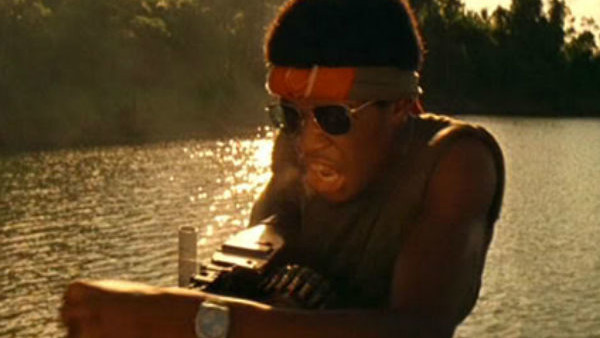
Another classic Francis Ford Coppola film from the 1970s, Apocalypse Now is a hallucinogenic journey through the Vietnam War that's loosely adapted from Joseph Conrad's brilliant short novel, Heart of Darkness. The film follows the exploits of Captain Willard, as he and the crew of a PBR travel through the rivers of rural Vietnam in search of Colonel Kurtz, who has gone AWOL.
This particular scene opens with a minor confrontation between Willard and the boat's commander, Chief, which sets a tense tone for the scene's proceedings. The scene sees the crew of the PBR performing a standard procedure stop and search of a local Sampan. One of the crew members reluctantly boards the boat and starts rummaging through the various goods, scaring the locals on-board as the whole scene is overlooked by a young and obviously nervous machine gunner.
One of the women on-board suddenly lunges for a basket and the machine gunner opens fire in a panic, joined quickly by the rest of his crew. Within seconds locals are all dead or dying, and it's revealed that the woman was dashing in an attempt to protect a puppy, which was hidden in a basket. The tension that gradually builds up as the search goes on, is used to devastating effect once the gunfire starts, and when the innocence of the locals is confirmed, the scene becomes wholly devastating.
1. Goodfellas - Funny Guy

We've all been in a situation where we've said something we shouldn't have, insulted someone by accident, or just got involved with the wrong sorts which is why this fantastically tense scene from Martin Scorsese's Goodfellas is so entertaining.
The scene takes place in a crowded restaurant, where Tommy DeVito (Joe Pesci) is entertaining a group of mobsters before Henry Hill (Ray Liotta) compliments him on how funny he is. The atmosphere changes instantly as Tommy pounces on the comment, treating it as a grave insult.
Tommy DeVito: You mean, let me understand this cause, ya know maybe it's me, I'm a little fucked up maybe, but I'm funny how, I mean funny like I'm a clown, I amuse you? I make you laugh, I'm here to fuckin' amuse you? What do you mean funny, funny how? How am I funny? Henry Hill: Just... you know, how you tell the story, what? Tommy DeVito: No, no, I don't know, you said it. How do I know? You said I'm funny. How the fluff am I funny, what the fluff is so funny about me? Tell me, tell me what's funny!
It's certainly not a dark or particularly moody scene, but the way the initially jovial meeting gradually descends into a potential conflict is a stark reminder of how unpredictable some of these characters are. Thankfully the way the scene ends is memorable for positive reasons, as Henry calls Tommy's bluff, and the entire table erupts with laughter.