12 Inferior Film Sequels That Totally Missed The Point Of The Originals

Because why keep a coherent message when you can burn a giant sack of cash instead?

When we go to see movie sequels, all that most of us hope is that they will at least do justice to the original pictures that we enjoyed so much. The producers also have their fingers crossed, of course, because movie franchises now have the potential to gross billions of dollars if done right. While many movie fans complain about the rampant sequelizing in today's movie industry, it's undeniable that sequels make sense from a financial perspective: of 2013's top ten highest-grossing movies worldwide, eight of them were part of a franchise. Whilst sometimes we get lucky and sequels eclipse the originals, as with The Dark Knight and Terminator 2: Judgment Day, audiences are often happy if sequels are just decent follow-ups that don't hurt our enjoyment of the franchise. But every once in a while there is a sequel that is worse than just a bad movie, and it all stems from the fact that it completely misses the point of the original, whether consciously or just through abject ignorance. These sequels seem like the people who made them didn't even understand who or what made the previous movies so successful in the first place, and in the process delivered - what felt like - a kick to the groin for fans...

12. All Sequels Without The Original Cast (Caddyshack II, Blues Brothers 2000, Grease 2...)
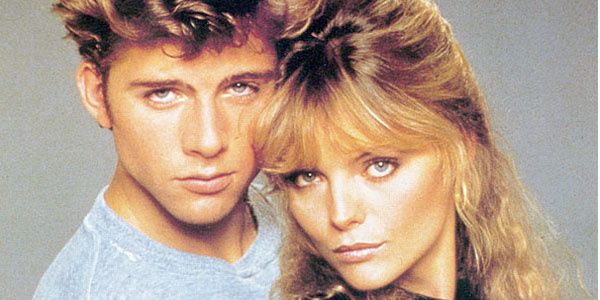
Sometimes sequels miss the point just by starting with the wrong cast. Dan Aykroyd should've learned by now since he starred in the failed sequels Caddyshack II and Blues Brothers 2000, but he has been adamant about making Ghostbusters 3 without Bill Murray. What movies like Ghostbusters, Grease, Caddyshack, Dirty Dancing, Donnie Darko, The Sting, and Blues Brothers all have in common are memorable stories and phenomenal cast chemistry that can't be reproduced with others. John Goodman is a great actor, but not an adequate replacement for John Belushi in Blues Brothers 2000. Sadly, the cheapness of direct-to-video and direct-to-VOD releases has allowed studios to make low-budget sequels to popular films with no members of the original's cast and creative team. This includes the next entry...

11. Naming A Movie "American Psycho 2" Doesn't Make It A Sequel To American Psycho
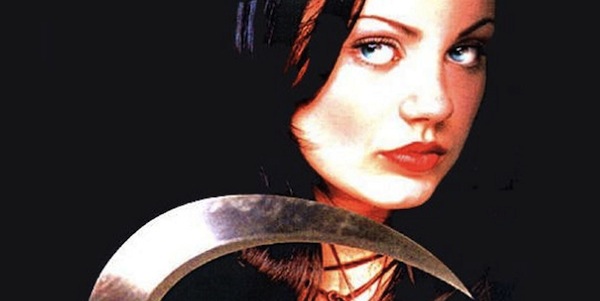
Lionsgate Films released American Psycho 2: All-American Girl in 2002 as the direct-to-video sequel to the cult 2000 film American Psycho, which starred Christian Bale as serial killer Patrick Bateman. However, the "sequel" originated as an unrelated script titled The Girl Who Wouldn't Die. Lionsgate saw the popularity of the original and thought connecting the new movie to American Psycho would help sell DVDs. The only connection to the original film is Bateman appearing in the opening scene, but Bale didn't return to portray Bateman. Bale's performance in the original makes the character ridiculously likeable despite being psychotic. That concept is what the "sequel" forgoes, because there's nothing to latch on to with star Mila Kunis' generic character. Both Bret Easton Ellis (who wrote the novel American Psycho) and Kunis have spoken out about attaching the unrelated movie to a cult classic. But in the defense of Lionsgate, the move wasn't without precedent...

10. Despite Their Titles, There Are No Trolls In Troll 2 & Troll 3

Troll is a dark fantasy film about a troll that terrorises a family and has been a cult hit since its 1986 release. It has gained more recognition recently because two of the characters are named Harry Potter, Sr. and Harry Potter, Jr. (seriously). In 1990, we got a Troll 2 that nobody asked for, which doesn't even feature any trolls because it was originally titled Goblins and produced as an unrelated movie. Someone thought it might do better at the box office if it was marketed as a sequel to Troll, which makes no sense considering Troll wasn't successful. Regardless of whatever name Troll 2 was released under, it turned out so bad that writer/director Claudio Fragasso actually removed his name from the film. The fact that he was filming a movie in English when he and the crew didn't speak English fluently is evident in the awful dialogue in the finished product. Similarly, Troll 3 was released in 1993, it also wasn't originally produced as a sequel to Troll and also doesn't have any trolls in it. It also isn't a fantasy film, but a horror movie about killer plants. It's up for debate which sequel misses the point more.

9. Jim Carrey-Less Sequels To Jim Carrey Movies

Jim Carrey was the most popular comedic actor of the 1990s, and most of his movies during that decade made over $200 million at the worldwide box office. However, after starring in a 1995 Ace Ventura sequel Carrey turned down huge paychecks to make sequels to his hits. Producers went ahead anyway and made Dumb and Dumberer: When Harry Met Lloyd (2003), Son of the Mask (2005), Evan Almighty (2007), and Ace Ventura, Jr.: Pet Detective (2009), and all each did terribly at the box office (Ace Ventura, Jr. went direct-to-video in most countries). The point that producers kept missing is that the primary reason people saw the originals was Carrey. Since Carrey's most recent original films have done poorly at the box office, he has finally agreed to do a sequel to one of his classics: Dumb and Dumber To, which will be released in November 2014. He's either finally doing it on his own terms or just finally desperate enough for a hit.

8. Kick-Ass: From Parody To The Subject Of Parody

Kick-Ass wasn't a monumental success at the box office, but fans loved seeing an ordinary New York City teenager trying to follow in the footsteps of his favorite comic book superheroes and the horrible real-life consequences. Star Aaron Taylor-Johnson was scrawny €“ like Michael Cera or Jesse Eisenberg €“ and he was a great fit for the geeky superhero Kick-Ass. Fans also loved the ultra-violence and coarse language. While the film's 2013 sequel follows the comic series it is based on, Taylor-Johnson seemingly followed Hugh Jackman's Wolverine workouts because he's built like a typical superhero. While it's part of his character development to become a stronger, smarter hero, the real-life foibles that he would face as a superhero are missing. To compensate the sequel pushes the violence and language to almost absurd levels, but that doesn't make up for the sense of fun from the original. It ended up the type of superhero movie that the original parodied. It didn't perform nearly as well as the original did at the box office, and though there are more Kick-Ass comic books it doesn't look like there is enough of an audience left for film versions of them.

7. Wall Street: Money Never Sleeps Neuters The Iconic Villain Of The Original

Many movies have been made about crooked stock brokers, but none are as memorable as Wall Street. It also features one of cinema's great villains in Michael Douglas' Gordon Gekko. Gekko is the rare villain that you love to hate €“ his full embrace of the excesses of the 1980s and his "greed is good" philosophy are admirable in a twisted way. After the 2008 financial crisis, director Oliver Stone decided to revisit Gekko with 2010's Wall Street: Money Never Sleeps. Though the movie is about the crisis, it focuses on Gekko repairing his relationship with his estranged daughter and mentoring her boyfriend, who is portrayed by Shia LaBeouf. LaBeouf is no replacement for Charlie Sheen's Bud Fox from the original, and Sheen's cameo in the sequel only highlights how much he is missed. Did anyone really want to see Gekko redeemed as a kindly grandfather? It would be like if Mr. Potter from It's a Wonderful Life suddenly felt bad about George Bailey's lost money and decided to coach George's kids' little league baseball team.

6. Jaws: The Revenge Turns A Natural Eating Machine Into A Family Curse

Jaws 2 is a decent sequel that was financially successful, but had trouble trying to live up to the first in quality. When Universal made Jaws 3-D in 1983 it used the 3-D effects to distract from the awful story, but like Jaws 2 it doesn't betray the original point of Jaws: sharks can be man-eating forces of nature. The franchise bottomed out with 1987's Jaws: The Revenge. As the tagline "This Time, It's Personal" suggests, Jaws: The Revenge reveals that the franchise was not following a basic man-versus-nature plot but all along was actually about sharks targeting Sheriff Brody, the star of the first two movies. Jaws: The Revenge follows Ellen, Sheriff Brody's wife from the first two films, after he dies from a heart attack (or as she puts it, fear of sharks) and her son is killed by a shark attack. The same shark is intent on killing her lone surviving son and herself. The novelization takes this a step further by suggesting it is all a voodoo curse from a witch doctor with a grudge against the Brody family. What was so wrong with the simple concept of sharks eating people around Amity because they are hungry?

5. The Hangover Part III Is The Change Everyone Asked For
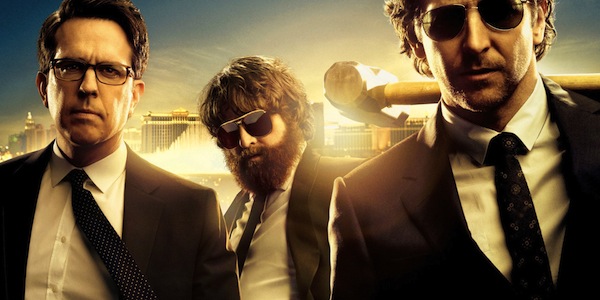
When The Hangover was released in 2009 it became an instant comedy favorite. It grossed an astounding $467 million worldwide and 2011's The Hangover Part II grossed $586 million. However, nearly everyone had the same criticism of the sequel: it was just like the original, just in a different location. Just because people thought Part II was a duplicate doesn't mean they didn't enjoy it. Yet writer/director Todd Phillips must've taken that criticism to heart, because The Hangover Part III went in an entirely different direction as a heist movie that focuses on Leslie Chow (a secondary character in the first two movies). The Hangover Part III is a case of "be careful what you wish for" after audiences complained Part II was too much like the first. While Phillips tired something different, he replaced the ridiculous slapstick humor of the first two movies with more serious violence. There is hardly any partying in Part III, and because of that it just isn't as funny. Part III still made $362 million worldwide, but obviously wasn't as successful as the first two.

4. Halloween 3... With 100% Less Michael Myers!

The original Halloween grossed $70 million on a $325,000 budget in 1978. Though not as successful, Halloween II grossed $25.5 million on a $2.5 million budget. Series creators John Carpenter and Debra Hill agreed to produce Halloween III... but with a different take that would have nothing to do with the first two. Though the first two Halloween movies are slasher films about the masked killer Michael Myers, Carpenter and Hill envisioned turning Halloween into an annual anthology series of different Halloween-related stories. Halloween III: Season of the Witch ended up being about mysterious masks and their connection to ancient evil magic, with no storyline connection to the prior films. Carpenter and Hill underestimated the popularity of Michael Myers, and Halloween III made much less at the box office than Halloween II. It's no surprise that 1988's Halloween 4 was subtitled "The Return of Michael Myers" and featured... well, I'm sure you can guess.

3. Cars 2 Turns A Goofy Supporting Character Into An Annoying Lead Character

Prior to Cars 2, Pixar released eleven feature films that were all major box office hits and critically praised, a streak that made the animation company seem infallible. Cars 2 proved otherwise. Cars was extremely successful at the box office and became one of Disney's top grossing films in merchandising. That's a jaw-dropping feat considering how much merchandise Disney sells. When the inevitable sequel was released in 2011 it snapped Pixar's streak. Cars 2 reduces the original's lead character Lightning McQueen to a supporting role and instead focuses on Mater, a dimwitted tow truck that was a supporting character in the original. Just because audiences liked Mater in the first movie didn't mean they wanted to see an entire movie about him. Cars 2 is also a parody of the spy genre, featuring dozens of easy gags parodying James Bond that are nowhere near as clever as Pixar's usual high-quality writing. As a result, Cars 2 is the second lowest-grossing Pixar movie in the U.S. (though it performed significantly better overseas). In 2013 Disney released a spinoff of the series titled Planes, which was even less successful than Cars 2 (a second Planes spinoff is set for release in July 2014). However, the sequel and spinoffs are doing one favor for Pixar: they are making the original Cars look better in hindsight.

2. Book Of Shadows: Blair Witch 2 Scraps Everything That Made The Original So Good

When The Blair Witch Project was released in 1999, the found footage horror genre was so unique that the movie actually tricked people into believing it wasn't fiction. Because the film cost just $22,000 to make and grossed $240.5 million worldwide, it remains the highest grossing found footage movie and one of the most profitable movies ever made. The original's distributor, Artisan Entertainment, hurried a sequel into production, though the creators of the original, Daniel Myrick and Eduardo Sánchez, objected to rushing a sequel. When Book of Shadows: Blair Witch 2 was released it grossed less than $50 million worldwide. What went wrong? The main problem is that the sequel isn't a found footage film. Even though Artisan hired documentary filmmaker Joe Berlinger to direct the sequel, he was asked to make a traditional horror movie to make the sequel more commercial. That ignored that The Blair Witch Project was successful precisely because it wasn't commercial. After more box office bombs, Artisan was acquired in 2003 by Lionsgate for $220 million, which is notably less than what The Blair Witch Project made at the box office. Had Artisan stuck to the original formula for its sequel, the company might still be in existence with a billion-dollar franchise.

1. Highlander 2: The Quickening Ignores Everything In The Original (Seriously)
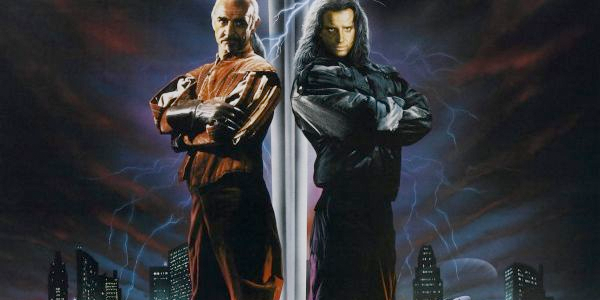
The tagline for the original Highlander, "There Can Only Be One," should have applied to the movie itself. No bad sequel can even compare to how much Highlander 2: The Quickening disrespects the original. 1986's Highlander is a fantasy film about immortal warriors who battle throughout time to be the final Immortal left. It became a cult classic and is highly regarded even if it does feature Sean Connery playing an Egyptian-born Spaniard, which does not explain the Scottish accent. Considering it was unsuccessful at the box office, Highlander should have remained a sequel-less cult fantasy film. However, the 1991 sequel rewrote every clever concept from the original by setting the film in the future, reviving Connery's character, making the Immortals extraterrestrials, and making the plot as convoluted and confusing as the original's is straightforward and enjoyable. To be fair, director Russell Mulcahy (who also directed the original) disowned the sequel and claims that the company financing it took control of it. Nonetheless, while both Mulcahy's director's cut (released in 1995) and the producer's cut (released in 2004) of Highlander 2 are better regarded, neither comes close to the original. Nor has any of the subsequent Highlander films or the various television series, all of which ignore the events of Highlander 2. Like this article? Let us know in the comments section below.

Contributor
Contributor

Chris McKittrick is a published author of fiction and non-fiction and has spoken about film and comic books at conferences across the United States. In addition to his work at WhatCulture!, he is a regular contributor to CreativeScreenwriting.com, MovieBuzzers.com, and DailyActor.com, a website focused on acting in all media. For more information, visit his website at http://www.chrismckit.com.