12 Least Successful Recastings Of Iconic Film Characters

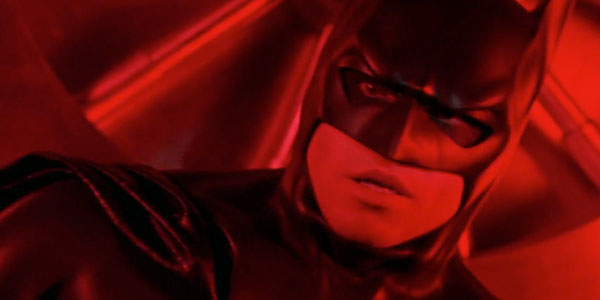
Face it Val, your Batman kind of sucks.
Some characters in film and television are so iconic that you can't imagine any other actor playing them. Vivien Leigh is Scarlett O'Hara; Harrison Ford is Han Solo, Michael J. Fox is Marty McFly, and so on. The affection we have for a particular film or character becomes indelibly linked to the actor who takes that role; should anyone else step into the role, it wouldn't feel right, no matter how good the actor in question was on paper. Nevertheless, there have been many examples in film franchises over the years where major characters have been recast mid-way through a series, with often disastrous results. The reasons for these re-castings vary: contract disputes, not being paid enough, interference from further up the pecking order, or occasionally because the original actor has tragically died. But for every one time where we could let it slide, or in which the new actor was actually better than his or her predecessor, there are just as many occasions when the powers-that-be should have left things alone. Today we're counting down the 12 least successful re-castings of iconic characters. We're looking at a wide range of offerings, from the Marvel Cinematic Universe to the Final Frontier, from successful sequels to widely-hated reboots, and from psychological horror to sword-and-sorcery. We'll begin our countdown with an inexplicable decision regarding the Iron Man series...

12. Don Cheadle - Lt. Col. James 'Rhodey' Rhodes
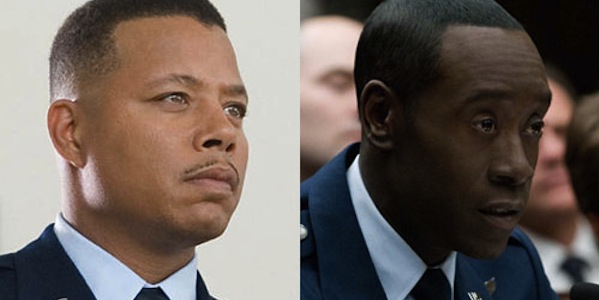
Films: Iron Man 2 (2010) & Iron Man 3 (2013) Replacing: Terence Howard The first Iron Man film was something of a watershed. It re-established Robert Downey Jr. as a trusted leading man with box office draw, and it ushered in the Marvel Cinematic Universe (MCU), effectively leading to The Avengers. To many comic book film fans, it remains one of the high points of the superhero genre, with many comparing the series to Christopher Nolan's Batman movies. But then came the announcement of Iron Man 2 and the replacement of supporting actor Terence Howard with the Oscar-nominated Don Cheadle. After years of speculation about exactly why he was given the boot, Howard finally spilled the beans in 2013. It turns out that Marvel had only offered him one-eighth of his Iron Man salary to make the sequel, with the remaining money going to Downey Jr.. This was in spite of Howard having signed a three-picture deal, which guaranteed him specific amounts for Iron Man 1, 2 and 3 (assuming that 3 got made at this stage). Feeling cheated and dogged by accusions of "difficult behaviour" on set, Howard refused to take a pay cut and was let go in favour of Cheadle. Whatever your feelings about how the matter was handled, the jury is still out as to whether this was a successful move. While many Iron Man fans will argue in favour of Cheadle, or claim that it didn't make a difference, there's still a fair number who feel that Howard got a much better grip on the character of Rhodes and could have taken it in a more interesting direction in the sequels. Cheadle remains a very fine actor, but Rhodes has not been one of his finer performances.

11. Robin Curtis - Lieutenant Saavik

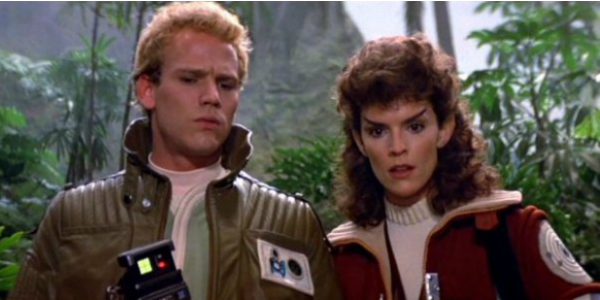
Films: Star Trek III: The Search for Spock (1984) & Star Trek IV: The Voyage Home (1986) Replacing: Kirstie Alley It might seem ridiculous to say so now, but Star Trek II: The Wrath of Khan was originally intended to be the last Star Trek film. The critical and commercial failure of Star Trek: The Motion Picture led to the second film being made on a much lower budget, and the fact that Spock was being killed off in its climactic moments put a feeling of finality upon proceedings. But once TWOK became a commercial hit, producer Harve Bennett began planning a further sequel, which subsequently became a loose trilogy with Star Trek IV: The Voyage Home. Most of the core cast of TWOK returned for Star Trek III: The Search for Spock, with Leonard Nimoy stepping into the director's chair as well as reprising the title character. But Kirstie Alley, who had played his half-Vulcan counterpart Saavik, did not return. Saavik was Alley's first big screen role, and due to a legal oversight her contract did not contain any stipulations regarding a sequel. Worrying about being typecast, Alley demanded more money but Bennett refused and replaced her with Robin Curtis for the next two films. Alley's performance as Saavik is one of the more under-appreciated aspects of TWOK. It's a thankless role in some respects, having to play the by-the-book rookie against the experienced crew of the Enterprise, but Alley brought an earnest commitment to the role which made it more than the "tits and ass" performance that the producers wanted. Curtis, by contrast, isn't particularly charismatic and seems uneasy amongst all the prostethics and silly costumes. While Alley worked hard to make her character rounded, Curtis allows Saavik to become at best an awkward distraction.

10. Edward Norton - Bruce Banner/ Hulk

Film: The Incredible Hulk (2008) Replacing: Eric Bana Marvel fans will be all too familiar with the problems surrounding the casting of the Incredible Hulk. With both previous attempts at a 21st-century portrayal both coming up short for different reasons, Marvel finally struck lucky by giving Mark Ruffalo the gig in The Avengers. But whatever gripes there might have been about Eric Bana's portrayal (which I singled out for criticism in this article), there doesn't remain a great deal of love for Edward Norton's interpretation which arrived five years later. Ironically, Norton was in the running to play Bruce Banner the first time around; he eventually refused to be a part of Ang Lee's project, claiming to be disappointed with the script. Lee's film was an equal disappointment commercially, bringing in $245m on a budget of $137m; nowadays, big films have to bring in two-and-a-half times their budgets to be considered successful. Once the rights ceded back to Marvel from Universal, Norton was signed and rewrote Zak Penn's script, distancing himself from Lee and Bana's film by changing the origin story. Ultimately The Incredible Hulk wasn't the world-beater that was expected; it pulled in $263m on a budget of $150m. Both films are heavily flawed, particularly in the CG effects department, but at least with Bana's interpretation there was an attempt to focus on character development and the internal struggles of Bruce and Betty. Norton's portrayal is hammier and more needlessly aggresive, reflecting the pumped-up, adolescent feel that director Louis LeTerrier wanted. Like Cheadle before him, Norton is a fine actor whose collaborations with Marvel bring out the worst in him.

9. Julianne Moore - Clarice Starling

Film: Hannibal (2001) Replacing: Jodie Foster The Silence of the Lambs remains one of only three films to have secured the Big Five at the Oscars - Best Actor, Best Actress, Best Writing (Adapted Screenplay), Best Director and Best Picture (the others, if you're interested, are It Happened One Night and One Flew Over The Cuckoo's Nest). Being such a big critical and commercial success, it was only a matter of time before Thomas Harris' other novels would be brought to the big screen. But whatever else was wrong with Hannibal - and there was quite a lot - the recasting of Clarice Starling was a big misjudgement. Even before Harris' novel was published in 1999, plans were already afoot to reunite the cast and crew of 'Lambs. But once director Jonathan Demme passed on the project, original Clarice actress Jodie Foster proved increasingly reluctant to be part of it. She turned down the part after reading Harris' novel, saying that she disapproved of how her character developed with regards to Lector. After a rewrite by Schinder's List screenwriter Steve Zaillian failed to change her mind, Anthony Hopkins suggested that director Ridley Scott cast Julianne Moore, with whom he had worked on Surviving Picasso. Like several of the people we've encountered on this list so far, Moore is a perfectly good actor - in fact, she's arguably one of the best of her generation. Taking place as it does ten years after the events of 'Lambs, the character is bound to have changed somewhat from the Clarice we knew and loved. But the change isn't welcome, with Moore seeming all the more awkward in the role as things get progressively sillier, even before the infamous scene of Hopkins eating Ray Liotta's brains. While Moore's career wasn't adversely affected by this appearance, it's still not the Clarice that either we or the film desperately needed.

8. Jackie Earl Haley - Freddie Kreuger
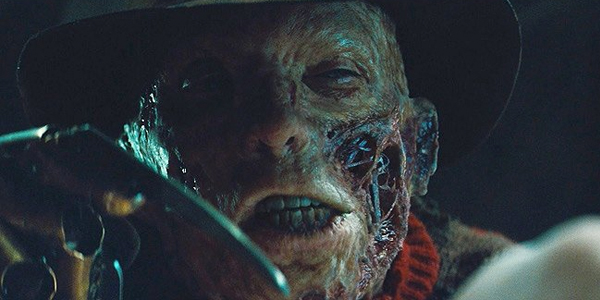
Film: A Nightmare on Elm Street (2010) Replacing: Robert Englund The phrase 'horror remake' is one that should naturally fill you with dread and despair, given the shed-load of awful American remakes to perfectly good or great foreign-language horror movies in the last 15-20 years. But this feeling of dread becomes all the more amplified when Michael Bay's name is mentioned alongside. When Bay's Platinum Dunes production company sank its rampantly cynical claws into Wes Craven's Elm Street saga, we all knew it wasn't going to be pretty. But one of its most underwhelming aspects was the casting of Jackie Earl Haley as the legendary Freddy Kreuger. By the time Bay came to develop the Nightmare remake, the Elm Street series had been in hibernation for some time. It had ended on something of a high with the post-modern New Nightmare in 1994, notwithstanding the passable Freddy vs. Jason crossover in 2003. When Bay and director Samuel Bayer came on board, they wanted to move the series back to its roots, disposing of many of the more comedic elements that Freddy gained in the later sequels. While original actor Robert Englund approved of the remake, he declined to reprise his iconic role. Jackie Earl Haley won the role after producer Toby Emmerich saw his Oscar-nominated performance in Little Children. Even by the standards of horror remakes, A Nightmare on Elm Street is shockingly terrible. While the original was a smart, interesting film about American suburbia, parental guilt and the boundaries between dreams and reality, the remake is a nasty, retrograde, meat-heated slasher with no well-written characters and no brains. Where Robert Englund brought dark humour and a Shakespearean presence, Haley is one-dimensionally mean: there's no subtlety to his performance as he growls all his lines and is upstaged by the grissly make-up. If they absolutely had to remake the film, keeping Englund would have been the only smart option.

7. Johnny Depp/ Jude Law/ Colin Farrell - Tony
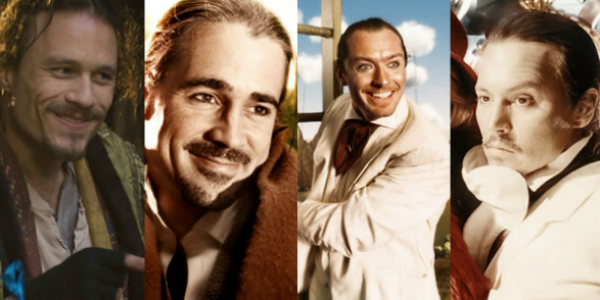
Film: The Imaginarium of Doctor Parnassus (2009) Replacing: Heath Ledger It's one thing to replace an actor or actress because they demanded too much money or weren't co-operative behind the scenes; it's quite another to step into someone's shoes after said actor has died in the middle of filming. Most directors in these situations choose not to recast, with body doubles being employed to cover for Brandon Lee in The Crow and Oliver Reed in Gladiator. But Terry Gilliam neither had this option nor seemingly wanted to take it on The Imaginarium of Doctor Parnassus. Gilliam was about a third of the way through filming in London when news broke of Heath Ledger's death in New York, aged just 28. Filming was halted as various options were discussed, such as using CGI to enable Ledger's character to alter his appearance, akin to Brad Pitt in The Curious Case of Benjamin Button. Eventually Gilliam brought in Johnny Depp, Jude Law and Colin Farrell to play altered versions of Tony in the different fantasy realms, while Zander Gladish doubled for Ledger in some of the wider shots to ease the audience into the change. Each of the three new actors donated their fees to Ledger's daughter Matilda, who had been left out of his most recent will. While you have to give props to Gilliam for the inventiveness of his solution, in hindsight the sensible option would have been to have shut down production. The Imaginarium of Doctor Parnassus is a complete mess, which squanders a potentially interesting story through a host of flat performances and unappealing characters. None of the three replacements for Ledger are convincing, with Depp phoning things in (nothing new there), Law playing completely to type, and Farrell looking genuinely confused as to what he is meant to be doing and why. Perhaps the film would have worked if merely one actor had been Ledger's replacement, but as things stand it only makes the film more aimless and meandering.

6. Eric Roberts - The Master

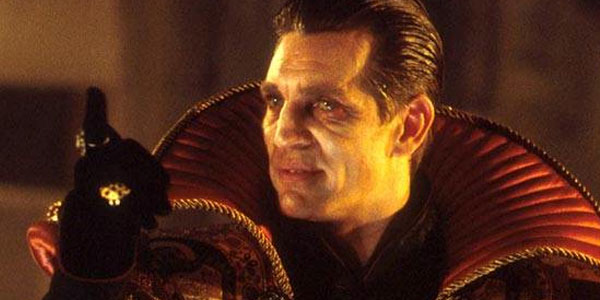
Film: Doctor Who (1996) Replacing: Anthony Ainley The new series of Doctor Who lands on our screens later this month, with Peter Capaldi taking over the reins from Matt Smith (as if you didn't already know). But while it's a commonly held belief that no-one has ever played the Doctor badly, other recurring characters have not been quite so fortunate. If you're a Nu-Who fan and found John Sims' version of the Master off-puttingly over-the-top, then you'll want to steer clear of the 1996 TV movie and the awfulness that is Eric Roberts. The Doctor Who TV movie was intended as a back-door pilot for a relaunched version of the show, following its move onto indefinite hiatus in 1989. The project was an elaborate co-production between the BBC, Fox and Canadian television, which producer Philip Segal had been developing long before the British series had ever finished. In order to cast his chosen actor of Paul McGann to play the Eighth Doctor, Segal had to cast a well-known American actor to play his arch-enemy The Master. In a bizarre loss of judgement, he went with Eric Roberts, whose only well-known role was his Oscar-nominated performance in Runaway Train back in 1985. Roberts' is by no means the only version of the Master that has come in for criticism - Anthony Ainley's version is incredibly pantomime, and as I say Sims' rendition has its detractors. But while other actors were at least bad enough to be memorable, Roberts' performance is completely inept. He captures none of the key aspects of the character (originally written as Doctor Who's Professor Moriarty), preferring instead to play him as a standard, dull Hollywood bad guy. The TV movie does have its defenders, particularly surrounding McGann's performance, but Roberts' portrayal is not going to challenge Roger Delgado's mantle any time soon.

5. Brandon Routh - Clark Kent/ Superman
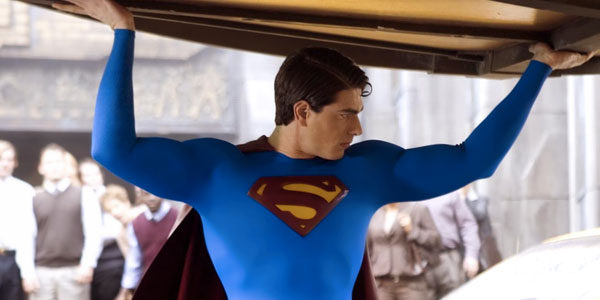
Film: Superman Returns (2006) Replacing: Christopher Reeve Yes, there have been a million articles on the internet criticising Brandon Routh's portrayal of Superman. Yes, he's an easy target and yes, he's done very little besides Scott Pilgrim vs. the World to demonstrate his acting chops in his subsequent career. But the fact remains very few people would regard Routh's performance as the genuine article, and even fewer would consider him a worthy successor to Christopher Reeve. Obviously Reeve wasn't available to reprise his career-defining role: he became quadraplegic following a horse-riding accident in 1995 and died of a heart attack in 2004. Having dropped out of directing X-Men: The Last Stand to make the film, director Bryan Singer believed that it would be best to cast an unknown actor to play Clark Kent, having turned down Jim Caviezel from The Passion of the Christ. Routh was selected from a casting call of thousands, with Reeve's late wife Dana remarking on his physical likeness to Christopher. Superman Returns, like a lot of Bryan Singer's work, is very conflicted. It doesn't know whether it want to recapture the camp, idealistic spirit of Superman I and II, or present a more modern, emo Superman for the 21st century. But while much of its narrative issues can be laid at Singer's door, its biggest problem is Routh's total lack of charisma. While Reeve managed to make Superman interesting, balancing humour with integrity, Routh seems burdened by the responsibility of the role, lost in the masses of special effects and being nothing like as emotional as he should be. It may be easy to make Superman boring, but Routh manages to do it in spades.

4. Val Kilmer - Bruce Wayne/ Batman

Film: Batman Forever (1995) Replacing: Michael Keaton The obvious choice when talking about the early Batman films would be to single out the casting of George Clooney in Batman and Robin - and sure enough, he does a pretty awful job. But all too often people are soft on Batman Forever, which for all its goofy charm represented a big climb-down from the heights of Batman Returns. Fellow WhatCulture! columnist Alex Leadbetter has already laid into the film here, but there's one crucial thing that he forgot to mention: Val Kilmer's planky performance as the Caped Crusader. After Batman Returns underperformed at the box office, Warner Bros. wanted to take the series in a more family-friendly direction. Tim Burton stayed on as producer but Joel Schumacher replaced him as director, and set about "lightening down" Burton's early concept for the Riddler. Michael Keaton, disatisfied with this new direction and wanting to vary the roles he played, turned down $15m to appear in the film. Schumacher hired Kilmer on the basis of his performance in Tombstone, and Kilmer signed on without knowing who the director was and without having even read the script. It's very hard to act when only half of your face can be seen. It's a challenge that each of the actors who've played Batman have had to face, with Keaton bringing dry wit and aggression and Christian Bale relying heavily on the voice to intimidate people. Kilmer, on the other hand, acts overly haughty as Bruce Wayne and seems to spend all his time in the mask either pouting or mumbling. It's a very good example of making the very least of the props and costume, setting a low bar under which Clooney subsequently limboed.

3. Michael Gambon - Albus Dumbledore

Films: Harry Potter and the Prisoner of Azkaban (2004) to Harry Potter and the Deathly Hallows: Part 2 (2011) Replacing: Richard Harris As we have seen, recasting after an actor has died is not an easy task. It becomes even harder when the character they play is part of a franchise which, box office permitting, is locked in for at least seven films. Prisoner of Azkaban is widely regarded as a step up for the Harry Potter series, with the pedestrian Chris Columbus vacating the director's chair for the brilliant Alfonso Cuaron. But for all the plaudits the subsequent films have garnered, many fans still have a problem with Albus Dumbledore Mark II. Richard Harris had been initially reluctact to play Dumbledore, only taking the role when his 11-year-old granddaughter threatened that she would never speak to him again if he turned it down. He succumbed to Hodgkin's disease in 2002, two-and-a-half weeks before the American premiere of Chamber of Secrets. Harris' family lobbied for his great friend and fellow actor Peter O'Toole to take the role, but Warner Bros. felt that O'Toole was an insurance liability based upon his own advanced age. Ian McKellen was (falsely) rumoured to be interested before Michael Gambon accepted the role. Ironically, Gambon had previously replaced Harris in another role, taking over the mantle of Maigret on TV back in the 1990s. Gambon is a very accomplished actor, and a great many Potter fans feel that he did a great job in a difficult role. But increasingly Gambon began to depart from the way that Dumbledore is depicted in the books, making him more active and cantankerous in contrast to Harris' sweet and caring approach. Gambon was even quoted at a Q&A for Order of the Phoenix as saying: "I don€™t have to play anyone really. I just stick on a beard and play me, so it€™s no great feat... I just say what the script tells me to say." We can debate how well Harris would have handled the darker material in the later books had he lived, but aspects of Gambon's performance remain frustatingly lazy.

2. George Lazenby - James Bond

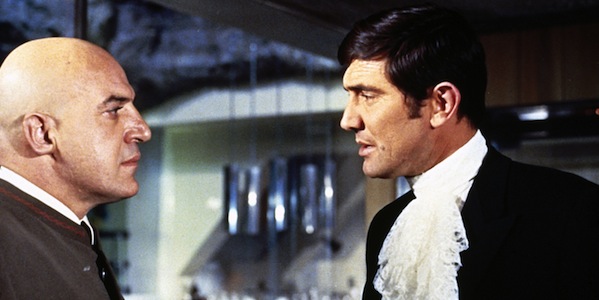
Film: On Her Majesty's Secret Service (1969) Replacing: Sean Connery I know that I've already bashed George Lazenby in my article on actors famous for just one film, but there's no way you can write an article on bad recastings without mentioning him somewhere. Sean Connery's performance as James Bond was definitive in its day and is arguably still the definitive Bond now (though personally I'm more of a Timothy Dalton fan). It was going to be hard for any actor to follow him in the role, but no-one has ever followed quite as badly as Lazenby. After Connery resigned during the filming of You Only Live Twice, producer Harry Saltzman originally wanted to film The Man With The Golden Gun in Cambodia, with Roger Moore as 007. But production stalled due to political instability in the region and Moore signed on for another series of The Saint on TV. New director Peter Hunt, who had edited several of the previous films, wanted the new film to be more realistic and closer to Fleming's version of Bond. And in his search for realism, he cast a man whose most realistic performance to date had been as a model for Big Fry Chocolate. Like many models who've turned their hand to acting, Lazenby doesn't have a great amount of range. Not only doesn't he look the part as Bond, being too preened and immaculate to capture his rougher qualities, but his delivery is unconvincing and seems frustrated, belying the on-set conflict between him and Hunt. Lazenby decided that he only wanted to play Bond once before shooting was completed, but it was a good decision in any case not to keep him on for Diamonds are Forever. However bad Connery's Bond got in Never Say Never Again, Lazenby's version remains eternally in his shadow.

1. Hayden Christiansen - Anakin Skywalker/ Darth Vader

Films: Star Wars - Episode II: Attack of the Clones (2002) & Star Wars - Episode III: Revenge of the Sith (2005) Replacing: David Prowse, James Earl Jones, Sebastian Shaw & Jake Lloyd This may be a predictable pick for the top spot on this list, but there's no getting away from what still ranks as one of George Lucas' worst decisions regarding the Star Wars prequels. While Jar Jar Binks was arguably more offensive (at least on a racial level), the decision to cast a wooden pretty-boy as the younger version of Darth Vader is far more baffling. If no-one knew who Hayden Christiansen was before Star Wars, he made sure that he would never be forgotten. To quote To Boldly Flee, "fame is fleeting, but infamy is eternal". Much like Brandon Routh in Superman Returns, Christiansen was chosen from a very large number of people; the casting director reviewed over 1500 actor before Lucas was satisfied. Christiansen was cast because Lucas believed he had "the presence of the dark side" that was meant to build over Attack of the Clones and flourish tragically in Revenge of the Sith with the creation of Darth Vader. He even requested that a special Darth Vader suit be created for him in 'Sith, so that he could get a feel for how the newly-entombed Anakin would move his burned and battered body around. I will give Christiansen a little bit of credit: he is a better actor than Jake Lloyd from The Phantom Menace. But in every other conceivable aspect, he's just about the worst choice that you could have gone for. While Lucas' dialogue is poorly written and his direction is often non-existent, Christiansen's delivery is so off-kiltre that he makes the threatening moments seem silly and the softer, more romantic moments feel terribly creepy. He has no presence, no range and absolutely zero charisma, and inserting him into the newer editions of Return of the Jedi is beyond insulting. Disagree with my choices? Drop me a comment below or visit Mumby at the Movies for more reviews.

Contributor
Contributor

Freelance copywriter, film buff, community radio presenter. Former host of The Movie Hour podcast (http://www.lionheartradio.com/ and click 'Interviews'), currently presenting on Phonic FM in Exeter (http://www.phonic.fm/). Other loves include theatre, music and test cricket.