12 More Movies You Didn't Realise Stupidly Broke Their Own Rules
Change the past, alter the future. UNLESS...

What are we without rules? Monkeys that's what. Well, not those super smart monkeys that end up taking over the world and destroying the Statue Of Liberty. We couldn't hope to compete with them.
The finer point of rules is that without properly adhering to them, we end in chaos. If you cross the streams, everything goes to sh*t, if you mess with the timeline, Doc Brown gets really angry (unless it involves him getting laid, then it's fine). There is cause and effect, and as such it's an appealing mechanism to use in telling stories.
Films have long established a framework of rules to guide their stories. Everything from sci-fi to horror comes with a set of laws that make sure their characters can't just do as they please without ramifications. Freddie Kruger can only attack you in your sleep; if the totem spins forever, you're in a dream; Gremlins can't be fed after midnight.
Occasionally those rules are as famous as the characters, which makes it especially annoying when the writers just completely bloody ignore them for the sake of their plot or a few easy thrills. We've already discussed one set of such cases, and it seems there are even more of them out there.
If you wait around long enough, films that rely upon complex rules will end up being hoisted by their own petard.
12. Changes In The Past Change The Present - The Butterfly Effect
The Rule:
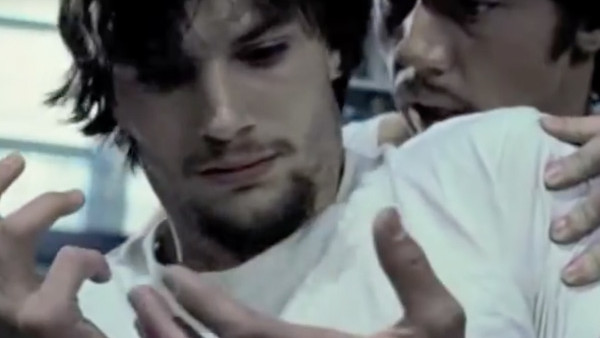
If Ashton Kutcher makes any changes to the past, they have huge ramifications in the future, which only he is aware of. Everyone else will carry on as if their lives have always been that way.
The Breaker:
Look, time travel logic is always an iffy thing to play with, because paradoxes start opening up the second you even mention messing with a time-line. You either embrace it or ignore it (as the X-Men movies and Terminator: Genisys did).
Unfortunately for The Butterfly Effect, the whole movie is defined by its rule about changing the past to reshape the future without anyone other than Evan being aware. It is entirely crucial, which makes it so frustrating when they just drop the central rule when the plot requires it.
When Evan is imprisoned, he hatches a plan of escape that involves his cellmate (the very unMexican Kevin Durand playing the very Mexican Carlos) and giving himself stigmata-style scars to convince him he's telling the truth. He pops back in time, stabs his hands and then jumps back. The only problem is that by every other bit of logic in the film, to Carlos, his scars would have been on him for the entire time he's known him, and not just when he jumps back to the present.
And the idea that something like that wouldn't in any way change the course of his life is just ludicrous.
11. Don't Go Sub-Atomic - Ant-Man
The Rule:
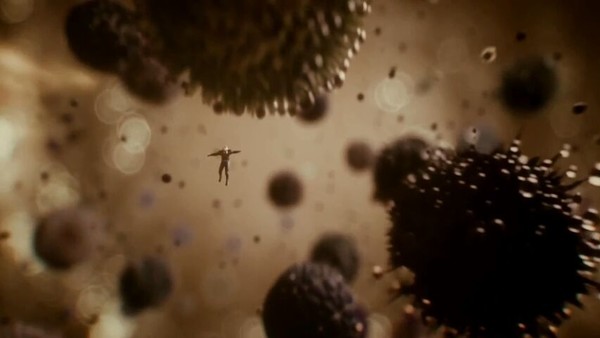
Whatever you do, don't go sub-atomic and shrink between the molecules, for that will surely lead to disaster and you being lost forever in a fantastic tiny world so difficult to comprehend it will scramble your brain.
The Breaker:
This is very much the MCU's version of "don't cross the streams", which would apparently cause "total protonic reversal" ("very bad") and specifically "all life as you know it stopping instantaneously and every molecule in your body exploding at the speed of light." Sounds grim, except it was a big old lie.
It's the same with the "don't go sub-atomic" warning. At best there should be a caveat that says "you will be lost forever, unless you hear your daughter calling for you or something", but even then relies on the ludicrous idea that Hank Pym didn't bother trying to call out for Janet Van Dyne when she was lost to the Quantum Realm.
He was as distraught as Cassie was to see her father disappear, so surely he would have? And by the logic of the film's finale, that should have been enough to draw her back.
10. Everything Is 1982 - Pixels

The Rule:
The plot of Pixels (if you could call it a plot, anyway), centres on an alien invasion inspired when a time capsule is sent up into space in 1982 containing footage of classic video games. The aliens interpret this as a threat and invade using characters from that capsule, all of which HAVE TO have been released before 1982.
The Breaker:
Except, there are MULTIPLE things in the alien attack that aren't from 1982.
Madonna appears one of the hidden messages threatening Earth with destruction, using footage taken from 1984. That's not entirely ruinous as much as it's just sloppy (especially as Chris Columbus admitted it was two years too late).
More problematic is the appearance of Max Headroom, who wasn't even invented until 1984, and nor was the infamous Wendy's "Where's The Beef" advert that the aliens reference. With that in mind, it seems a little strange that they didn't just set the year as 1984.
10. You Have To Destroy The Horcruxes - Harry Potter

The Rule:
It's simple really, destroy the Horcruxes, kill Voldemort. Specifically, you have to ensure the container is destroyed beyond magical repair.
So, when each of the Horcruxes is destroyed, the vessel is destroyed. The Ring is smashed, the diary stabbed and ruined, the locket basically explodes... It's a fairly well established rule.
The Breaker:
When the idea of Horcruxes is introduced in The Half-Blood prince, it is immediately established that the only way to stop Voldemort from being immortal is to destroy each of the seven Horcruxes containing fragments of his soul. That lasts all the way up to the rather grim revelation that Harry is a Horcrux and thus has to die - a secret Dumbledore has been keeping for years.
But then, actually no, that's not the whole story. In reality, you can "kill" the Horcrux, which is for some reason reimagined as a Voldefetus without destroying the vessel when it's Harry Potter, who is protected by his mother's love and a bond to Voldemort. For some reason, the Horcrux is not protected by any of that, and can be destroyed with a killing curse. Even though it is only questionably alive.
Stop asking questions.
It's what is rather poetically known as an almighty ass-pull - a narrative contrivance of convenience of the utmost degree.
8. Arthur Should Wake Up - Inception

The Rule:
The only way to get out of a dream - other than dying - is to experience a kick that jolts the dreamer out of sleep. These can be being dunked in water or falling, and in the final multi-layered dream a kick has to wake the sleepers up for them to get back "up" a level.
The Breaker:
Despite how important the logic of inception is, Christopher Nolan missed a detail.
In the first dream level, when the van driven by Yusuf goes off the edge of the bridge, strictly speaking, Arthur should wake up. He's the dreamer in the second level, and is experiencing a kick in the first level, meaning he should wake up. He doesn't need the same synchronised kicks the others need, because he didn't go deeper.
Somehow though, he doesn't wake up until the others do, which is just sloppy.
7. The Drug Is Deadly - Limitless

The Rule:
Taking super-drug NZT-48 does great things for your brain function, turning you into an absolute genius capable of all sorts of higher functions. Unfortunately, it also comes at a deadly cost and users tend not to do so well after prolonged usage.
In other words, they die.
The Breaker:
That should have been the end of it: Limitless should have been a Promethean tale of human over-reaching biting back, like Frankenstein or Jurassic Park or Icarus, where the arrogance of achievement leads to untold horrors and death. It should have been a morality tale.
Instead, the film decides to break its most compelling rule and just has Bradley Cooper's Eddie realise that he can just use his new special brain to work out the issues with the drug, in a sort of wishing for more wishes loophole. He comes to that conclusion because of his boosted brain-power, which is sort of fine, except it assumes that none of the other users could come to that relatively simple solution with their own identically boosted minds.
6. Neo Is The Chosen One - The Matrix Sequels

The Rule:
Since he's the Chosen One, Neo can do basically whatever he likes.
The Breaker:
Pretty much everything that happens in the sequels establishes that actually, Neo's Chosen One status means precious little.
Even though he has already proved he can fight Agents - something "no human could do" - that he can read the Matrix code in real time and that he is the real McCoy that Morpheus is looking for, by the time the sequels come about, he's back to being pretty unspectacular. He can no longer manipulate the Matrix to his every wish, and he's just as subject to rules as everyone else, barring a few exceptions.
Presumably this was done because The Wachowskis realised that having a God Mode character in your film robs all possibility of dramatic tension, so they just hobbled Neo without giving a second thought to what they established in the first movie.
5. Biff's Time Travelling - Back To The Future II
The Rule:
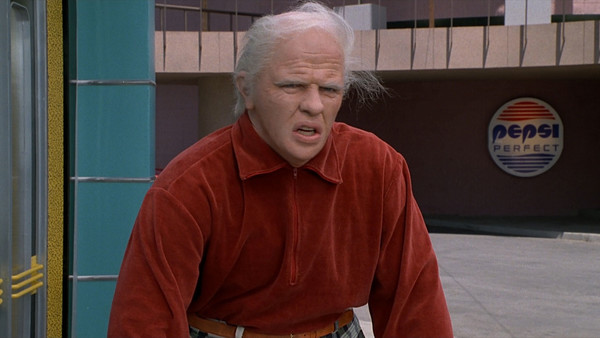
In Back To The Future, if you change the past, your actions have huge impacts on the future. Something as insignificant as destroying a tree has an echo in the future, and while you're aware of the changes, nobody else is. Simple time travelling logic.
The Breaker:
Biff Tannen is the issue here, as he usually is.
In 2015, Marty McFly buys himself a Sports Almanac with the intention of making his past self rich. He's admonished by Doc Brown, but unfortunately for them both, Biff witnesses the whole thing, picks up the Almanac and somehow manages to pilot the Delorean back to 1955 to give it to himself, then returns to the exact same time so nobody notices.
By the laws firmly established in this film universe, this is impossible. The second Biff went back, he irreversibly changed the timeline, and the future that he goes back in time from no longer exists. With the new 1985 timeline established - in which Biff becomes Donald Trump - the old 2015 is wiped out, so he wouldn't be able to get back to where he was.
He should have arrived in a completely different dystopian 2015 in which Biff had grown to old age as a billionaire and was probably president or something silly.
4. Untrained, Luke Would Become "An Agent Of Evil"

The Rule:
According to Yoda, Luke's training to become a Jedi is so crucial that if he doesn't complete it fully, he will be corrupted by the dark side:
"If you end your training now - if you choose the quick and easy path as Vader did - you will become an agent of evil.”
The Breaker:
Well, he didn't become an agent of evil at all, did he? He became a badly equipped Jedi, woefully under-prepared to fight Darth Vader, which leads to him losing a hand, but he's never actually evil.
It's just another case of authoritative figures in Star Wars lying to younger heroes to try and control their behaviour. There's definitely an allegory of millenial protest in there.
Unless of course The Last Jedi is the pay-off to that prophecy, but it seems unlikely Luke would go full Vader Jr.
3. The Boggart - Harry Potter & The Prisoner Of Azkaban

The Rule:
The only way to defeat a Boggart is the spell Riddikulus, combined with a clear image of something ridiculous that undoes its fearful powers. The charm causes the creature to assume a form that is funny to the caster, and as laughter is their weakness, they are defeated.
The Breaker:
Because rules in Harry Potter are apparently only there to be broken, the Riddikulus charm is conveniently forgotten when Professor Lupin uses a Boggart to try to teach Harry to deal with his fear of Dementors.
During their training sessions, Lupin urges Harry to project a Patronus to ward off the Dementor, which would be all well and good if it actually was a Dementor. But it's not. It's a Boggart appearing as a Dementor, and as such using a Patronus Charm against it would be as effective as casting Reparo.
Luckily though, the film just ignores its own rule and Harry is able to heroically fight the DementorBoggart off with his Patronus. As if that's just fine to do.
2. The Power Of Blood - Edge Of Tomorrow
The Rule:
The time loop in Edge Of Tomorrow is governed by the aliens, and the moment they die, time is reset to their reset point, so they can go about tactically avoiding all the things that would lead to their deaths.
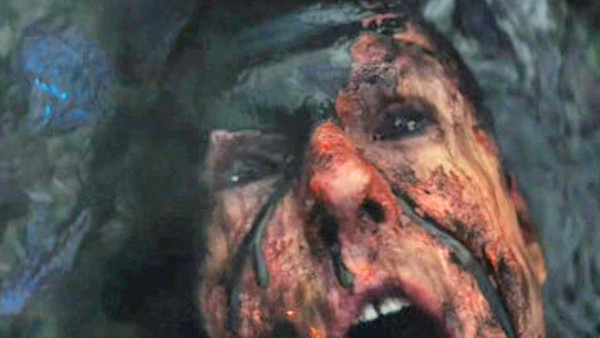
Also, the only way for a human to gain their powers is to be splashed by their blood.
The Breaker:
Great film, bad plot hole created by bending a rule so hard it goes see-through.
In his first "death", Tom Cruise's Cage is empowered with the alien time travelling power when he blows up an Alpha with a mine and gets doused in the creature's blood. The problem with that, of course, is that the alien died before its blood could hit him.
By blowing it up, he killed it instantly, rather than wounding it enough to ensure he was covered in blood before it died to reset the timeline. And instant means no time between the death and the Omega resetting in which the blood could get to Cage.
1. Kryptonite Limits Superman's Powers - Batman v Superman

The Rule:
Kryptonite - Superman's literal Kryptonite - is the great plane-leveller, which turns Superman into a fairly normal guy, who Batman can beat up (albeit temporarily). As with the traditional Supes lore, it essentially wipes out all of his powers.
The Breaker:
Actually, it only affects SOME of Superman's powers, so it's okay really. As ever, Superman's power-set is incredibly malleable, as per the requirements of the plot.
Despite showing that a cloud of Kyrptonite gas would render Superman considerably less strong than Batman (albeit temporarily as it left his system) in their fight, the Krytponite spear he uses to kill Doomsday has very little impact on him.
Were the rule properly adhered to, Superman would not have been able to fly anywhere near the Kryptonite. He would have been left sitting in an all-too-human heap trying to function normally.
Which other films that broke their own rules belong on this list? Share your own finds below in the comments thread.