12 Movie Franchises That Ruined Their Iconic Character
Mistakes were made.

The inevitable worry comes with any long-running cinematic franchise that, sooner or later, the mythology will get muddled and a once-loved movie icon will be reduced to a mere shadow of their former self.
With blockbuster filmmaking being such a complex beast and so many voices going into the creation of any franchise movie, it's little surprise that so many iconic screen heroes and villains end up ruined by misguided, inferior follow-ups. There are two common ways that movie icons have been ruined: either by "Flanderizing" the character and making them into a parody of themselves (coined from Ned Flanders becoming a walking caricature in The Simpsons), or by altering or unnecessarily expanding on their origins and mythology.
And no, before you ask, Luke Skywalker didn't make this list.
12. Star Wars (Darth Vader)
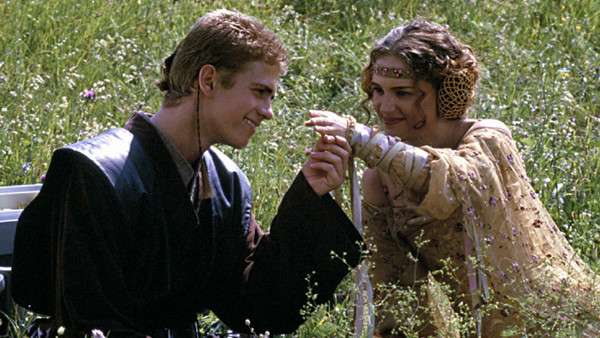
The original Star Wars trilogy made Darth Vader an immediately iconic villain, with his awesome costume, deep foreboding voice and immense lightsaber skills cementing him as an all-timer cinematic antagonist.
And then the prequels happened.
Things just went from bad to worse, as George Lucas first envisioned Anakin Skywalker's origins through an irritating child (Jake Lloyd), and then the horndog mope played by with cardboard conviction by Hayden Christensen.
As bada** as Vader was in the original trilogy - and Rogue One's climactic scene sure tried hard to redeem him - little Annie squealing "Yippee!" and the infamous sand one-liner effectively rendered the galaxy's most ferocious tyrant a verifiable laughing stock.
Though Anakin's transformation into Vader was absolutely a story worth telling, Lucas ultimately told it in the most bloated, unintentionally comical and unsatisfying way possible. Embarrassing.
11. Predator (The Predator)

Depending on how you choose to look at it, the Predator has been ruined at least twice if not three times over the course of its three-decade cinematic tenure.
The 1987 classic original single-handedly cemented the camouflaged alien creature as an unforgettable movie monster, though the decidedly more uneven Predator 2 made some incredibly ill-advised decisions, such as having the Predator seeking refuge in an old couple's apartment to recuperate.
Things got worse with Alien vs. Predator almost 15 years later, inexplicably teaming the hunter with a human to help take down a Xenomorph Queen, and though 2010's Predators briefly restored the iconic creature's glory, Shane Black's recent The Predator once again derailed the antagonist's goodwill with most fans.
In a bungled attempt to re-imagine the franchise as a rich cinematic universe, it's revealed that the main Predator in the new movie is actually trying to save humanity from a bigger, genetically mutated race of Ultimate Predators (rendered in ghastly CGI).
That doesn't stop the Predator slaughtering many, many humans upon arriving on Earth, before being killed and gifting humanity an Iron Man-esque "Predator Killer" suit. Right.
In addition to the contradictory motives and actions, The Predator just softened the edges of the beloved monster too much, stripping away the specialness and over-complicating things for no smart reason.
Of all the goofy and eye-rolling depictions the character has suffered through over the decades, this is by far the most infuriating, especially as The Predator's box office failure has put the franchise back in the closet for the foreseeable future.
10. A Nightmare On Elm Street (Freddy Krueger)

In Wes Craven's original A Nightmare on Elm Street, dream-invading killer Freddy Krueger (Robert Englund) was a genuinely terrifying murderer with a penchant for sick gallows humour.
Unfortunately it wasn't long before the sequels started to lean into the comedy a little too eagerly, stripping away Freddy's terror in the process and making him more of a campy ghoul than a truly fearsome figure.
As the one-liners got cornier and the kills more elaborately silly - such as Freddy emerging out of a TV and shouting, "Welcome to prime time, b*tch!" - the scare factor became inversely proportional.
Though the 1994 meta-sequel New Nightmare did bring Freddy back to his terrifying best, it technically wasn't canon, and more to the point, Freddy vs. Jason returned the character back to his sillier roots. This role was then dispassionately rebooted in 2010 with Jackie Earle Haley thanklessly playing the part.
Freddy is a quintessential example of a horror icon who was Flanderized and transformed into a wise-cracking cartoon.
9. Die Hard (John McClane)

John McClane (Bruce Willis) is one of the most unforgettable action heroes ever: a charming, no-nonsense everyman who springs into action when the time calls for it.
Willis' charm managed to prevail through the first four movies even if the films themselves were fairly inconsistent, but the fourth sequel, A Good Day to Die Hard, effectively turned the character into a miserable dope.
With more outlandish action than ever before, McClane was a million miles away from the more relatable Average Joe of at least the first movie, to say nothing of the fact that a bored-looking Willis failed to bring the expected charm to the table.
Willis is set to reprise the role for a "final" sixth movie, McClane, and sadly there's more worry than excitement given the potential to ruin the essence of the character even further.
8. Terminator (T-800)

The first two Terminator movies established Arnold Schwarznegger's T-800 as a sci-fi icon, both as a terrifying hunter and a dogged protector respectively. Sadly the "character", if you can call it that, has appeared in as many bad Terminator sequels as incredible ones, and a just OK one in the middle.
Terminator 3: Rise of the Machines had Arnie suffer through the indignity of Elton John glasses and "Talk to duh hand", while Terminator Salvation brought him back only in garish digital form, and Terminator Genisys re-imagined him as "Pops", a grinning, grey-haired protector of Sarah Connor (Emilia Clarke).
It's emblematic of the movies having no idea what they're doing at all, let alone with regard to Schwarzenegger's iconic cyborg. Though the currently-shooting sixth movie will ignore all the sequels post-T2 and has James Cameron heavily involved, it's still foolish not to be extremely sceptical of the film doing the T-800 any justice whatsoever.
7. Halloween (Michael Myers)

John Carpenter's original Halloween created one of the most enduring horror icons of all time in Michael Myers, no matter that the overwhelming majority of the nine sequels and spin-offs that have followed (so far) are really quite terrible.
Casual fans often forget that the twist of Michael being Laurie Strode's (Jamie Lee Curtis) wasn't introduced until Halloween II, and the first film simply saw an embodiment of evil hacking apart babysitters in a quiet, middle-class suburb.
It had a purity to it that the sequels abandoned in favour of the melodramatic family connection, not to mention the involvement of a cult and the increasingly supernatural recuperative and teleportation abilities of Myers himself.
The absurdity eventually reached peak levels, at which point Rob Zombie was drafted to reboot the series, leading to the ill-advised 2007 prequel-reboot Halloween.
The film needlessly devotes much of its run-time to demystifying and humanising Michael Myers, when the character was always far more interesting as an ambiguous cipher on which the audience could project whatever they wanted.
The early word is that the 2018 sequel to the original Halloween has restored Myers' good name, but wait and see.
6. Pirates Of The Caribbean (Jack Sparrow)

There's no denying that Johnny Depp's boozed-up pirate Jack Sparrow was the main reason the original Pirates of the Caribbean was such a smash hit, and he even earned a Best Actor Oscar nomination for his efforts.
Though the character was fairly well-utilised in the first two sequels, the fourth and fifth movie ill-advisedly bumped him up to main character status to compensate for the absence or lesser presence of both Keira Knightley and Orlando Bloom.
Much like Freddy, Sparrow became Flanderized, with any character nuance eliminated in favour of an extremely broad sketch of his most prominent traits. Given that Depp's performance felt pretty phoned-in for both of these sequels, it seems like he was as aware of it as anyone.
Sparrow was once an hilarious charmer, but by the end of the fifth film, he was a weird mix of irritatingly over-affected and depressingly lazy.
5. Hannibal Rising (Hannibal Lecter)

Hannibal Lecter is one of the most iconic movie characters of the last three decades, in large part thanks to Anthony Hopkins' unforgettable, Oscar-winning work on The Silence of the Lambs and his sublime performance in the more uneven Hannibal and Red Dragon.
2006's Hannibal Rising, then, pulled a Halloween and served up a prequel explaining how Lecter became the maniac with a taste for human flesh we came to love him as.
Adapted from franchise author Thomas Harris' novel, the film rips away any and all ambiguity about Lecter, revealing his cannibalistic tendencies to be the result of a traumatic childhood culminating in him being force-fed his own sister in a broth. Charming.
In addition to the movie dispassionately explaining how Lecter obtained every iconic aspect of his look and persona, it's also hamstrung by a terrible performance from Gaspard Ulliel, who sure ain't on Hopkins' level.
Ultimately it reduces Lecter to pop psychology and tacky torture porn, a far cry from the classy, visceral appeal of even the lesser other Hannibal films. While the character was at least redeemed with Mads Mikkelsen's tremendous recent TV portrayal, the movie version sadly suffered a most undignified demise.
4. Resident Evil (Nemesis)

Nemesis is without question the most beloved antagonist from the Resident Evil video game franchise, so fans were hugely excited to see the hulking brute appear in 2004's second Resident Evil movie, Apocalypse.
Even though schlock merchant Paul W.S. Anderson didn't direct the sequel, his grubby mitts were still all over it as writer-producer, and it once again bolstered his baffling disdain for faithfully representing the source material.
While changing Nemesis' origins to make him the result of experimentation performed on Matt Addison (Eric Mabius) wasn't an issue, the fact he appears here as a garish, low-budget hybrid of plastic suit and appalling CGI renders him laughable from the very first second he appears on screen.
The true crime, though, is having Nemesis be defeated by Alice (Milla Jovovich) in a fistfight, before having the antagonist pull a face-turn and save Alice's life before being killed by a crashing helicopter.
Considering Nemesis was an unstoppable Terminator-on-steroids in the third video game, to see him depicted here as a cheap-looking chump was heartbreaking for millions of fans.
Quite ironic it is that despite Apocalypse including more elements from the games, it somehow ended up less faithful and a straight-up worse movie than the original.
3. The Texas Chainsaw Massacre (Leatherface)

Leatherface is a quintessential horror icon and with damn good reason: Tobe Hooper's original The Texas Chainsaw Massacre terrified millions with its chainsaw-wielding cannibal antagonist who wore a face made of human skin.
Unfortunately the various sequels, spin-offs and prequels largely jettisoned that primal horror in favour of more outlandish narrative detours.
The very first sequel wasted no time venturing into camp territory, before 1994's fourth film re-imagined Leatherface as a transvestite - with a distinct air of transphobia in the bargain - and a 2003 remake needlessly revealed his origins while kick-starting a trend of attempting to humanise him.
This carried through to 2013's atrocious Texas Chainsaw, which hilariously re-imagined Leatherface as an anti-hero, and last year's largely-unseen prequel Leatherface, which once again tinkered with the antagonist's origin story.
The savage ambiguity is what made Leatherface so utterly horrifying in the first place, but in the pursuit of a nuanced mythos, the series has given audiences too much to stew on, while the attempts to force the viewer to empathise with him are just absurd.
2. Alien (The Xenomorph, The Space Jockey, Ripley, Newt & Hicks)

Well, where to begin with the Alien franchise? The wildly uneven sci-fi horror series began with two first-rate entries before spinning wildly out of control, ruining its numerous beloved characters in the process.
Though the Xenomorph itself was kept fairly in-tact in the first four movies - if we forget Resurrection's horrid hybrid - Newt (Carrie Henn) and Hicks (Michael Biehn) were given a widely-loathed off-screen death in Alien 3, before Ripley (Sigourney Weaver) herself was offed at the end, only to be resurrected with Resurrection's glorified fan fiction clone plot.
And then Prometheus happened, which needlessly lifted the veil on the origins of the eerie Space Jockey, after which Alien: Covenant revealed that the Xenomorphs were the creation of mental android David (Michael Fassbender), contradicting vast aspects of Alien lore in the process.
That's not to ignore Covenant's rendering of the Xenomorph as a repulsive CGI creation, and the truly goofy decision to give audiences a glimpse of how the Xenomorph views the world.
Isn't it so much more interesting if the alien creature remains, well, alien, and its origins stay creepily mysterious? With Covenant bombing at the box office and Ridley Scott claiming he wants to veer away from the titular creature in future films, the Xenomorph is basically dead and buried for the foreseeable future.
1. Burton-Schumacher Batman (Batman)

It's important to remember that, as far as Warner Bros. is concerned, the Tim Burton and Joel Schumacher Batman movies do indeed take place within the same universe, even if they're incredibly different both tonally and aesthetically.
While Schumacher's first Batman movie, Batman Forever, just about skated on the line of inspired absurdity, there's little defending his follow-up Batman and Robin, which unequivocally transformed the Dark Knight into a complete joke.
Far from the psychologically complex, gothic stylings of Burton's movies, Batman and Robin cast an ill-fitting George Clooney in an unbearably campy film filled with toe-curlingly cringe-worthy one-liners and, yes, the return of the Bat-nipples.
While you can argue that without Schumacher ruining the Batman brand so enthusiastically we would've never had Christopher Nolan's Batman Begins, the fact he killed the Caped Crusader's cinematic cred for the better part of a decade is still a total shambles.
Can any of these ruined franchise icons be saved, or has too much damage been done? Shout it out in the comments!