12 Movie Remakes That Completely Screwed Up Iconic Scenes
Misunderstanding what made the originals so great.

Creating an iconic movie scene is no easy feat: no matter how much planning and blood, sweat and tears your pour into a movie, there's just no guarantee it's going to catch on with audiences. On the other hand, sometimes luck seems to play a big part: a last-minute change or ad-lib can come out of nowhere and charm audiences, just as it did with Indiana Jones' famous gun vs. sword fight in Raiders of the Lost Ark, which was cut down to a single gunshot because of Harrison Ford's illness on the day of shooting.
Remakes of classic movies are a whole other bag altogether. The delicacy often rests between making a movie that will appeal to a whole new generation, and one that will upset the die-hard fans of the original as little as possible.
However, most of the time these remakes can't resist trying their own take on a supremely iconic scene, and usually the results are pretty disastrous. After all, why would audiences want to see a (usually inferior) replication of something they've already spent years, even decades enjoying, when many of the best remakes simply go their own way and try to spin a similar riff on the same idea?
These 12 remakes, whether good or bad, got one classic scene fundamentally wrong. Some, naturally, are going to be up for debate, so feel free to contribute to the argument in the comments, and include any similar scenes we didn't!
12. Wax On, Wax Off - The Karate Kid

The Original: Daniel LaRusso, the titular karate kid, is taken under Mr. Miyagi's wing, but rather than train him how to fight from the outset, he gets him to do a number of banal chores, such as waxing a series of vintage cars.
The trick, of course, is that Miyagi is really building up some of Daniel's fundamental skills, namely the virtue of patience. Daniel doesn't appreciate it at first, but in the long run, it's key. Miyagi telling Daniel to "Wax on, wax off" became an instantly iconic pop culture quote, one that seemed impossible to top in the 2010 remake.
The Remake: And oh, how true that turned out to be. Though Jackie Chan tries hard as this film's Miyagi, Mr. Han, him telling Dre (Jaden Smith) to take his jacket off and put it back on again just doesn't have the same impact or ring to it as the original phrase. "Jacket on, jacket off" sounds awkward and try-hard compared to the original, when in my opinion it would have been better not to struggle to find a compelling catchphrase altogether. It makes the same point as the original movie, albeit in a less memorable and altogether worse way.
11. The Prom - Carrie

The Original: Brian De Palma's classic 1976 horror culminates in one of the most iconic scenes in movie history, as Sissy Spacek's Carrie White is named Prom Queen, before a cruel prank results in her being drenched in pig's blood. Carrie snaps, using her telekinetic powers to seal the school gym, causing most of the students and teachers inside, even the kindly Ms. Collins, to be killed either by the fire or flying debris.
The Remake: To its credit, Kimberly Peirce's remake last year was pretty far from awful, if still a mostly pointless update. One major issue for both this scene and the film in general was the casting of Chloe Moretz as Carrie: she is far too attractive and conventionally pretty to pull the outcast role off (despite her best efforts), and though it boasts obviously superior effects (one student's face smashing through a car windshield is pretty awesome), the edges are too soft on the whole.
For instance, Carrie opting to let the teacher, Ms. Desjardin, survive in the remake seems like a bit of a cop-out: the horror of Carrie's rage taking out innocents and guilty parties alike was far more palpable in the original. And Carrie levitating out of the gym at the end was a bit silly and unnecessary.
10. The Ending - The Departed

The Original: The original Hong Kong film, Infernal Affairs, is bleak to its final frame. It ends with Inspector Lau, a mole in the police force, having undercover cop Chan killed, while he manages to erase any links that might identify him as the bad guy. The final moments of the film indicate Lau's respect for Chan in the end, and how he appears to regret the loss of life that took place. It's a grim and yet brilliantly philosophical note on which to end the movie.
The Remake: Save for its ending, I find Martin Scorsese's The Departed to be superior in every way, from the script to the actors, the musical choices and so on. The film appears to be wrapping up in similar fashion to the original, as mole Sullivan (Matt Damon) has undercover cop Costigan (Leonardo DiCaprio) killed, and seems to have gotten away with it.
This being a Hollywood movie, though, things can't end there, and Scorsese tacks on an additional scene in which Sullivan returns home only to find suspended cop Dignam (Mark Wahlberg) waiting for him, wearing surgical shoes and pointing a gun. Dignam kills Sullivan and the movie ends, with everything nicely tied up in a neat bow.
9. Alex Murphy's Death - RoboCop

The Original: Paul Verhoeven is renowned for his brilliantly gory action scenes, and arguably the very best takes place at the start of RoboCop, where cop Alex Murphy (Peter Weller) is brutally slain by Clarence Boddicker (Kurtwood Smith) and his gang of thugs. It's an extremely unpleasant scene, in which Murphy has his hand blown off before being riddled with countless shotgun blasts, all while the perpetrators laugh at Murphy and thoroughly humiliate him. It disturbed me to no end as a child, and has stuck with me ever since. As such, when Murphy becomes RoboCop, we can't wait for him to get bloody revenge.
The Remake: Jose Padilha's remake is crippled at the first step by its stifling PG-13 rating, which naturally means a lack of gore and foul language, and this is felt no more than in the equivalent scene of Alex's demise. Even ignoring the fact that Alex doesn't die in this version (he's just really, really hurt), the scene lacks the same visceral impact because it's so sudden and obscured: Alex goes outside to tend to his car alarm, only to be engulfed in a fireball as the car bomb explodes. The lack of a personal touch, combined with the fact that the villain in this version is such a non-entity, makes this unquestionably inferior to the original take.
8. The Truck Stop - The Hitcher
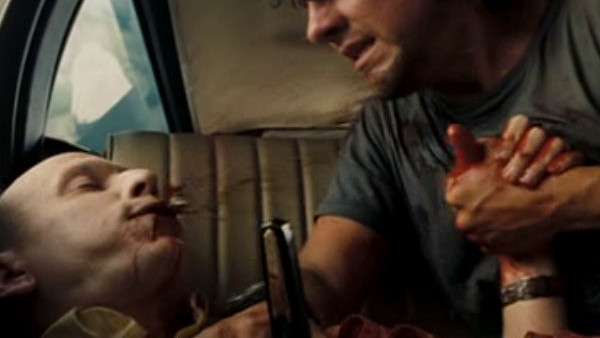
The Original: A classic staple of 1980s horror, The Hitcher is a deliciously depraved B-movie best remembered for the terrifying performance of the titular maniac, played by Rutger Hauer. Easily the most memorable scene occurs when John Ryder (Hauer) kidnaps Nash (Jennifer Jason Leigh) and ties her between a trailer and a truck he is driving.
The cops cannot shoot Ryder, because if his foot slips off the clutch, the truck will bound forward and rip Nash to pieces. Protagonist Jim enters the truck to reason with Ryder, who challenges him to shoot him. Jim refuses, and so Ryder removes his foot from the clutch, killing Nash. However, it's important to note that the screen promptly fades to black and we don't see a speck of blood.
The Remake: In the remake, however, the scene is nowhere near as bracing due to Sean Bean's tired, cliched performance failing to live up to Hauer's excellent portrayal, and the fact that for these filmmakers, the scene is really just a way to shock audiences with a gory money shot. We cared about Nash in the original, so seeing her be violently ripped apart wasn't something we wanted to see, whereas here, with the characters poorly developed and having their roles reversed (so Jim is tied up, while protagonist Grace looks on), it's all in the interest of a graphic shot of Jim being ripped in half, his bloody entrails splattering all over the floor. Believe me, I love a good gory kill as much as anyone, but this scene is meant to have real emotional impact, and instead it was diminished here to a "Holy s***!" moment.
7. Godzilla's Rampage - Godzilla

The Original: The 1954 Gojira may be incredibly dated (especially in the face of Gareth Edwards' impending remake), but its charm accounts for a lot. As a metaphor for the nuclear destruction of Japan in World War II, it is among the most powerful and meaningful blockbusters of all time. The various sequences depicting Godzilla rampaging were achieved by putting a man in the famous Godzilla suit, and having him destroy a miniature cityscape: it's crude by today's standards, but it's still a lot of fun to watch.
The Remake: It's difficult to separate my general disdain for Roland Emmerich's 1998 remake, given how all-encompassing the awfulness is. Even ignoring the cheesy "humour" and poor performances, the real kicker is that despite spending so much money on creating a digital Godzilla, it's really a pretty boring film to watch.
The new Godzilla design feels like an attempt to copy Jurassic Park, and Emmerich spends far too long shooting the character's feet above all else, obscuring him in the New York skyline as much as possible. The scenes of destruction may look objectively better, but Emmerich's direction holds us at arms length for too long, while the original just gives us the gratification we desire. The guy-in-suit goofiness of the original is considerably outdone by the corny punchlines which distract so much from all that digital mayhem in the 1998 version.
6. Shower Scene - Psycho

The Original: Alfred Hitchcock's Psycho is one of the greatest suspense flicks of all time, with the most stirring and iconic sequence being the murder of protagonist Marion Crane (Janet Leigh) just one-third through the film. She's taking a shower, and just then, the shower curtain rips open, Bernard Herrmann's iconic score pipes up, and Marion is stabbed to death by an unseen assailant. The blood drains away as Marion expires, and cinema history is made.
The Remake: Gus Van Sant's shot-for-shot remake of Psycho is one of the most pointless undertakings ever by a talented filmmaker, as evidenced no more than in the film's money-making scene itself. Hitchcock's Psycho was framed and designed with monochrome in mind, so to then essentially "colourise" the film without any major alterations (aside from a new cast and a few different shot selections) is to essentially remove much of the majesty of the original. It is in part just impossible to separate the original movie from its distinctive look and feel, and to replicate that but with colour and a little more blood is so utterly, utterly pointless.
5. Buried Alive - The Vanishing
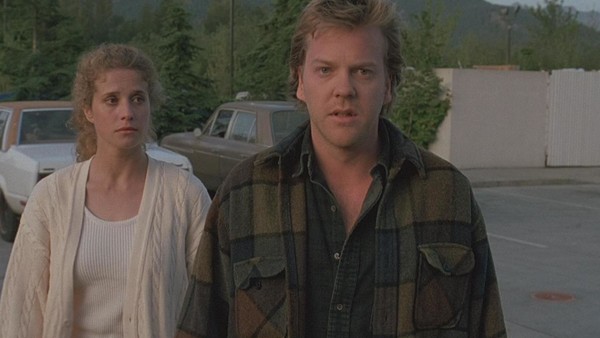
The Original: One of the finest horror films ever made, the 1988 Dutch movie The Vanishing features one of the most terrifying twist endings in movie history. After his girlfriend Saskia is kidnapped at the start of the movie, Rex finds himself desperately obsessing over her whereabouts, even years later. This fascinates Raymond, the man who kidnapped her, and he ends up agreeing to tell Rex everything if he goes through the same experience as her. Rex drinks a cup of drugged coffee Raymond gives him...and wakes up buried alive in a coffin. Raymond gets away with it, and the movie ends. Absolutely chilling.
The Remake: Easily one of the worst remakes in cinema history, the 1993 English language version adds a new third act onto the movie. Kiefer Sutherland plays the long-suffering boyfriend, Jeff, who ends up being buried alive in order to experience what his girlfriend (Sandra Bullock) did, but it doesn't end there.
Instead, the brilliant image of seeing a man realising how sealed his own fate is, is ruined by Jeff's new girlfriend, Rita (Nancy Travis), managing to track him down. Eventually, Jeff escapes his demise, and manages to kill his captor (this time played by Jeff Bridges). Oh, and he makes a novel out of the story. What a disgustingly happy, even sacrilegious ending.
4. The Twist - Oldboy

The Original: Chan-wook Park's demented thriller is remembered best for its mind-blowing plot twist, that the protagonist, Oh Dae-su and the girl he has been having sex with, Mi-do, are in fact father and daughter. This is revealed to him by Woo-jin, the antagonist of the movie, as part of his long-winded plan to avenge his own sister's death (which he believed to be Dae-su's fault). It was shocking, and completely upended everything we thought we knew about the story.
The Remake: Spike Lee was clearly acutely aware of the fact that many viewers would have seen the original Oldboy and would therefore know what's going to happen. To try and combat that, Lee thought he'd pull one over on viewers by heavily implying that the daughter character (played by Elizabeth Olsen) was not the daughter: Josh Brolin's protagonist even sees video footage of a different woman as his daughter.
Of course, in the end the villain (played horribly by Sharlto Copley) reveals that he hired an actress to pretend to be his daughter, and through home video footage, we see that Olsen's character is, in fact, his daughter. It's such a lame duck attempt to try and trick savvy audiences, especially as it can be seen coming a mile off, and even if you somehow didn't manage to guess it, it just seems really cheap.
3. Rape Scene - Straw Dogs
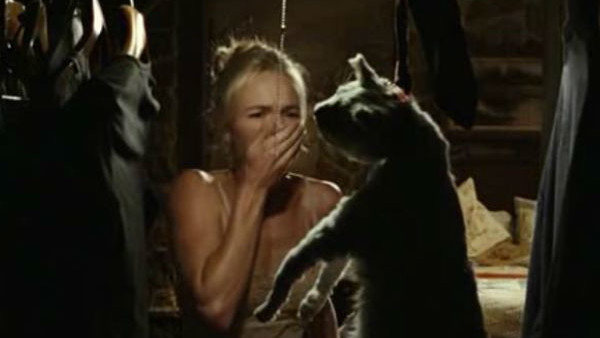
The Original: One of the most shocking and controversial scenes ever put to film, the rape scene between Amy and her former lover Charlie in Sam Peckinpah's original sparked an outrage because of its ambiguity, and the possible implication that the victim may have enjoyed the experience to an extent. Allowing viewers to make up their own minds makes it possibly the greatest scene the director ever shot, and though it may arguably eroticise rape, it also crowbars open a fascinating if deeply unpleasant debate among viewers. It's worth noting that a second rape, from another man, was restored in the 2002 Special Edition, which ironically undid some of the controversy, due to Amy clearly not enjoying that assault.
The Remake: The equivalent scene in the remake, this time replacing Susan George for Kate Bosworth, is considerably more tame if still undeniably horrible. For starters, the lack of nudity makes it seem less "raw" and more obviously a staged, fake sex scene, while Amy is less ambiguous in her feelings. She remains disgusted and is clearly not enjoying the experience, a rather cowardly move by director Rod Lurie, essentially de-fanging what was a ground-breaking if queasy scene.
2. Twist Ending - Planet Of The Apes

The Original: One of the best twists and worst-kept secrets in cinema history is the reveal at the end of Planet of the Apes, that the alien planet George Taylor (Charlton Heston) arrived on after a deep space voyage, is in a fact a post-apocalyptic Earth. Following humanity's obliteration of the planet, apes seemingly rose up and became the dominant animal, while George's arrival comes long after that period, where apes rule supreme, and humans are thought of as primeval buffoons.
The Remake: Much like Spike Lee, Tim Burton clearly realised that the plot twist was just too monumental to copy verbatim, so he opted for his own bizarre take which just left everyone confused and dissatisfied.
When protagonist Leo (Mark Wahlberg) attempts to travel back to his own time and planet Earth, he ends up on an Earth that is now comprised largely of apes, with the Lincoln Memorial now even being altered to honour General Thade, the ape antagonist of the movie. Did Leo end up in a parallel dimension? Did Thade somehow beat Leo back to Earth and manage to change the history of the planet? Or is there some other crazy explanation?
Even Burton himself expressed exasperation, claiming the ending was tacked on in order to facilitate a sequel if Fox so wished.
1. The Protagonist Dies - The Wicker Man

The Original: One of the most unsettling movie endings in history, The Wicker Man concludes with Sgt. Howie (Edward Woodward) realising that the missing girl he has been chasing all over a remote island is not intended for a Pagan sacrifice as he believed: it was all a ruse to ensnare Howie himself as the sacrifice. Howie is then placed inside a giant wicker man and burned to death, while the islanders merrily sing and the film comes to an end. Absolutely horrifying.
The Remake: Though Neil LaBute's remake follows along similar lines, it's shot through with an absurd amount of self-seriousness given how campy and silly this take on the material is. Nicolas Cage clearly knows he's acting in a dud, so decides to have a little fun and over-act himself into oblivion, screaming "Killing me won't bring back your godd*mn honey!". It's almost impossible to take seriously, and is essentially a masterclass in how not to remake an iconic movie scene, or indeed, a great movie. The sinister dread felt at the end of the original movie is just not here: instead it's mainly cacophonous laughter.