12 Movies That Were Ruined By One Dumb Decision
It could have gone so well.

When you sit watching a bad movie it is normally the culmination of a long series of bad decisions. Chief among them you spending your hard earned cash on a ticket, but we're talking less about your shockingly poor judge of quality (did Movie 43 really look funny to you?) and more about how the film itself has came into being.
Lots of things can go wrong in the journey from concept to screen. Although a truly terrible script can be spotted, without any sensory input a mediocre one can appear stellar, while a great one can crumble under bad direction (just see the varying success of movies from Hollywood's widely-revered Black List of unproduced scripts).
Of course, that's not always the case. Whether it led to a destructive chain reaction, or was so heinous it overshadowed everything else in the film varies, but there're some choices made during production that single-handedly manage to derail what could have been pretty damn fine movies. Today we're going to bring you twelve movies that could have been awesome, but one dumb decision led down a path of destruction. Quite how no one realised they were leading themselves to critical (although in most cases regrettably not commercial disappointment) is, frankly beyond us, but movie-making is a strange business.
12. Reducing Phoenix To A Subplot - X-Men: The Last Stand

After spending two films slowly building character interactions and setting up its world's politics, X-Men looked ready to dive head first into the Dark Phoenix Saga. The franchise's biggest storyline, in print it saw Jean Grey unlock her full potential thanks to the Phoenix entity, leading to the loss of billions of lives and ultimately her death. On screen it's a different story, with Jean an almost ethereal presence who bumps off characters for shock value until she's anti-climatically killed.
Bryan Singer, director of the first two movies, left production early on in The Last Stand, leading to Brett Ratner taking his place. Neither knowing or caring about the comic mythos, Ratner left the story and its faithfulness to the writers, who were under immense pressure from Fox to drop the Phoenix storyline in favour of the much less complex idea of a mutant cure. In the end a compromise was made, with Phoenix's rampage remaining, but relegated to a subplot.
Ruining two movies worth of set-up in favour of pushing a painfully unsubtle story to the fore (and this is a series that blatantly parallelled itself with the Holocaust), Fox forcing the writers to keep things as broad as possible led to something that even the franchise itself has since disowned; Days Of Future Past wrote all of the movie's events out of history.
11. Spending So Much Time In Zion - The Matrix Reloaded/Revolutions
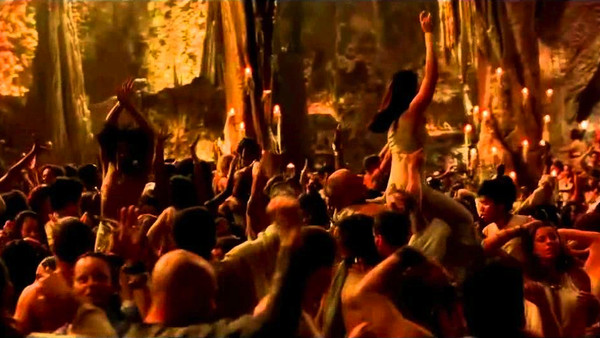
What did you like about The Matrix? Was it the incredible wire action, the smart logic behind it all, the unique sci-fi setting or the clear philosophical questions it raised? If you answered yes to any of the above then you were probably let down by the sequels.
With a much higher budget, The Matrix Reloaded pushed everything that worked to the extent it was actually tiresome (you liked Morpheus' fancy talk? Well here's the Architect to say lots of words that mean nothing), while The Matrix Revolutions rushed to a vaguely meaningful finale in the most laughable way possible. By far the strangest preoccupation of Reloaded and to an even worse extent Revolutions was the amount of time spent in Zion, home of the human revolution. The second film saw us finally visit the oft-discussed city, only to discover it was a depressingly generic sci-fi locale, complete with that definitely-not-tired staple the mech suit, full of people with a love of sweaty cave raving. And, by the final movie, half the action sequences were set there, featuring characters we neither knew nor cared for.
What everyone loved about The Matrix was, well, the Matrix - that fake world where anything was possible. Why, then, was the decision made to spend half of the remaining time in the purposely depressing real world?
10. Casting Daniel Radcliffe - The Woman In Black

Daniel Radcliffe gave a pretty damn fine performance in The Woman In Black. After we'd spent ten years getting used to him as a boy wizard, he suddenly appeared on screen a disheveled, widowed single father, yet we fully bought into it. He was a solid, relatable presence that fit the role of haunted victim very well.
But his casting hurt the film to such an extent that the finished product would have been much scarier without him. Being so intrinsically linked with Harry Potter meant Radcliffe brought with him a new audience that a ghost story a Hammer production wouldn't normally have; teenagers and even younger. So naturally the studio were keen to get them in, leading to a film that by all reasoning should have been an R/15 toned down to become a PG-13/12A. Some region specific changes needed to be made to the film in the UK to manage that, with the image darkened and six seconds cut, but even before that the movie was compromised.
The stage version (and Susan Hill's original novel) both had a prolonged sense of terror, but James Watkins' film, obviously unable to do that lest the kiddies get too scared, threw in numerous jump scares to turn a night in Eel Marsh House into a momentarily startling, but mostly unaffecting experience; imagine the second act without a jolt every time the woman appears.
9. Splitting The Book In Three - The Hobbit

Strip away the made-for-film subplots and needless action set pieces and there's a good film in The Hobbit Trilogy. It wouldn't be perfect - the overuse of unconvincing CGI has seen to that - but a competent editor could take Peter Jackson's officially released movies and turn out a version running less than three hours in total and much more faithful to Tolkien's novel.
The decision to split the the book in three was allegedly done for creative decisions, although we never saw any evidence of that. Not just three movies, but three long movies, the attempts to eke as much cash from the property as humanly possible mean there's been so much stuffed in to justify the length that it all feels aimless. One less touched on effect of the divide is that the individual parts don't get a proper narrative structure. All three entries of The Lord Of The Rings felt like self-sufficient installments despite being part of a bigger whole, whereas An Unexpected Journey and The Desolation Of Smaug are essentially painfully long episodes in a TV serial with a protracted release schedule; the cliffhanger may be cool, but the second film does just stop.