12 Movies That Were Almost Directed By Steven Spielberg
For all the greats he's made, he's passed up on plenty more.

The news just broke that Michael Bay may have found his latest film project. Naturally, this attracted roughly the same amount of cheers on one side from the hyperkinetic director's admirers, and snark on the other side from his ever-more vocal detractors.
However, the news that Bay may be set to direct the big screen adaptation of Daniel H Wilson's science fiction novel Robopocalypse is kind of a big deal - as, not so long ago (2012, in fact), it was poised to be a Steven Spielberg movie.
For a time, Spielberg's Robopocalypse looked good to go. Drew Goddard was writing the screenplay, Chris Hemsworth and Anne Hathaway were all set to star - but, apparently over budget concerns, the plug was pulled, and Spielberg wound up scratching his contemporary SF novel adaptation itch with the upcoming Ready Player One.
Of course, this is hardly the first time Spielberg has worked on a project only to wind up passing it on to someone else. Filmmakers don't wind up with a body of work like his (34 features and counting) without letting a few go along the way.
Here are just some of the major movies which, in some alternate timeline, were directed by Steven Spielberg.
Note: we're only counting films which ultimately got made, as opposed to those which Spielberg developed but which never materialised (such as Night Skies, or the notoriously unpleasant-sounding ET sequel).
12. The Taking Of Pelham One Two Three

The project in a nutshell: An adaptation of the 1973 thriller novel by John Godey, about a hostage crisis on a New York subway train.
When was Spielberg attached: Early in the film's development, shortly after completing his first theatrical feature The Sugarland Express.
Who ended up directing it: John Sargent, in 1974, with Walter Matthau in the lead.
What happened: United Artists head of production of the time, David Picker, recognised Spielberg's potential on the strength of The Sugarland Express and his debut TV movie Duel. Reportedly, Picker considered The Taking of Pelham One Two Three "director-proof," and thought it better to save Spielberg for something that would really flex his creative muscles.
Spielberg soon found just such a project in Jaws - and we all know how that turned out. Whilst The Taking of Pelham One Two Three was a success (and was later remade by Tony Scott in 2009), it didn't have anything like the same impact.
There are some Jaws connections, however. The Taking of Pelham One Two Three co-stars Robert Shaw, who would later play Quint in Spielberg's film; and 12 years later, director John Sargeant would helm the ill-conceived Jaws: The Revenge.
11. Rain Man

The project in a nutshell: An original screenplay by Barry Morrow and Ronald Bass, about an arrogant hustler who, following the death of his father, discovers he has an autistic savant older brother.
When was Spielberg attached: Early in the film's development in 1987, Spielberg worked closely with Morrow and Bass to develop the script.
Who ended up directing it: Barry Levinson. The film, starring Dustin Hoffman and Tom Cruise, was a big hit on release in December 1988, and cleaned up at the Oscars shortly thereafter, winning Best Picture, Best Director for Levinson, Best Actor for Hoffman, and Best Original Screenplay for Morrow and Bass.
What happened: Rain Man was a project which, by all accounts, Spielberg was deeply invested in. It also would have given him the chance to direct Dustin Hoffman and Tom Cruise, both of whom he was eager to work with.
However, production on the film would have overlapped with Indiana Jones and the Last Crusade, so Spielberg was forced to withdraw, something he has since professed regrets about.
10. Cape Fear

The project in a nutshell: A remake of the dark 1962 thriller starring Robert Mitchum and Gregory Peck, centred on an ex-convict who sets about getting revenge on the attorney he holds responsible for sending him down.
When was Spielberg attached: Early on its development.
Who ended up directing it: Martin Scorcese, in 1991, with Robert De Niro and Nick Nolte in the lead roles. De Niro got a Best Actor Oscar nomination, whilst young newcomer Juliette Lewis was nominated for Best Supporting Actress.
What happened: Spielberg had a change of heart. For one, he felt Cape Fear was too dark and violent for his liking; for another, he felt a far greater personal connection to another project he was developing, Schindler's List.
At that time, Scorcese was attached to direct Schindler's List, but was having difficulty with it himself. The directors swapped projects, and the rest is history: Cape Fear became Scorcese's biggest commercial success up to that point, whilst Schindler's List wound up one of Spielberg's masterpieces, and won him his first Oscars.
9. Meet The Parents

The project in a nutshell: A remake of a low-budget 1992 independent comedy of the same name, centred on the difficulties a young man has on meeting his girlfriend's parents for the first time.
When was Spielberg attached: Studio Universal bought the remake rights in the mid-90s, and at one point Steven Soderbergh was interested. Later, Spielberg came on board, with an eye to casting Jim Carrey.
Who ended up directing it: Jay Roach in 2000, with Robert De Niro and Ben Stiller. It was a huge hit, spawning two sequels.
What happened: Spielberg and Carrey were attached for a time, and contributed to the development of the screenplay; reportedly, the character name Gaylord Focker was Carrey's idea. However, ultimately both men felt the project wasn't really for them.
Enter Jay Roach, an up-and-comer in the wake of the Austin Powers movies, who struck gold in casting De Niro and Stiller. Carrey for one has insisted he has no regrets, admitting that Stiller was far more suited to the role.
And it's hard to imagine what Spielberg would have done with it, as he doesn't have the best track record with comedy: 1941, anyone?
8. Harry Potter And The Philosopher's Stone

The project in a nutshell: An adaptation of the first book in JK Rowling's series of children's novels, which by the turn of the 21st century had become a massive cultural phenomenon.
When was Spielberg attached: Early on, not long after studio Warner Bros obtained the rights.
Who ended up directing it: Chris Colombus, who would ultimately take the helm on the first two films of the series. In the end 8 films were made from Rowling's 7 novels, with the same core cast - most notably child actors Daniel Radcliffe, Rupert Grint and Emma Watson - on board for the duration.
What happened: Accounts vary. It has been claimed that Spielberg had wanted to make a CG animated movie amalgamating the first two books, and had Haley Joel Osment in mind to play Harry, which both Warner Bros and JK Rowling were against.
Spielberg, for his part, says he felt no personal connection to the material, and recognised that he was perhaps too obvious a choice for the job. He would instead make AI: Artificial Intelligence (with Osment in the lead), which was closer to his heart as it was an unrealised project of his late friend Stanley Kurbrick.
7. Big Fish

The project in a nutshell: An adaptation of Daniel Wallace's novel, centred on a man's investigations into the true life of his terminally ill father, an extravagant storyteller with a tendency to stretch the truth.
When was Spielberg attached: Not long after completing AI, in the early 2000s.
Who ended up directing it: Tim Burton directed John August's screenplay. Where Spielberg had envisaged Jack Nicholson as the elderly Edward Bloom, Burton cast Albert Finney, with Ewan McGregor as his younger counterpart in flashback.
What happened: Reportedly, Spielberg had envisaged Big Fish being his next movie after 2002's Minority Report, but he chose to pass in order to focus on Catch Me If You Can.
By all accounts, the project resonated deeply with all the key figures involved, given its emphasis on a troubled father-son relationship. Spielberg famously had a fractured relationship with his father following his parents' divorce in his youth, whilst Burton found himself drawn to the film having lost both his parents not long before starting production.
6. Memoirs Of A Geisha

The project in a nutshell: An adaptation of Arthur Golden's 1997 novel, which, while fictional, was based on the author's research into geishas in World War II-era Japan.
When was Spielberg attached: Initially, Spielberg intended for it be his next film after 1998's Saving Private Ryan, which won him his second Best Director Oscar.
Who ended up directing it: Rob Marshall, in 2005; his first film after the Oscar-winning Chicago.
What happened: According to David Geffen, Spielberg's partner at Dreamworks SKG, the project "wasn't good enough" for Spielberg. As we've seen, the director had been quite busy in the early 2000s, and ultimately decided to step back, remaining on board as producer.
Ultimately, Memoirs of a Geisha was not a great success either critically or commercially. It also attracted a great deal of criticism for its western perspective on eastern culture, and the casting of non-Japanese actresses Zhang Ziyi, Michelle Yeoh and Gong Li.
5. The Curious Case Of Benjamin Button
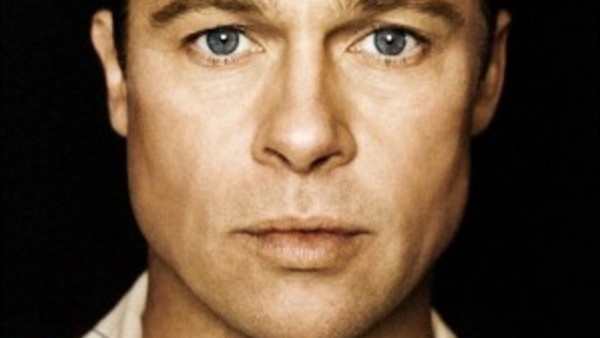
The project in a nutshell: An adaptation of F Scott Fitzgerald's 1922 short story about a man who ages in reverse.
When was Spielberg attached: very early on: Spielberg optioned the project in 1991, intending on casting his friend Tom Cruise in the lead.
Who ended up directing it: Ultimately, David Fincher made The Curious Case of Benjamin Button in 2008, with Brad Pitt and Cate Blanchett starring. The film received 13 Oscar nominations including Best Picture, Best Director and Best Actor, but only won in 3 technical categories.
What happened: As might be apparent from how long it took to reach the screen, Benjamin Button proved a significant challenge to a number of directors. Frank Oz had been attached before Spielberg, and Ron Howard, Spike Jonze and Gary Ross would be among the others linked before Fincher.
Ultimately, Spielberg would spend the early 1990s working on Jurassic Park and Schindler's List, and would finally work with Cruise a decade later on Minority Report and War of the Worlds.
4. Oldboy

The project in a nutshell: A remake of South Korean director Park-chan Wook's 2003 thriller, starring Choi Min-sik as a man who is incarcerated for 15 years with no idea why. Once free, he seeks answers, not to mention bloody revenge.
When was Spielberg attached: In 2009, with Will Smith in mind to star.
Who ended up directing it: Spike Lee in 2013, with Josh Brolin in the lead.
What happened: This one was baffling from the get-go. Given that Oldboy had become a instant cult classic among fans of extreme cinema, the idea of a mainstream-friendly duo like Spielberg and Smith taking it on was very hard to envisage. However, plans fell through as Dreamworks couldn't secure the rights.
The ultimate 2013 film seemed to prove how misconceived the whole endeavour had been. Audiences stayed away, and critics agreed that Lee's take did almost nothing that the original hadn't already done better.
3. The Secret Life Of Walter Mitty

The project in a nutshell: An adaptation of the 1939 short story by James Thurber about a mundane office worker who harbours unfulfilled dreams, which had already been adapted for the screen in 1947.
When was Spielberg attached: The film had been in development since the mid-1990s, planned as a vehicle for Jim Carrey. Spielberg came on board in 2003.
Who ended up directing it: Once again, Ben Stiller took over an abandoned Steven Spielberg/Jim Carrey project, both directing and starring in the film in 2013.
What happened: Again, it would seem to be a combination of scheduling issues, and concerns about the material. After being attached for almost a year, Spielberg dropped out in early 2004 to pursue his next two films, War of the Worlds and Munich.
Soon enough Carrey too would vacate the role. In the decade ahead Owen Wilson, Mike Myers and Sacha Baron Cohen would all be linked, until Stiller ultimately got it made to a fairly lukewarm response with critics and audiences.
2. Interstellar

The project in a nutshell: A science fiction drama about a mission into deep space to find a new inhabitable planet for the human race.
When was Spielberg attached: 2006; he was the first director attached to the project, conceived by Contact producer Lynda Obst and physicist Kip Thorne.
Who ended up directing it: Christopher Nolan in 2014, with a cast including Matthew McConaughey and Anne Hathaway. It was a box office hit and a critical success.
What happened: Spielberg's Dreamworks was associated with Paramount when Interstellar went into development, but when Dreamworks moved over to Disney, Paramount retained the project.
After several years and a bit of legal red tape, Warner Bros obtained the project for Christopher Nolan, whose brother Jonathan had been hired by Spielberg to write the script back in 2007.
The Nolan brothers then developed the final script, which by all accounts is quite far removed from what Spielberg had originally envisaged.
1. American Sniper

The project in a nutshell: A biopic of Chris Kyle, US Navy SEAL and sniper with the highest kill count in US military history. The film went into development as an adaptation of Kyle's autobiography, prior to his murder in 2013.
When was Spielberg attached: David O Russell expressed interest in the project early on, which already had Bradley Cooper attached to star and produce. However, Spielberg signed on to direct in May 2013; mere months after Kyle's death.
Who ended up directing it: Clint Eastwood. The film was released Christmas Day 2014, and it became the director's biggest box office hit ever. It also received several Oscar nominations including Best Picture, Best Actor for Cooper and Best Adapted Screenplay for Jason Hall.
What happened: Reportedly, Spielberg walked away over budget concerns, feeling the $60 million that Warner Bros had allotted to the film was not enough to realise his vision. He went on to make Bridge of Spies and The BFG back-to-back instead.
Around the same time, Bradley Cooper was rumoured to be a contender to take the lead in a rebooted Indiana Jones; but that doesn't look likely to happen, as Spielberg and Harrison Ford are reportedly poised to start work on a fifth Indy movie soon.