12 Shocking Implications Of 2017 Movies You Totally Missed
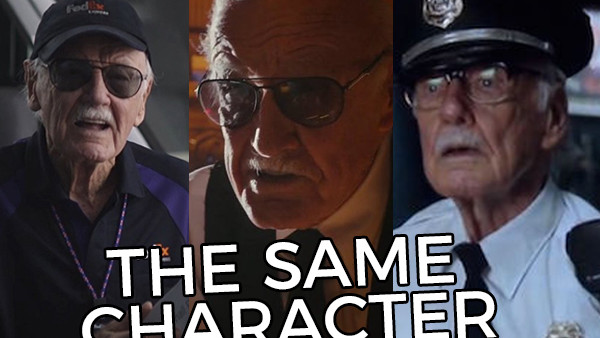
The Stan Lee theory pans out (kinda).
Isn't it great when a movie works on multiple levels? For instance, kids can look at Toy Story 3 as a cute film about toys going on an adventure, while adults will inevitably view it as a heartbreaking treatise on the impermanence of everything and the loss of childhood.
In the case of these 12 movies, none of which were aimed primarily at children, they offered plenty for fans to think about below the surface, from tacitly confirming fan theories, to slyly explaining character motivations, hinting at deeper aspects of a franchise's mythology, and even making some unexpected commentaries about society at large.
Yes, these are implications, not statements, from what is seen and spoken on-screen, but it's hard to believe the filmmakers weren't sending very intentional messages to those who really dared to pay attention to what was going on.
View these 12 films as more simplistic, one-track blockbusters if you must, but you'll be missing out on a goldmine of stunning, hilarious and even horrifying subtext...
12. Shaw's Body Parts May Have Created The First Facehugger - Alien: Covenant

In Alien: Covenant's third act, the corpse of Elizabeth Shaw (Noomi Rapace) is revealed in David's (Michael Fassbender) lab, with the suggestion being that he created the first Xenomorph egg through experimenting with Shaw, whether she was alive or dead at the time.
But what about the Facehugger, you ask? Well, there's an absolutely revolting - yet relatively plausible - fan theory that the Facehugger in fact originated from Shaw's own body, with her fingers, spine and reproductive system being fused together with the black goo to create the creature.
It's certainly suitably terrifying and fits the experimental biology of the newer Alien movies just fine, even if it's probably too disgusting a point for Ridley Scott to outright reveal in the movie. It makes sense enough, at least for the barmy recent standards of the series, especially after seeing Shaw's dissected corpse laid open like that.
11. Thor Has Changed The World's View Of Religion - Spider-Man: Homecoming

There's a blink-and-you'll-miss-it moment in Spider-Man: Homecoming which intriguingly nods towards the wider impact of superheroes and Gods showing up on Earth.
When Peter (Tom Holland) and May (Marisa Tomei) go out for dinner, the building to the right of the Thai restaurant they're frequenting has a large Korean logo with smaller text below it reading, "Korean Church of Asgard."
Though this is essentially intended as a throwaway Easter egg, it is a slyly important piece of world-building, in that it suggests how the world of religion and belief has changed since the likes of Thor and Loki have made their presence known on Earth.
These visible, tangible Gods are the new pillars of worship, and are likely even siphoning believers away from mainstream religions more reliant on faith than, well, actually seeing a guy use his magic hammer to destroy evildoers.
This aspect of MCU lore will likely never be fleshed out in any substantial way, but it's fascinating food-for-thought all the same, and hopefully more nods like this will be included in future films.

10. Deckard (Probably) Isn't A Replicant - Blade Runner 2049

The biggest question surrounding Blade Runner 2049's release was whether or not the film would finally settle the 35-year mystery of Deckard's (Harrison Ford) true identity. Is he a replicant after all, as Ridley Scott claims, or a mere human, as Harrison Ford conversely insists?
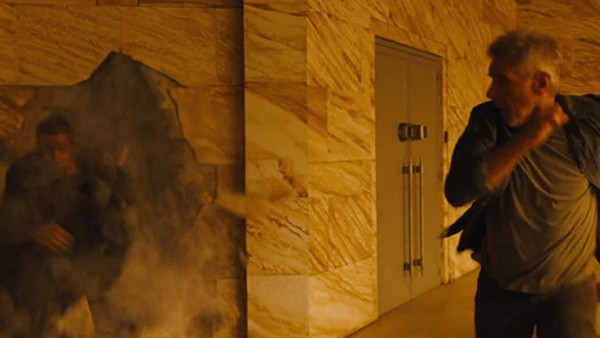
Though Denis Villeneuve's astonishing sequel stops short of decisively answering the question, there is one major clue once K (Ryan Gosling) heads to Las Vegas to confront him, and Niander Wallace's (Jared Leto) forces soon enough follow.
During the ensuring chase, K bursts through a wall, being a replicant and capable of bounding through concrete, but curiously, Deckard instead uses the door, seeming to suggest he's a human.
Some fans have already argued that this merely deepens the ambiguity further, as Deckard could still be unaware of his real nature, but this is nevertheless the strongest hint fans have had to date that, indeed, Deckard is not a replicant.
9. "Walter" Loves Running For One Creepy Reason - Get Out

One of the most iconic scenes from Jordan Peele's incredible horror-satire sees the Armitage's housekeeper Walter (Marcus Henderson) running towards Chris (Daniel Kaluuya) in the middle of the night.
Though at first this seems like some random creepy horror movie nonsense, it's subtly revealed to have an incredibly important meaning later in the movie.
The third act reveals that Rose's (Allison Williams) grandfather Roman has taken control of the real Walter's body, and the reason for the running? Because as a youngster - and a white man at that - he was beaten by Jesse Owens when attempting to qualify to race in the 1936 Berlin Olympics.
Roman never got over his failure, and some 80 years later, he's hoping that he can use the body of a black man to become the runner he never could as a white man. This is never explained verbally as it would in a more conventional movie, but it's clearly Peele's intent.
It's one of those brilliant details that evaded most people on their first viewing, but the second or third time around, it might reveal itself in an extremely satisfying - if disturbing - lightbulb moment.
8. Stephen Hawking Is The Transformers' Greatest Living Protector - Transformers: The Last Knight
When Cade Yeager (Mark Wahlberg) meets up with Sir Edmund Burton (Anthony Hopkins), he learns about the history of the Transformers on Earth, specifically that there is a secret society, the Order of the Witwiccans, who have been charged with protecting the secrecy of the Transformers for centuries.
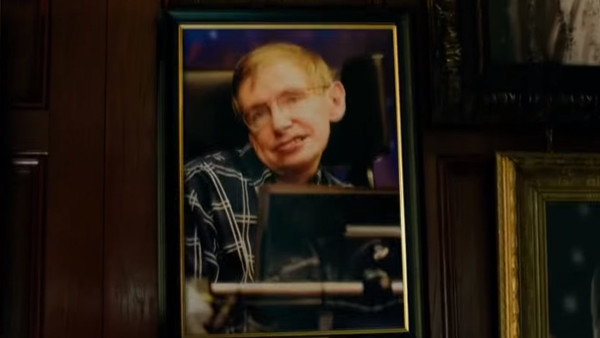
Burton quickly reels off a list of famous figures who were part of the order, such as Charles Darwin, Winston Churchill, Leonardo da Vinci, Albert Einstein, Abraham Lincoln and so on, while casually mentioning one major living figure among all the dead.
Stephen Hawking's image only flashes up on screen for half a second or so and is easily missed, but he's the only real-life, currently alive figure mentioned as a Witwiccan, seemingly making him the most important figure of the group by default.
Simply, the idea of Stephen "Bloody" Hawking presiding over the Transformers is both unbelievable and totally hilarious, and god bless Michael Bay for daring to go there.
7. Stan Lee Plays A Single, Recurring MCU Character - Guardians Of The Galaxy Vol. 2

It's been a long-standing fan theory that Stan Lee's various cameos throughout the Marvel Cinematic Universe are all in fact featuring the same character, Uatu the Watcher, an extraterrestrial being who observes events on Earth.
Guardians of the Galaxy Vol. 2 confronted this theory head-on, when Lee is shown talking to the Watchers in space mid-way through the movie, discussing the time he posed as a FedEx employee, referring to his Earth-set cameo in Captain America: Civil War.
Though the scene doesn't confirm Lee to be Uatu himself, the credits list him as "Watcher Informant", effectively confirming the long-held theory that all of his MCU cameos are the experiences of one entity, who appears to report these outings back to the Watchers.
What a relief it was to finally have this resolved, even if they didn't go the whole hog by making him Uatu outright. At this point, fans will take this as a victory.
6. Whitewashing Is Totally Fine If You're Self-Aware About It - Ghost In The Shell

The live-action Hollywood adaptation of Ghost in the Shell courted plenty of controversy out of the gate for "whitewashing" the original manga's protagonist Motoko Kusanagi, who for the new movie was renamed Mira Killian (Scarlett Johansson).
In a move both brave and stupid, the film opted to roll the casting controversy into its own narrative, by revealing in act three that Mira's original identity was indeed Motoko, and her brain was eventually placed inside the Caucasian shell known as Mira.
This only incited the fan rage further, as it was perceived that Paramount was attempting to "hang a lampshade" on the whitewashing, by effectively saying, "because we're self-aware about it, it's OK."
Though it's perfectly easy to watch the movie on its own terms without even considering the racial implications, to many who want to see greater representation in Hollywood, especially when adapting properties from other cultures, this gross plot twist sent completely the wrong message.
At least the movie bombed, proving that a popular actress alone can't elevate offensive material, making it less likely that other studios will attempt similar nonsense in the future.
5. Consent Doesn't Matter If You're Hot & Female - Batman & Harley Quinn

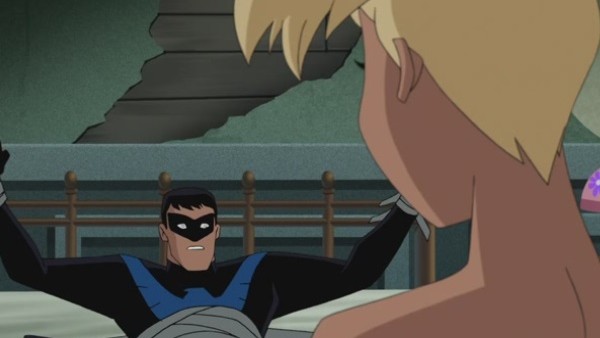
This past summer's DC animated film Batman and Harley Quinn featured a number of questionable scenes that placed Harley in objectionable, sexist poses, though the most alarming actually involved her kinda-sorta-maybe raping Nightwing aka Dick Grayson.
After Harley beats Nightwing in a fight, she brings him back to her apartment and ties him to the bed, before she strips down to her skimpy underwear.
After Harley realises that Dick is, ahem, erect, he tells her, "Don't get any ideas", but she ignores him, turns the lights off, straddles him and the rest, as they say, is history.
Just imagine if the scene was played the other way: it'd be called out as creepy and rapey at best, but because of the societal presumption that all men are dum-dums who want nothing but sex, and an erection is tantamount to consent, this scene is "fine", apparently.
The main issue is that scenes like this have no business being in a Batman movie, and it just feels like pandering fan service for 12-year-old boys, while not exactly sending them a terrific message about consent either.
4. It's Pro-Aristocracy Propaganda - Kingsman: The Golden Circle

On the surface, Kingsman: The Golden Circle is a satire of the James Bond franchise, and is a wilfully un-classy affair full of gags about anal sex, people being fed into meat grinders, and sexual encounters of dubious consent.
However, it's been noted by some that both Kingsman movies can be interpreted at a more subtle level as a commentary on British aristocracy. Take this review of The Golden Circle, which called out the movie's "ultra-conservative politics", which with its reliance on an old boys' club of rich, dapper gents to save the everyday folk, represents an "implicit endorsement of the aristocracy as the de facto custodians of the masses".
The rabbit-hole goes much deeper than this when you consider writer-director Matthew Vaughn's own life. Vaughn found out in the early 2000s that his biological father was George Albert Harley Drummond, a British aristocrat and godson to King George VI.
As such, Vaughn has a certain personal interest to paint aristocratic institutions as noble and heroic, even if some might argue it makes him a class propagandist.
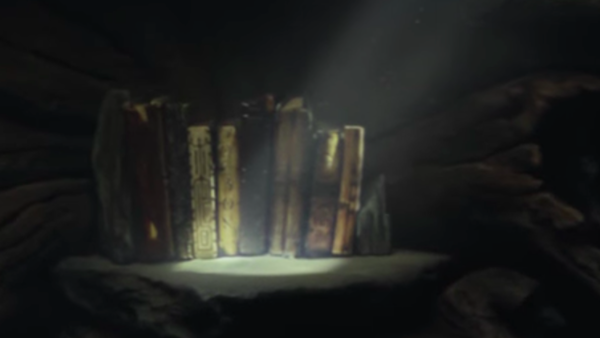
3. Rey Stole The Jedi Texts From Luke - Star Wars: The Last Jedi

Early on in The Last Jedi, Rey (Daisy Ridley) takes a liking to the precious Jedi texts hidden within Luke's (Mark Hamill) library on Ahch-To, but after Yoda (Frank Oz) burns the library down, it seems that they become lost forever.
However, eagle-eyed viewers may have noticed that, at the very end of the film as Finn (John Boyega) is seen caring for Rose (Kelly Marie Tran) aboard the Millennium Falcon, an open drawer briefly reveals the texts to be safely hidden away, with Rey having presumably sneaked them out just in time.
This circles back to Yoda telling Luke, "There's nothing in that library that Rey doesn't already possess", a seemingly philosophical comment which was ultimately a cheeky nod to the books being hidden in plain sight at the very end of the film.
This probably won't have any wider impact on Episode IX, but it's still a fun little surprise for those who catch it.
2. It's Set In The Same Universe As Ocean's Eleven - Logan Lucky
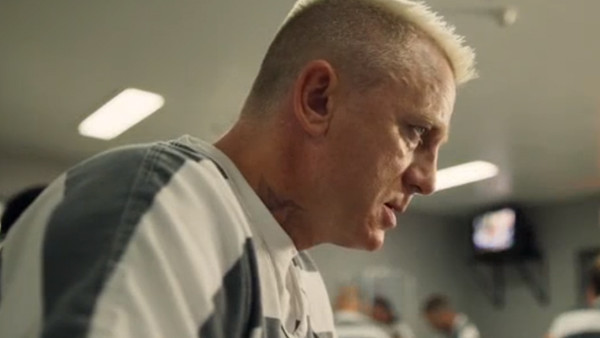
A playful but undeniably awesome and unexpected reference occurs near the end of Steven Soderbergh's latest crime caper. Once the heist has been carried out, Joe Bang (Daniel Craig) sits in jail while a TV in the canteen features an interview with a local woman who says, "Well, I heard that they're callin' it 'Ocean's 7-Eleven' 'cause they found that truck with the money behind a convenience store."
This is of course a reference to Soderbergh's hit Ocean's franchise, but it's missed incredibly easily if you're not paying attention, because the sound isn't particularly loud and so many will dismiss it as incidental dialogue that doesn't need to be listened to.
More to the point, this moment suggests that Logan Lucky and the Ocean's movies are set within the same continuity, which while not an Earth-shattering revelation considering how relatively "grounded" these movies are - compared to superhero films, anyway - is nevertheless a great way to tie thematically similar movies together in Soderbergh's filmography.
So, what about a cross-over movie?
1. The Human Race Is Total Trash & Not Worth Saving - War For The Planet Of The Apes

And finally, the most shocking and depressing implication of any 2017 movie? The human race totally sucks, and they're worthy of being wiped out by a colossal extinction-level event.
War for the Planet of the Apes concludes with two warring human factions preparing to do battle, at which point Caesar (Andy Serkis) triggers an explosion, which unknowingly sets off an avalanche, annihilating both sides and leaving the apes, along with human child Nova (Amiah Miller) as the sole survivors.
It's fascinating watching a movie that actively paints humans as literal garbage and motivates you to root for the "insurgent" species which, in any other franchise, would be the terrifying creatures to root against.
It's a hell of a vision, and says plenty about the destructive - namely self-destructive - nature of humanity, as horrifying as that is. This is not what viewers of blockbuster movies are conditioned to expect from big-budget tentpoles, which is probably why War grossed considerably less than its predecessor.
Which of these surprising implications caught you the most off-guard? Shout them out in the comments!