12 Subtle Movie Plot Points You Probably Overlooked

Your buddies will think you're the Rain Man of film fandom knowing these.

All audiences love a movie that doesn't just spell things out obviously for them and rewards viewers who actually pay attention to what's taking place on screen. Even so, sometimes filmmakers will intentionally include plot points so subtle and fleeting that, in the thrall of all the action and Hollywood spectacle, it often passes viewers by, whether it's a small visual cue or an overriding theme of the piece. These 12 movies, mostly popular, successful Hollywood flicks, all included some rather mind-blowing reveals that, to most audiences, will go completely unnoticed, all while the director smirks to himself about it. Whether it's a sly set-up for a sequel that's got a little more to it than audiences imagined, a decades-old mystery finally solved, a plot twist hiding in plain sight, or a realisation that completely changes viewer perception of the entire movie, these films all included something awesome that most people just don't know about. So sit back, take a look, and prepare to wow your friends the next time you're watching these movies: you won't see them quite the same away ever again, and your buddies will think you're the Rain Man of film fandom. Here are 12 subtle movie plot points you probably overlooked.

12. The Joker Delivered The Playing Card To Batman - Batman Begins
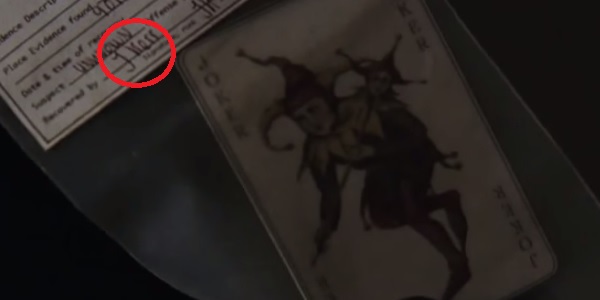
The Plot Point: At the end of the movie, when Gordon (Gary Oldman) informs Batman of the presence of The Joker and shows him the card, the evidence bag says that it was recovered by a "J. Kerr", an obvious implication that The Joker himself planted the evidence and was baiting Batman to come after him right from the get-go. Why You Probably Missed It: If you're a Batman fan, you've probably seen Batman Begins five, maybe ten times since its release, right? And yet you probably never noticed this, quite forgivably given that the shot appears on screen for a whole 2 seconds, and practically everyone's attention is focused on the Joker card itself rather than the evidence bag. Still, it's a fun little foreshadow of The Joker's playful demeanour, and is something that only came to light once the movie was out on home video (and even then, it's gone undetected to most for years).

11. Kevin's Plane Ticket Is Thrown In The Garbage - Home Alone
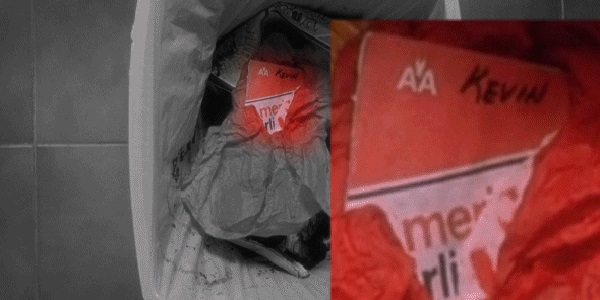
The Plot Point: As popular as it is, people often criticise the Macaulay Culkin-starring Home Alone for being contrived and riddled with plot holes. One of the foremost questions is this: how do Kevin's parents not notice he's missing when they bring his ticket to the boarding gate and have one more ticket than people? A Reddit user posted this glorious gif last year, revealing that, after Kevin (Culkin) spills milk on the plane tickets, his father accidentally throws Kevin's ticket away while cleaning things up. Why You Probably Missed It: It's on screen for such a fleeting amount of time, and you've probably grown up with the lower-resolution VHS version of the movie, that it's only easy to spot if you've revisited the film on Blu-ray over the last few years and really paid attention, where Kevin's name is clearly visible on the ticket. It papers over one of the movie's biggest "flaws", and reflects how keen the movie is to have an answer for every nitpicky film nerd question thrown at it.

10. Soze In Turkish Means "Talks Too Much", Or "Verbal" - The Usual Suspects

The Plot Point: The criminal mastermind behind all the murder and mayhem in Bryan Singer's crime classic calls himself Keyser Soze, and most of the movie revolves around figuring out who he is. However, there's a massive clue hiding in plain sight: writer Christopher McQuarrie only opted to use the name "Soze" after finding it in a Turkish dictionary, where it translates to "talks too much", or as one might say, to be verbal. "Keyser" is meanwhile similar to the German "kaiser", meaning King, which combined with Verbal Kint's (Kevin Spacey) assertion that Soze has mixed German-Turkish heritage, reveals Soze's name to mean "The King who talks too much", rather obviously revealing Soze's identity to be none other than the movie's most wordy character, Kint himself. Why You Probably Missed It: Because you probably don't speak freaking Turkish, that's why! It'd certainly be interesting to get the perspective of a Turk watching the movie for the first time and see if the twist really was more obvious to them or not, though given how blatant a clue it is, it's hard not to believe so.

9. It's A Satire Of Sexist Fanboy Culture - Sucker Punch

The Plot Point: Within hours of Sucker Punch's first trailer hitting the web, commentators were taking director Zack Snyder to task for cobbling together another deeply sexist action movie that objectifies women and patronises men, appealing to their basest desires in a lazy attempt to sell movie tickets. Though it's far from a great film, it is, at least, far more intelligent and self-aware than most critics have given it credit for, because Sucker Punch is at its core a satire of the tacky fanboy culture that breeds this sort of sexism. The proof? The sheer over-the-top nature of the costumes and nonsensical action, the ridiculous character names like Babydoll, Sweat Pea and so on, and the fact that almost every male character in the movie is a perverse scumbag, in essence reflecting the audience's own leering nature if they went to see the movie just to ogle some cute young thing in a sailor costume. Whether Snyder entirely succeeds in his satire is an entirely different matter (can a movie satirise something while also showing it off?), but it's clearly what he was shooting for. Why You Probably Missed It: Because who expected a Zack Snyder movie to deliver anything this sub-textual and ambitious? Given Snyder's rather dubious depiction of females in his prior movies, why wouldn't he just make some sexy fanboy-bait that's catering to the lowest common denominator? Still, in the years since its release, it's been re-evaluated by many, and though plenty flawed, it's at least a much braver film than most give it credit for.

8. The Payphone Only Accepts Outgoing Calls, Hinting At The Plot Twist - Fight Club
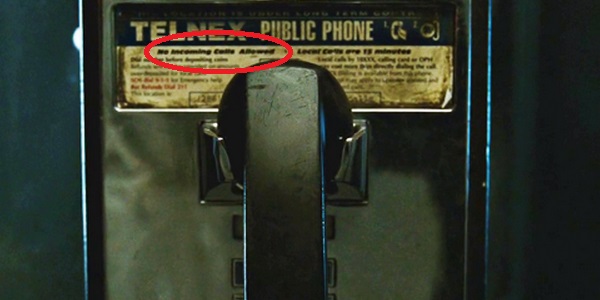
The Plot Point: When Jack (Edward Norton) is calling Tyler Durden (Brad Pitt) after his condo is blown up, viewers can see that the payphone says "no incoming calls allowed", rather blatantly hinting to viewers that something isn't quite right here, and that, of course, Jack and Tyler are really the same person, as is revealed at the climax. Why You Probably Missed It: Because it's on screen for the shortest time, and even if you did manage to see it, you'd probably just dismiss it as a continuity error of some kind, right? Who would leap straight to the conclusion that it was unequivocal proof of Jack having Dissociative Identity Disorder? Still, David Fincher has proven time and time again his meticulous attention-to-detail as a director, so there's absolutely no way this was a coincidence.

7. The Murdered "German" Soldiers Are Actually Czech - Saving Private Ryan
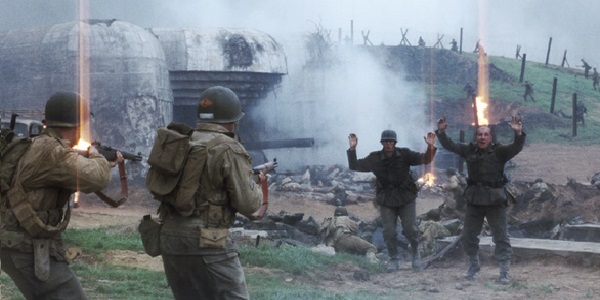
The Plot Point: On Omaha Beach, two "German" soldiers are attempting to surrender to the Allies, who cannot understand them and, out of frustration, simply shoot them dead before mocking them ("Look, I washed for supper!"). However, it turns out that the soldier who speaks was talking in Czech, and said, "Please don't shoot me, I am not German, I am Czech, I didn't kill anyone, I am Czech!" They were members of a German battalion which took nationals from countries Germany had invaded and forced them to fight against the Allies. Why You Probably Missed It: Because you likely don't speak Czech, as is the entire point of the scene. To most viewers without a knowledge of the language, it completely flies over their heads, though to Czech viewers the scene takes on an entirely different meaning, and German speakers will probably be able to figure it out as well. It's a brutal scene no matter how you understand it, though realising that the two men were innocent is just another extremely powerful way in which Spielberg realised the brutal horror of war.

6. Tom Is The A**hole, Not Summer - (500) Days Of Summer

The Plot Point: When Marc Webb's (500) Days of Summer came out, it was celebrated as an indie gem and one of the more authentic cinematic depictions of contemporary romance. One consistent view among many viewers is that Summer (Zooey Deschanel) is a callous b**ch who refuses to enter a relationship with Tom (Joseph Gordon-Levitt) and ultimately smashes his heart to pieces. In reality, though, Gordon-Levitt himself put it best: "I would encourage anyone who has a crush on my character to watch it again and examine how selfish he is." That's right. It's important to realise that Tom is essentially an unreliable narrator, playing-up the favourable aspects of his time with Summer and downplaying the less-happy ones, projecting an idyllic image of his perfect girl onto Summer who is, of course, an actual human being and absolutely not perfect (because the perfect woman or man does not and cannot exist). Tom is entirely consumed by his "love" for Summer, but never really seems to show much of an interest in the life she has away from him, hence why he never meets any of her friends. Summer appears to know this, and it seems to largely be the reason why they split the sheets and she ended up married a short time later, presumably to a guy who wasn't totally selfish. Why You Probably Missed It: Because it's such a charming film regardless, and as such it's easy to get swept up in the cutesy not-quite-relationship between Tom and Summer. Gordon-Levitt makes Tom so charming that it's easy to ignore the fact that he's really living in a fantasy world and essentially ruining his own chances with Summer through his own selfish, besotted attitude.

5. Fischer Didn't Really Resolve His Daddy Issues - Inception
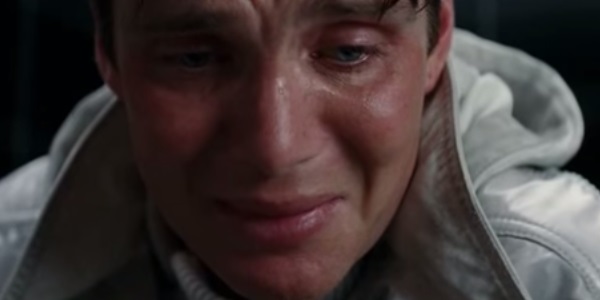
The Plot Point: This might seem like an obvious one, but going by the number of YouTube comments about the scene, people clearly are missing the big picture. During the pivotal scene in which the Inception is finally performed on energy magnate Robert Fischer (Cillian Murphy), Cobb (Leonardo DiCaprio) and co. implant the idea into Fischer's mind to break up his father's company in a dream, by having his father tell him, "I'm disappointed...that you tried ", as opposed to Fischer's own belief that his father was disappointed that he didn't live up to his standards. To many, this was a deeply emotional part of the movie, as Fischer came to realise that his dead daddy really did love him, but of course, the tragedy is that this is all predicated on a lie, a sentimental moment of catharsis that's just a dream and nothing else. It was potent enough to convince Fischer to break up the company, sure, but when you remember that it's a deception and nothing else, it's really more depressing than emotionally resonant. Why You Probably Missed It: There are two clear reasons why people forgot about this: firstly, Christopher Nolan directs the scene with such dramatic aplomb that it's easy to get swept up in the emotion anyway. Secondly, Cillian Murphy is absolutely fantastic in the scene, breaking down as he gains some "closure" about his dad's demise and the future of the company, and as such, it's hard not to forget that this is all a lie concocted not for Fischer's benefit, but for Saito and Cobb's. Sure, some of us never fell for it, but going by what's being said online, not everyone quite "got" what this part of the movie was about.

4. Rambo Only Kills One Person...By Accident - First Blood

The Plot Point: Believe it or not, John Rambo (Sylvester Stallone) only kills one person in the character's inaugural outing, First Blood, and it's totally by accident. When Rambo is chased through the forest by a helicopter, the sadistic Galt fires at him, only for Rambo to retaliate by throwing a large rock at the helicopter's windscreen. This causes the pilot to pitch suddenly, while Galt, who had unbuckled his seatbelt to get a better shot at Rambo, is then thrown to his death. Why You Probably Missed It: While the Rambo franchise is typically associated with a high body count and wealth of blood-shed, this is only true of the three sequels: First Blood is a far more considered and thoughtful movie than any of the ones that followed, though has been tarred with the same brush over the years as a brainless, savage action film. If you've not seen First Blood in years, it's easy to forget this fact and just lump all four Rambo movies together, which is a huge disservice to the fine work here.

3. Sullivan Is Probably Gay - The Departed

The Plot Point: This marvelous YouTube video provides a compelling argument that undercover criminal Colin Sullivan (Matt Damon) is, in fact, most likely gay. The proof includes Sullivan's numerous homophobic slurs, the hilarious exchange with his real estate agent who clearly believes him to be gay, his evident discomfort when meeting Costello (Jack Nicholson) at the porno cinema (though this could just be a discomfort at the environment rather than at the nude female form) and Sullivan's sexual impotence with Madolyn (Vera Farmiga). Above all else, it's a fun reflection of the fact that Sullivan is a criminal in hiding: he's also a closeted gay man pretending to be straight. Why You Probably Missed It: Because while picking up on things like Sullivan's impotence (though not explicitly stated) is easy enough, the gay subtext is deeply layered throughout, and it requires viewers to keep their eyes peeled on the more understated meaning of a number of scenes (such as Sullivan's apparent lack of interest in Madolyn on their first date, and his conversation with Captain Ellerby at the golf course). This is a perfect example of brilliant subtext, though: it's unobtrusive enough that the movie can be enjoyed while not even realising it, but the layers are there to be peeled back by more discerning viewers.

2. Teddy Wanted To Be Lobotomised - Shutter Island
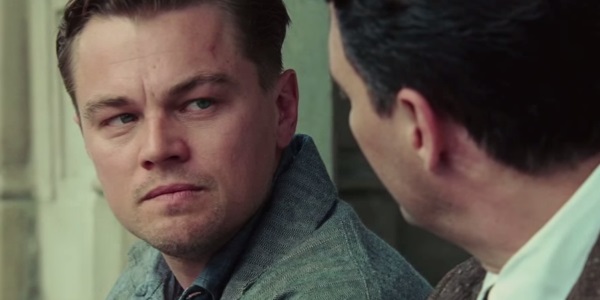
The Plot Point: Prior to its release, many viewers thought they had Shutter Island pegged from the trailer alone: they found themselves extremely satisfied that the asylum's missing patient 67 would turn out to be Leonardo DiCaprio's Teddy Daniels, and in fact, they'd be right. At the movie's conclusion, it's revealed that Teddy, whose real name is Andrew Laeddis, murdered his wife (Michelle Williams) after she drowned their two children, and the movie's events have been an attempt to break Laeddis' paranoid insanity. However, this is just the prelude to the more thought-provoking twist at the end of the movie. When Laeddis talks to his shrink Dr. Sheehan (Mark Ruffalo) in the final scene, he refers to him as his fictional identity Chuck, causing the medical staff to assume that Teddy isn't cured, and as such he's sent off to be lobotomised as the movie ends. However, Laeddis' final question to Sheehan, "Which would be worse? To live as a monster, or die as a good man?", heavily implies he had already been cured of his insanity, but simply didn't want to live with the knowledge of his children's deaths and having murdered his wife, so faked a relapse in order to be lobotomised and metaphorically "die" (by having his memory erased). Why You Probably Missed It: Because the plot twist that comes minutes before is such a game-changing moment (predictable though it was), attention was largely focused on the fallout of that rather than on the more subtle and relatively unambiguous implication from Sheehan's reaction that Laeddis actually knew exactly what he was doing. Some might still argue the opposite, but it's difficult to see why that quote was thrown in there otherwise.

1. Nite Owl Saves Bruce Wayne's Parents In The Opening Credits - Watchmen

The Plot Point: The brilliant opening credits of Zack Snyder's Watchmen opens with a slow-motion image of Nite Owl punching a thief, but take a closer look. There are Batman posters on the wall, and say, don't those folks on the right look kinda like Thomas and Martha Wayne? And could that be Alfred to the left? Viewers are left to assume from this blatant imagery that Nite Owl saves Bruce's parents from being shot by Joe Chill, essentially ensuring that Batman never comes to be within this universe's darker, more flawed approach to superheroes. Why You Probably Missed It: Because though the shot lasts around 10 seconds, the focus is clearly on the punch in the middle of the frame, and even if you notice the Batman posters, it's unlikely you'll immediately draw a connection between this and the background characters at the left of the frame. Still, given the clear intent to demonstrate that the couple are wealthy, it's a fun nod by Snyder, and a bit of a mind-melter given that the Batman comic exists within this world, but so too do the Waynes. What are some of your favourite subtle plot points from movies? Shout them out in the comments!

Contributor
Contributor

Stay at home dad who spends as much time teaching his kids the merits of Martin Scorsese as possible (against the missus' wishes). General video game, TV and film nut. Occasional sports fan. Full time loon.