13 Harsh Truths We Don't Want To Admit About Comic Book Movies
Aren't we all a little old for playing dress-up?
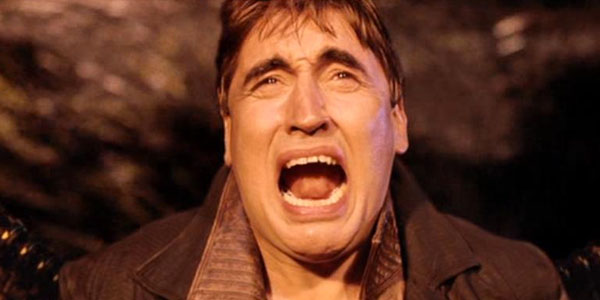 FoxMost of us love comic book movies, right? You can't be a fan of bombastic blockbuster cinema without excitedly anticipating each and every new comic book movie that comes down the pike, be it from Marvel, DC, or a new graphic novel adaptation you hadn't previously heard of. Ever since X-Men cleaned up at the box office in 2000, the comic book movie has been a hot property in Hollywood, and with the tremendous success of Spider-Man, Batman and the Marvel Cinematic Universe over the last decade, movies adapted from comics more often than not end up claiming several spots in the highest grossing films from any given year. With their beautiful actors and state-of-the-art visual effects, why wouldn't they be successful? Those comics and cartoons we grew up idolising are given $200 million budgets and realised in a far more potent and visceral way than we ever could have imagined. At its best, the comic book movie is about as great as blockbuster cinema gets, but there's no getting around the fact that the genre is also prone to lapses in direction and creativity, and as fun as many of these movies are, even the best ones usually end up trapped by the nature of their creation. It's time to man up and accept these 13 harsh truths about the vast majority of comic book movies.
13. Most Are Far Too Long
 Warner Bros.This isn't just true of comic book movies, but blockbusters in general. If a movie can hold our attention for 120-130 minutes, that's pretty good going, but some directors have pushed the boat out and crafted mega-epic tentpole flicks that run dangerously close to 3 hours. Just look at the last few years of comic book movies and their respective run-times: The Dark Knight Rises (165m), Watchmen (162m), The Dark Knight (152m), Man of Steel (143m), The Avengers (143m), The Amazing Spider-Man 2 (142m) and Batman Begins (140m). While the majority of these movies were, in fairness, actually pretty damn good, it's fair to say that escapism begins to give way to exhaustion once movies cross the 140 minute mark, especially when a plethora of explosions are involved. When directors are trying to weave intricate, time-spanning stories as with The Dark Knight Rises, a long run-time seems acceptable, though with rare, franchise-bookending exceptions aside, movies like X-Men: Days of Future Past (131m), Iron Man 3 (130m), The Wolverine (126m) and Captain America: The First Avenger (124m) seem to have the balance pretty much right. It's enough time to tell a tight story, but not enough that it begins to feel saggy. Of course, no good movie is too long and no bad movie is too short, so the idea of imposing an all-catch rule on run-times is ridiculous, even if snappy editing and lithe plotting is always going to be welcomed.
12. They Can't Please Everyone
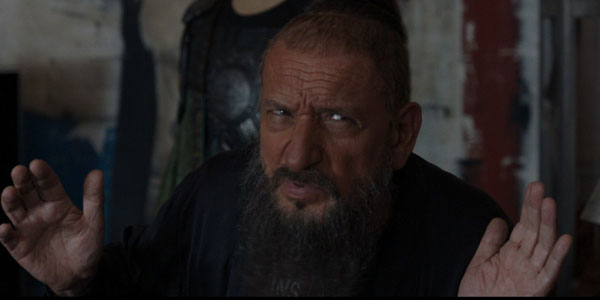 Walt Disney PicturesMovie studios who make comic book movies inevitably find themselves being pulled in two directions, towards those fanboys who love the comics and will nitpick every small detail of the movie, and in creating a work accessible enough that casual viewers with next to no knowledge of the source material will still want to fork over their cash. As we've learned from comic book movies to date, it is absolutely impossible to completely please everyone: stick rigidly to the source material and it might seem outdated or even silly to mainstream audiences, whereas going too casual and not giving a damn about the comics (as in X-Men Origins: Wolverine) will just make the fanboys sad. The key is balance: it's fine to change some aspects of the characters, story or setting, but it's important to retain the spirit of what made it popular in the first place. Yes, movie studios will often feel that they know better, and this will often upset the most loyal fans (who can forget the whole Mandarin debacle in Iron Man 3?), but they're in an undeniably difficult position, trying to appeal to two very different demographics. If they had to pick one, it'd surely be the money, considering that casual cinemagoers account for the vast majority of the success of these movies.
11. They Rarely Do Romance Well
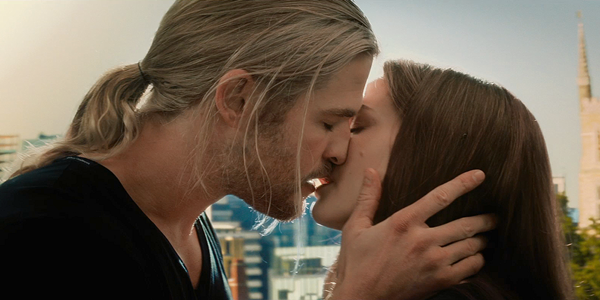 Marvel StudiosLook at the vast majority of blockbuster movies released today, and you'll see that they're almost duty-bound to include a romance, as if the explosions and high-drama is completely invalidated if there's not some sexual tension and smooching to balance things out. While, say, Christopher Nolan's Batman movies and Marc Webb's Spider-Man films made us believe in their romances because they were integrally tied into the story and benefited from strong casting, for the most part, comic book movie romances are just pretty limp. The test case is certainly that of Thor and Jane Foster. This thread was so loosely sewn in the first Thor movie that it may as well have not existed: it was laughably contrived and not at all believable, and while a greater effort was made with it in Thor: The Dark World, we still didn't really care at all about the romance. Even if we felt like Jane was actually in danger, did we care? We'd much rather see Thor romance someone he has actual chemistry with, like Sif. Other examples include Wolverine's roll in the hay with Mariko Yashida (The Wolverine) and the shoehorned Lois & Clark kiss (Man of Steel). We don't need all this kissy-kissy nonsense: if it's organic to the story, then fine, but don't just throw it in for the sake of it!
10. Reboots Devalue The Genre
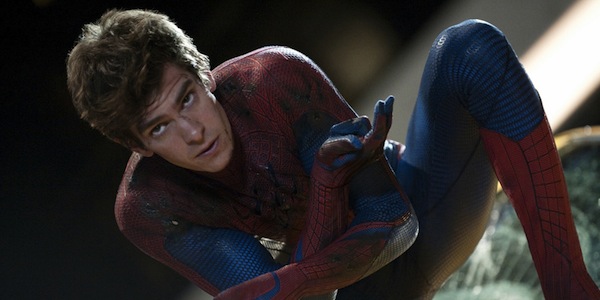 Sony Pictures ReleasingReboots are becoming increasingly popular in the world of cinema, where if something doesn't quite work out, film studios can just press the reset button and restart a property with a new cast and crew a few years later. While this is acceptable with a project that tapered off in quality and simply died, like Joel Schumacher's Batman movies, it begins to feel a little tacky when, within 5 years of Sam Raimi's mostly-solid Spider-Man series ending, the franchise was restarted. More to the point, director Webb opted to re-tell Peter Parker's origin story once again, and it just felt like a total waste of time. Similarly, the recent X-Men: Days of Future Past rejigged plot elements from Brett Ratner's X-Men: The Last Stand that director Bryan Singer didn't like, and while this movie used time travel in a relatively ingenious way to course-correct the series, it still devalues the very process of making a major Hollywood movie. This sort of culture now says to studios that it's not so bad if they screw up, and as such they're less likely to be careful in the future: after all, if a movie flops, they can just try again in a few years with different people. It sets an awkward precedent and makes the movies feel more throwaway: if studios can so easily disregard what came before, whether it's good or bad, how can we get emotionally invested in what's going on? Perhaps the healthiest attitude is to just treat these comic book movie worlds as people do the comics themselves: they're just different interpretations of a similar idea, and no one concept is "canon".
9. A Lack Of Important & Interesting Female Characters
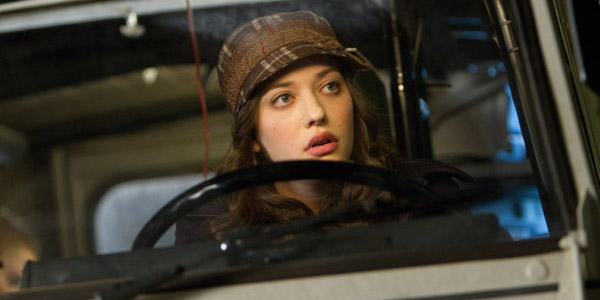 Marvel StudiosLong gone are the days where comic book movies are designed to appeal to only teenage boys looking for huge explosions and sexy ladies kitted out in skin-tight spandex. Though we're not quite there yet, the genre as a whole is getting better at giving female characters interesting and complex parts, as evidenced by Mystique in X-Men, Gwen Stacy in Marc Webb's Spider-Man movies, and despite being something of an unavoidable sex object, Black Widow in the Marvel Cinematic Universe (especially in Captain America: The Winter Soldier). These are some of the genre's best examples, though a lot of movies still seem stuck in the cinematic past, where females are merely heroines to be rescued, or simply so lacking in personality that they can never truly take a central role in the narrative. Darcy and Jane Foster from the Thor movies are two prime examples (though Darcy admittedly has her fans), while Christopher Nolan's peculiar engagement with women in his Batman movies has been well-documented (even if Catwoman was a step in the right direction). We're certainly not out to decry most comic book movies as sexist, but they need to balance their female characters: they can be sexy, but if they're playing a big part in the story, it certainly doesn't hurt if they're either resourceful or powerful as well. Of course, a damsel-in-distress female character isn't inherently sexist, but we're just really damn tired of seeing it. Hopefully characters like Thor's Sif and Batman v Superman's upcoming interpretation of Wonder Woman will help create iconic feminist figures we can all enjoy.
8. 3D Sucks
 Marvel Studios3D is the fad that just won't die. It's clung around for over 5 years now, and despite numerous claims that the gimmick's popularity is waning, it's still proving to be a financially viable avenue for studios to rinse audiences of even more money, as though cinema tickets aren't already expensive enough. Can 3D work? Of course: James Cameron's Avatar and How to Train Your Dragon are the go-to arguments for 3D that augments the audience's experience, whereas in the case of comic book movies, it's typically tacked on with little regard for the nature of the movie itself. It's commonly known that 3D glasses cause the picture to become significantly dimmed, and as such it's important that steps are made to brighten the picture for these screenings, though in the cases of the latest X-Men and Captain America movies, the often-dark nature of their imagery simply resulted in a muddy, washed-out look that didn't exactly boast stellar 3D to compensate for it either. The majority of major comic book movies are now displayed in 3D, though this is often the result of murky post-conversion, which never provides the dimensional clarity that native 3D filming will. More to the point, cinema chains are pushed to promote 3D ahead of 2D screenings, and as such, it can be hard to find a cinema playing a "normal" version of the movie. We can hope that the 3D bubble will burst eventually, but for now, we're just going to have to put up with this tripe being shoved down our throats.
7. They Are Fundamentally Silly
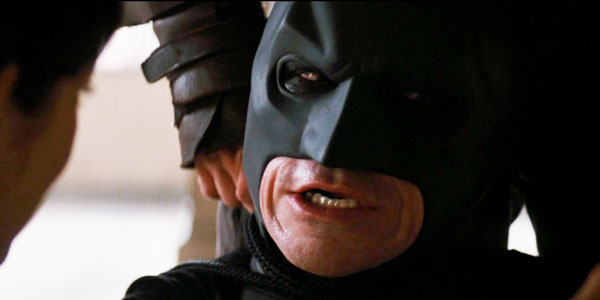 Warner Bros.As much as certain filmmakers might try to convince you otherwise, the whole comic book movie phenomenon is fundamentally silly, and there's nothing wrong with that. A guy flying around Gotham City dressed as a giant bat? A kid gets bitten by a radioactive spider and starts web-slinging around New York City? In a few short weeks, we're going to have a talking, anthropomorphic raccoon gracing our screens with a giant tree monster in Guardians of the Galaxy. While some of these movies embrace their silliness, they all should. Christopher Nolan has most famously tried to push the comic book movie into the serious stratosphere of the hard-boiled crime genre, and it's hard to deny the grand job he's done, yet even so, it is still at its core a daft concept, and one that needs to balance Nolan's somber tonality with the entire reason anyone reads a comic book in the first place: for fun. Even look at the most serious-minded comics out there, like Alan Moore's superb Watchmen, and it concludes with a gigantic squid attacking New York. Granted this was changed for the movie, but how is that not completely ridiculous? Comic book movies are insanely silly, and you know what? We like it that way, even if we might be tempted on occasion to lift the genre up on Shakespearean tragedy and grand pathos.
6. There's Usually Too Much Going On
 Sony Pictures ReleasingAs successful movies earn sequels, there's a constant pressure for a follow-up to be bigger and better than whatever came before it. As a result, this often ends up getting wildly out of hand, and the two test cases for this are, funnily enough, both disappointing Spider-Man sequels. After the enormous success of Spider-Man 2, Spider-Man 3 had Sam Raimi trying to juggle three villains, none of which he dealt with particularly effectively, resulting in a muddled, unsatisfying plot. Similarly, Marc Webb didn't learn from Raimi's mistakes: The Amazing Spider-Man 2 featured three villains (even if one of them was merely a cameo), and felt grossly over-stuffed, lacking a clear narrative direction. Even the better films of the genre suffer with this problem: Christopher Nolan's The Dark Knight could have saved Two-Face for a whole other movie, and Rises was rife with plot holes and questionable logic which emerged because Nolan simply tried to inundate the audience with so much drama and information all at once. The recent X-Men: Days of Future Past is a decent example of a movie which just about got away with a potentially tricky premise, by nailing down some firm time travel logic and (mostly) sticking to it. Can we give it a rest with multiple, disconnected villains in a single movie? With the right actor and screenplay, one menacing primary villain is more than enough.
5. Most Of Them Come Off A Conveyer Belt
 Comic book movies are a business like any other blockbuster property, but more so than most, they are geared towards the long-term plan, of keeping sequels and spin-offs churning out until the end of time. This is particularly evident in the Marvel Cinematic Universe, where a wide, sprawling plan has been intricately mapped out, and apparently has movies plotted for around another 15 years. Though, to be fair to them, the MCU has for the most part been a rousing success, our inner cynic can't help but suggest that, eventually, this is going to result in a slew of creatively bankrupt, arbitrary sequels. When Chris Evans and Iron Man give up playing Captain America and Iron Man, a prospect that probably isn't years and years away, the parts will be recast, but the properties will live on, hopeful that we as audiences will accept the replacements with open arms. Whether that will happen of course remains to be seen, but this need for Marvel to build a relentless, unstoppable commercial juggernaut may end up stinging them in the long run. That said, they also have to strike while the iron is hot, so one can understand why they're so keen to keep pumping these movies out right now. Hopefully they'll have the foresight to realise when the law of diminishing returns kicks in and call it a day.
4. CGI Isn't Used Sparingly Enough
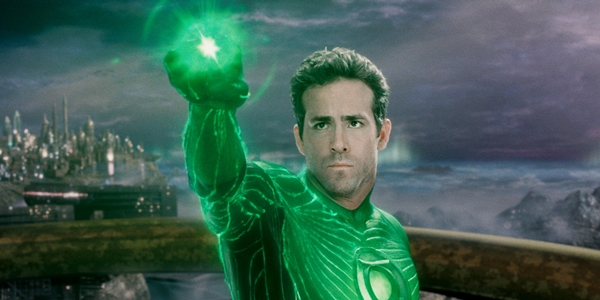 Warner Bros. PicturesBlockbuster movies need special effects to survive: that fact is a given, and considering some of the magnificent feats the likes of Christopher Nolan, Joss Whedon and Bryan Singer have achieved with the help of CGI, we would never begrudge some fantastic effects-based trickery. The problem is when filmmakers and studios rely on CGI too much and forget how important the organic, in-camera element is of any movie. Take Green Lantern, a terrible movie which was rendered even worse because Martin Campbell and co. opted to have Hal Jordan wear a Lantern suit made entirely of CGI: it looked goofy and, combined with the film's generally ugly colour palette and gamut of effects, ensured the movie was never going to be a success. The Thor movies also suffer from blurry, low-rent visual effects from time to time, and though the movies would be near-impossible to do practically, we might've appreciated a little more set-based work that wasn't so distractingly sketchy. The Amazing Spider-Man 2 also suffered from an overuse of CGI: the physics of Spidey being thrown around during the battles look more like a cheap video game than something we're supposed to believe is photo-realistic. CGI should be a tool to assist filmmakers, not one to replace the real, human heart of the movie.
3. R-Rated Comic Book Movies (Usually) Aren't Worth It For Studios
 Warner Bros.Rather understandably, there's a number of reasons why The Dark Knight and The Avengers aren't rated R, because they're aimed at the teen market and a PG-13 rating is the most appropriate, as well as the most financially viable. An R-rating would not suit the tone of either film, but rather it is reserved for movies with more adult, subversive themes, such as Zack Synder's ultra-violent, sex-filled Watchmen, the uber-gory 300 and Sin City, and movies like Kick-Ass, which feature cursing children. Go figure. Sadly, the R-rated comic book adaptation isn't something undertaken with much enthusiasm by most movie studios, and that's for one main reason: money. All comic book movies cost a lot of money, but the R-rating places a severely restrictive ceiling on who can see your movie, and so even one of the most successful R-rated comic book movies, 300, made "only" $456 million (admittedly on a small budget of $65 million), whereas PG-13 comic book movies are routinely approaching the $1 billion mark. Also, R-rated movies are far more prone to commercial failure for their adult content: everyone wants to see Captain America bloodlessly smack some dude about with his shield, but not everyone wants to see The Punisher explode a guy's head or see Elijah Wood be devoured by a wolf. Just look at films like Watchmen and Dredd: they were entertaining and acclaimed, yet failed to connect with audiences, and as such reinforced the notion that, most of the time, R-rated comic book flicks just aren't worth the hassle.
2. The "Nolan Style" Has Become Boring
 Warner Bros.Christopher Nolan brought an entirely new cinematic style to both the comic book movie and the blockbuster in general with his Dark Knight trilogy: it stripped away most of the fantastical elements and focused on practical, formalist filmmaking that attempted to cement Gotham in the reality of our own world. Tonally, the focus was on dark, brooding psychological complexity, whereas aesthetically, the colour palette was a lot of blacks, greys and dark blues. Nolan's downcast style was an immediate hit with audiences, to the extent that other filmmakers began to adopt a similar style of filmmaking: in the comic book realm, Zack Snyder adopted a similarly dark style and tone for Man of Steel (on which Nolan was a producer), Iron Man 3 was sold on its "darker" narrative in trailers (even though it actually turned out to be pretty hilarious), and outside of comics, Sam Mendes took a similar approach with his superb Bond flick Skyfall. Though these movies did well by Nolan's popular aesthetic, it's also becoming pretty boring and predictable to just copy his style and apply it to other movies. As we mentioned earlier, the genre is inherently silly, so not everything has to be doom and gloom: look at The Avengers, the third highest-grossing film of all time and it has a considerably more upbeat tone than any of the aforementioned films.
1. The Comic Book Movie Bubble Will Burst Eventually
 Marvel StudiosAs much as we hate to admit it, the comic book bubble is going to burst eventually: there will come a point, perhaps a long time from now, where market saturation sets in and audiences will have had their fill with Iron Man, the X-Men, Batman, Spider-Man and so on. As we already mentioned, there is an inherent necessity for these properties to be rebooted and recast roughly every 10-15 years, and it follows that when Robert Downey Jr and Hugh Jackman finally throw in the towels, audiences aren't necessarily going to be receptive to whoever follows their lead. In addition to this, with the risk of a new cast and crew comes a nervous studio who may seek to have more control of the project than the new writer or director may appreciate, and with one misguided movie, the studio may lose most of their audience, and therefore their chance to make another one. That probably won't stop them trying to reboot it if it fails, but there's no guarantee that will work either, and the potential desperation that may set in could simply drive audiences even further away. The future of the comic book movie is certainly exciting, but it's also plenty scary too: this success cannot and will not continue forever. What do you make of the future of the comic book flick? Let us know in the comments!