13 Most Diverse Directors In Movie History
These filmmakers have mastered every genre they've touched.

There are plenty of directors who tend to stick to the same small set of genres over and over again, and there's certainly nothing shameful about working with what you know.
However, there are also those filmmakers who have boldly ventured outside their comfort zones and dared to work in a litany of movie genres, proving how a skilled enough director can succeed at making just about any type of film.
Though these directors, both still working and sadly no longer with us, typically have their favourite genres to work in, they've also proven their incredible versatility time and time again by daring to surprise audiences with game stabs at different types of movie, be they unexpected musicals, shocking forays into the comic book genre, or maybe even a video game adaptation or two.
While these revered artists may not serve up home runs every time they go to bat (though some of them in fact almost do), it's hard not to admire their desire to work so frequently outside the box. At least you know that every time they release a new movie (if they're still around), it's going to be something interesting to behold...
13. Danny Boyle

Danny Boyle may not have as many movies to his name as most of the directors on this list, but of the 12 theatrical features he's released to date, he's made sure to dabble in a ton of different genres.
Boyle is certainly most accustomed to dramas (both Trainspotting movies, Slumdog Millionaire) and thrillers (Shallow Grace, The Beach, Trance), but he's also directed crime comedy (A Life Less Ordinary), horror (28 Days Later), family comedy (Millions), sci-fi (Sunshine) and even two biopics (127 Hours, Steve Jobs).
The Oscar-winning director is simply a brilliant all-hander who is fantastic working on big and small scale projects alike, to the point that whatever his next film ends up being, it's easy to be excited about what he'll bring to the table.
12. Stanley Kubrick

Though Stanley Kubrick's stature as one of cinema's greatest auteurs essentially makes him a brand, even a genre unto himself, the man nevertheless fearlessly threw himself into just about genre imaginable over his near-50-year career.
Kubrick has made war movies (Fear and Desire, Paths of Glory, Full Metal Jacket), film noirs (Killer's Kiss, The Killing), an historical epic (Spartacus), two romantic dramas (Lolita, Eyes Wide Shut), a political satire (Dr. Strangelove), a sci-fi (2001: A Space Odyssey), a dystopian thriller (A Clockwork Orange), a period drama (Barry Lyndon), and even a horror film (The Shining).
It goes without saying that Kubrick has one of the most enviable filmographies of any director in history, not simply because he tackled so many different types of film, but that he did so without a single stumble over the course of half a century.
11. Ridley Scott

Though Ridley Scott's output is undeniably inconsistent, it's still hard not to respect the man's ambitious commitment to so many different types of film, especially considering that he turns 80 years old this year and is still routinely releasing a movie every year or two.
Over Scott's four decades of directing movies, he's helmed historical drama (The Duellists), sci-fi (three Alien movies, Blade Runner, The Martian), fantasy (Legend), crime thrillers (American Gangster, The Counsellor), action (Black Rain, Black Hawk Down), a road movie (Thelma and Louise), historical epics (Gladiator, Kingdom of Heaven, Exodus: Gods and Kings), crime comedy (Matchstick Men), a spy film (Body of Lies), action adventure (Robin Hood)...and that really weird one where Russell Crowe goes off wine-tasting or something (A Good Year).
Though Scott clearly favours sci-fi and historical epics above all else, it's extremely impressive that he's at least made an attempt at so many major genres.
It looks like the Alien franchise will probably keep him busy for the remainder of his career, but this is a mighty body of work no matter the undeniable clunkers in the mix.
10. Ang Lee

Though Ang Lee isn't quite as prolific or famous as the likes of Ridley Scott, the two-time Best Director Oscar winner has bravely dived into a ton of disparate genres over the course of the 13 movies he's released so far.
Lee began his career with the "Father Knows Best" trilogy of Taiwanese dramedies (Pushing Hands, The Wedding Banquet, Eat Drink Man Woman), before moving onto a period drama (Sense and Sensibility), a contemporary drama (The Ice Storm), a Civil War western (Ride with the Devil), a martial arts epic (Crouching Tiger, Hidden Dragon), a freaking comic book movie (Hulk), a romantic drama (Brokeback Mountain), an erotic spy thriller (Lust, Caution), an American dramedy (Taking Woodstock), a survival adventure (Life of Pi) and finally a war drama (Billy Lynn's Long Halftime Walk).
That's not all, either: Lee is about to start production on a sports biopic (Thrilla in Manila), and is also prepping a sci-fi (the Will Smith-starring Gemini Man). Basically, the guy hasn't made the same movie twice in decades.
Though you can certainly argue that Lee's most radical divergence, Hulk, wasn't exactly a rousing success, the mere fact he dared to work on something so outside his wheelhouse is a testament to his courage as a filmmaker. Plus, the script was clearly the problem with that one.
Thankfully most of Lee's dalliances in new genres have paid off, so hopefully he'll keep at it. Whatever next, an Ang Lee-directed musical?
9. Steven Spielberg

Steven Spielberg's reputation as one of the greatest and most successful directors of all time need not be repeated, but he certainly didn't get this far by clinging to just a handful of genres.
Over almost five decades, Spielberg has tackled the thrillers (Duel, Jaws), crime drama (Catch Me if You Can), sci-fi (Close Encounters of the Third Kind, E.T., the first two Jurassic Park movies, A.I., Minority Report), period comedy (1941), action adventure (the Indiana Jones franchise), period drama (The Colour Purple, Schindler's List, Amistad, Lincoln), war (Empire of the Sun, Saving Private Ryan, War Horse), romantic dramedy (Always), fantasy (Hook, The BFG), contemporary dramedy (The Terminal), a political thriller (Munich, Bridge of Spies), and even animation (Tintin).
Also, though he's never been officially credited for it, it's basically an open secret that he really directed 1982's horror classic Poltergeist.
While Spielberg hasn't really branched out too much in recent years, his overall career has certainly demonstrated his fearlessness as an artist beyond any doubt.
8. Billy Wilder
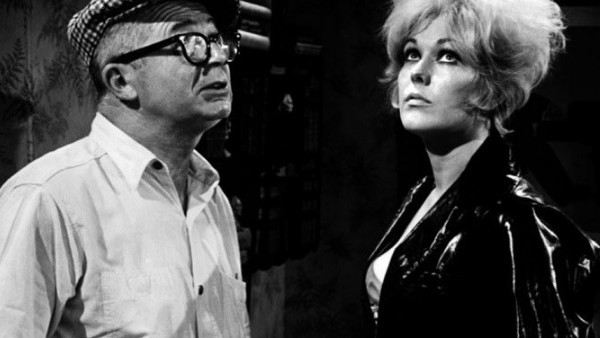
The legendary Billy Wilder won an incredible six Oscars for writing, directing and producing over the course of his monumental 50-year career, and as a powerhouse writer-director, had almost no misses throughout his industrious filmography.
Wilder gamely tackled romantic comedy (Sabrina, The Seven Year Itch, Some Like It Hot, The Apartment), courtroom drama (Witness for the Prosecution), film noir (Double Indemnity, Sunset Boulevard, Ace in the Hole), war (Five Graves to Cairo, Stalag 17), straight drama (The Lost Weekend), a musical (The Emperor Waltz) and a biopic (The Spirit of St. Louis).
Wilder won consistent, sustained acclaim for pretty much everything he attempted, and though he never made, say, a sci-fi or a horror, he probably would've crushed them too.
7. Werner Herzog

There are few filmmakers with careers as weird and wonderful as Werner Herzog, who next year will celebrate 50 years since his first feature film, Signs of Life, was released.
Herzog has lent his singular, eccentric directing style to dramedy (Stroszek), a period epic (Aguirre, the Wrath of God), horror (Nosferatu the Vampyre), drama (The Enigma of Kaspar Hauser, Woyzeck), adventure (Fitzcarraldo), sci-fi (The Wild Blue Yonder), war drama (Rescue Dawn), a crime thriller (Bad Lieutenant) and a biopic (Queen of the Desert).
Herzog has also directed more documentary movies than he has narrative features, the most revered of which include Little Dieter Needs to Fly, My Best Fiend and Grizzly Man.
While the director's style may not be for everyone, it's hard to argue with the impressive diversity of his immense filmography.
6. Howard Hawks
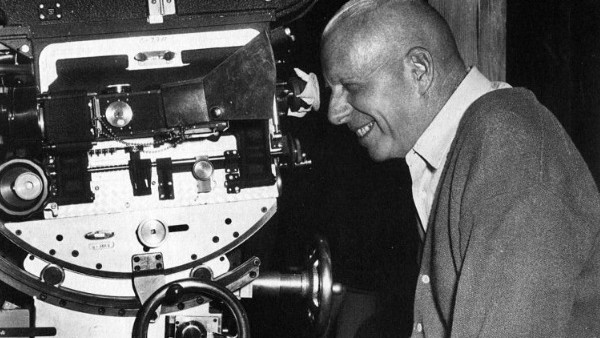
When it comes to directors from the classical Hollywood system, arguably nobody was as accomplished and varied in their output as the brilliant Howard Hawks, who had just one critical dud (A Song is Born) over an epic 44-year career.
Where to even begin? Hawks directed film noir (The Big Sleep), numerous westerns (Red River, Rio Bravo, El Dorado), war films (Sgt. York, Air Force), musicals (A Song is Born, Gentlemen Prefer Blondes), a gangster film (the original 1932 Scarface), screwball comedies (Bringing Up Baby, His Girl Friday, Monkey Business), an historical epic (Land of the Pharaohs), and even a sci-fi romp (The Thing from Another World).
He is also distinguished by having worked in both silent and sound cinema, and has been a pronounced influence on several entries onto this list, including our next pick...
5. Martin Scorsese

Martin Scorsese is considered by many to be the world's best-living filmmaker, and he's sure as hell got the filmography to back it up, with his only critically rotten film to date being his second feature film, 1972's Boxcar Bertha.
Over half a century, Scorsese has made his mark on just about every genre going, sinking his teeth into dramedy (Alice Doesn't Live Here Anymore), crime (Mean Streets, Taxi Driver, Goodfellas, Casino, The Departed, The Wolf of Wall Street), a musical (New York, New York), sports (Raging Bull, The Colour of Money), dark comedy (The King of Comedy, After Hours), a concert film (The Last Waltz, Shine a Light), documentaries (George Harrison: Living in the Material World), a biblical epic (The Last Temptation of Christ), thrillers (Cape Fear, Shutter Island), period drama (The Age of Innocence, Silence), a biopic (The Aviator), and even a family fantasy (Hugo).
Scorsese hasn't touched sci-fi yet, a genre that seems to make many veteran filmmakers either apathetic or nervous, but he's still got time.
4. Robert Altman
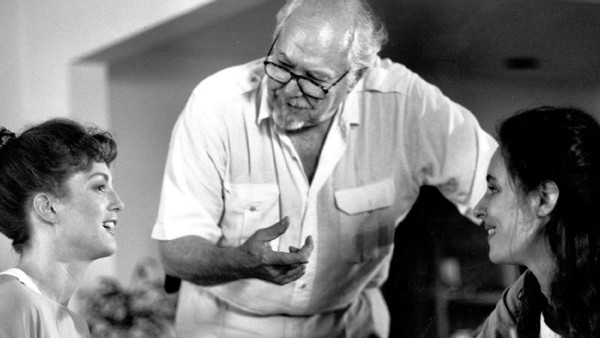
Five-time Best Director Oscar nominee Robert Altman was a true original filmmaker beyond all compare, starting out in documentaries (The James Dean Story) before venturing on to crush every genre going.
Altman took on sci-fi (Countdown, Quintet), war (M.A.S.H., Streamers), experimental fantasy (Brewster McCloud), westerns (McCabe and Mrs. Miller), psychological horror (Images), neo noir (The Long Goodbye), musicals (Nashville, Popeye), a rom-com (A Perfect Couple), teen comedy (O.C. and Stiggs), a biopic (Vincent and Theo), black comedy (The Player), anthology drama (Short Cuts), a legal thriller (The Gingerbread Man), and a mystery drama (Gosford Park).
Altman didn't always nail total home-runs, but as if being one of the most innovative directors in cinema history wasn't enough, he bravely employed his unique approach on an insanely wide array of movies. There will never be another just like him.
3. Clint Eastwood

Though Clint Eastwood didn't start directing until he turned 40, the fact he's still working consistently into his late-80s has allowed him to become one of the most cherished filmmakers of the last half-century.
It goes without saying that Eastwood's forte as a director is the western genre (High Plains Drifter, The Outlaw Josey Wales, Unforgiven), but he's also worked on war films (Heartbreak Ridge, Flags of Our Fathers, Letters from Iwo Jima), psychological thrillers (Play Misty for Me), a space drama (Space Cowboys), action (The Gauntlet, Sudden Impact), sports dramas (Million Dollar Baby, Invictus), biopics (J. Edgar, Sully), romantic dramas (Breezy, The Bridges of Madison County), musicals (Honkytonk Man, Jersey Boys), straight dramas (Mystic River, Gran Torino), a political thriller (Absolute Power), mystery thrillers (Blood Work, Changeling) and even a buddy cop film (The Rookie).
Eastwood's showing no sign of slowing down, though at this point in his career, it basically feels like he's worked in every genre he could possibly want to.
2. Steven Soderbergh

Steven Soderbergh may be the youngest entry on this list, but he's certainly made terrifically varied use of his 32-year career so far.
Soderbergh started off as a documentary filmmaker (Yes: 9012 Live) before working in genres as diverse as drama (Sex, Lies and Videotape), surreal thriller (Kafka), coming-of-age drama (King of the Hill), crime (Out of Sight, the Ocean's trilogy, Traffic), sci-fi (Solaris), indescribable art-house weirdness (Schizopolis, Bubble), historical biopic (Che, Behind the Candelabra), comedy caper (The Informant, Logan Lucky), thriller (Contagion, Haywire, Side Effects) and...whatever Magic Mike is.
Though Soderbergh has expressed frequent frustration with Hollywood filmmaking, he never stops challenging himself as an artist, as evidenced by the fact that his next film, Unsane, is a horror movie shot entirely on an iPhone. Get hype.
1. Takashi Miike

As brilliantly diverse as all these directors are, not one of them can hold a candle to Japanese legend Takashi Miike, whose prolific output of more than 100 feature films over the last 25 years has ensured he's touched just about every kind of movie possible.
Miike is best known for his controversial, ultra-violent crime film Ichi the Killer and grisly horror Audition, but he's also turned his talents towards family films (Zebraman and The Great Yokai War), an unconventional road movie (The Bird People in China), sci-fi teen drama (Andromedia), musical horror-comedy (The Happiness of the Katakuris), and even two video game adaptations (Yakuza and Ace Attorney), not to mention several samurai films (13 Assassins, Blade of the Immortal).
Miike's insanely prolific output is tough for even the most ardent cineaste to keep up with, and while it's undeniable that directing up to four movies per year severely dents the overall quality of his oeuvre, his ability to make so many different types of film is dementedly singular.
Whatever kind of movie you're craving, Takashi Miike can get the job done.
Who do you find to be the most diverse and versatile filmmakers of all time? Shout them out in the comments!