13 Movie Characters Whose Fates Were Changed At The Last Minute

10. Francine & Peter - Dawn of the Dead
 The original screenplay for George A. Romero's iconic zombie classic had the movie's protagonists, Francine and Peter, commit suicide at the conclusion of the film, a final, definitively bleak statement not dissimilar from the end of the director's previous zombie outing, Night of the Living Dead. Peter was to shoot himself, while Fran would make the more drastic statement of shoving her head into the spinning helicopter blades above her. Most disturbingly, Romero planned for the rotating blades to spin over the end credits, eventually stopping, suggesting that had Fran and Peter decided to fly away, their copter would have crashed soon after take-off anyway. During filming, the decision was made to change this ending, yet with the prop for Fran's suicide already fully made, Romero decided to re-incorporate it into the infamous shotgun scene near the start of the movie. Many hints to the ending, however, do remain in the final film, such as Peter putting a gun to his head.
9. Dewey - Scream
 Loveable goofball cop Dewey Riley (David Arquette) is essentially the heart and soul of the Scream movies, providing comic relief and some much-needed humanity amid the slasher film scenario. While by this point in the franchise it seems like he's indestructible, having survived near-death four times, he was originally written to die at the end of the first Scream. However, test screenings liked the character a lot, and wanted to see him make it to the end of the movie, so Wes Craven had to quickly cobble together an additional scene that showed Dewey being loaded into an ambulance on a stretcher, which slots effortlessly into the final product. This is one of the few changes that is 100% right; Dewey's such an enjoyable component of these movies that they'd feel a little empty without him. Granted, many likely expected him to die - how often does the comic relief survive? - but that's just another way the Scream franchise bucks convention.
8. Juno & Sarah - The Descent
 The original end of The Descent, the version shown everywhere but the U.S., has Juno presumed dead after a fight against the cave monsters, while Sarah has a dream of escaping before waking up and realising that she's still trapped inside with the crawlers moving closer, just as the film ends. We assume that they both die, except that the American distributors, a) realising they might have a franchise on their hands and b) wanting to appeal to the more flowery outlook of stereotypical Americans, changed the ending, cutting Sarah awakening and ending the movie with her escaping. This, of course, paved the way for The Descent Part II, with Sarah alive, while Juno has somehow managed to survive inside the caves. This is also the singular instance on this list of a film being tinkered with post-original release, simply to placate another territory.
7. Clarence - True Romance
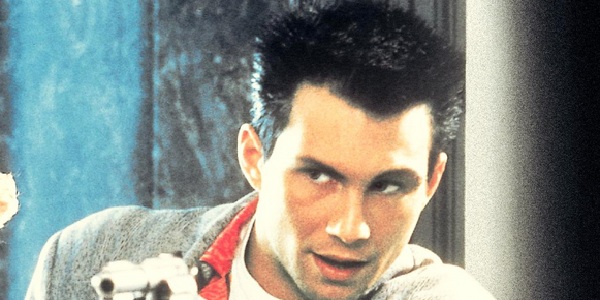 Easily Tony Scott's best film, True Romance benefited from a superb Quentin Tarantino script, with odd couple Clarence (Christian Slater) and Alabama (Patricia Arquette) trying to offload some drugs so they can make a life together, while being hunted by the folks they lifted them from. The final ending of the film has Clarence and Alabama making it against the odds, relaxing on the beach with a son in tow, an unusually sweet, optimistic ending for a movie from the guy who made Reservoir Dogs, Pulp Fiction and Inglourious Basterds. Tarantino's original script, however, had Clarence die at the film's finale, with Alabama fleeing on her own, crassly implying that she didn't even care that much about him. It's suitably Tarantino-esque, but Scott, in a ballsy move, decided to scrap that ending and devise his own, far cheerier ending. Tarantino has since conceded that Scott made the right choice for the type of film he was making, though noted that had he actually directed the film, the tone would have been far more downcast throughout.
6. Preacher & McAllister - Deep Blue Sea
 Deep Blue Sea is not a good movie by any stretch of the imagination, but at least the filmmakers had the sense to listen to test audiences who, for once, were actually right about something. The original state of the film had LL Cool J's wise-cracking Preacher die, while Saffron Burrows' straight-laced Dr. McAllister would live, yet quite ironically, audiences didn't like McAllister while finding themselves hugely rooting for Preacher, and so the studio took note of this, essentially switching their fates around. We'll never know exactly how the original cut was different, but it's difficult to see how anyone could have thought killing Preacher was a good idea, given that his "You killed my bird" line is the best thing in the entire movie, while Burrows' scientist character is utterly forgettable and boring, worthy of a nice, gory death, then.
5. John Rambo - First Blood
 It's perhaps because of this change that most people associate the name "Rambo" with a series of brainless, excessively violent action films, despite the fact that the original film, First Blood, was a savagely intelligent, visceral and heartfelt examination of the post-Vitenam temperament in America, topped by a career-best performance from Sylvester Stallone. The film ends with Rambo giving a tearful, powerful monologue about his plight before being taken into custody by his superior officer, Colonel Trautman, setting up a series of sequels that become increasingly less intelligent and more chaotic (though the finale of the fourth film was totally awesome). However, the original, filmed ending featured Rambo committing suicide at the finale, grabbing Trautman's gun and shooting himself through the chest. While neither ending is explicitly "better" than the other in my eyes, it's really a balance of interests; one ending made Stallone filthy rich, whereas the other would have kept the reputation of the film water-tight.
4. Melissa - Black Christmas (2006)
 Black Christmas is a pretty pointless remake of the classic original horror flick, and I wondered why an actress as talented as Michelle Trachtenberg was putting herself through such a damaging experience, when it couldn't really do anything at all to benefit her career. Going by the sounds of it, Trachtenberg wasn't all that keen either, as she only agreed to appear in the film if she was going to die at the end - a guaranteed she wouldn't be asked back for sequels, or her desire to see herself brutally slain on screen? Either way, she got her wish, and the character, pretty much the only likable one in the whole movie, is killed when an ice skate is thrown at her skull, despite the original script dictating that she would survive. Frankly, I don't think anyone is too bothered about this one...
3. Riggs - Lethal Weapon 2
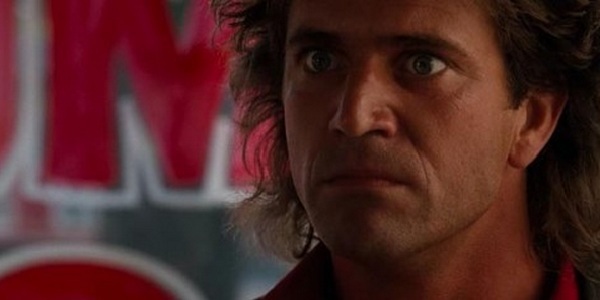 Believe it or not, the trajectory of the Lethal Weapon franchise was supposed to be very different if Shane Black were to have his way, with Martin Riggs (Mel Gibson) biting the bullet at the end of the second movie. The suicidally despondent character in the first film would complete his character arc, being gunned down and leaving Roger Murtaugh (Danny Glover) to finish things off, yet Black, who only outlined the story, decided to quit the project after his ending was changed to have Riggs survive the wound. This, of course, paved the way for two more - though less enthusiastically received - sequels, making everyone involved a shedload of money, yet how would the franchise have turned out if Riggs had died? Would Lethal Weapon 2 have managed to outdo the original? And would the series have continued with Murtaugh getting a new partner? We can only imagine...
2. Dante - Clerks
 Kevin Smith's audacious debut, Clerks, is a hilarious document of the travails of being a convenience store worker - the idiotic customers, the irritating working conditions, and if Smith had kept to his original vision, the hazard of potentially being murdered on the job. You see, the original filmed ending featured Randall leaving the store for the day, just as in the final cut, except there's an extra beat where a thief enters the store, points a gun at a stunned Dante and shoots him once through the chest. Smith then lingers on Dante's corpse for a few moments as the thief cleans house and leaves, before we cut to black. It's easy to see why Smith ditched the ending - it's downbeat and not as commercial for a first-time director - but it goes beyond mere shock value and actually serves a narrative point. How fascinating is it that Dante spends most of his day debating these relatively insignificant aspects of his life, and then it's all just cut down in one fell swoop? Part of me wishes Smith had stuck with this ending, but then we'd never have got the brilliant Clerks 2 as well (nor Clerks 3, which is currently in the works).
1. Katie - Paranormal Activity
 The original ending to Paranormal Activity, shot in 2007 but not released until 2 years later, is vastly superior to the theatrical version, which was in fact suggested by Steven Spielberg after he saw a rough cut of the film. Originally, the ending had Katie killing Micah and rocking back and forth for a while before two police officers arrive at the residence. Katie, holding a knife, begins walking towards them - and this is the clever bit - yet just as she does, a door slams behind the cops (obviously a move on the part of the demon), which causes one of the cops to panic and fire his gun, killing Katie. Essentially, the demon gets away with it, and Katie is killed. Spielberg, smelling a franchise, changed the ending to a more familiar Hollywood one, where Katie ends up lunging towards the camera in a cliched horror movie close. Had the director, Oren Peli, been able to stick to his guns, he would have avoided three awful and needless sequels (and another on the way), though given the millions he has doubtless raked in out of the franchise, I'm sure he has no regrets. Were these character changes good ideas or not? Let us know in the comments below.