13 Movies Saved By Ridiculously Last Minute Changes
Things could've been very different.

The film world is reeling right now with the shocking recent news that Kevin Spacey is being entirely removed from his upcoming movie All the Money in the World.
Director Ridley Scott is planning to speedily reshoot Spacey's scenes with his original choice for the role, Christopher Plummer, and incredibly still plans to meet that December 22nd U.S. release date.
It's a smart, bold move that sends a potent message to Hollywood's ne'er-do-wells and unquestionably opens up the movie's commercial possibilities, ensuring that the film will enjoy a far more welcoming reception regardless of how good it actually turns out.
Scott's new movie is obviously an extreme example, but Hollywood is littered with stories of movies that received sudden alterations at the eleventh hour and were miraculously improved, even saved, as a result.
Yes, many a potentially great movie is meddled into oblivion by overly hands-on studio heads and poorly thought-out late-day decisions, but for these 13 films, the ballsy calls to recast, reshoot, and re-edit ultimately paid off dividends.
13. Michael J. Fox Replaces An Overly-Serious Eric Stoltz - Back To The Future
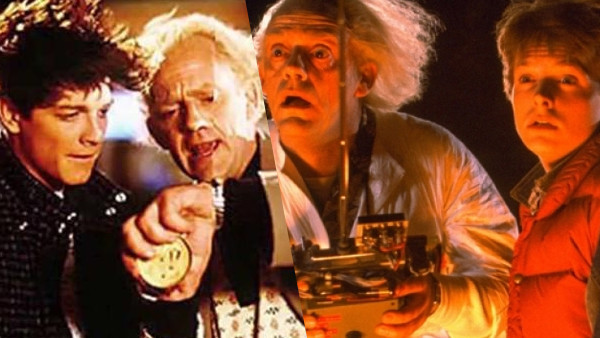
Though Michael J. Fox was indeed the first choice to play Marty McFly, his commitments to TV show Family Ties prevented him from initially taking the part, which eventually went to on-the-rise actor Eric Stoltz instead.
After a whole four weeks of shooting, director Robert Zemeckis decided that Stoltz was miscast, playing the part too seriously and lacking the laid-back charm necessary for the character.
At a cost of $3 million, Zemeckis decided to start over, offering the role to Fox once again, who now had a free enough schedule to take the part.
The rest, of course, is history. It's Fox's signature role and it's hard to imagine anyone else pulling it off as well as he did.
12. Malfunctioning Shark Prop Enhances The Suspense - Jaws

Jaws is popularly deemed the original summer blockbuster and was beset by countless production issues, namely problems with the mechanical sharks which in part caused the film's final budget to more-than-double.
Director Steven Spielberg's original vision of the film had the shark appearing much more frequently, but due to the shark props failing to work or looking overly fake, the director opted to keep the antagonist mostly hidden from view.
The result, of course, was ultimately fortuitous, delivering an all-time classic thriller that made the absolute most of the creature's fleeting on-screen appearances. Spielberg himself put it best: "The shark not working was a godsend. It made me become more like Alfred Hitchcock than like Ray Harryhausen."
What could've been pure shlock ended up a suspense classic for the ages.
11. David Fincher & Brad Pitt Fight To Keep The Bleak Ending - Se7en

After being thoroughly burned by studio interference on his previous film Alien 3, director David Fincher fought aggressively against New Line Cinema to ensure they didn't compromise Se7en's chillingly bleak ending.
The finale sees Brad Pitt's Detective Mills killing the villainous John Doe (Kevin Spacey), ironically completing the cycle of seven deadly sins Doe's been carrying out over the course of the movie. It's a darkly poetic finale that provides a perfect capper to a thoroughly engrossing thriller.
However, New Line fought Fincher and star Brad Pitt all the way to the finish line, proposing numerous alternate endings, such as Gwyneth Paltrow's wife character surviving, her severed, boxed head being replaced with that of a dog's, and most bafflingly, Mills murdering not only John Doe but also his own partner, Somerset (Morgan Freeman), in a fit of rage.
It eventually transpired that the studio sent Fincher the darker original script by accident, but once Pandora's Box was open, Fincher wouldn't let it lie.
Despite the studio's aggressive efforts to soften the tone, Fincher won out, and his only concession was adding the final Ernest Hemingway quotation rather than cutting to black as soon as Doe was dead.
Considering that the movie is one of the most acclaimed thrillers of the 1990s and grossed over $325 million worldwide, it's safe to say Fincher's instincts were right.
10. Al Pacino's Villain Is Replaced One Month Before Release - Despicable Me 2

If you thought switching-out Kevin Spacey just six weeks before release was something, Despicable Me 2 did one better.
Al Pacino was not only originally cast to play the animated sequel's villain, Eduardo, but actually recorded all of his lines and effectively delivered a completed performance.
However, due to the ever-common "creative differences", Pacino was replaced just a month before the movie's release, with Benjamin Bratt taking over the role.
Though it's never come to light exactly why Pacino left, the common belief is that he decided that his depiction of Eduardo would be offensive to Mexicans, and so demanded he be scrubbed from the final film.
Considering the PR s***storm that retaining Pacino's performance in the movie against his will could've caused, the filmmakers made a smartly sensitive call to ensure minimal blowback.
Most impressive of all? Despite Bratt having to time his performance to Pacino's already-rendered mouth movements, you'd never guess it while watching the final movie.
9. Script Leak Forces A New, Better Ending - Scream 2

The much-anticipated horror sequel suffered problems almost immediately after shooting began, as the film's script was promptly leaked online, revealing the identities of the killers and posing a huge problem for the production.
While director Wes Craven and writer Kevin Williamson scrambled for a solution, shooting continued with only a partial script. Ultimately, Williamson delivered pages on-the-fly to Craven, who would flesh them out on set, and together, they managed to significantly alter the latter portion of the movie, especially the identities of the killers.
In the original script, the killers were revealed to be Derek and Hallie, working under the influence of Mrs. Loomis aka Debbie Salt, but this was ultimately changed to be just Mickie and Debbie, which feels like a much better fit.
Also, Cotton Weary turned full-tilt psycho at the end, killing Gale and Sidney but also being killed by Sidney himself, effectively bringing the franchise to a close.
Of course, this didn't happen in the final shoot, and Cotton ended up being killed in Scream 3, while the series was allowed to flourish further with the highly entertaining Scream 4.
Simply, the leaked draft sounds like it would've been a mess full of shock value for its own sake, whereas the final movie somehow made a classic horror sequel out of its absolutely chaotic production.
8. Viggo Mortensen Replaces Stuart Townsend During Production - The Lord Of The Rings

Production on Peter Jackson's The Lord of the Rings trilogy began in late 1999, when actor Stuart Townsend was just 26 years of age.
Townsend was cast to play hero steely hero Aragorn, but after spending two months training for the role and getting through just a few days of shooting, Jackson realised the actor was too young to play the 87-year-old King.
After rushing to find a replacement, including offering the role to Daniel Day-Lewis for a second time, Viggo Mortensen took the part at the behest of his son, but had virtually no time to prepare.
Hilariously, he read the source material during his flight over to New Zealand and received a crash course in fencing upon arriving, before diving straight into shooting.
Looking at the end product, though, Mortensen gives one of the series' most entertaining performances, and his being more than a decade older than Townsend undeniably made him a better fit for the part.
Who's to say how these films would've turned out without Mortensen's involvement?
7. Rambo Doesn't Die (Like He Does In The Book) - First Blood

Though David Morrell's original novel concluded with the death of John Rambo, Sylvester Stallone and director Ted Kotcheff decided to shoot two endings for their film adaptation in order to have some decisions in the editing room.
They initially went with an ending similar to the book, where Rambo shoots himself and dies, but after test audiences responded badly to its bleakness, Stallone and Kotcheff opted to go with a slightly less depressing ending where Rambo surrenders and is arrested.
The two endings are absolutely night and day, and this is a rare example where a "softer" ending actually plays better, especially considering how effectively the movie's commentary on society's treatment of war veterans has already been cemented, regardless of Rambo's ultimate fate.
While you can argue that it led to a glut of unnecessary sequels that undercut the true intent of the original, the fact we got to see Rambo being led away while "It's A Long Road" played out solely justified that this was the right way to end it.
6. Dante's Death Gets The Chop - Clerks

Kevin Smith's indie smash hit debut Clerks saw the writer-director struggling with how to end his movie, and so to ironically reference the film's early discussion of The Empire Strikes Back ending on such a down note, Smith opted to have Quick Stop clerk Dante be shot and killed by a thief.
It's a shockingly dark ending, albeit one which Smith's mentors Bob Hawk and John Pierson ultimately convinced him to cut. Instead, the movie ends a few moments earlier, as Randal leaves the Quick Stop and Dante ponders his life.
Smith has since stated that the original ending probably would've resulted in the View Askewniverse never happening, so it's safe to say he made the right last-minute call.
5. Diane Keaton's Expanded Role - Annie Hall

Woody Allen's Best Picture-winning comedy masterpiece was shaped into a very different film over the course of its production.
Initially conceived with a greater focus on Allen's character Alvy while Diane Keaton's titular character only appears sparingly throughout, Allen realised in the editing room that the relationship drama was in fact the most compelling material.
As such, Allen ended up shooting additional material with Keaton while reducing the more surrealist asides that focused exclusively on his character.
The result is by far his most popular and acclaimed film, even if Allen has conceded his own disappointment in recent years that the final cut is so focused on romance. There's no pleasing some people...
4. Paul Dano Replaces Kel O'Neill - There Will Be Blood

Paul Thomas Anderson's towering epic originally saw relatively unknown actor Kel O'Neill playing the part of sycophantic preacher Eli Sunday, but two weeks into shooting, Anderson replaced him for reasons that have never been made explicitly clear. The rumour, however, is that the intensity of Daniel Day-Lewis' method acting made him too anxious to work opposite the statuesque actor.
Either way, Paul Dano was originally only set to play the small part of Eli Sunday's brother Paul, but Anderson decided to offer him the role of Eli also, transforming the siblings into twin brothers.
It's a decision that was pure cinema magic, for though the film absolutely belongs to Day-Lewis' stonking, Oscar-winning performance, Dano's dual turn as the Sundays is only a few steps behind.
Simply, it's hard to imagine O'Neill delivering such a terrific performance, so all things considered, it was definitely the right decision, regardless of whatever Anderson's reasoning ultimately was.
3. Edward Norton Takes Control Of The Final Cut - American History X

The Edward Norton-starring race drama struggled through a tempestuous post-production period, in which director Tony Kaye butted heads with New Line Cinema regarding the final cut of the film, to the point that Kaye ultimately requested, in vain, that his credit for the final cut be replaced with "Humpty Dumpty".
Kaye originally wanted the film to end with Norton's protagonist Derek returning to his Neo-Nazi ways after his brother's murder at the hands of a black student, with the final shot showing Derek once again shaving his head.
However, the famously hands-on Norton was allowed to take a pass at the movie himself, and New Line Cinema preferred his cut to either of Kaye's attempts, resulting in it being the final theatrical release.
Considering that Kaye's original ending completely betrays the deeper meaning of the film in favour of a cartoonish, laughably unsubtle plot twist, New Line definitely made the right call here.
2. Joss Whedon To The Rescue - Justice League

What a wild ride the production of Justice League has been. Zack Snyder first began shooting the superhero epic back in April of last year, and test screenings reportedly made it abundantly clear that the movie needed to be significantly tinkered with in post-production.
Snyder hired Joss Whedon to help script some light, witty dialogue to give overly serious scenes a little more pep, but with the tragic death of Snyder's daughter earlier this year, the director ended up leaving the project. Whedon ended up taking over final reshoots and post-production duties.
With early reports suggesting that Whedon's work on the film has significantly boosted the test screenings scores to be closer to the level of Wonder Woman, it seems that, regardless of what the nerds think, Whedon has managed to salvage a movie that was in incredibly dire straits just a few months ago.
Nobody's saying it's going to be a masterpiece, but it appears that its rougher edges have at least been smoothed out for a likely formulaic but enjoyable popcorn romp. All things considered, that's pretty good going.
1. Tobey Maguire Is Replaced For Being "Too Famous" - Life Of Pi
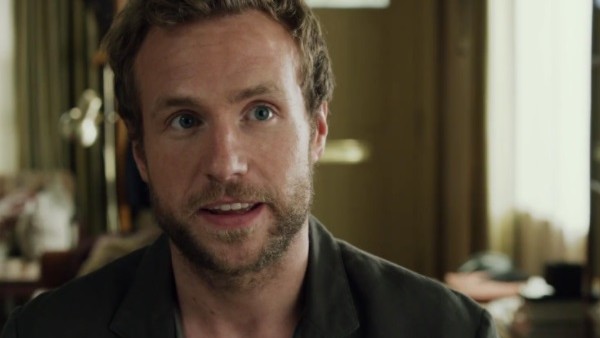
And finally, during principal photography on Ang Lee's acclaimed adaptation of Yann Martel's much-loved novel, Tobey Maguire was originally cast as a reporter interviewing Pi about his ordeal, which would serve as the film's frame narrative.
However, Lee decided in post-production that Maguire, as the only Hollywood actor among the entire cast, was "too jarringly recognisable", and decided to recast the part.
More than six months after initial shooting wrapped, Maguire was replaced with Rafe Spall, who at the time wasn't terribly well-known to audiences, and the role was altered to be the novel's author himself rather than a reporter.
This was a shame for Maguire but it was definitely the best thing for the movie: Maguire's famous face showing up every so often would undeniably detract from the story, whereas having someone as non-intrusive as Spall in the role made it easier to keep focusing on Pi's adventure.
Which movies do you feel most benefited from their shocking last-minute changes? Shout them out in the comments!