13 Movies That Only IMPROVE With Age
Timeless and prophetic.

Time destroys everything, or so the saying goes. And if the history of cinema has proven anything, it's that only a select few movies are able to truly weather the test of time.
You need look no further than the many 80s comedies which are undeniably "problematic" under a modern microscope, to say nothing of all of the 90s cyber-thrillers which seem laughable and chintzy by today's standards.
But every so often, there will be a film that not only holds up to modern scrutiny: it in fact grows more astonishing and entrancing as the years pass by.
13. Fight Club

Few movies have captured a zeitgeist as successfully as David Fincher's Fight Club.
A stridently satirical film albeit one which served as a rallying cry for a generation of frustrated young men, Fincher's film literally inspired real-life fight clubs and was interpreted by its target audience as a recognition of how the "modern man" is emasculated in a world where traditional masculine attributes (i.e. violence) have little value.
Yet of course, Fight Club is not an endorsement of psychologically castrated men blowing up the world to quell their existential angst, but rather a skewering of precisely that mindset.
And in 2019, where the phrase "toxic masculinity" is firmly woven into the cultural consciousness and Fight Club is itself an unintended handbook for "incels", its deconstruction of young men who refuse to evolve couldn't feel more relevant.
And don't be surprised if the film continues to feel more complex, layered and prescient in the future.
12. Alien

The recent 40th anniversary re-release of Ridley Scott's Alien has served as the perfect reminder of just how mesmerising the unassailable sci-fi classic continues to be.
But beyond the stately nature of its new 4K remaster, Scott's film continues to endure as a taut, claustrophobic masterpiece even as both mainstream horror and even the Alien series itself have proven themselves maddeningly inconsistent in its wake.
Aside from the Nostromo's glaringly outdated CTR monitors, there are few hallmarks that Alien is anything approaching an "old" movie.
And as contemporary filmmaking in a similar vein relies on oft-unconvincing visual effects - case in point, Alien: Covenant - the practical, stripped-down terror of the original continues to rein supreme.
Unencumbered by the excess plotting which defines most contemporary "Alien-esque" movies, Alien remains a breath of fresh air 40 years later, and remains a firm tonic for the tendency for modern genre fare to over-complicate itself while under-nourishing the audience in the process.
The recent remaster, meanwhile, is the icing on the cake, underlining just how impeccable the overall production design truly is.
11. Network

Sidney Lumet's 1976 Oscar-winner is one of the most mind-bogglingly ahead-of-its-time films ever made, a blackly comic drama about a newscaster (Peter Finch) driven insane by the ratings-grabbing demands of the network's higher-ups.
With mainstream news media slavishly chasing ratings in more insidious ways over the decades - usually through manufactured outrage and graphic depictions of violence - Network has proven itself a deep and shockingly insightful film about the forces powering world news (that is, money).
And though media satire isn't exactly a new trick in 2019, the film impressively still feels enormously relevant today, where the notion of "mainstream" media has evolved considerably, and the proliferation of online news has allowed the very word "news" to mean something completely different.
If the current era has proven both the democratic and the destructive powers of everyone having a voice online, Network cements how the much-cited "outrage cycle" of current news/fake news can stymie discourse and create an echo chamber of hatred.
Could anyone in 1976 have guessed how absurdly indicative Network would be of information dissemination some 40+ years later? Absolutely not, and that's the film's true genius.
10. Toy Story 3

Now, Toy Story 3 is by far the most recent movie on this list, having only been released nine years ago, but it is also a film - and indeed, a series - which has tracked with a very specific age group ever since the beginning.
The real beauty of Toy Story 3 is that it was released in 2010, some 15 years after the release of the original movie, near enough allowing the prime target audience to enter adulthood at roughly the same time as protagonist Andy (John Morris).
As such, Toy Story 3 was something of a rite of passage for many who were in their late-teens or early-20s when the film came out. As Andy prepared to leave for college, they were likely either entering college themselves or heading out to work for the very first time.
But almost a decade later, revisiting the movie may evoke entirely different feelings in the audience, who may themselves now have young children.
As much as Toy Story 3 is unavoidably a coming-of-age film, parents are undeniably going to view the story through a parental lens, perhaps identifying as much with Andy's mother (Laurie Metcalf) as Andy himself.
Within the next few years, ever more kids who were born at the "perfect" point of relatability for this franchise will be starting their own families, and upon revisiting Toy Story 3, another under-layer in an already supremely emotional film will unveil itself.
9. The Texas Chain Saw Massacre

Tobe Hooper's 1974 horror masterpiece improves with age for a unique and somewhat paradoxical reason: it kinda looks like crap.
Hooper's film boasts a deliberately scuzzy, rough-around-the-edges aesthetic which makes it feel more lived-in and even "believable", and it's only natural that the film looks ever more beaten up and ugly as the years have passed.
And you know what? It totally works in the movie's favour.
Its roughshod cinematography and low-fi production only further evoke the grimy vibe Hooper was initially shooting for, enhancing the atmosphere and therefore the audience's unease at what they're watching.
There aren't many movies that age "well" in this regard, but Hooper's film is a perfect collision of lurid subject matter and agreeably messy production values.
Furthermore, early reviews of the international 4K Blu-ray release seem to confirm that the UHD remaster treatment has done little to "clean up" the original dirtied aesthetic, and in fact only draws further attention to the blurry, mucky shooting style.
8. Falling Down

Joel Schumacher's Falling Down is one of the most criminally under-appreciated films of the 1990s, an hysterical dark comedy in which an over-worked, perennially frustrated white man (Michael Douglas) lets his violent frustrations out across Los Angeles on a very, very hot day.
At the time of the film's release and for a long time afterwards, it was accepted that Falling Down was pushing back against the perceived social ills preventing the "average man" - that is, white and middle-class - from progressing in society.
Douglas' protagonist Bill Foster is depicted as casually racist throughout the film, but it is also a mistake to assume that Falling Down is itself a racist film as a result.
Rather, Schumcher's film proved itself incredibly ahead of the curve by tackling the notion of "white fragility" that's so prevalent today. After all, the film even concludes with Foster asking Robert Duvall's imminently retiring cop, "I'm the bad guy?"
It is perfectly emblematic of how, in a present society increasingly favouring inclusiveness, insecure and frustrated (predominantly white) men find themselves lashing out and doing insane things (like, uh, voting for Donald Trump).
In many ways the present moment has only better crystallised the characterisation of Foster and made him that much more believable, which for a film that really seemed like an urban cartoon in decades prior (albeit a ridiculously entertaining one), is both incredible and terrifying.
7. 2001: A Space Odyssey

Depending on your perspective, 2001: A Space Odyssey is either Stanley Kubrick's definitive masterpiece or a bunch of pretentious twaddle, but whatever your opinion, it's impossible to deny the film's sublimely accurate predictions for the future of both tech and space travel.
Though an A.I. hasn't yet been created to match HAL 9000's detached malevolence, we're probably not that far off, and with humanity now on the verge of making privatised space flight a viable commodity, the movie's vision of routine travel to the stars feels rather imminent.
That's not to ignore the film's Newspad, which bares an eerily similar design to the iPad despite predating it by, oh, 42 years. Cue the conspiracy theories about Kubrick "inventing" the iPad.
But if society's recent tech advances have only solidified the film's perceptiveness, its impact over time is heightened further by the jaw-dropping effort that has been made to restore it.
The recent 4K Blu-ray release is quite probably the finest UHD disc yet produced, for rather than highlight the limitations of the miniatures and visual effects work, the higher resolution better accentuates just how ridiculously detailed and articulated the models in particular were.
The tireless visual effects work of Kubrick, Douglas Trumbull and their crew have resulted in a relentlessly deep experience both thematically and stylistically, though one wonders whether or not the inevitable 8K remaster might finally see the returns hit a brick wall. Only time will tell.
6. Do The Right Thing

Spike Lee may be hot off the mega success of the Oscar-winning BlacKkKlansman, but history will likely best remember Lee for his incredible 1989 film Do the Right Thing.
A righteously angry drama about racial tensions spilling over on a red-hot summer's day in Brooklyn, Lee's film asks complex questions about society and has lost not a drop of its relevance three decades later.
In fact, in the age of social media where our general awareness about police brutality and race-related crime is that much more amplified, a movie about a cop who chokes a black man to death really feels more relevant today.
Nothing has really changed dynamically, and Lee's examination of both the event and the fiery outrage following it holds everyone involved to account in some form or another.
As much as many like to scream about progress, a few casual glances across news headlines makes it clear that little real change has been made since '89.
5. Minority Report

It's rather apt that a movie about pre-cognition actually managed to make some pretty spot-on predictions about the modern world.
Though depicting a far more advanced, tech-infused 2054 where mutants are used to predict crimes before they happen, there are a number of speculative elements which have allowed the film to endure as more than a mere fantasist fiction.
From self-driving cars to touch-based computing, augmented reality, voice-controlled smart tech and, most relevantly, consumer-targeted advertising, Minority Report is really quite an eye-opener when revisited today.
While the whole precog mutant shtick is probably a bit of a leap, the contextual world-building is first-rate, and what felt like far-flung speculation in 2002 feels shockingly dead-on barely 15 years later.
4. Clerks

Nobody's going to argue that Clerks has aged well from a technical perspective, but its gritty, low-fi cinematography perfectly encapsulates its endearing slacker vibe, not to mention the quintessential aesthetic of mid-90s American indie cinema.
It's fair to say that Smith's comedy primarily appeals to nerdy young males between the ages of 12 and 25, and if you came of age in the late 90s or early 2000s, there's a good chance you saw Clerks when you were way too young.
And in 1994, long before Hollywood had lovingly embraced nerd culture as it has today, Clerks was one of the few films which truly spoke to that underserved adolescent demographic.
But like Toy Story 3, it is a film that in many ways benefits from the audience "growing up" with the movie itself, and viewed as an adult with a few relationships under your belt, Smith's film takes on an entirely different identity.
The nerdy gags are still hilarious, because of course they are, but Silent Bob's (Smith) "They don't all bring you lasagne at work" speech has a far greater emotional heft to it when you're 30 as opposed to 13.
Smith did of course give the film his own official post-script with the surprisingly solid sequel Clerks II in 2006, but accepting the superior original on its own terms, it is a film which unlocks itself to the viewer as they themselves grow older, and that's a wonderful thing.
3. The Great Dictator

Charlie Chaplin's 1940 classic comedy is fondly remembered as one of his finest achievements, a radical and riotous satire of the Nazi party and Adolf Hitler in particular.
Though the focal figure of derision tethers the film to a very specific point in time, its overall message, about humanity uniting against hatred, tearing down national barriers, fighting ignorance, championing science and securing happiness for all, hasn't lost a shred of import in almost 80 years.
The Great Dictator is an especially compelling sit at present, where the so-called "Leader of the Free World" actively bolsters his brand on gun-totting nationalism, hatred, racism, ignorance and an anti-science agenda.
But the film's relevance goes one level deeper when you consider the current debate about the ethics of satirising figures as harmful as Trump and, indeed, Hitler.
Some will argue that comedy can be a useful tool to de-legitimise these figures, while others argue that it unintentionally creates emotional distance from their more heinous actions.
After all, Chaplin himself stated decades after he released The Great Dictator that he wouldn't have made the movie had he known the full extent of the Nazis' atrocities, and in a current age all-too-eager to parody Trump on shows like SNL, it'll be interesting to see how history views that decision.
Whatever your own stance, the fact that a movie so old can still provoke such passionate and nuanced dialogue about the present political moment is all the proof you need that it's only grown in relevance and interest over the years.
2. The Truman Show

Peter Weir's incredible sci-fi satire is one of the best films of the 1990s, revolving around Truman Burbank (Jim Carrey), a man unaware that his entire life is a fabrication created by a TV studio, which broadcasts the titular production 24/7 without his knowledge or consent.
The Truman Show hit screens just a few years before the reality TV boom of the early 2000s, and predicted with a staggering level of accuracy how mass audiences would lap up the voyeuristic qualities of obsessing over every last, mundane detail of a regular person's life.
Reality TV is of course even more of a juggernaut today than it was then, exacerbated by the exponential growth of the Internet and social media in particular, where people are "brands" unto themselves attempting to sell lifestyles (and get some sponsorship dollars in the process).
The Truman Show foregrounded how technological advancement and the obfuscation of reality can go hand in hand, and in a modern era where Facebook, Instagram and the like encourage people to present an unrealistic scrapbook of their personal successes, the film feels like a frighteningly authentic precursor.
So many movies that speculate on the future of entertainment and tech end up feeling quaint within a short span of time, but 20+ years on, The Truman Show continues to get it right.
1. M
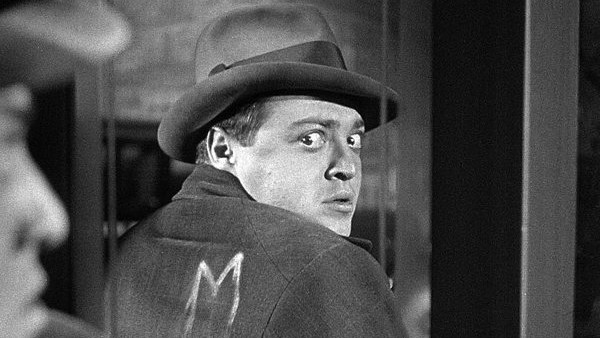
Fritz Lang's 1931 thriller M is perhaps cinema's most emphatic indictment of mob mentality, where a child murderer (Peter Lorre) finds himself chased down by not only the authorities but also a gang of violent criminals keen to brush their own murderous antics under the carpet.
Mob mentality is and likely always will be a fascinating psychological phenomena endemic to the nature of humanity, and it's one which has taken on a whole new meaning in the age of Twitter, where an errant, years-old tweet can result in a public figure being "cancelled" by the digital mob.
And that's not to conflate a rude tweet with the actions of a child murderer, but on a broader level M is a chilling critique of how a hateful mob outside of the law can discard nuance in favour of summary judgement.
Despite being almost 90 years old, Lang's film is a fascinating psychological testament and one which confirms how unshakeable human nature truly is.
Which movies do you feel have aged the best? Shout them out in the comments!