13 Movies You Didn't Know Were Responsible For Weird Cinematic Milestones
Because one movie had to be the first to make a fart joke.

When it comes to the motion picture business, progression is everything. Which is why, year after year, cinema has continued to grow, expand, change, transform and innovate what it means, exactly, to sit down and watch a movie. Nowadays, of course, the advancement of cinematic technique appears to be moving slower than it did in, say, the '30s and '40s, but it would be obtuse to suggest that the recent rise of digital filmmaking - and the death of celluloid - is not one of the most significant milestones to have occurred in the history of the medium, if ever.
But not all movie milestones are of the "technique variety" - some movies set other milestones that aren't akin to the likes of "it was the first movie to feature sound!" or "it was the first full-length animated feature," but more along the lines of "it was the first movie to feature a fart joke!" And though that might not seem at all worthy of the advancements made by The Jazz Singer or Snow White and The Seven Dwarves, a fart joke is still progressive in its own special way - after all, one by one, even the most unlikely of milestones break down the cinematic boundaries.
Join us, then, as long back across the span of cinema at 13 movies you might not have known were responsible for putting setting weird cinematic milestones - milestones that include flushing toilets, swear words, the sunshine, naff websites, CGI fur and, uh, more toilets...
13. In Cold Blood Was The First Picture To Use The Word "Bullsh*t"

By 1967, a human being was yet to utter the word "bullsh*t" in a major motion picture - that is until In Cold Blood, the movie adaptation of Truman Capote's seminal true crime book, came along and decided to break the taboo once and for all. It's weird to think that - somewhere along the line - all swear words had to be uttered for the first time on the silver screen, but "bullsh*t" is the sort of word you thought would've been uttered at least once before 1967.
The reason this is even more interesting, though? In Cold Blood was released before there was a big emphasis on rating systems, and movies were generally considered to be viewable by "everyone" - for cinema-goers who had gotten used to the standard practices of the day, hearing a character uttering this word must've been downright shocking.
Oddly, this milestone is often attributed to Bullitt with Steve McQueen, but In Cold Blood got there first.
12. The Godfather: Part II Was The First Mainstream Picture To Use "Part II" In Its Title
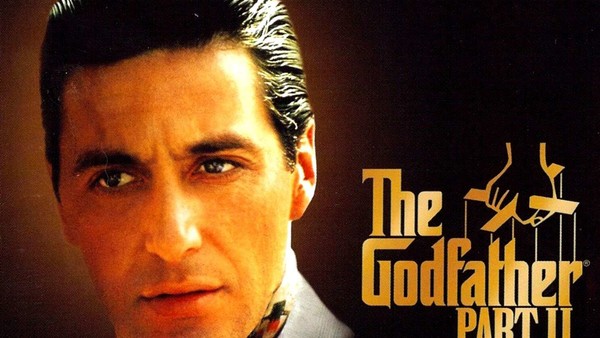
The first feature length movie ever made, Birth of a Nation, also spawned the first sequel ever made, aptly titled The Fall of the Nation - but it wasn't until the sequel to The Godfather almost 60 years later that the now-common subtitle "Part II" was stuck on the end of a movie to say, hey, this is a follow-up to that other movie you saw!
Before then, movie sequels tended to have unique titles of their own (think Bond) - numbering them wasn't really a thing. Because "Part II" wasn't the mainstream phrase that it is today when Francis Ford Coppola used it to denote the second chapter of his acclaimed trilogy - nowadays, it just seems logical to stick "Part II" onto a sequel, but when Coppola used it, he was legitimately denoting the fact that The Godfather story wasn't actually over, and that we genuinely had only seen half the story.
It was genuinely intended as a clarification and not as a coy marketing tool.
11. True Lies Was The First Picture To Have A $100 Million Dollar Budget

When you think of True Lies, you presumably think about Arnold Schwarzenegger, the explosions, and the fact that it probably cost a lot of money - but it's somewhat shocking to learn that, back in 1994, True Lies was the most expensive film ever made up until that point.
Granted, the movie came to us courtesy of James Cameron, so it makes sense that he spent a lot of dough on it - still, it's not the kind of movie anybody presumably associates with $100 million. You can understand, of course, the likes of Waterworld, Titanic and Spider-Man 3 being the most expensive films ever when they were put into production, because it's all up there on the screen.
Not to say that it isn't with True Lies - just that this movie was a sort of comedy action movie based on an obscure French property. Who'd have thunk?
10. Blazing Saddles Was The First Mainstream Picture To Feature A Fart Joke

Of course, it probably makes total sense in retrospect that Mel Brooks was the one who made fart jokes okay for mainstream entertainment - but can you believe that, up until 1974, fart jokes simply weren't a thing? Every second movie released today seems to make at least one passing reference to the notion of flatulence, with fart jokes acting as a sort of go-to place for screenwriters who want a cheap, easy laugh.
Back in '74, fart jokes were super revolutionary. It's thought, then (according to film critic David Kehr, anyway), that the famous scene set around the campfire in Brooks' Blazing Saddles - where the movie's heroes ingest far too many beans for their own good and end up farting consecutively, one after the other - gave birth to the modern movie fart joke. And, yes, we've been smelling 'em in low-brow comedies ever since.
9. The Lost World Was The First Feature Film To Be Shown On A Plane

Watching movies on planes seems like something that came about in, oh, the '80s or something, right? Contrary to popular opinion, though, movies have been part of in-flight entertainment as early as 1922 - seriously, almost a hundred freakin' years ago!
Whilst a short film called Howdy Chicago was shown during a flight to passengers who were flying around Chicago on Aeromarine Airways in 1921, The Lost World was the first feature film to be shown to excited plane-users. Yes, a 1925 Imperial Airways flight - between London (Croydon Airport) and Paris - screened the now classic movie adaptation of Arthur Conan Doyle's novel, The Lost World, for its passengers. What, exactly, that entailed, or how successful the viewing was, who knows?
But for those people who were FLYING THROUGH THE SKY WATCHING A MOVIE ABOUT DINOSAURS IN 1922... man, what a day! Oddly, despite the fact that the film stock was highly flammable and the chance of death was increased for everyone involved, they went ahead with it anyway.
8. Rashomon Was The First Picture To Feature A Direct Shot Of The Sun

Akira Kurosawa's 1950 masterpiece, Rashomon, is best remembered for its innovate narrative technique, whereby the same story is recounted by different people a number of times, but the movie clings to an all together more bizarre and revolutionary innovation, too.
Though it sounds crazy, Rashomon is actually credited as being the first movie to feature a direct shot (i.e. on purpose) of the sun. Before Kurosawa just went ahead and did it, such shots were unheard of.
"These days it is not uncommon to point the camera directly at the sun, but at the time Rashomon was being made it was still one of the taboos of cinematography," said Kurosawa on the subject of shooting of the movie. "It was even thought that the sun's rays shining directly into your lens would burn the film in your camera."
Thankfully he ignored this trite and a milestone was created.
7. Westworld Was The Motion Picture To Feature 2D Computer Animation

Until recently, Westworld wasn't a movie that many people would talk about nowadays, mostly because it's a weird, sci-fi western starring Yul Brenner and because it's downright weird. Still, before the recent tv makeover, Westworld existed as something of a cult classic mainly because of the plot description (courtesy of Wikipedia) goes like this: " stars Yul Brynner as an android in a futuristic Western-themed amusement park, and Richard Benjamin and James Brolin as guests of the park."
So, yeah.
Aside from that bizarre premise, though, Westworld - made in 1973 - was the first feature length motion picture to use 2D computer animation to render the "android vision." Though we tend to think of the late '80s and early '90s as the period where computers found their way into motion pictures, Westworld was doing it as early as 1973 - quite the achievement, and one that is often forgotten in favour of movies like Tron and The Young Sherlock Holmes.
6. Psycho Was The First Motion Picture To Show A Flushing Toilet

It seems odd to think that, at one time, the sight of a flushing toilet - a toilet lacking any, uh, defecation, that is - could be offensive to audiences, but when Alfred Hitchcock opted to show such an act occurring for his seminal horror flick, Psycho, it was considered to be a rather shocking thing indeed.
So although it's bizarre to learn that - up until 1960 - nobody had dared show a bit of water swirling around a porcelain bowel on screen, it really did take that long. The famous scene - in all its flushing glory - occurs when Janet Leigh's Marion Crane tears up a piece of paper and disposes of the evidence using her trusty white toilet.
It's interesting to note that there were presumably people who found this moment in the film to be far more offensive than the infamous shower scene, stabbings and all! Oh, the past: you so funny.
5. The Flintstones Was The First Motion Picture To Contain CGI Fur
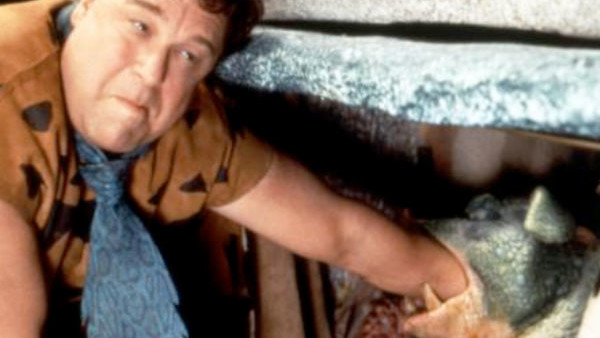
Even now, fur is considered to be one of the most difficult and time consuming things to create using CGI. Though we've recently been impressed as by the likes of the digital fur in movies like Monsters Inc., and King Kong, a very awful and probably best forgotten movie - starring John Goodman, no less - was actually the first picture in movie history to have a go at rendering the stuff; That's right, Brian Levant's film adaptation The Flintstones from '94.
Narrative awfulness aside, The Flintstones set an impressive milestone twenty years ago when it became the first movie to tackle the arduous task of rendering fur - in this case, to create the Flintstone's sabre-toothed tiger pet, Baby Puss.
In retrospect, it doesn't look all that great, but for the time it was an achievement to be proud of. Fur, of course, is notoriously hard to "get right" because effects artists have no choice but to render each and every hair. Ugh!
4. Zyzzyx Road Was The First Picture To Gross Just $30
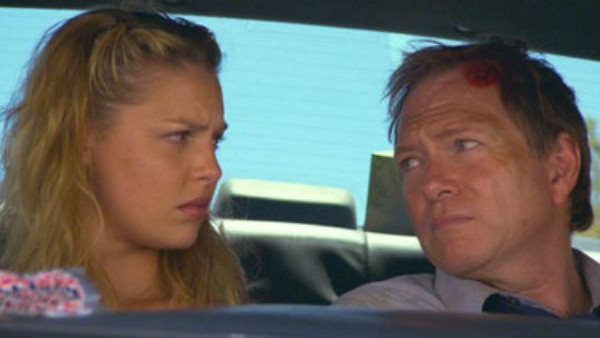
Seriously. There's a movie that exists in the real world that genuinely made the pathetic, cringeworthy sum of $30 dollars at the box office, a downright unbelievable notion that begins to make a lot more sense when we reveal that the movie in question starred Katherine Heigl in a starring role.
That's right: the tragically named 2004 film "Zyzzyx Road" cost $1.3 million dollars to produce, and yet it managed to pull in a measly $30 dollars. Not $3,000 or $30,000 dollars, by the way, but $30! As in: the sum of money that you probably have in your wallet right now.
Played for six days in a theatre in Dallas, Texas, Zyzzyx Road has set the modern standard for lowest grossing movies - it's likely that no other movie will ever gross such a low amount, because HOW COULD IT?
Okay, so you have to take into consideration the whole six days thing, but seriously, if, like, fifty people had gone to see the movie, at least we'd have a figure that made sense? Oh, Tom Sizemore was in this, too. Sizemore and Heigl in a movie about awful actors having affairs and trying to murder people in the desert? Well, it's no wonder people didn't bother.
3. The Yiddisher Boy Was The First Picture To Feature A Flashback
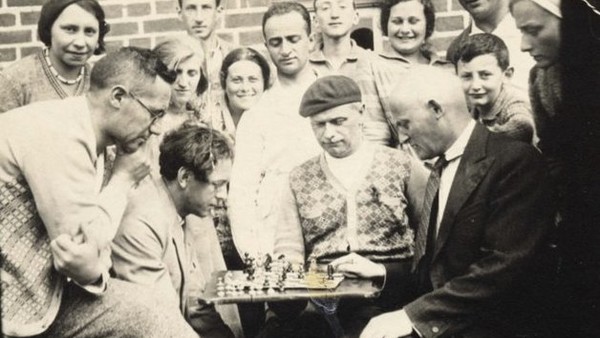
The movie "flashback" seems like something of a post-modern idea, made popular in the '90s, but who'd have thought that flashbacks were being employed as early as 1909? That's right, silent film The Yiddisher Boy is thought to contain the earliest example of what we'd label today as a flashback. In the film, made by Siegmund Lubin, a character thinks back 25 years in the past to a boyhood street fight to allow audiences to better under his motives - something that was probably fairly confusing for audiences at the time.
What's strange is that the grammar of cinema was already being shaped as early as this, and narrative techniques like flashbacks were being employed - presumably without too much thought - as a way of opening up stories to new and exciting levels. The film only runs at 3 minutes, and is massively difficult to find, but it's worth checking it if you get a chance for the flashback factor alone - it's a milestone, people!
2. Stargate Was The First Picture To Have Its Own Official Website

Was the internet something people were using as far back as 1994? Apparently so, considering that Stargate - a movie released in that very year - holds the distinction of being the first ever motion picture to have its own official website.
Yes, movie producers were asking people as far back as twenty years ago to get online and click stuff and read about freakin' Stargate. Since the movie is all science-y and futuristic, it sort of make sense that it went first, we guess. We know what you're wondering: is the website still up?
Unfortunately not - given that it first went live in 1994, chances are you probably wouldn't want to look at it anyway, for fear that your eyes might break with the sheer ugliness of it all.
What we can gift to you, though, is the official website for the smash hit Space Jam, which was unveiled two years after Stargate's, and is - for some reason - still live and as horribly retro as you'd imagine.
1. Catch-22 Was The First American Picture To Show Somebody On The Toilet

So we've already covered flushing toilets - in far more detail than probably necessary - so we might as well get to the question that presumably everyone who has made it this far down the list is asking: what was the first movie to depict somebody actually using a toilet? Like, for its intended purpose? That honor goes to Mike Nichols' 1970 adaptation of Catch-22, which became the first American flick to feature a shot of somebody sitting on a toilet doing their business.
The man who got to take the immortal dump? Martin Balsam, who is interrupted whilst emptying his bowels by - who'd have imagined? - a character played by Anthony Perkins. A neat coincidence, you'll agree, given that both Perkins and Balsam featured in Psycho, the very movie which caused shock and awe with its toilet flushing escapades ten years previously.
We wonder if these guys know just much progress they've made for toilets in the cinema?