13 Things You Learn Rewatching The Dark Knight
10 years on, is it still the king of the superhero genre?

Happy birthday, The Dark Knight! Christopher Nolan's unforgettable and iconic Batman sequel turned 10 years old this week, so after you've spent some time moping about how old you now feel, why not revisit the magnificent superhero classic?
Since 2008, the world has clearly changed a lot, the superhero movie landscape is radically different and we as people are all in different places. To that end, it's always interesting to rewatch beloved movies and see how well they stand the test of time, both as technical pieces of filmmaking and within the present social climate.
Unsurprisingly, The Dark Knight holds up incredibly well a decade on as an astonishingly well-crafted, bravura piece of filmmaking. The flaws are more obvious now we're so far removed from the honeymoon period, sure, but the film remains a standout tentpole movie that was tremendously influential on both superhero films and blockbusters as a whole.
Not everything in it has aged superbly, but rewatching the movie today nevertheless reveals some things you probably didn't notice previously, and most crucially confirms the film's status as a stone cold masterpiece...
13. It's Still Got The Best Comic Book Villain Introduction Ever

In the decade since The Dark Knight's release, no superhero villain introduction has proved as bone-rattlingly effective and iconic as The Joker's (Heath Ledger) unforgettable debut in the movie's very first scene.
An electrifying bank heist sequence which keeps the Clown Prince of Crime under a mask for almost its entirety, it nevertheless does a fantastic job building up the character's mythic status in Gotham, all the more impressive as the entire scene takes place in broad daylight.
The climactic reveal, with The Joker baring his face to William Fichtner's bank manager ("Whatever doesn't kill you simply makes you...stranger") is terrifically chilling, no matter that his subsequent escape in a school bus is more than a little contrived.
It remains a note-perfect introduction to an all-timer villain that has yet to be topped, and superbly sets the tone for the rest of the movie.
12. The PG-13 Rating Is Pretty Generous

At the time of The Dark Knight's release, a lot was written about the movie's violent, grim tone and how much Christopher Nolan got away with under the restrictive PG-13 rating.
Whether or not you believe scuttlebutt that Warner Bros. threw some cash at the MPAA to pass the film at the family-friendly rating or not, watching the movie today, it's still pretty shocking how far Nolan was able to take things.
Though there's scarcely a speck of blood on screen, Nolan does a fantastic job implying brutal violence, best exemplified by the clever concealment of The Joker's pencil trick early on. His subsequent murder of gangster Gambol (Michael Jai White) sadly isn't quite as convincing, with awkward editing even making it somewhat unclear how he was killed.
The most surprising aspect to be accepted by the MPAA, however, was Two-Face's (Aaron Eckhart) grotesquely mutilated face. Though there's no blood visible, the sinewy detail of his facial injuries is really quite horrifying for a film children can freely watch, and it's not exactly like the movie shies away from showing off all that VFX magic.
More than anything, the film's general tone is intense enough that, with a few tweaks, The Dark Knight could've clearly ended up an R-rated movie. Sure, the final film doesn't have profanity, nudity or gore, but it wouldn't take much to transport the film into that adult realm.
11. The Hong Kong Subplot Is Shameless Filler

Look, the part of the movie where Batman (Christian Bale) heads to Hong Kong to retrieve mob accountant Lau (Ng Chin Han) is good fun and all, but it's also clearly the most blatantly superfluous major sequence in the entire movie.
Plot-wise Lau fleeing to Hong Kong and being brought back to the U.S. by the Caped Crusader doesn't really add much at all to the film, and this whole subplot could easily be cut without affecting the overall product too much.
It's a ravishing action scene with some terrific visuals and entertaining use of some imaginative technology, but in a 152-minute movie that's already struggling to cram the Harvey Dent downfall into its third act, this probably could've been lost.
When revisiting the movie, it's by far the most perfunctory and workmanlike sequence: an entertaining yet arbitrary set-piece.
10. The Dead "Batman" Jump Scare Is Still Extremely Effective

If you haven't seen The Dark Knight in quite some time, you might've forgotten that it features one of the best-deployed jump scares in the history of blockbuster cinema.
When Harvey Dent is talking to Mayor Garcia (Nestor Carbonell) about the mob, the corpse of a Batman copycat slams into the window of his office, having been killed and strung up there by the Joker.
The moment the corpse collides with the window still provides a genuinely bracing jolt, especially as Nolan's movies - and the superhero genre as a whole - aren't typically known for their jump scares.
If The Joker had launched some random citizen at Garcia's window it'd be disturbing enough, but the fact that it's one of the well-meaning-but-misguided Batman impersonators makes it all the more unsettling. Bravo.
9. The Love Triangle Subplot Totally Wastes Maggie Gyllenhaal

Maggie Gyllenhaal gets a lot of disingenuous and mean-spirited hate for her role as Rachel Dawes in this movie, for though she might not be as conventionally beautiful as Katie Holmes, she sure as hell is a better actress.
All of this ignores the fact, however, that Nolan generally does a terrible job writing good roles for women, and as great as The Dark Knight is, the central love triangle between Rachel, Bruce and Harvey is easily the worst part of the entire film.
Despite being the assistant D.A., Rachel has little agency of her own beyond being the "prize" for Bruce and Harvey to squabble over. She considers marrying Harvey, but kisses Bruce, then eventually rejects Bruce and decides to marry Harvey, but dies anyway.
It's an incredibly uninteresting way to drive a wedge between the two men, especially as an actress of Gyllenhaal's calibre deserved much better material.
8. The Batman Voice Is Dumber Than You Remember
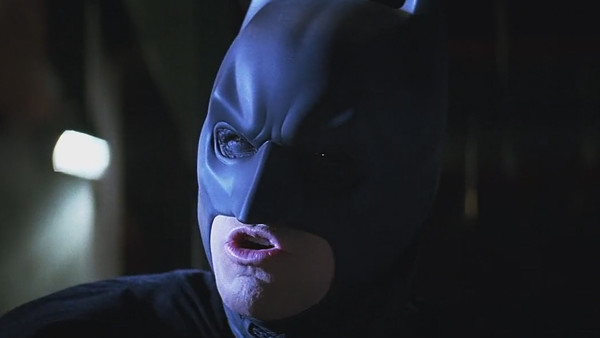
For all of the great choices Christopher Nolan made with the Batman character in his trilogy of movies, the "Bat-voice" sure wasn't one of them.
Christian Bale's growl, an attempt to disguise Bruce Wayne's voice while under the cowl, frequently comes off as unintentionally hilarious. During Bats' climactic confrontation with The Joker, the growl is so cumbersome that an out-of-breath Bale has to break the dialogue up into chunks: "This city...just showed you..that it’s full of people...ready to believe in good."
More than anything, it doesn't really make sense from a practical perspective: why wouldn't Bruce, a billionaire, have Lucius Fox (Morgan Freeman) whip up a voice modulator for him? This is one of the few aspects of the character that Batman v Superman actually improved upon, by giving Ben Affleck's Batman a digitally-enhanced register.
In a movie that wants to take itself oh-so-seriously, the Bat-voice remains one of its most laughable aspects.
7. The Visual Effects Have Aged Incredibly Well

Few blockbuster filmmakers make as smart and shrewd use of visual effects as Christopher Nolan, with his famous preference for practical effects ensuring that CGI is used only where truly needed.
The miniatures used during the iconic SWAT chase look fantastic, but more surprisingly, the actual digital effects still look pretty damn great a whole decade later.
Especially praise-worthy is Two-Face's disfigured countenance, an extremely complex task for the VFX team and one that still looks appropriately horrifying today.
There's also a lot more green screen used in this movie than most viewers appreciate, but it's virtually impossible to spot because the lighting between composited elements is matched so damn perfectly (something many modern blockbusters still fail to get right).
In fact, the only especially bad visual effect in the entire film is the infamous Batpod flip after The Joker's lorry is flipped over. The physics and animation look a little too goofy for their own good, but everything else is basically excellent.
6. Some Of The Dialogue Is Insanely Cringe-Worthy

Nolan is a great ideas man, but dialogue has always been a bit iffier for him. For every "you either die a hero or live long enough to see yourself become the villain", there's a clunky, cornball line of dialogue to match.
Most of the groan-worthy lines in The Dark Knight are given to cop characters, just as they were in Batman Begins, oddly enough. The most toe-curlingly bad zingers include, "Have a nice trip, cya next fall", "Things are worse than ever", and the litany of awful lines from that overly chatty SWAT team guy: "Is that a bazooka?", "I didn't sign up for this!", "OK that's not good!" and "We're like sitting ducks!"
That's to say nothing of Batman's risible opening one-liner, "I'm not wearing hockey pads!", Harvey Dent telling a failed assassin, "I suggest you buy American", and the overly expository climax, where Jim Gordon (Gary Oldman) explains to his young son (Nathan Gamble) why Batman is on the run.
That all these lines made it into the final cut is, honestly, baffling, because they ever-so-slightly pull the audience out of the movie and create an unnecessary distraction.
5. Gordon Faking His Death Is Less Lame Than It Used To Be

Back in 2008, the subplot where Jim Gordon fakes his own death at the hands of The Joker only to make a "surprise" return 20 minutes later and arrest him was torn apart by fans, because the trailers effectively spoiled it.
Indeed, the movie's marketing focused extensively on Gordon being featured in the prison scene with The Joker, so when Gordon died randomly mid-way through the movie, the surprise return fell totally flat, making the whole deception feel rather pointless and overdone.
A decade on, though, it's a little easier to accept it on its own terms. The frustration over that spoilerific marketing has faded away, and while Gordon's "death" is still pretty pointless, it's much easier to swallow down.
To Nolan's credit, he doesn't linger on Jim's demise too much - there's no funeral scene, for one - and Gordon's return does at least bring the Batman-Joker stand-off to a snappy conclusion.
4. It Gave Ant-Man's David Dastmalchian His Big Break

It's always fun to revisit movies and notice actors who, at the time, hadn't yet staked their claim in Hollywood, and The Dark Knight is no exception.
The most notable appearance by a relatively unknown (at the time) actor is by David Dastmalchian, who played Thomas Schiff, a paranoid schizophrenic who teams up with The Joker at Commissioner Loeb's (Colin McFarlane) funeral and is consequently interrogated by Harvey Dent.
Dastmalchian's small but remarkable performance as the deranged character was impressively subtle and memorable, even if it was another five years before he got his truly big break in Denis Villeneuve's Prisoners, winning major acclaim for playing a frazzled kidnapping victim.
Since then, he's gone on to appear in both Ant-Man movies as Scott Lang's (Paul Rudd) pal Kurt, and had a small but enjoyable role in Villeneuve's latest movie, Blade Runner 2049.
Dastmalchian has himself credited Nolan with his career success, but considering what brilliant use he made of his brief screen time in The Dark Knight, he more than earned it himself.
3. Lucius' Privacy Concerns Seem More Relevant Than Ever

Back in 2008, the prospect of someone being able to "weaponise" your phone by using it as a sonar mapping device seemed a touch silly, but a decade later? Absolutely not.
Though Nolan doesn't exactly approach the theme of personal privacy with much nuance in the film, Lucius' concerns about the disturbing potential of Bruce's mobile phone surveillance tech certainly feel more relevant now than they ever did 10 years ago.
In a time where everyone's phone can listen to their daily life and potentially report information back to third parties, this aspect of the film no longer feels like a heightened fancy but instead a work of impressive prescience.
Amusingly, Nolan himself has admitted in recent interviews that he found the idea pretty far-fetched, and his brother and co-writer Jonathan had to convince him to include it. With the NSA's 2013 surveillance scandal and everything that's happened since, it helps The Dark Knight feel surprisingly current and contemporary.
2. The Ferry Set-Piece Isn't As Clever As It Thinks It Is

The big third-act centrepiece of The Dark Knight is the famous ferry sequence, in which The Joker rigs two ferries with explosives and provides their occupants with the detonator to the other boat's bomb.
One of the ferries contains regular folk on their way home from work, while the other is filled with criminals. Nolan clearly wanted to position the sequence as a provocative social and thought experiment, but honestly, it comes off pretty shallow.
In comically unsubtle fashion, it outlines all the major viewpoints - those who feel the criminals "had their chance", those who want to vote on pulling the trigger, and those who won't even entertain the idea - before settling on a weirdly patronising "criminals are people too" resolution.
Nolan wants people to believe that the criminals would blow up the civilians without hesitation, so of course, he does the opposite: the regular folk deliberate about pushing the button, but one of the giant, hulking criminals throws the detonator away, while smugly glaring at those who even gave it a second thought.
The scene's written and drawn-out as though Nolan's making some sort of grand statement on humanity, but really the morality here seems incredibly basic. Wouldn't it have been so much more interesting if the civilians pushed the detonator, only for The Joker to have tricked them, resulting in the civilians blowing up their own boat instead?
Rather than that, Nolan served up a pop-sociology lesson that was pushing it in 2008, and after dozens of viewings and a decade of time, it feels like one of the movie's most flat and underwritten pieces of commentary.
1. Yes, It's Still The Greatest Superhero Movie Of All Time
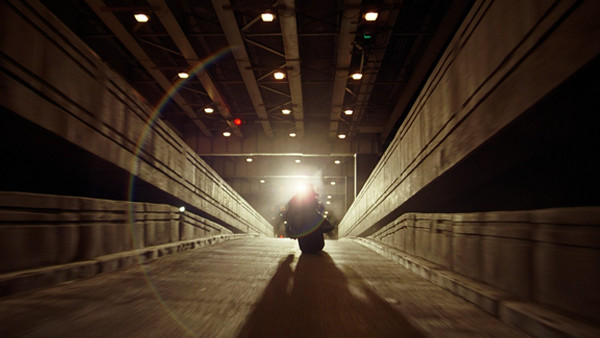
All these things considered, The Dark Knight still remains the King of the superhero genre. There have been some worthy adversaries over the years - The Avengers and Logan in particular - but Nolan's tonal and technical mastery combined with a bevy of excellent performances and the genre's best-ever screen villain make it the easy victor.
It's all-too apt that the movie that changed the genre forever remains its high bar for excellence, and though there may one day be a film that manages to dethrone it, a decade on it's still waiting for a worthy successor.
There are superhero films that have done things better, sure, but as a total package and as a screen adaptation of some of the most beloved superheroes and villains of all time, it continues to be a virtually peerless effort.
Have you revisited The Dark Knight for its 10th anniversary? If so, how did it hold up for you? Shout it out in the comments!