20 Recent Movie Endings Nobody Can Agree On
The recent movie endings we can't stop arguing about.
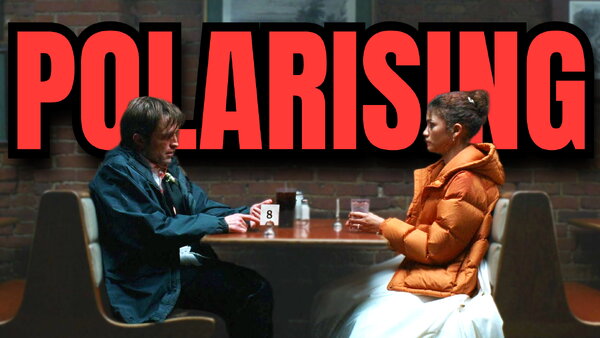
An ending can make or break a movie - get it right and it can cement a film as a sure-fire classic forevermore, but get it wrong and an otherwise great piece of work can be left permanently tarnished.
And while there's a sure consensus on many movie endings, good or bad, there are many, many that also split audiences right down the middle, leaving them in a polarising no man's land.
That's certainly true of these 20 recent movies, each of which concluded in a manner which sharply divided viewers on the merits (or not) of each.
Perhaps audiences were split on a certain last-minute plot twist, or disagreed on how well it stuck a tricky tonal landing, or whether it was actually basically satisfying at all.
Regardless of your opinion on these movies overall, these endings generated a whole ton of spirited discourse online, viewers passionately debating whether that final scene paid off everything leading up to it or not.
And it goes without saying that the discussions about these endings are likely to rage on for years and years...
20. Send Help
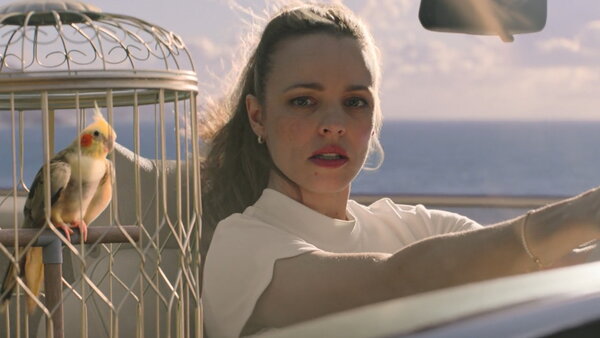
Sam Raimi's Send Help was a major return to form for the beloved filmmaker, though served up an ending that undeniably rubbed some the wrong way.
At the end of the film, protagonist Linda (Rachel McAdams) kills her a**hole boss Bradley (Dylan O'Brien) - with whom she's spent the story stranded on a desert island following a plane crash - with a golf club.
At this point we suddenly jump-cut to a year later, where Linda has become a beloved celebrity following her rescue, having published a memoir of her experience which is now being adapted into a film.
This is a prototypical divisive ending, some left unsatisfied that Linda killed Bradley rather than the two being rescued and forever changed by their grim experience.
But for many, the ferocious mean-spiritedness of it all, where Linda is revealed to be an unhinged capital-S-Survivor beyond any expectations, is what makes the ending so fun - and pretty much the most Sam Raimi way to wrap things up.
19. The Drama
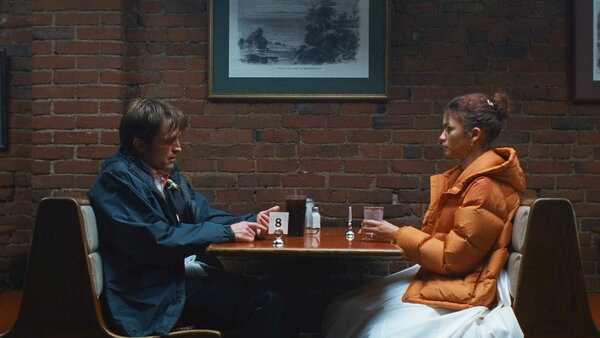
Kristoffer Borgli's brilliant new black comedy The Drama revolves around an engaged couple, Charlie (Robert Pattinson) and Emma (Zendaya), whose relationship is put to the ultimate test when Emma reveals that she planned a school shooting as a depressed teenager and very nearly carried it out.
This revelation sets the foundations for one of the year's most provocative films, culminating in a disastrous wedding where Charlie apologises for cheating on Emma and gets beaten up by the boyfriend of the co-worker he cheated with, before Emma leaves the wedding.
In the final scene, a bloodied Charlie heads to their favourite diner, where Emma soon enough arrives and the two sit together, reintroducing themselves as though meeting for the first time.
To some, this ending marks a fitting way for the troubled couple to draw a line under both of their acts, yet many also took issue with the film effectively equating planning a school shooting many years prior with extremely recent infidelity.
If nothing else, it's an ending that invites fervent discussion among audiences, which was presumably exactly what Borgli intended.
18. Resident Evil
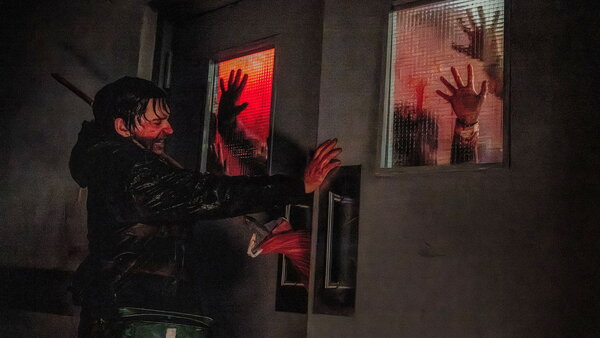
The climax of Zach Cregger's terrific Resident Evil reboot is easily the film's most divisive aspect, as after fighting through absolute hell to reach Raccoon City General Hospital with a vital component of the viral cure, medical courier Bryan (Austin Abrams) succumbs to his infection.
Though the scientists attempt to inject a fast-mutating Bryan with the cure, he kills each of them in turn, the film abruptly ending as he completes his mutation into a grotesque monster and a National Guard helicopter approaches overhead.
While there are many who found this ending refreshingly mean and to-the-point, there are also a lot of people who otherwise loved the movie but felt the climax was both excessively rushed and a little too downbeat for its own good.
After following Bryan suffer so much for 90 minutes while enthusiastically rooting for him to succeed, some felt that it was an unsatisfying bummer for him to meet such a grim fate, and that the jolting, sudden cut to the end credits was too frantic.
17. The Housemaid

The Housemaid ends with housemaid Millie (Sydney Sweeney) killing the abusive Andrew (Brandon Sklenar) by pushing him over some stairs, then staging the scene to look like an accident.
Andrew's long-suffering wife Nina (Amanda Seyfried) subsequently gives Millie $100,000 to start over her life, while recommending Millie to her friend Lisa (Ellen Adair), another woman in an abusive relationship.
The final scene implies that Millie has effectively become a vigilante protector of abused women - a suggestion that, depending on your perspective, is either one step too silly or precisely the right amount of campy sequel-bait.
Some found this ending a little too Marvel-coded - an overly cutesy setup for a series of movies in which Millie murders awful men - but for those who engaged fully with the movie as the trashy airport novel adaptation it fundamentally is, it felt totally in step with everything up to that point.
16. Evil Dead Burn
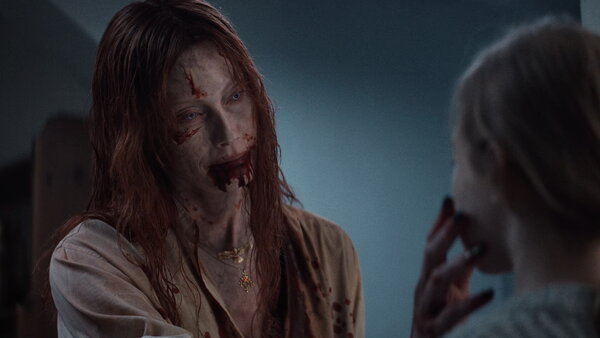
The big surprise at the end of Evil Dead Burn is a shock cameo from Ellie Bixler (Alyssa Sutherland), the iconic Deadite from the series' previous movie, Evil Dead Rise.
In the film's post-credits scene, Ellie is suddenly resurrected at a crematorium that houses her unclaimed ashes, at which point she brutally kills the manager's daughter and declares, "Mommy's back."
While there were certainly some fans happy to see one of the series' most beloved characters back, there were also many absolutely baffled at Ellie's re-emergence.
After all, we saw Ellie get fed into a wood chipper at the end of the last film, so how exactly is she back?
Couple this with the groan-worthy MCU-style nature of the scene, corny one-liner and all, and it reeks of sure desperation - an attempt to build out a wider Evil Dead Universe when this franchise is arguably better off telling standalone stories at this point.
Ultimately it'll depend on precisely how this scene is followed up on in a future Evil Dead movie, but without any additional context it felt cynical and tacked-on.
15. Marty Supreme
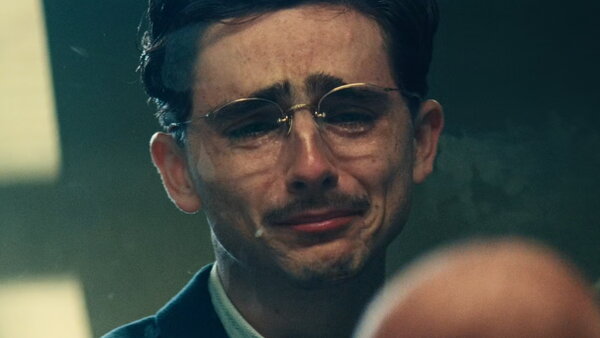
Marty Supreme served up one of the most fiercely debated endings of the past year, when table tennis wunderkind Marty (Timothée Chalamet) heads home after his infamous exhibition match with rival Koto Endo (Koto Kawaguchi) and meets his newborn child at the hospital, breaking down in tears.
There are two schools of thought on this ending - Marty is crying while realising that his table tennis dreams are over and he's about to "settle" for a regular family life, or he's genuinely euphoric at seeing his child for the first time, finally giving him the meaning and peace in life he's so desperately sought.
And there is also a third potential explanation which splits the difference between the two, that it's a bittersweet ending in which a conflicted Marty both mourns his former life and embraces fatherhood.
Given that the film leaves us hanging at this moment, Marty's future is sure to be debated for the long haul.
14. Backrooms
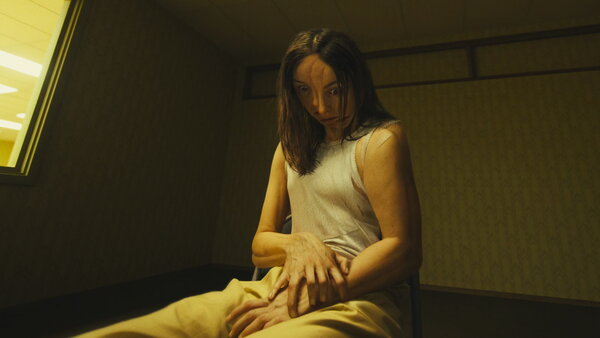
The deeply eerie, ambiguous ending of Kane Parsons' terrific Backrooms leaves a whole lot to discuss, namely whether or not protagonist Mary (Renate Reinsve) actually managed to escape the Backrooms.
Though Mary is apparently rescued by Async researchers and debriefed at their research facility, when she asks scientist Phil (Mark Duplass) if Async will let her go, he tells her the decision isn't up to him.
A closing montage in the Backrooms then ends with a glimpse of Mary's own deformed simulacrum sitting still in a rough copy of the Async interrogation room.
Given that the Mary simulacrum is seen wearing the same clothes that the real Mary wore during her interrogation, there's certainly a strong argument to be made that Mary is still in the Backrooms, though the vague specifics of how they operate doesn't make this a total certainty.
Parsons is already working on a Backrooms sequel, though it remains to be seen if Mary will return or it will be a largely standalone follow-up centered around a new cast of characters.
13. The End of Oak Street
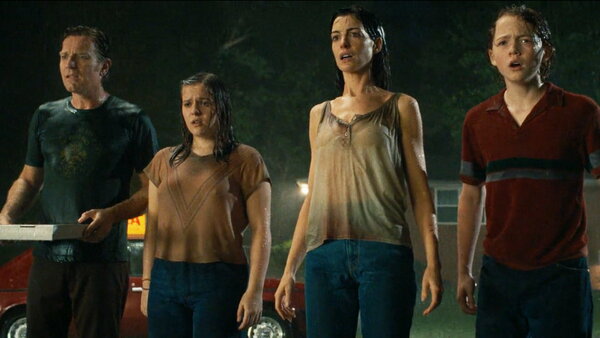
There are those who found The End of Oak Street's finale to be enticingly mind-bending and twisted, and those who saw it as a morally dubious cop-out.
After Denise (Anne Hathway) and her family jump through a wormhole together, they end up back in their present of 1982, roughly 20 minutes before Oak Street was previously teleported into prehistory.
Denise makes some calls from a payphone warning the street's residents, including her husband Greg (Ewan McGregor), who was previously killed by one of the dinosaurs.
Greg meets up with his family much to their relief, just as Oak Street is once again teleported and replaced.
Two years later, Denise is a hero for saving the street's residents, and while having a barbecue with their neighbours, we see that there are two versions of their neighbour's daughter, Jeannette (Jordan Alexa Davis).
This ending is contested largely because some feel that the central predicament is resolved far too neatly, and that the moral implications of Denise effectively stealing her husband from another timeline are totally glossed over.
12. Bugonia
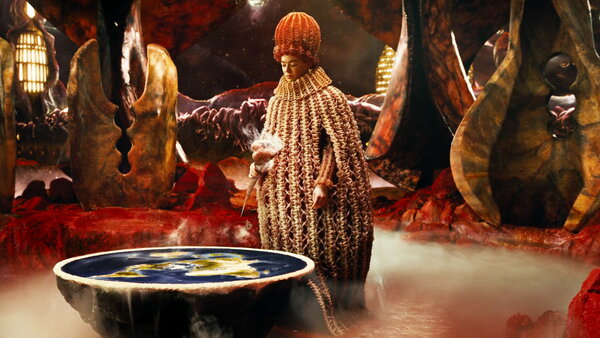
Yorgos Lanthimos' Bugonia was only ever going to end one of two ways - pharma CEO Michelle Fuller (Emma Stone) is revealed to be an alien just as conspiracy theorist Teddy Gatz (Jesse Plemons) believed, or she isn't.
And ultimately, it turns out that Teddy was correct - after his suicide vest explodes and kills him, Michelle enters a closet and transports to the Andromedan mothership, revealing her to be the aliens' emperor.
She then consults with her fellow Andromedans before deciding that the "human experiment" has failed, prompting her to pop a bubble-like dome of Earth, resulting in every single person on Earth instantly dying. The End.
There are many who took umbrage with Teddy's apparent delusions being proven correct, feeling that in an era where conspiracy theorists have more reach and influence than ever, this was a dangerous message to send.
Others, however, embraced the darkly absurd nature of the ending, all the way up to that glorious closing montage showing the end of all human life.
11. Hokum
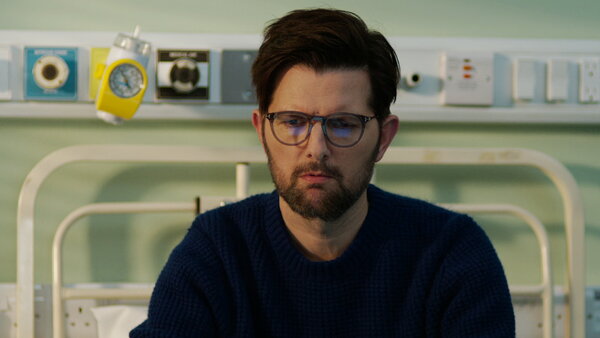
Damian McCarthy's new horror film Hokum is such a bleak piece of work that most seemingly assumed it was teeing up a downer ending, and yet, the big surprise is that it has a shockingly happy denouement.
For one, our troubled author protagonist Ohm Bauman (Adam Scott) not only survives the events of the movie, he ends the story in a far better place than he started.
By the time the end credits roll, he appears to have triumphed over his guilt for a childhood incident in which he accidentally shot his mother dead, now resolved to be a more open-minded and optimistic person, even ending his new novel on a more hopeful note.
It's an ending so unexpectedly upbeat that it left some viewers unsure what to think, though there's also a strong argument to be made that this ending was entirely earned by McCarthy, and dealing a grim fate to such a downtrodden character risked coming off excessively mean.
10. Disclosure Day
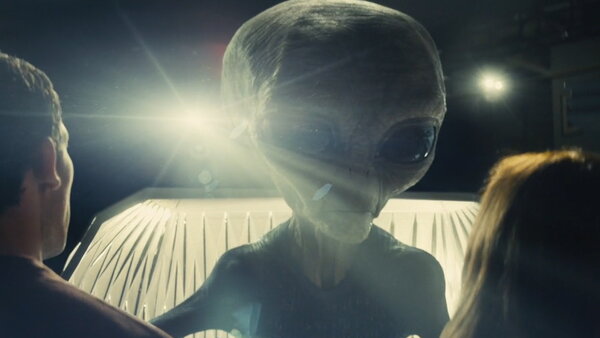
Though well received by critics, the general audience response to Steven Spielberg's new sci-fi film Disclosure Day has been decidedly more mixed, with most discussions inevitably debating the merits (or not) of its ending.
Cybersecurity specialist Daniel Kellner (Josh O'Connor) finally manages to get the footage of extraterrestrial life broadcast by news networks around the world, stunning everyone watching.
At this point, disclosure activist Hugo Wakefield (Colman Domingo) wheels out an ancient extraterrestrial he freed from captivity, which then whispers something to Daniel, who relays it to meteorologist Margaret Fairchild (Emily Blunt).
Margaret then goes on the air to tell the message to her viewers, the film ending after she utters just one word - "Listen."
There are certainly many who appreciated this quasi-fourth wall-breaking ending in which viewers themselves are seemingly encouraged to listen to one another and be empathetic, even if a lot of viewers were infuriated by not learning what the aliens' actual message was.
It was certainly a "damned if you do, damned if you don't" ending, and one that's likely to be debated for years.
9. Lee Cronin’s The Mummy
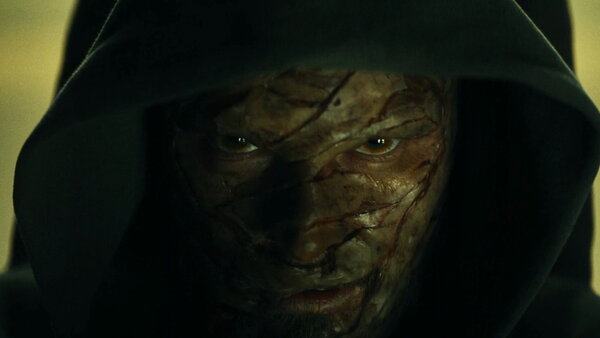
Lee Cronin's The Mummy is one of the year's most divisive horror films overall, and reaches a polarising apex during its final sequence.
At the end of the movie, Charlie (Jack Reynor) sacrifices himself, allowing the demonic entity known as the Nasmaranian to be transferred to him from his daughter Katie (Natalie Grace).
Charlie is then sealed inside a coffin which is housed in the family's basement, before we cut back to Cairo some time later, where the Magician (Natalie Grace) who first kidnapped Katie is confronted by Katie's vengeful mother Larissa (Laia Costa).
With the help of detective Dalia (May Calamawy), Larissa sedates the Magician, wheels in the possessed Charlie, and begins enacting the ritual to transfer Charlie's possession to her.
Is it a totally ridiculous ending? Absolutely, yet considering that Lee Cronin's film clearly doesn't take itself all that seriously, it's tonally in-step with what came before.
For some, though, it's just a step too goofy and throws the established vibe off at the last minute.
8. A House of Dynamite
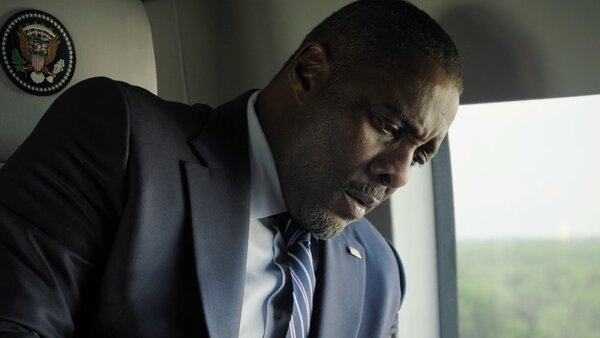
Few recent movie endings have invited more ire - or more passionate defense - than that of Kathryn Bigelow's political thriller A House of Dynamite.
The film is structured around the perspectives of various individuals in the U.S. government as an unknown nation launches a ballistic missile strike against Chicago.
At the end of the first and second acts, Bigelow stops short before the missiles reach their destination, and so the assumption is that she'll finally show the audience what actually happened at the conclusion of act three.
Yet this isn't what happens at all - instead, the film ends on an ambiguous note where we don't know if the missiles hit Chicago, who launched them, or whether the President of the United States (Idris Elba) ordered a retaliatory attack.
While Bigelow has stated that the lack of closure is precisely the film's point, to leave the audience on edge about the very nature of mutually assured destruction itself, there are nevertheless a lot of people who felt the ending was a total cop-out.
7. One Night Only
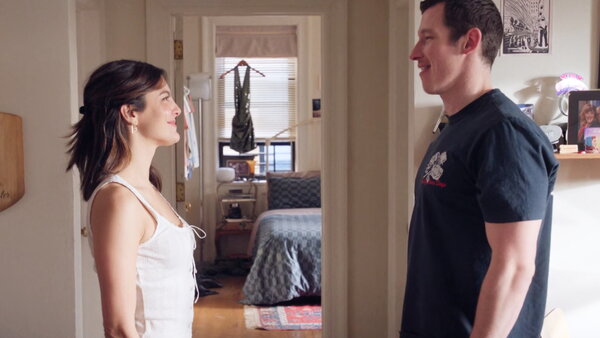
Sci-fi rom-com One Night Only touts one of the year's most talked-about premises, given that it takes place in a world where single people are only legally allowed to have sex a single night per year, per the missives of a dystopian government.
In the ending, star-crossed singletons Allie (Monica Barbaro) and Owen (Callum Turner) meet up to have sex just as the 12-hour exemption period is coming to an end, but ultimately decide not to do the deed, waiting until next year's exemption day instead.
While there are those who read the scene as two people not wanting to rush their first sexual encounter, some interpreted it as our two lead characters puritanically bending the knee to fascism by waiting to get frisky.
Ultimately the debate surrounding the movie's ending speaks more to how conceptually polarising One Night Only is, especially with the decision to dig so unnecessarily into the political particulars of the setup.
6. Fall 2: Deadpoint
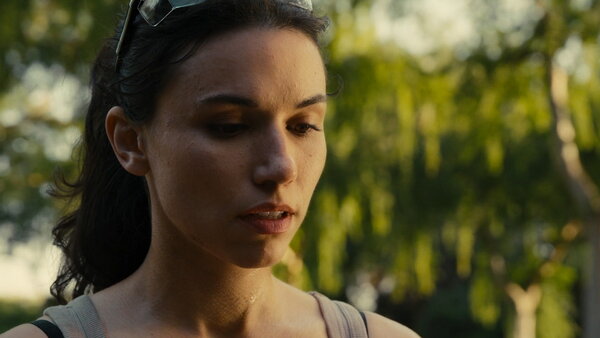
Fall 2: Deadpoint is a big ol' hot mess of a sequel, and one which fittingly concludes with an absolutely hilarious head-scratcher of a setup for a planned third film.
After surviving her harrowing plank walk ordeal, protagonist Jax (Harriet Slater) opens her sister Shiloh's (Virginia Gardner) scrapbook and finds one remaining travel destination she never got to before her death in the first film - a vertiginous, remote location called Hell's Chasm.
We then cut to Becky (Grace Caroline Currey), Shiloh's best pal and the survivor of the first film, who receives an invitation to celebrate Shiloh's life at - you guessed it - Hell's Chasm.
The film suddenly ends, leaving many viewers unsure whether the invitation is genuine or Jax has a bone to pick with Becky over her sister's death and wants her pound of flesh.
The ambiguous tone of this sequel-baiting final scene ensures we'll have to wait for the already-greenlit Fall 3 to get our answer.
5. The Death of Robin Hood
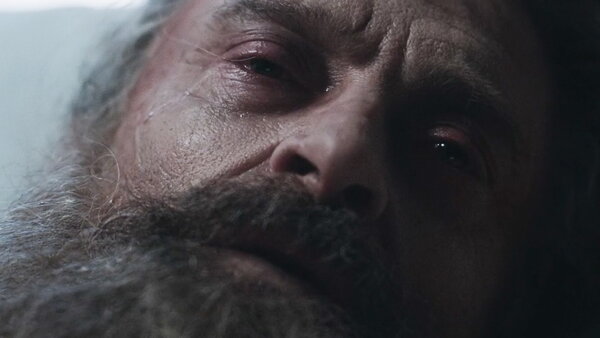
Believe it or not, there were many disappointed that The Death of Robin Hood indeed ended with the title character (Hugh Jackman) dying at the end.
The film's title was seemingly playing things a little too obvious, or so some thought, feeling that the movie would instead end with this roguish, violent iteration of Robin Hood living to atone for his sins, the title instead referring to the death of the Robin Hood legend itself.
But this isn't at all what happens - a regretful Robin instructs the prioress Sister Brigid (Jodie Comer) to begin bloodletting him, and when he refuses to let her stop the bleeding, he soon enough bleeds to death.
Anyone expecting a more hopeful and redemptive ending in which Robin lives to become a better man was evidently left underwhelmed by this bleaker climax, which at least eschewed the most obvious outcome in favour of something a tad more believable and less sentimental.
4. Undertone
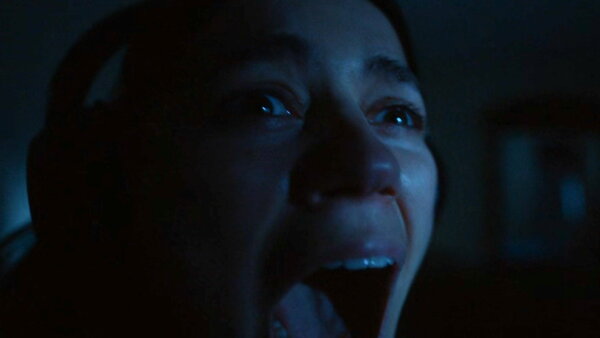
Ian Tuason's impressively low-fi feature Undertone follows Evy (Nina Kiri), a podcaster who is sent cursed audio recordings of a couple in their home, causing Evy herself to be terrorised by a paranormal entity.
In the climax, Evy rushes upstairs and is attacked by her apparently dead mother, with Tuason cutting abruptly to black during the struggle, leaving the audience to try and deduce precisely what happened to Evy through sound alone. And then the end credits roll.
This ending sparked a whole lot of debate online, some taking issue with the decision to deny the audience a decisive visual ending, feeling that this withheld the most basic technical expectation of any movie's finale.
However, others felt that stripping away the visual aspect was appropriate for a low-budget film which uses sound as a central storytelling device, and while not all films should end this way, it was fitting for a movie this sound-forward.
3. Mutiny
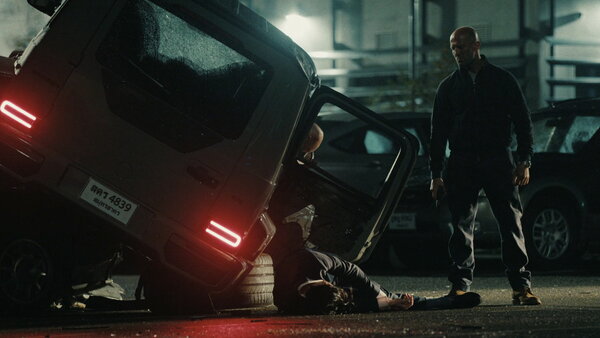
Most will at least agree that Jason Statham's new action thriller Mutiny isn't one of his most inspired recent efforts, but it does end with a memorably daft final scene - albeit one which some found a bit too cheesy for its own good.
At the very end of the movie, The Stath's protagonist Cole Reed confronts the Big Bad, Daniles (Simon Kluth), who attempts to bribe Reed in exchange for his life.
When Daniles asks Reed what he wants, he responds by shooting him dead, replying "Vengeance," and then walking off as the film cuts to credits.
Some simply found this toe-curingly corny to behold, but while there's no denying that it's totally absurd to kill someone before answering their question, c'mon - this movie is a naff Die Hard knock-off set on a boat.
Cheeseball one-liners are basically expected if not also encouraged, surely?
2. Obsession
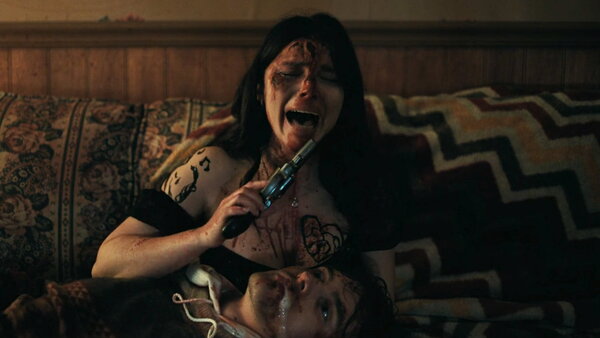
Curry Barker's Obsession climaxes with an uncompromising downer ending in which Nikki (Inde Navarrette) shoots Ian (Cooper Tomlinson) dead, prompting Bear (Michael Johnston) to lock himself in the bathroom and take a fatal overdose of oxycodone.
However, Bear eventually changes his mind and tries to vomit the pills up, just as Nikki breaks the one remaining One Wish Willow, inducing Bear to stop what he's doing and exit the bathroom.
Bear kisses Nikki but he promptly dies from the overdose, at which point Bear's wish is broken, Nikki finally regaining control of herself just in time to observe the human carnage in her midst. Roll credits.
For every person who finds Obsession's ending to be fittingly dark and ironic, there's someone who thinks it's too cruel and mean-spirited for its own good.
Considering how thoroughly Nikki was put through the wringer over the course of the movie, it's understandable that folks would want a happy ending for her, but given everything we saw leading up to the finale, was that ever really likely?
1. Digger
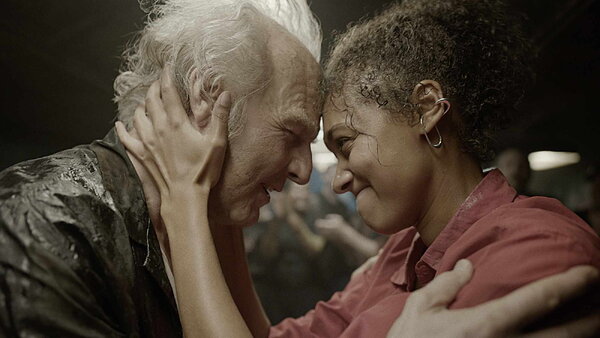
Digger is admittedly an extremely divisive film from top to bottom, typified by a polarising early twist where it's revealed that we're not actually watching the real Digger Rockwell (Tom Cruise) but an actor, Curtis Markson, performing as him in a satirical stage play called Fossil Fools.
In much the same vein, the ending sees the play conclude with Digger's suicide, which the theater audience cheers on, just as Curtis learns that his missing daughter has been found safely.
After the play ends, an announcement declares a "Level 4" condition outside, prompting the entire audience to put on branded gas masks and head out into a dystopian, flooded city patrolled by robots, soldiers, and drones.
And to hammer the point home, the end credits are interrupted by their own gloriously fourth wall-shattering moment, as the Level 4 announcement plays out for the very people watching this film.
Yet for every person who found Digger's bold climax to be a giddy cherry on top of one of the decade's most provocative satires - a satire of satire itself - there's someone who found it smug and obnoxious.
It'll certainly be interesting to see how Digger's reception morphs - if at all - some 10 or 20 years from now.