13 Times You Lost Respect For Your Favourite Filmmakers

How to ruin your reputation as a film-maker in 13 easy steps.
Everyone has those moments where they plop down in front of a film by a well-respected director, settle in for a good time, and then feel their heart sink like a stone when they realize the movie is a turkey. This experience is inherently traumatic. However, it takes on an additional level of pain when the director is someone you really love. For some directors you expect that they are going to make a disappointing film from time to time. Look at Woody Allen; he's a guy whose filmography is nearly split 50/50 between the good and bad. It's not really surprising at this point, and his bad stuff doesn't really influence one's opinion of Allen in one way or another. However, some filmmakers will periodically stumble in a way that makes you sit up and pay attention. When one comes across these films it becomes immediately apparent that during production something must have gone seriously wrong. These are mainly the films that will be explored, films that made your jaw drop and your head shake with sadness. Here are 13 times where famous filmmakers took a mighty swing and hit nothing but air.

13. Alfred Hitchcock - Torn Curtain

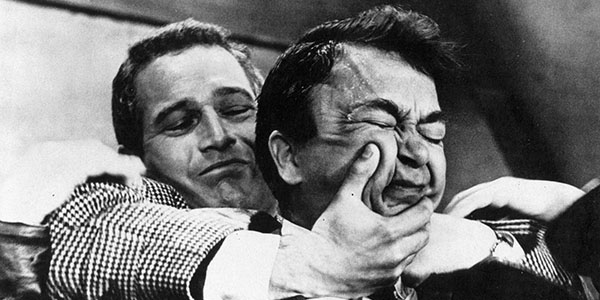
It is common knowledge that Alfred Hitchcock started to lose a step or two as he got older. The brilliant madman behind classics like Spellbound, North By Northwest, Vertigo and Psycho slowly began to deteriorate as an artist following 1963's fondly remembered The Birds (and even that film was laborious in places). While many would put Family Plot or Topaz as the moment where they began to lose respect for the legendary director, it is actually the 1966 Paul Newman/Julie Andrews vehicle Torn Curtain that should take the prize for being Hitch's nadir. Slow, perfunctory, and really just duller than dirt, Torn Curtain blights the awesome star power of Newman and Andrews, turning them into unlikable and (even worse) uninteresting people. The story at the heart of the film is also listless, paced in such a lumbering fashion that it would make even the most ardent Hitchcock fans dig their nails into their legs and scream "when is this going to end?!" While Torn Curtain heralded the beginning of the end of Hitchcock's prolific career, the film is notable for one scene: the cottage fight between Newman's dour scientist and Wolfgang Kieling's security officer. Presented as the antithesis of a James Bond action scene, the fight in Torn Curtain is brilliant piece of work - vicious, savagely edited, and unbearably tense. It is the one redeeming quality of a film that is a dark stain on the Hitchcock's filmography.

12. James Cameron - Avatar

Once upon a time James Cameron seemed content to be a venerable writer and director of flat-out awesome action films. From the iconic Terminator films to the outrageously entertaining True Lies, Cameron proved that he was an undisputed master of the genre. Then came the infamous blockbuster Titanic, which broke hearts and sold out theaters around the globe. This was the first indicator of Cameron's ambition perhaps outstripping his abilities. Titanic succeeded due to the enormous power of its aesthetic spectacle. Still, all the Oscars and box office numbers in the world aren't going to change the fact that the writing and characterization in Titanic was embarrassing and derivative. Cameron is a brutish, visceral, and utilitarian filmmaker at his core, which is something he seems intent on disavowing. This has, quite frankly, been to the detriment of his films. A similar process occurs in Avatar: while there are some moments in this ego trip that are epic in scope, the film is again indicative of how Cameron's strengths do NOT lie with writing an original or nuanced screenplay. Everything in Avatar seems to be at the service of a flabby allegory about environmentalism. All of the characters are walking cliches, and there are enough facepalming moments (such as the notorious "unobtanium" mineral) that one could get permanent brain damage from the repeated blunt force trauma. Now, there is a certain amount of respect that should be doled out to someone attempting to rise above their artistic comfort zone. Yet Cameron has branched out twice, and in both cases he has embarrassed himself with recycled stories and "nails on the chalkboard' dialogue. Someone should tell Mr. "King of the World" that enough is enough.

11. George Lucas - Star Wars Episode I: The Phantom Menace
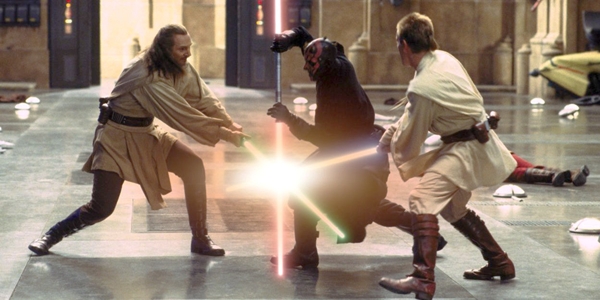
At this point attacking George Lucas seems almost too easy - like shooting fish in a barrel - but is there really anyone who is more deserving of being included on this list? Lucas was a wonderkid back in the day, tossing out three films that were brilliantly done (yes, THX-1138 rules). Even better than this auspicious beginning was Lucas having the self-awareness to remove himself from the director's chair for the Star Wars sequels; a move which probably helped ensure the series' immortality. For the next 20 years Lucas resigned himself to the role of producer and businessman. Not only was this lucrative for him and his company, but it allowed the memory of the bright, passionate and iconoclastic filmmaker from the 70s to be preserved with images of cruising hot rods and Death Stars. Then came the woeful Phantom Menace in 1999, followed by the equally awful Attack of the Clones in 2002, and the only slightly less terrible Revenge of the Sith in 2005. So much has been said about these travesties that it would be pointless to write much about them here. To understand why the world collectively lost respect for George Lucas, one simply has to pop in a copy of Episode I, and wait for the moment where they hear that awful voice saying: "Mesa called Jar Jar Binks." It's all you need to know.

10. David Lynch - Inland Empire

The inclusion of this David Lynch film here will no doubt rub some people the wrong way. Inland Empire has a surprising number of proponents out there. That being said, the film is still an embarrassment. Described by Lynch simply as a movie about a "woman in trouble," Inland Empire has to rank pretty highly on a list of the most impenetrable films ever made. This is not a good thing, because Inland Empire's nebulous storytelling distracts from everything else redeeming about the film. This includes Laura Dern's searing performance as the film's lead, and the intriguing supporting work by Jeremy Irons and Justin Theroux. Eraserhead, Twin Peaks, and Mulholland Drive may have also had their surrealist flourishes, but an audience was given at least some tools to understand the plot and the characters' predicaments. This isn't the case with Inland Empire; it's just a big, confusing, and disappointing mess. It even fails on a technical level, with the DV photography adding nothing to the proceedings.

9. Francis Ford Coppola - Jack

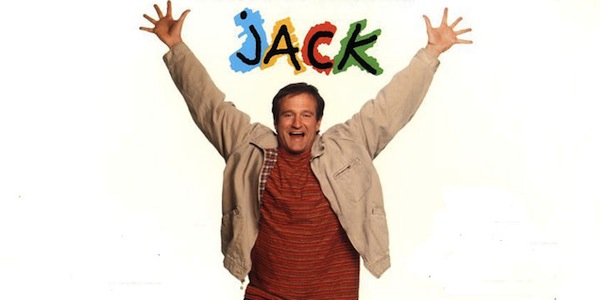
Francis Ford Coppola has had a prolific career spanning six decades, but he has never captured the kind of acclaim he garnered throughout the 1970s, where he released a barrage of classic American films. When one looks at that run, which includes masterpieces like The Godfather, The Conversation and Apocalypse Now, it becomes painful to think about one of Coppola's more recent efforts: the inane 1996 feature, Jack - starring Robin Williams at his saccharine worst. Jack is not so much a bad film as it is an aggravating one; everything about it is so good-natured, so sweet, so scrubbed clean of anything approaching style or complexity. Jack also can't decide what it wants to be - it's not so much funny as it is uncomfortable. Additionally, the drama elements come off as being hackneyed and cheesy. Now, probably a great deal of Jack's problems come from the bland script and absolutely terrifying performance of Robin Williams as the titular Jack. Aside from Roberto Benigni barking like a dog in Pinocchio, there has rarely been as creepy an image as Williams leaping into the bed of Diane Lane and Brian Kerwin - who play his parents in the film. Coppola must still share the blame however. In Jack there is not one iota of the director's forceful, unstoppable talent - which once launched careers, built a powerful film company, and changed cinema forever. Instead, Jack is an intensely forgettable film that exists in a complete different universe from the lunatic radicalism found in Apocalypse Now. Thankfully, Coppola extracted himself from the studio filmmaking world soon after the film's release. It's not surprising: after Jack anyone would need to take a break and reevaluate their life decisions.

8. Martin Campbell - Green Lantern

His work will probably never win him any Oscars, butt Martin Campbell has proven himself to be a great director when it comes to rousing, mainstream action films. From Goldeneye and The Mask of Zorro, to Casino Royale and Edge of Darkness, Campbell has historically been a great bet for a studio looking to either put a new, energetic spin on an old character, or pull off a successful adaptation of a preexisting property. Thus, when it was announced that Campbell was going to take a swing at DC's second-tier superhero it seemed like a pretty safe bet. What was the worst thing that could happen? Apparently quite a bit. Under the helm of Campbell - the man who brought Bond back from the franchise graveyard not once but TWICE - Green Lantern proved to be an unmitigated disaster. The story stunk, the performances were unconvincing, the CGI dubious, and the villain was a giant evil cloud. On the business end of things Green Lantern was a mega-bomb, netting the studio approximately $90 million in losses. Needless to say we probably won't be seeing Campbell near a property of this size or scale again, which will leave the world no poorer.

7. Tim Burton - Planet Of The Apes

Tim Burton was the man in the 1990s: he defined the collective childhood of a generation, produced three classic works (Edward Scissorhands, Ed Wood and The Nightmare Before Christmas), and helped buffer the stock of Hot Topic. However, while modern society did not collapse around the time of Y2K, the quality of Tim Burton's output did. Oh sure, his films were largely more successful than ever throughout the 2000s. Yet, there was something lacking in an artistic sense. And nowhere was this more evident than in the critically maligned, hideously directed remake of the Charleton Heston sci-fi classic: Planet Of The Apes. As Burton was working as a dreaded director for hire it is probably not surprising that this insipid remake feels a tad anonymous. There is very little of the director's trademark style present in the film. This isn't the worst thing in the world, as Burton's monochromatic wonderlands were already becoming forgettable 13 years ago. The biggest problem with the Apes remake is how there is no passion to be found in the story. Not only does star Mark Wahlberg prove himself to be a poor man's Charlton Heston, but the strong sociological themes pulsating behind the 1968 original feel often subsidiary to the drunken, nonsensical action of Burton's take. Finally, the infamous ending - which Burton stated was there simply to set up a sequel - is unbearably stupid.

6. The Coen Brothers - The Ladykillers
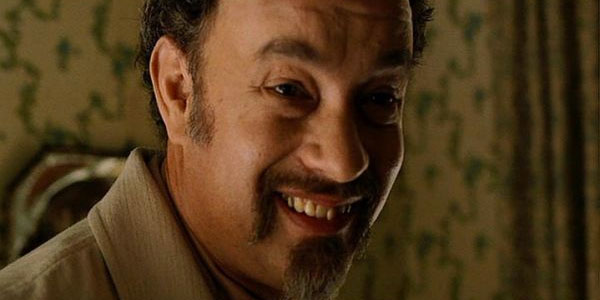
Unquestionably one of The Coen Brother's worst films, the Tom Hanks headlined remake of The Ladykillers is an exercise in frivolity and off-putting, gross-out humor. As opposed to the brothers' later film True Grit - which is arguably better than the John Wayne original - The Ladykillers in no way, shape or form trumps the 1955 film starring Peter Sellers and Alec Guinness. Most of what stinks about The Ladykillers is the feeling of desperation that the story gives off. Throughout the film one senses, quite clearly, that the filmmakers were desperate to find laughs, somewhere.. anywhere. While some comedic elements work - such as Hanks' humorous performance as the esoteric dandy, Professor G.H. Dorr - most of them don't. For proof one should consider two of the characters who constitute Dorr's criminal gang: Lump Hudson and Garth Pancake, who are played by Ryan Hurst and J.K. Simmons respectively, both of whom are absolutely wasted, saddled with material that is not only beneath them in regards to talent, but also in terms of age bracket. For instance Garth's main, zany shtick is that he has irritable bowel syndrome; that's his whole deal. Digestion humor may be something typically mined by Will Ferrell, Jay Roach, and the Farrelly Brothers, but it feels profoundly incongruent in the world of The Coens. Historically, they have been able to keep their sense of humor largely out of the toilet bowl, and have produced several great comedies as a result. The Ladykillers however is definitely not one of them.

5. Andy and Lana Wachowski - The Matrix Reloaded and The Matrix Revolutions
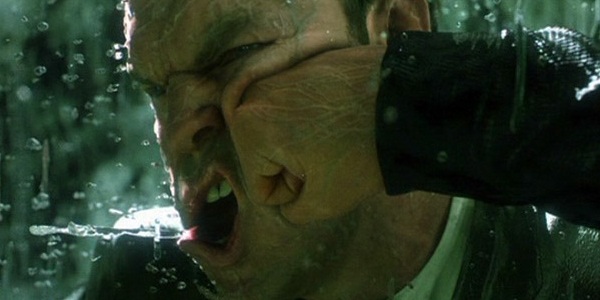
While irrefutably derivative, the original Matrix film remains a towering achievement: a glorious, groundbreaking riff on cyberpunk and neo-noir aesthetics, paired with then state-of-the-art technology. It also proved to be exceptionally intuitive, tapping into the cultural zeitgeist of uncertainty swirling around the then nascent digital age. The Matrix also ended definitively, with Keanu Reeves' laconic Neo stopping a phone call trace by the machines dead in its tracks and proving himself the one. And yet, inexplicably, Neo and the gang returned a few years later with two irrelevant sequels that sought to wipe out all the good of the original. While the tension in the first film was exceptionally potent, with images of leaping agents, crumbling buildings, and surreal allusions to Alice and Wonderland obfuscating Neo's grasp on reality. Even better was the intense vulnerability of the main cast of characters: everyone remembers the vicious bathroom fight scene between Morpheus and Agent Smith, not to mention the iconic, pulse-pounding final showdown between Neo and Smith in the blighted subway tunnel. Much of this intensity is drained in the sequels: with Neo's ascendency to God-like status complete after the first film, many of the brawls in Reloaded and Revolutions have all the tension of the final fight scene in Man Of Steel; essentially amounting to just two immortal guys punching each other, and often times with no end in sight. To a certain extent this description of the fight scenes summarize the sequels in their entirety. Basically, the follow-up films added nothing to The Matrix mythos. They were overlong, overproduced films inundated with CGI. Most unfortunately, they were devoid of the heart and ample amounts of style that made the original Matrix a classic.

4. Ang Lee - Hulk

Ang Lee's brief and misguided foray into the unstoppable madness that is superhero cinema was not a complete waste of time - but it was close. One could however make the case that Lee's Hulk is actually one of the more interesting entries into the canon; with Hulk parsing complex thematic material like the ephemeral, mysterious nature of identity, and dysfunctional father/son relationships with a surprising amount of effectiveness. Still, the film eventually begins to fall apart due to the demands of the genre. The director displays a clear lack of understanding on how to integrate the big, loud moments of spectacle. Also, the climax of the film - a completely incomprehensible punch-up between the big green guy and his wayward father - is a failure. The general unevenness of the film is unfortunate because Lee, with something like Crouching Tiger Hidden Dragon, has shown that he is capable of making something emotionally evocative and exciting from an action movie perspective. Hulk however fails to find that critical balance. And, let's be honest, the constant use of split screens (while a noble experiment) eventually just became abrasive and distracting.

3. Oliver Stone - Alexander

To be fair, Oliver Stone had already lost the respect of some people prior to his epically bad 2004 film, Alexander. This is what happens when you make projects like U-Turn and the meandering Heaven and Earth. However, nothing in Stone's earlier filmography could have prepared the world for the heinous cinematic atrocity that is Alexander. Overlong, horrifically miscast, and featuring more bad hairdos than you can shake a spear at, Alexander is a true misfire in every sense of the word. It does have a few admirable qualities, with the Babylon sets being wonderful, and some of the battle scenes contain a thrill or two. Yet, in the end Stone was unsuccessful in elucidating anything coherent about who Alexander was, much to the chagrin of audiences worldwide.

2. Nicholas Winding Refn - Only God Forgives

After the successes of Bronson and Drive it seemed that Nicholas Winding Refn could do no wrong. However, then came the obtuse and frankly idiotic Only God Forgives, which completely disintegrated all of the goodwill that the eccentric director had accrued. Containing a flat, simplistic story and one of the most outrageously bad scripts in years, Only God Forgives is a major disappointment. The film also features the professional nadir of Ryan Gosling, who has offered little more than an expressionless face and a ripped body in his last few roles. Hopefully, Only God Forgives will be one of the last times we see the actor playing another tight lipped psychopath. Additionally, one can only hope that Refn's next film represents a rebound, and that he doesn't continue to self-destruct.

1. Sam Raimi - Spiderman 3

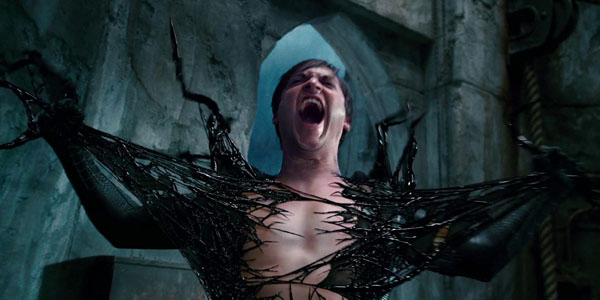
Sam Raimi can be a wonderful, playful filmmaker. These were traits evident in his original Spiderman film, and especially in his largely great sequel Spiderman 2. However, in the final installment of his trilogy Raimi's irreverent silliness - which initially was so charming - went completely off the rails, resulting in one of the goofiest superhero films of all time: Spiderman 3. To be fair to the filmmaker, it is now public knowledge that Spiderman 3's bloated, sloppy storytelling can be partially attributed to Sony, who basically held a gun to Raimi's head and forced him to include Venom in the already busy film. That being said, there is really no explanation for some of directorial decisions found in Spiderman 3, such as the awful way Gwen Stacy was utilized, and of course the infamous sequence where the symbiote morphs Pete into a jive-talking, emo-looking moron. While public opinion towards Raimi final spin on Spiderman seems to have softened in the years since its release, the film remains one of the least successful entries in the franchise. It is also one of Raimi's most disappointing films. Which films made you seriously re-evaluate your respect of formerly great directors? Share your thoughts below in the comments thread.

Contributor
Contributor

Adam Mohrbacher has been afflicted with an obession for film since his earliest memories. In addition to his work with WhatCulture, Adam has been a contributor with Filmophilia.com, FilmMonthly.com and Examiner.com. You can also check out his personal blog here: adammohrbacher@wordpress.com. A devoted fan of all film genres and styles, Adam gets equally giddy over the sensitive, existential musings of Ingmar Bergman, and the brawny brilliance of Arnold Schwartzenegger. He loves fish tacos and misses the work of Heath Ledger and Jack Lemmon on a daily basis.