14 Actors Who Became Absolute Legends With Just One Movie

Sometimes all it takes is a single role to be remembered forever.
It's really, really difficult to make it as an actor. The profession is massively oversubscribed, the wages are often terrible, and Hollywood is very quick to turn on you if your film flops or you speak out of turn. While a very small handful of actors will get to sit on Inside The Actors Studio and listen to James Lipton drooling over their greatest roles, many - who are just as talented - will never get the parts or the recognition they deserve. All of which brings us to today's subject matter: actors or actresses who are known solely or primarily for a single film. While not every actor will enjoy a career that spans decades at the top, every so often the industry throws up an individual who becomes an inescapable part of popular culture with their brief moment in the sun. This can be both a blessing and a curse: actors have always suffered at the hands of type-casting, but in our celebrity-obsessed age, maybe a tiny bit of fame is better than no fame at all. Today we're going through 14 actors and actresses who achieved legendary status through a single role - the cinematic equivalent of a one-hit wonders. Not all of these individuals became legendary in a good sense, and some of them continued to work under the radar long afterwards (like many of the people in my recent Star Wars article). For better or worse, these are the roles for which they are remembered. We'll start our countdown with a twist...

14. Jaye Davidson - Dil (The Crying Game)
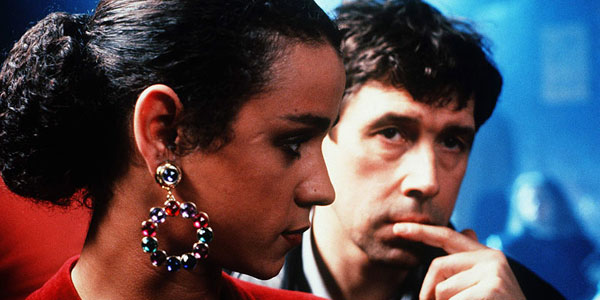
Some actors fade from view over time, others burn out pretty quickly, but a select few actually hate their new-found fame and choose not to pursue the roles offered to them. Such is the case with the first actor on our list, who made only one more major film after his performance in The Crying Game, a film billed as having one of the biggest twists of the decade. Jaye Davidson became an actor almost by accident. Beginning his career as a model, he supplemented his income with production work, including on Derek Jarman's Edward II. At Jarmans' wrap party, he was spotted by the casting agent for Neil Jordan's film, and was given the role on the basis of his androgynous appearance. Davidson did a really good job in The Crying Game, bringing a gentle sensitivity to the part of Dil in a film dominated by the politics and violence of Northern Ireland. The film was groundbreaking in its exploration of sexuality, but Davidson quickly grew uncomfortable with the limelight. While he was well-cast in this film, there wasn't a great deal to indicate that he would enjoy a lengthy career; he neither wanted nor deserved future success. What He Did Next: Davidson appeared as Ra in Stargate but subsequently concentrated on his modelling career.

13. Kate Capshaw - Willie Scott (Indiana Jones And The Temple of Doom)
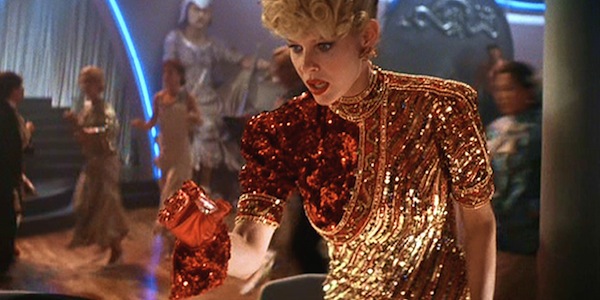
Our first of five entries from the Indiana Jones series concerns one of its least-loved characters. Willie Scott is commonly regarded as a poor relation to both Marion Ravenwood from Raiders of the Lost Ark and Elsa Schneider from Last Crusade (more on her later). While a lot of that lies in the way the part was written, Kate Capshaw's performance wasn't all that inspiring either. Capshaw got her first break on the long-running soap The Edge of Night, before landing small roles in A Little Sex and the TV movie Missing Children: A Mother's Story. She won the role of Willie Scott by dying her hair blonde and repeatedly watching The African Queen. She beat out over 120 actresses for the role, including Sharon Stone. Damsels in distress have always been in plentiful supply in Hollywood, and only those who can bring something distinctive to the table will go on to something more interesting. Capshaw's legendary status is rooted largely in infamy: her character is the most annoying, excruciating and unlikeable aspect of the whole film. While she can scream plentifully and look grossed out on cue, she lacks the range and charisma of her co-stars, and so her lack of subsequent success was probably deserved. What She Did Next: Capshaw starred in Dreamscape the same year as Temple of Doom, but thereafter concentrated on TV movies. She married Steven Spielberg in 1991 and officially retired from acting in 2003.

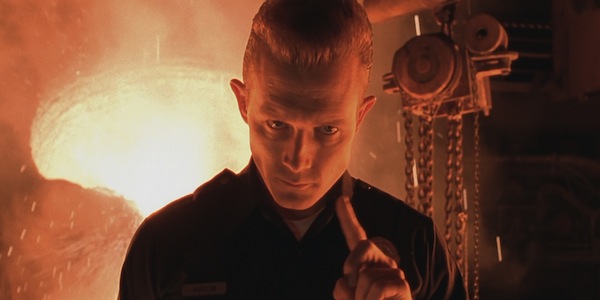
12. Robert Patrick - The T-1000 (Terminator 2: Judgment Day)

You can often gauge the success of an actor by how often they are persuaded to reprise their most famous role: the more they do it, the less other work would appear to be coming in. Robert Patrick reprised his role as the T-1000 on two occasions in more comedic films, namely in Wayne's World and Last Action Hero. While the original role was iconic, breaking new ground in the blending of live action and CGI, his subsequent career has left a lot to be desired. Patrick started off as a house painter, until he almost drowned in a boating accident in 1984. After moving to California and getting a few small roles in low-budget films, his first significant credit came as a henchman in Die Hard 2. James Cameron had originally cast Billy Idol as the T-1000, but Idol was involved in a motorcycle accident and couldn't take the part. Cameron picked Patrick because he was a complete contrast in appearance to Arnold Schwarzenegger, quipping, "If the T-800 series is a kind of human Panzer tank, then the T-1000 series had to be a Porsche." Patrick did a really good job on the T-1000, portraying a villain of cold determination who is seemingly indestructible and relentless in its mission to destroy John Connor. The problem was that he took the business of not showing emotion a little too liberally in his subsequent work, turning in performance which lacked any real charisma. He has his moments here and there but nothing that indicates either that he deserved better or that a comeback is on the cards any time soon. What He Did Next: Patrick has continued to work consistently but enjoyed little mainstream success, the exceptions being his supporting roles in Cop Land and Walk the Line.

11. George Lazenby - James Bond (On Her Majesty's Secret Service)
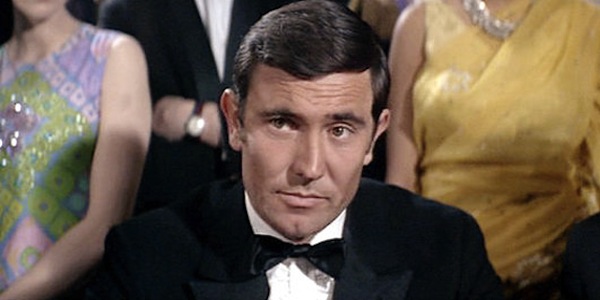
George Lazenby has become a byword for a singular, forgettable performance. Paul McGann called himself "the George Lazenby of Doctor Who" following his appearance in the ill-fated TV movie, and critics used similar terms when described George Clooney's performance in Batman and Robin. But whether through infamy or an increasing number of fans who have reappraised his performance, he is more than worthy of a place on this list. Born in New South Wales, Australia, Lazenby emigrated to London in 1963. After working as a used car salesman, he was spotted by a modelling agent and became the face of Big Fry chocolate. Bond producer Albert 'Cubby' Broccoli met Lazenby when both men had their hair cut in the same barber's. Having seen his advertising work, Lazenby was given a screen test in which he wore Sean Connery's suits. The clinching moment came when he accidentally punched a stunt coordinator in the face. While others on this list became legendary for the strength of their performances, Lazenby became a legend for just how bad he was. While it was reasonable that anyone following Sean Connery would be in his shadow, Lazenby's lack of acting talent and difficult attitude towards director Peter Hunt made the production something of a laughing stock. While the film has since been rehabilitated, his performance is still pretty infamous, making it no surprise that he faded from view. What He Did Next: Lazenby co-wrote and starred in Universal Soldier, before languishing in TV movies and eventually ending up in the long-running Emmanuelle series.

10. Julian Glover - Walter Donovan (Indiana Jones And The Last Crusade)

For much of the 20th century it was very rare for British actors to achieve screen success until they were middle-aged. The traditional route to success was through years of hard graft in the theatre, leading eventually to some TV appearance and then perhaps films in later life. Julian Glover's career follows one such trajectory, becoming immortalised in later life and then struggling to escape the boundaries created by fame and increasing age. Glover made his name through his TV appearances, turning up in Doctor Who, Blake's 7, The Avengers and The Saint. His film breakthrough came in Hammer's version of Quartermass and the Pit, in which he played Professor Quartermass' nemesis Colonel Breen. He impressed Lucas with the small role of Imperial General Maximilian Veers in The Empire Strikes Back, and also made a splash as villain Aristotle Kristatos in the James Bond film For Your Eyes Only. Walter Donovan is a very interesting villain. A ruthless beast lurking beneath a refined facade, his greed and ambition lead him to the Holy Grail but ultimately cause his demise when he drinks from the wrong vessel. His death scene is one of the most memorable and elaborate in 1980s Hollywood, and Glover has a reptilian quality which balances out the more pantomime Nazi stooges. Despite this, Glover was very much a product of the British system, failing to diversify after the film's success. What He Did Next: Glover has largely concentrated on smaller parts in TV, culminating in a recent recurring role in Game of Thrones. His subsequent film roles include the voice of Aragog the giant spider in Harry Potter and the Chamber of Secrets and the Duke of Wellington in The Young Victoria.

9. John Neville - Baron Munchausen (The Adventures Of Baron Munchausen)

One of the peculiar things about modern acting is the way that people assume you've disappeared if you decide to work in theatre in between making films. No matter how successful a theatrical play may be, it will never have the global audience of a mass-market feature film, and so choosing theatre over the silver screen can often be taken as an act of self-inflicted obscurity. John Neville is one such actor who favoured the stage over the screen, something which is both understandable and a great pity. Neville was a highly respected British theatre actor, with his mellifluous delivery lending him comparisons to Sir John Gielgud. Having played opposite Richard Burton in Othello (alternating the parts of Othello and Iago), he emigrated to Canada in 1972, becoming artistic director of several theatre companies. A big Monty Python fan, he agreed to take the part after Gilliam lost his battle to get Peter O'Toole to play the lead. It was the first film he'd appeared in since 1970. Baron Munchausen is one of Gilliam's most underrated films, which has gained cult status over the years following its initial commercial failure. For all its grand scale and amazing supporting cast (including Robin Williams and Eric Idle), Neville's central performance is its jewel in the crown, with his unique delivery and gleeful attitude somehow providing an anchor for all the whimsy and mayhem around him. While he had little interest in pursuing a film career, one wishes he had worked a little more, that he might have brought this kind of presence to other films. What He Did Next: Neville continued to make small appearances in films like Spider and The Fifth Element, as well as a recurring role on The X-Files. His main focus, however, continued to be theatre, for which he was awarded the Order of Canada in 2006. He died in 2011 aged 86.

8. Alison Doody - Dr. Elsa Schneider (Indiana Jones And The Last Crusade)

While it's difficult for any actor to re-establish themselves after a self-imposed break, it's especially hard for an actress to do so. Taking time off to raise a family often leads to preconceptions that the job is no longer one's primary focus; such women are written off as being less committed than younger, single people and the jobs stop coming in. It's an awful line of reasoning, but it's a believable argument for why Alison Doody's later career never matched the heights of her most famous role. Doody became the youngest ever Bond girl when, aged 18, she played Jenny Flex in A View to a Kill. She also made a small appearance in Jim Henson's Storyteller series (which I covered in my John Hurt article) and appeared with Mickey Rourke in A Prayer for the Dying. According to IMDb, it was her resemblance to Hollywood superstar Grace Kelly (later Princess Grace of Monaco) which won George Lucas and Steven Spielberg over at the auditions. While she's not as strong a character isn't as strong as Marion Ravenwood in Raiders of the Lost Ark, Elsa Schneider is a memorable villain and one of the most enjoyable parts of Last Crusade. She uses her sexuality to manipulate both father and son, and displays both traditionally sensitive characteristics and an iron will to get what she wants. Doody had great chemistry with both Harrison Ford and Sean Connery, and deserved a decent career in light of her work on this film. What She Did Next: Doody became a spokeswoman for L'Oreal and spent most of the 1990s working in TV and B-movies. During this period she turned down the female lead in both Days of Thunder and Basic Instinct. She was offered the part of Eowyn in The Lord of the Rings but was pregnant at the time and so could not commit to the 18-month shoot.

7. Paul Freeman - Dr. René Belloq (Raiders Of The Lost Ark)

The Indiana Jones series created some of the most iconic characters in 1980s cinema. The original trilogy's impact on popular culture is so vast that it's unavoidable to some extent that the actors involved would always be associated with their part in it. But some actors play to their typecasting more than others, and none more so than Paul Freeman. Freeman started out as a teacher and advertiser before joining the Royal Shakespeare Company in the mid-1970s. His early film credits include The Long Good Friday and The Strange Case of the End of Civilisation As We Know It, starring John Cleese and Arthur Lowe. Steven Spielberg spotted him playing opposite Christopher Walken in The Dogs of War. He liked him so much he wanted him back for the sequel, before the script for Raiders was finalised and his character killed off. While he often plays second fiddle on Ron Lacey's character (more on him later), Belloq is still a very fine villain, bringing a great deal of charm and disdain to the scenes with Indy and a lot of humour to those with Marion. Freeman openly embraced the typecasting, and could have carved out the kind of niche in Hollywood that Alan Rickman would several years later. But this decision hurt him more than he realised, and before long his performances became overly similar. He deserved better on the basis of his big break, but subsequently milked it for much way long. What He Did Next: Freeman continued playing villains in Hollywood for the next two decades, including Professor Moriarty in Without A Clue and Ivan Ooze in the Power Rangers movie. After taking on Dennis Rodman in Double Team (which created the "frying the coke" meme), he returned to TV and the stage, appearing in Midsummer Murders, Waking the Dead and The Hollow Crown: Henry V.

6. James Earl Jones - Darth Vader (Star Wars)
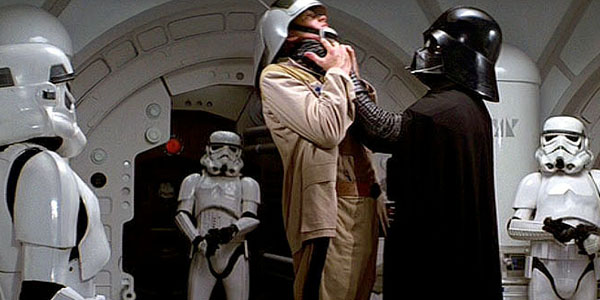
As I mentioned in my article on Star Wars actors, there are plenty of people who wouldn't mind being forever associated with one of the most successful series in cinema history. And out of all his Star Wars colleagues, James Earl Jones has fared pretty well since the original trilogy ended, with several live-action performances winning him acclaim. But there's still the niggling feeling of his whole career being overshadowed by one role, hence his appearance on this list. Jones made his film debut in 1964 as Lt. Luther Zogg in Stanley Kubrick's Dr. Strangelove. Ten years later he was Oscar-nominated for his leading role in The Great White Hope, reprising his Tony Award-winning stage performance. Having realised David Prowse's West Country accent would make Darth Vader less intimidating, George Lucas originally wanted Orson Welles to create his voice. When he realised Welles' voice would be too easy to recognise, Lucas made the call. It's arguable that Jones didn't deserve better than his career worked out: he deliberately asked not to be credited until Return of the Jedi, and his unique voice was always more suited to stage and character acting. While he has worked consistently since then and seems happy with his lot in life, it seems a shame that his most famous role utilises none of his expressive facial features or unique physical presence. A small price to pay, perhaps, for being a cinematic icon. What He Did Next: Jones reprised his role in The Empire Strikes Back and Return of the Jedi, while also appearing in Exorcist II: The Heretic and Conan the Barbarian. He won acclaim for his roles in Field of Dreams and The Lion King, and continues to work relentlessly on stage and screen.

5. Ron Lacey - Major Arnold Toht (Raiders Of The Lost Ark)
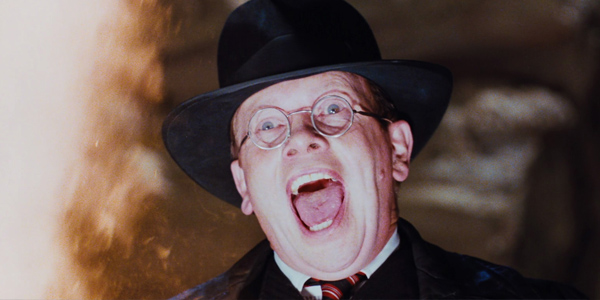
For most actors, typecasting is something you have to worry about after you become widely-known. Tom Baker didn't wander into playing Doctor Who having worn long scarves and eaten jelly babies for 20 years beforehand. But Ron Lacey's career is an exception to this rule, with his biggest role coming shortly after he considered giving up acting. For our fifth and final Indy entry, I give you one of the creepiest villains of the 1980s. Lacey made his name on stage in the early-1960s, turning in a memorable performance in the original run of Chips with Everything. He later made several noteworthy TV appearances, in Civilisation, The Avengers and Porridge. Steven Spielberg cast Lacey for his resemblance to classic Hollywood character actor Peter Lorre. The part had previously been offered to Roman Polanski, who refused to travel for legal reasons, and Klaus Kinski, who branded the part: "moronically sh***y". Toht is a skin-crawling and perverse character, whose grotesque physicality belies a sadistic nature and a cruel disregard for other's lives. He brings a really intimidating presence to all his scenes in Raiders, and his death is as graphic as anything Lucio Fulci was doing around the same time. In light of his subsequent problems, relating to intestinal surgery in his youth, he probably made the best of what he had to work with, but it's a shame that his success came so late in his career. What He Did Next: Lacey continued to play villains in films like Sahara and Red Sonja, alongside a memorable turn as the Bishop of Bath and Wells in Blackadder II. A heavy drinker and smoker, he died of liver failure in 1991 aged 55.

4. Linda Hamilton - Sarah Connor (The Terminator & Terminator 2: Judgment Day)

Notwithstanding the challenges of returning to acting after pregnancy, actresses in Hollywood face another, simpler and bigger challenge: the lack of great, active female roles. While men can pick and choose from a variety of roles in big-budget blockbusters, women often have to settle for playing love interests, damsels in distress or other mainly romantic or sexual roles. Parts like Sarah Connor come along once in a blue moon, and that explains why Linda Hamilton isn't more famous. Having been told by her acting professor at Washington College that she wouldn't amount to anything, Hamilton moved to New York and attended classes by Method acting pioneer Lee Strasberg. She got her break on the soap Secrets of Midland Heights, before breaking into films with TAG: The Assassination Game. James Cameron spotted her in Children of the Corn, based on the short story by Stephen King. While Sarah Connor begins the first Terminator film as a frightened mousy creature, she gradually transforms into something much more gutsy, independent, energetic and intelligent. Hamilton is a commanding presence in the second film, retaining traditionally feminine qualities like empathy and the material bond with her son while being as physically and mentally strong as most of the men around her. The fact that Hamilton has never reached these heights again is a big indictment of Hollywood's attitude to women - something which is still a problem for aspiring talents today. What She Did Next: Hamilton concentrated on TV work between the two Terminator films, appearing on Beauty and the Beast and Murder, She Wrote among others. After Terminator 2 she returned to TV again, with her only big cinematic hit being Dante's Peak. She recently had a recurring role in Chuck.

3. Linda Blair - Regan (The Exorcist)

Linda Blair is one of the horror genre's biggest icons. The Exorcist terrified audiences when first released, to the extent that several screenings in the USA had nuns standing outside them, sprinkling holy water on the punters and handling out leaflets with numbers to call if they had been traumatised by watching the film. Whatever you think of the film now, there's no denying the power of Blair's performance. Having become a child model at the age of six, Blair began her acting career on the short-lived soap Hidden Faces in the late-1960s. Her film career began with small parts in The Way We Live Now and The Sporting Club. She auditioned for Regan at the behest of her mother rather than her agent, and beat over 600 other actresses to the role. The part almost went to Denise Nickerson, who played Violet Beauregard in Willy Wonka & The Chocolate Factory, but her parents found the material too troubling and pulled her out. Blair's performance is on the most terrifying aspects of The Exorcist, drawing us in with her sweetness and innocence in the early scenes before freaking us out as the demon drains and corrupts her. Even without all the green puke and Dick Smith's amazing make-up, she has great screen presence and deserved to transition into a successful career as an adult. In the right hands, she could have had the same career trajectory as Sigourney Weaver several years later. What She Did Next: She appeared in the sequel Exorcist II: The Heretic after landing several roles in TV movies. Following a charge of drug possession, she struggled to get hired and spent most of the 1980s in low-budget exploitation films. She subsequently sent up her most famous role in Repossessed and had a cameo in Scream.

2. Ricardo Montalbán - Khan Noonien Singh (Star Trek II: The Wrath Of Khan)

Non-white actors have always been under-represented in Hollywood. Alongside the struggle to get more African-American actors on screen, Hispanic or Latino actors were generally pigeonholed into playing either 'the Latin lover' in musicals or Native Americans in westerns. Ricardo Montalbán did a great deal to improve the lot of Hispanic actors through his organisation Nosotros, but he himself deserved a much wider career in light of his great performance as the original Khan. Already a superstar in his native Mexico, Montalbán began his Hollywood career in westerns and musicals. His biggest success prior to Star Trek was a seven-year stint as Mr. Roarke on Fantasy Island. After the critical and commercial failure of Star Trek: The Motion Picture, new director Nicholas Meyer wanted to recapture the swashbuckling spirit of the original series. He re-watched all the old episodes, picked out Montalbán's original performance in 'Space Seed', and made the call. However hard Benedict Cumberbatch tried in Star Trek Into Darkness, Montalbán's performance remains both the definitive depiction of Khan and the all-round best Star Trek villain. He brings enormous passion to the role, creating a ruthless, near-tyrannical intensity founded on a believable, relatable motive (revenge for the death of his wife). Montalbán brought a great decency and humility, and his lack of subsequent success was more down to the vagaries of the Hollywood system than any lack of talent or commitment. What He Did Next: Montalbán continued to act in lower-profile roles, his most notable post-Trek being the villain in Naked Gun and the grandfather in the Spy Kids series. Suffering from a long-term spinal condition, he was partially paralysed in 1993 after lengthy surgery, but continued to act in voice roles until his death in 2009 aged 88.

1. Christopher Reeve - Clark Kent/Superman (Superman: The Movie)

From one superman to another, as we finish our countdown with the definitive depiction of Krypton's favourite son. Many would take being famous for playing Superman and not worry about having a career outside of it - especially when your portrayal becomes as widely-loved as Reeve's was. But curiously enough, Reeve consciously distanced himself from several roles that would have bolstered his career. After training at Juilliard alongside Robin Williams, Reeve began his career on the soap Love of Life. After fainting on stage during his Broadway debut (alongside Katherine Hepburn in A Matter of Gravity), he made his film debut in Gray Lady Down. Reeve was given a screen test for Superman through the persistence of casting director Lynn Stalmaster, and was given the part on the condition that he bulked up. He began an intense two-month programme with David Prowse of Darth Vader fame, and the rest is history. Reeve was clearly a talented actor, and remains the definitive Superman for a great many people. He brought Mario Puzo's script to life, playing the character with a straight face and handling the mythology with respect while still finding room for both humour and heroism. After becoming famous he turned down the leads in Lethal Weapon, Pretty Woman, Fatal Attraction and Mutiny on the Bounty, fearing that many of these would typecast him either as an action star or a fresh-faced romantic lead. It's tragic that his life was cut short so soon, but one feels he made a few bad career moves before his accident. What He Did Next: Reeve reprised his role in Superman II, Superman III and Superman IV: The Quest for Peace. Between his superhero commitments he appeared in Somewhere in Time and Deathtrap. As the 1980s wore on he diversified into politics, before a fall from a horse in 1995 rendered him quadriplegic. He died of a heart attack in 2004. Disagree with my choices? Drop me a comment below or visit Mumby at the Movies for more film reviews.

Contributor
Contributor

Freelance copywriter, film buff, community radio presenter. Former host of The Movie Hour podcast (http://www.lionheartradio.com/ and click 'Interviews'), currently presenting on Phonic FM in Exeter (http://www.phonic.fm/). Other loves include theatre, music and test cricket.