14 Most Divisive Movies Since 2000

The most hotly debated movies from the past decade and a half.

There's people out there who don't like The Godfather. Seriously - on IMDb a whopping 30,000 people have rated the film a lowly one star. Sure, that may be a hyperbolic reaction to the film's reputation, but there's still people in there who think it's on a similar level to Birdemic: Shock And Awe, with some writing lengthy dissections of why it's "completely un-redeeming in any way". There's never going to be a unanimous opinion on any film; each person has their own set of loves and hates that dictate their individual tastes. And yet we let sites like RottenTomatoes and Metacritic, which condense complex opinions down into one easily digestible number, dictate the popular consensus. It helps make sense of the multiple films released each week, but isn't it making things a little too simple? While those who despise The Godfather are most certainly in the minority, things aren't always so black and white. There's plenty of movies that, for whatever reason, split opinion to a polarising effect, causing endless debate over whether they're actually any good. Here's a run down of the fourteen most divisive films of the 21st century.

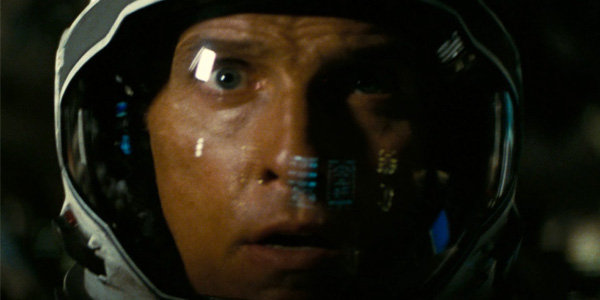
14. Interstellar

It's only been a week since the release of Nolan's latest and already Interstellar has proven itself as one of the director's most divisive films. For every person claiming it to be a groundbreaking piece of visionary film-making, there's someone rolling their eyes at the self-imposed seriousness of it all. It'd be easy to simply dismiss the reaction to the film as the embodiment of the debate between Nolan fans and his haters, but that's only part of the story. Sure, it's probably the most "Nolan" film ever made, oozing with profound dialogue and a cold visual beauty, and yet that's not really the cause of the divide; many of Interstellar's biggest detractors are self-professed Nolan-ites. Clearly the issues are greater than just the director's usual trademarks. You may need to be a fan to love the film, but you don't need to be a hater to dislike it. What exactly Interstellar's enduring reputation is will take time to be settled on, but even in the immediate aftermath it's clear it'll be one of the most hotly debated films of the decade.

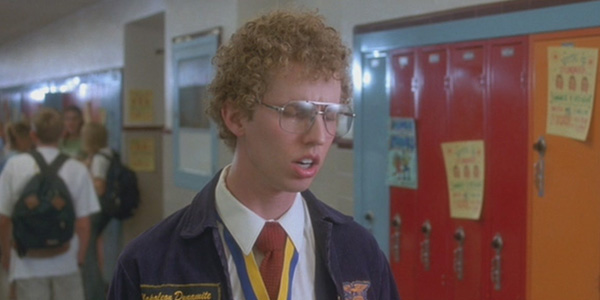
13. Napoleon Dynamite

Napoleon Dynamite is a film so inexplicably divisive that Netflix spent $1 million trying to figure out just what was up with it. The personal recommendations on the streaming site are based on an algorithm that takes your ratings of previous viewings and suggests similar movies and TV shows you may like. But certain films proved a problem with this, most notably Napoleon Dynamite; turns out it's a film nigh on impossible to recommend with a degree of certainty. If there's a better definition of a cult classic, we'd like to hear it. Rather than removing the film, the site instead offered up a massive cash prize for anyone who could improve the success rate of their Cinematch algorithm by at least 10%. It took three years, but eventually a team did it. Although odds are the film will still be recommended to people who'll wind up hating it. So why is Napoleon Dynamite so divisive? It's kinda hard to put a definitive finger on it, hence why a company had to shell out a million dollars to work around it. It's just the sort of film that initially coming across a little aimless, with its style becoming more understandable with rewatch. That's comedy for you.

12. Crash

When talking divisive movies, the Crash that immediately jumps to mind is David Cronenberg's 1996 paraphilic thriller, but it's not the only movie with that title to get in on the fun. Upon initial release, Paul Haggis' Crash was treated as you'd expect; an interesting, if painfully on-the-nose look at the racism present in modern day L.A. It's not a movie that's typically controversial enough to warrant a long-standing debate, but that's mainly because much of the divide in opinion isn't to do with the film itself. Often a movie's detractors won't come out of the woodwork until it's celebrated beyond reason; it's fine for a film to make a few mistakes, as long as those mistakes aren't trumpeted as its glowing qualities. And when Crash came out of nowhere to win the Academy Award for Best Picture it's not surprising there was a massive backlash. In the decade since much of the debate around the film has been less about whether it's any good, but rather whether it deserved to snub award-favourite Brokeback Mountain, in many people's eyes a more mature movie, to the prize.

11. Watchmen

There's always going to be a sizeable divide in the fan-base when a popular work is turned into a big budget movie, but with Watchmen it's something else. Those unfamiliar with the original source were mostly favourable in their appraisals of the film, finding the alternate history setting engaging despite the Cold War's lack of relevance, but to those who've experienced the seminal graphic novel it was a different matter. Even though Zack Snyder essentially used the thirteen-issue comic run as a storyboard for the movie, it still split opinion; was this a shallow interpretation of a medium-defining work or a living embodiment of Alan Moore's genius? It all boils down to one question - did you miss the big squid? In the graphic novel Ozymandias' plan to unite the stale-mated America and Russia is to trick them into working together against an alien invasion, done by crafting a squid beast with the help of comic book artists. This was switched in the film to a more narratively sensible, but subtextually weaker explanation - an attack faked to look like the work of the near-god Dr. Manhattan. At its core Watchmen the film didn't do for superhero movies what Watchmen the graphic novel did for superhero comics. Partly because much of its subversion had been used by The Incredibles four years before and partly due to the film's qualities, whether it's a worthy adaptation is still undecided.

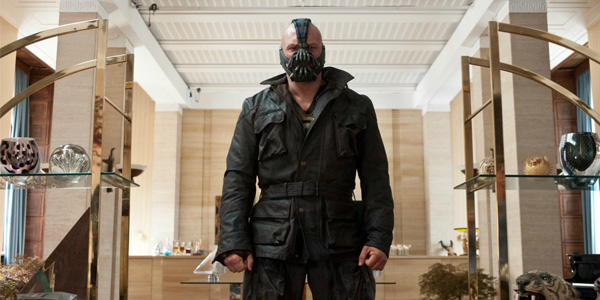
10. The Dark Knight Rises

A sequel to what is considered by many to be the greatest superhero movie ever made, there was always going to be a backlash against The Dark Knight Rises. But despite going through production with many fans sceptical, no one expected it to be to the level it ended up being. Interstellar may split opinion, but, bar intense Nolanites calling it a 2001-level masterpiece, it's not been as polarising as Rises proved to be. Originally much of the ire came towards the ending. Tying up the whole Dark Knight Trilogy, many of the developments in the last few minutes - Bruce Wayne survives somehow, giving John Blake the ambiguous stuff he needs to become Batman - felt hollow to audience. It was certainly an ending, but its execution didn't sit right, relying heavily on coincidence, something the film explicitly condemned later on. But the ending was just the beginning. With Bane's complicated plan seemingly existing outside the realistic bubble The Dark Knight had created and the editing of various sequences creating pretty glaring plot holes a general dissatisfaction set in, with the internet still unable to reach a happy middle ground.

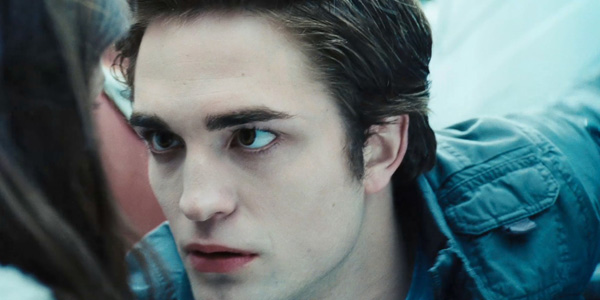
9. Twilight

Twilight may initially seem like an odd fit for a list on divisive movies; surely, now used a shorthand for a tacky love story, it'd be more fitting in a piece on the most despised movies of all time. Well, yeah, and in many circles it is, but that ignores that the intense hatred of the series was born less from the quality of the movies (although that helps) and more from the intense level of obsession shown by its fans. As a mainstream movie series Twilight was hampered from the start, with Twihards so obsessed with the adventures of Bella Swan that regular audiences would naturally feel a little out of their depth. The stories are so tailored to their audience that they're as attractive to young teens as they are off-putting to everyone else. While this normally isn't an issue with most targeted franchises (no one loses sleep over the success of the pre-teen marketing Tinkerbell series), due to the sheer size of Twilight it exploded into a massive divide, inspiring insults for a generation of YouTube commenters. As the series went on things only got worse, with the movies gearing directly towards the converted, increasing the hatred and love in equal measure.

8. The Amazing Spider-Man

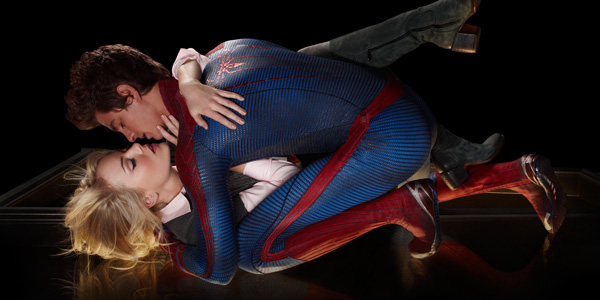
What's so strange about The Amazing Spider-Man is that fans on either side of the divide seem to be as equally aghast at the the opposing opinion. How can you like a rushed and sloppy reboot of such an iconic character? Or rather, how can you not like a modern, less-campy reboot of such an iconic character? It really doesn't help that there's a successful movie trilogy already done this century that manages to range from the best (train fight) to the worst (anything Venom) of what the superhero genre has to offer. If anything that's the central issue; people can't help but compare The Amazing Spider-Man to Raimi's original movies. The big problem with Spider-Man on film is that for over a decade Sony, who to Marvel's ire still hold the rights to the character, haven't known exactly what to do with him. But unlike Fox with Daredevil or Fox with Fantastic Four they've not done it all wrong; Spider-Man 3 has that incredible Sandman formation sequence, while even its detractors would admit The Amazing Spider-Man sees Andrew Garfield deliver a good performance as its version of Peter Parker. There's just enough good in both for the arguments to have a little weight.

7. Sunshine

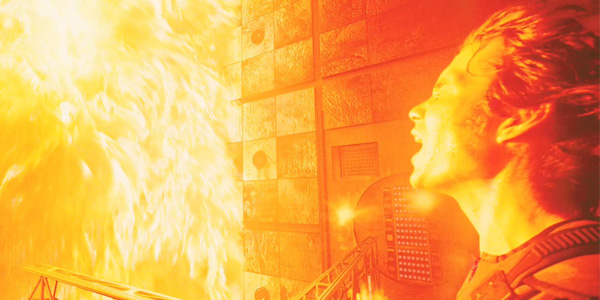
Following the crew of Icarus II, a last-stand mission attempting to reignite a dying Sun, Sunshine has all the hallmarks of a sci-fi classic. The ideas are as big as the events and some scenes are of jaw-dropping beauty. So what's the problem? Danny Boyle's sci-fi has drawn comparisons to 2001: A Space Odyssey, but fails to reach that level of praise on an audience-wide level thanks to a mixed reaction to one certain element. A final act divergence into slasher, with Mark Strong's deranged sole survivor of a previous mission picking off the crew, really gets its critics foaming. It's a stark tonal shift and few people would deny that it is all a little more closed in focus than the rest of the film. For a movie that has, up to that point, been a perfect fit for the "modern classic" title, it's a turn into the conventional that sees Boyle and screenwriter Alex Garland taking their ideas a little too literally. Sunshine was written from a starkly atheist perspective, a sci-fi that posited a totally scientific viewpoint. So it is kinda refreshing that the main argument around the film stems from its objective quality, rather than something rather arbitrary.

6. Kill List

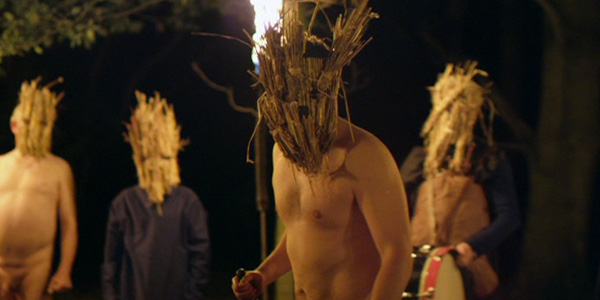
A key element of Kill List is deception. Just as Jay is unknowingly being led down a (very) dark path by a Wicker Man-infused cult, so are the audience being waylaid a little. The film presents itself as an all-out horror, with a creepy poster and foreboding trailer creating a palpable sense of dread before it even starts. And then, following a unnerving and quick opening credits, it's straight into splintered family dynamics and financial troubles. Wait, what? It takes Kill List over two-thirds of its run-time to get to its true horror, up until then being a Brit-crime thriller (albeit a painfully disturbing one), which is where the film really divides people. There's a sense of unease to that first hour, but, particularly with the subsequent twist, it can initially feel a little aimless. After seeing the film many people instinctively wish the whole thing had kicked into gear faster, while others posit that, like The Wicker Man, it is all about the slow build and that sense of disquiet within the normal. There's very little opportunity for middle-ground on the film, with it being one that typically gets given the Marmite "love it or hate it" label. And no matter what side you fall on, it's hard to disagree with that sentiment.

5. Man Of Steel

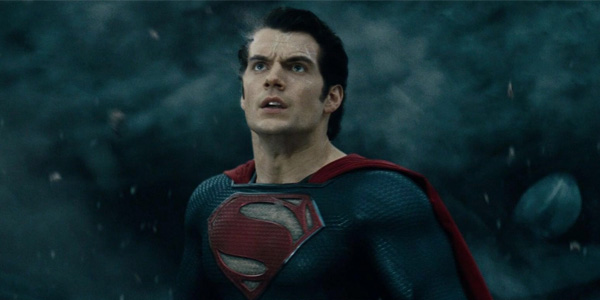
Ah, Man Of Steel, our old friend. Last year's Superman reboot subsequently has a lot riding on its shoulders, standing as the first entry in what D.C. hopes will be a Cinematic Universe to rival Marvel's. Which is a big ask of a film that underwhelmed at the box office and, more importantly, starkly split the audience. Taken in isolation, there's some nice elements to Man Of Steel - the visual style is consistent and some action beats pack a real wallop - but it's when it's all brought together that the problems arise. To some it was an exciting way to bring the iconic hero into the modern day, the film serving as a great companion piece to The Dark Knight Trilogy. And to others it was a head-bangingly long exercise of needless updating and unexciting escalation. Even the impartial parties got involved, with an editor at RottenTomatoes shocked by how low the film scored on the site's Tomatometer. The trailers, the first of which teased an incredibly meditative, almost Malick-style, piece, certainly didn't help, leading to highly inflated expectations for what was essentially a gritty Superman reboot. But the real problem was that as a superhero with such a strong screen legacy, doing something so incredibly new would always lead to a mixed reaction. A distinct directorial style certainly didn't help.

4. Signs

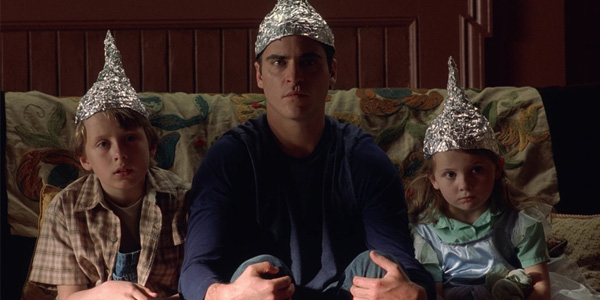
M. Night Shyamalan is now renowned as a piss-poor director, one of the biggest let downs in recent Hollywood. Breaking big with The Sixth Sense, his career has taken a continual nose-dive since, each new film somehow worse than the last. Back with Signs he was regarded very differently, with Newsweek hailing him as the new Spielberg building up to its release. What's strange is that the popular opinion of the film varies wildly; it somehow straddles being regarded as both a good and bad film. And there's strong cases for both sides; the 'twist' of the aliens, who let's not forget have landed on a water-based planet, being allergic to water is asinine and the whole religious premonition undercuts the rest of the film, but it still shows a sense of film-making prowess, with some scenes working in building a sense of dread. Is Signs the final moment of Shyamalan being creative, or the moment he went too far? Is the reveal of the alien gate-crashing a birthday party terrifying, or its defeat laughable? Can you believe we once took Mel Gibson seriously? These are questions whose answers still can't be agreed on.

3. Kill Bill

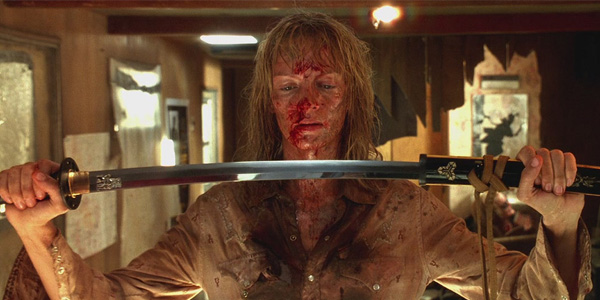
Coming into the new century, Quentin Tarantino was riding high. His then self-titled trilogy of Reservoir Dogs, Pulp Fiction and Jackie Brown had shook up the movie industry, popularising non-chronological narratives and pop cultural discussions, as well as spawning a barrage of imitators. And then he did Kill Bill. Split in two because he couldn't find a feasible way to make it work as a single movie, it contains many of the overarching problems people seem to have with Tarantino's films; an over-the-top obsession with violence, conventional cool over depth and, most importantly, a refusal to edit the films down to a concise length. There are similar problems with the director's other noughties movie, the aimless (and purposely so) Death Proof, but Kill Bill remains more divisive thanks to the promise it managed to still show. Vol. 1 was treated mostly positively thanks to a kinetic approach to action and the promise of narrative resolution in the second part. And it's that expectation that really hurt Vol. 2; we do indeed get to see the Bride kill Bill (unless the lack of name cross-out in the credits indicates his survival), but to get there is a bewilderingly talky and meandering path, which wasn't what his fans really wanted.

2. Avatar

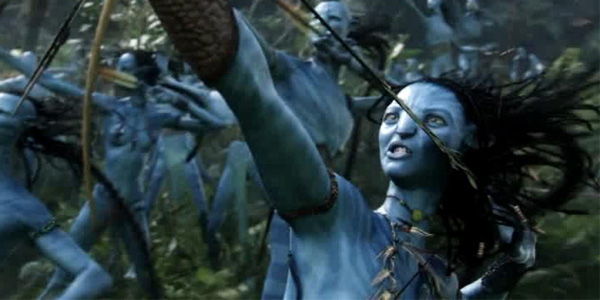
Any popular movie will ultimately become divisive to some degree. It is an unwritten law of cinema that has dependably never been broken; you don't have to travel far to find people who say The Dark Knight or The Avengers (or any popular new release) "isn't as good as people say". Who's ready to start wailing on Guardians Of The Galaxy? Naturally, the film this would hurt the most would be the biggest movie of all time; ike Titanic before it, which held the title of highest grossing film ever for twelve years previously, Avatar's phenomenal success swiftly led to a spate of detractors. The film was initially well received, with movie fans delighted to see James Cameron back behind the camera, but when it went from being a fun movie to "best evah" the divide was created. As with Titanic, many of the enduring criticisms (it's FernGully in space, Dance With Smurfs, Pandorahontas etc.) were present before the film was released, repurposed as damning complaints against its insurmountable popularity. In general though, it's not too much a condemning of the film overall, more the intensity with which the mainstream adored it.

1. The Tree Of Life

Angry Brad Pitt. Drunk Sean Penn in the desert. The creation of the universe for some reason. Freaking dinosaurs? Whispering. More angry Brad Pitt. More space stuff. More whispering. Drunk Sean Penn on a beach. Credits. What the f**k was that? Terrence Malick's fifth film in a forty-year career, The Tree Of Life is so self-confident it doesn't seem to care if you like it or not. When it first premiered at Cannes the film received both raucous applause and aggravated boos, the initially mixed reviews predicting its enduring legacy as the century's most divisive movie so far. The u-turn taken by the critical body following the film winning the Palme d'Or, with negative reviews replaced by across-the-board praise once it had high-end endorsement, highlights some of the key issues; it's ostensibly a well-constructed film - the cinematography is an obvious stand-out - but technical proficiency isn't all that's needed to make a masterpiece. The debate so often hinges on whether or not you "get it", but really it is more down to if you think there is anything to "get". Is the film meticulously constructed to provide a fluid look at family, the universe and everything in-between, or is is so vague that you can read just about anything into it? Have we missed any of the 21st century's most divisive films? What film do you think divides popular opinion the most? Let us know in the comments below.

Contributor
Contributor

Film Editor (2014-2016). Loves The Usual Suspects. Hates Transformers 2. Everything else lies somewhere in the middle. Once met the Chuckle Brothers.