14 Films From Toronto Film Festival 2013 - Graded & Reviewed
 The Toronto International Film Festival is a film-lover's dream. With nearly 300 films from every imaginable genre and hailing from countries all over planet Earth, the movies are showcased in beautiful state-of-the-art theaters and cineplexes, with many high-profile directors and actors attending their films' screenings and holding entertaining Q&A sessions afterward. This is my second year attending TIFF and I can't recommend the experience highly enough. If you're a fan of films, particularly films of the artsy and prestigious persuasion (although there are many more mainstream films at the festival than you might expect), and you have the opportunity to attend the festival, take it. Unless you are incredibly self-loathing, you'll be glad you did. For those that can't make the trek north of the border to the wonderful city of Toronto, the next best thing is to live vicariously through the people who did. I know this, because until recently, this is what I had to do. It's not nearly as fun as actually being there, but when you are an awards fiend such as myself, you'll inhale any little tidbit or review of the latest high-profile premiere from a potential Oscar player that you can get. With that in mind, and after a couple of weeks of letting the movies really wash over me and make their impact felt, I considered it my civic duty to share with you the cinematic experience I had at TIFF 2013. What follows then is a breakdown of all fourteen films I saw at this year's Toronto Film Festival, ranked from my least favorite to my favorite, accompanied by my grade for the film, a synopsis on my take on the film, and a look at the film's Oscar prospects. With Venice, Telluride, and Toronto in the rearview mirror, and the New York Film Festival just having wrapped, the 2014 Oscar landscape is finally starting to take shape. With that in mind, I'll be taking stock of the current status of the coming awards season soon, with a category by category breakdown, so be on the lookout for those articles as well.
14. The Invisible Woman
 Grade: D+My Take: This is about as rote and stereotypical as period piece biopics get. The film is technically about the great 19th Century English novelist Charles Dickens and his extramarital affair with a young actress, but other than the costumes, sets, and the fact the protagonist's name happens to be Charles Dickens, the film could really be about any love triangle involving a celebrity. The film has no particular insight into Charles Dickens as a man, and stylistically, there is nothing terribly Dickensian about the film. The Invisible Woman is yet another entry in the ever growing list of forgettable prestige biopics. Oscar Prospects: Best Costume Design. In fact, given the dearth of period films on the year-end docket (which is just fine with me), it's pretty much assured a costume nomination. The Costume Designers branch of the Academy is terribly predictable with its nominations, always ignoring the more subtle (but just as impressive, if not more so) contemporary work in favor of the frilliest (and probably technically the most difficult to actually make) design available for nomination. Other than costumes though, I don't think The Invisible Woman will be seeing any other Oscar kudos. And if it does, my respect for the Academy will drop yet another rung lower.
13. The Fifth Estate
 Grade: B-My Take: The Fifth Estate is about as topical and zeitgeist-y as it gets, but unlike its contemporary tech-pioneer peer that many compared it to pre-release, The Social Network, The Fifth Estate won't make an indelible mark on the history of cinema. Covering the story of the creation and rise of Wikileaks and its citizen journalist founder, the controversial hactivist Julian Assange (Benedict Cumberbatch), the film simply tries too hard to be cyber-punk edgy and breaking-news relevant. Metaphorically, its equivalent to whenever the middle-aged demographic finally catches up to the newest technological trend and can't stop patting itself on the back for finally being up-to date on what's cool and what's happening. Despite these flaws, I seemed to be a bit more forgiving than some critics, if only because the actual story and issues at hand are pretty interesting, even as the film annoyingly flails its arms incessantly to get your attention. Oscar Prospects: Done and done. Every year there is some heavily anticipated prestige pic the shrivels upon the cruel rays of sunlight when it is finally unveiled, and this year's bust appears to be The Fifth Estate (not that others might not join it down the line). On paper it had a lot going for it. A topical and politically-oriented subject matter, a writer from a respected contemporary television show (The West Wing), and two up-and-coming actors (Benedict Cumberbatch and Daniel Bruhl) who also have awards season presence on other potential Oscar players. Of course, the one thing that made prognosticators reticent to rank the film too high sight unseen was the film's incredibly inconsistent director Bill Condon (coming off directing the awards juggernaut Twilight series), and in retrospect, they had a damn good reason to be wary.
12. Only Lovers Left Alive
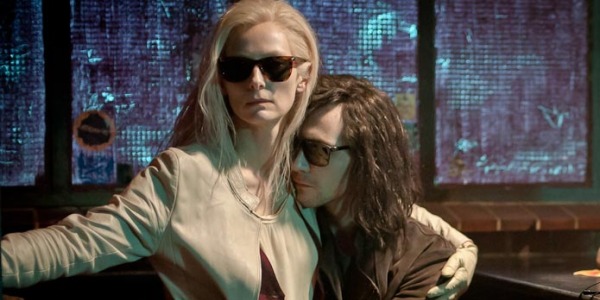 Grade: B-My Take: I am a huge fan of the Jarmusch. From films such as Dead Man, to Mystery Train, to my favorite Jarmusch joint, Down by Law, the independent film director has been a masterful cinematic craftsman that has managed to mix sly humor and geographical animism in fascinating and beautiful ways. The intelligentsia version of Wes Anderson, Jarmusch established twee comedy as an actual genre while imbuing his comedies with an incredible sense of time and place. Unfortunately, with Only Lovers Left Alive, we learn Jarmusch's style and vampire lore don't mix so well. While from a technical point of view the film is as flawless as all of Jarmusch's previous efforts, narratively the film loses steam fairly quickly. I'm not one to usually complain about coyness and archness in my movie humor, but Jarmush beats the whole "look-at-how-old-these-vampires-are-and-how-much-history-they-have-seen" joke into the ground until its buried 100 feet deep and well decomposed, to the point where even the maggots tire of feasting on its corpse. Oscar Prospetcs: Shamefully, Jarmusch has never received even the slightest bit of acknowledgement from the Academy, and I can tell you that Only Lovers Left Alive will not be the film to change this fact. I'm sure Jarmusch has long been resigned to the fact that he will never be an Oscar nominee (if he ever even gave a damn about it to begin with), and as much as a travesty as this fact is, I could not really support this film being the movie that finally gets him over the finish line. However, particularly given the lackluster field in the Best Supporting Actress category, the Academy would be wise to consider Mia Wasikowska's wonderful performance as an impish "young" vampire who brings some energy to the otherwise mopey cast of blood-lusters, but alas, this is just wishful thinking.
11. Joe
10. Dallas Buyers Club
 Grade: BMy Take: Dallas Buyers Club tells the true story of Ron Woodruff (Matthew McConaughey), a heterosexual, homophobic, rodeo-loving Texan who finds himself in the tragic position of contracting the AIDS virus during the breakout of the epidemic in the 1980's. Woodruff went on to bend and brake government regulations in order to sale more viable medical alternatives to suffering AIDS patients who were being offered inferior treatments through the traditional channels. For a biopic dealing with the sensitive subject of AIDS, the film is refreshingly straightforward and unfussy. This lets Dallas Buyers Club avail itself of the self-righteous and emotionally manipulative pitfalls films of this nature often walk into, but the film doesn't really adventure outside the "a-day-in-their-shoes" narrative and never transcends the human interest story aspect of its protagonist. Oscar Prospects: The area of the film that has garnered the most praise, and rightfully so, is for its terrific performances from Matthew McConaughey and Jared Leto. Both actors are locks for their respective categories (Best Actor and Best Supporting Actor), and McConaughey, who over the past two years has had one of the most miraculous career turnarounds in the history of cinema, is probably the favorite to win. Beyond the two male thespian categories though, Dallas Buyers Club may be the biggest beneficiary of the delays of Foxcatcher and The Wolf of Wall Street (if it doesn't make it by Christmas). If the film can generate enough love among the Actors branch, the largest branch in the Academy, then depending on how the December competition pans out, Dallas Buyers Club could be a serious Best Picture player. Also, even though it's a bit more crowded than usual this year, Best Original Screenplay could be a very real possibility.
9. Tim's Vermeer

8. Rush
 Grade: BMy Take: Rush is a throwback to the type of bread-and-butter action/drama hybrid that Ron Howard built his directorial reputation on back during the 1990's. Films such as Backdraft, Apollo 13, and Ransom proved Howard an adept director of movies made for the masses with just enough artistry behind them to earn some legitimate kudos from critics and cinephiles (a master of the middlebrow if you would). Howard then moved on to more self-consciously weighty material in the 2000's with films like A Beautiful Mind, Cinderella Man, and Frost/Nixon to good-to-mixed results depending on who you ask, but he returns to form with Rush. The film's appropriately up-tempo pacing, its limited but effective use of race scenes, and two strong performances from Chris Hemsworth and Daniel Bruhl are all strengths of the film that show some adroit direction. Unfortunately, the genre's clichéd tropes are not totally avoided, which when combined with the film's slightly de-saturated digital look, lend Rush a slightly schlocky feeling. Nevertheless, Rush is a solid picture, the type of solid movie that has almost gone out of existence in this bifurcated era of film production. Oscar Prospects: The film had a lot of pre-screening buzz going into the festival circuit, particularly since Rush appears to be Universal's only real potential awards season player, but despite receiving generally positive notices out of Toronto and Telluride, the film has since fizzled into background white noise. To be a serious contender, the film needed some resounding support from the public, which in the United States, it did not get. This was most unfortunate for its Oscar hopes, particularly since two of its awards season competitors, Prisoners and Gravity, debuted to surprisingly successful numbers both preceding and proceeding Rush's debut. With Captain Philips and 12 Years a Slave on deck, and possibly bigger premieres in the waiting, its easy to see how Rush will become but a distant memory. However, not all hope is lost, as I will expect Rush to (rightfully) show up in the sound categories. There are also many who are championing Daniel Bruhl's strong performance, so depending on how the critics and public receive some of his contenders performances that have yet to be seen, Bruhl's name may get Rush some more high-profile Oscar attention come nomination morning.
7. Labor Day
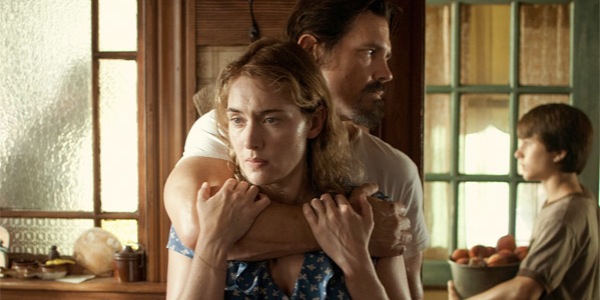 Grade: B+My Take: Based on the novel by Joyce Maynard, Labor Day is director Jason Reitman's attempt at doing "grown-up" work. Although the wunderkind has enjoyed a very successful start to his career making dramedies with sarcastic posturing, but warm, fuzzy humanist hearts at their centers, in Labor Day, Reitman abandons all 21st Century cynicism for some good old-fashioned heart-felt drama. The result is a largely successful tale about a single mother (Kate Winslett) and her son (Gattlin Griffith) who are forced to spend the long Labor Day Weekend in their home as hostages of an escaped convict (Josh Brolin). With strong performances from the three leads and assured direction from Reitman, Labor Day is a measured piece that delicately works over the emotions of its audience. However, even though I enjoyed the movie, I have to admit it is one of the films I have thought about least since the festival, and in retrospect, Reitman probably overcompensated with the tenderness of his touch in his attempt to go "serious". Labor Day is a fine movie, but it's no revelation. Oscar Prospects: Somewhat akin to Rush, Labor Day has really faded away in the post-festival analysis, although in Labor Day's case, the buzz began dissipating literally minutes after its screening. That's not a knock on the film's critical reception, which was largely positive, but the simple fact of the matter is there were many more shinier objects and impactful films making the rounds of this year's festival circuit. There's always a chance the film will find its feet upon Labor Day's actual release, but given the fact that so far most of the big prestige films have been the real deal, this scenario is getting more and more unlikely. Labor Day's best shot at sneaking into the Oscar race will be in the Best Actress race, where Kate Winslett, a undeniable favorite of the Academy, may have a chance at breaking into the field of five. The category is pretty top heavy this year though, and at the moment, Winslett is probably on the outside looking in. Brolin's name will likely be bantered about for the Best Supporting Actor category as well, and it's not out of the question, but with the usually stuffed-to-the-brim field in this category, it's probably unlikely.
6. Prisoners
 Grade: B+My Take: Prisoners is a movie that has seemed to take many by surprise. With a fairly unexceptional thriller premise about two suburban neighborhood families whose daughters go missing during their Thanksgiving Day party, many expected stock genre material that would be good for a 2-hour mystery ride but wouldn't have any staying power beyond its initial viewing. While technically the script may not be far off from that, the film is elevated way beyond your standard thriller procedural with the keen direction of Denis Villeneuve and strikingly beautiful lensing from the one and only Roger Deakins. Combine this with some career best work from the likes Hugh Jackman and Jake Gyllenhaal, and you have the recipe for quite the accomplished thriller. Oh... and did I mention how great the cinematography is from Roger Deakins. Oscar Prospects: Probably not as good as they should be. For a film without any connections to super heroes or young adult fiction novels, Prisoners did surprisingly good numbers at the box office in the States when it opened in late September. The film also received third place for Toronto's Audience Award (behind winner 12 Years a Slave and runner-up Philomena), an award voted for by the paying-public who make up the bulk of the audience in the festival's public screenings, so clearly the film has a solid fanbase among the masses. Unfortunately though, the Academy has had a history of aversion to thrillers, as Prisoners oft-compared peer, Zodiac, found out in 2007. If some of the latter-year releases, such as Saving Mr. Banks, The Monuments Men, and American Hustle, really belly-flop hard upon release, Prisoners could sneak back up in conversation, especially if any critics groups see fit to stick for the movie. It may be just as likely though that Prisoners could miss out on the Oscars all together, although if the cinematographers fail to nominate Deakins' work, the Academy may consider putting the branch on suspension for a year.
5. 12 Years a Slave

4. Can A Song Save Your Life?
 Grade: A-My Take: I hadn't planned on seeing Can a Song Save Your Life?, but when some other screenings fell through, I decided to give John Carney's film a shot, and I'm certainly glad I did. Irish director Carney first came to prominence with his critically acclaimed indie flick, Once, about two struggling Irish musicians who form a meaningful bond with one another through playing music. If Once was an artful indie debut album, then Can a Song Save Your Life?, starring Mark Ruffalo and Kiera Knightley, is the band's first full fledged studio album. Glossier, better production values, and more mainstream, there will be many (and if you read some of the reviews coming out of Toronto, this has already happened) who will declare the film a cheap sentimental sell out. They will say that Once was real and personal while Can a Song Save a Life? is an over-sacchrinated piece of fluff meant to manipulate the heartstrings of the masses. I could not disagree more with this. While Once was a good movie, it was a little too self-conscious of its "indie-ness". Can a Song Save Your Life? however goes for broke, embracing its cinematic nature to its full extent. The result is a beautiful celebration of music (as well as New York City) that, unless your utterly attached to 21-Century hipster detachment, is hard to resist. For the scene of Ruffalo and Knightley walking through the streets of the city to the sounds of Stevie Wonder's "For Once in My Life" alone, this movie deserves a multitude of laurels. Oscar Prospects: Although the film proved quite the surprise sensation in Toronto, starting a bidding war that was won by the Weinstein Co., the film won't be receiving any Oscar nominations for the 2014 ceremony. This is due to the Weinsteins' plan to hold off on releasing the film until 2014, making it ineligible for this year's race. As for next year's Oscars, the film could conceivably sneak its way into a category or two (particularly Best Song), but with a planned Spring release, the new season for indies without enough gravitas to make an immediate impact on the awards circuit, it's not very likely. Just ask France Ha, A Place Beyond the Pines, and Spring Breakers how that Spring release strategy works for indies trying to break into the awards circuit.
3. Gravity
 Grade: AMy Take: By now, hopefully, you have seen Gravity and you don't need me to tell you how great of a movie it is, but in case your holding out and need a bit more convincing, here's my two cents. Gravity is the single most impressive movie ever in its use of technology. It's the first film to fully justify, in an artistic manner, the use of 3-D technology and heavy CGI effects. Not since Jurassic Park has advancements in computer technology meant so much to a film and the film industry as a whole. There is simply no other way to describe Gravity then to call it an experience, and while some may view that term as a pejorative one, I do not. This is one hell of a vision dreamed up by director Alfonso Cuaron and his brilliant cinematographer Emmanuel Lubezki. Now it's true the film's script does have some weaknesses, as Sandra Bullock's character's whole back story is rather trite and unnecessary. Had Cuaron and company been brave enough to ditch the typical "character development" deemed necessary to make the audience "care" about the characters and gone simply for the harrowing space disaster angle, we might be talking about one of the best movies in quite some time. Nevertheless, Gravity is still a towering achievement that demands to be seen in the theater. Oscar Prospects: Very good. After strong receptions at the trifecta of fall film festivals (Venice, Telluride, and Toronto), Gravity's Oscar prospects seemed fairly certain, but after a great debut weekend at the box office, it's place in Oscar history became an inevitability. For technical categories such as Best Sound Editing, Best Sound Mixing, Best Visual Effects (obviously), and probably Best Cinematography, not only is Gravity assured of a nomination, but the Oscars themselves might as well already have their names engraved on it. Beyond these obvious Oscars, Sandra Bullock will certainly be nominated as well as Steven Price for writing the film's excellent understated score. Gravity will also have a good shot at receiving nominations in the Best Film Editing, Best Production Design, Best Original Screenplay, and Best Costume Design categories. The real question for Gravity though is can it win the big ones, Best Director and Best Picture? This is the debate you will be hearing from now until March. Many will say with utter certainty that because Gravity is a science fiction film, it has no chance at the big prize, and while there is certainly precedence for these beliefs, I wouldn't take it too seriously in Gravity's case. There are still a couple films that need unveiling that may shake up the race (particularly American Hustle), but it is very likely that 2014's Best Picture race is going to come down to a battle between 12 Years a Slave and Gravity, so prepare yourself for some ugly mudslinging between advocates of these two films.
2. The Wind Rises

1. The Double
