15 Banned Films That Shocked The World
Notorious films known for the panic they inspired in the world's moral guardians.
https://www.youtube.com/watch?v=moYbTH0QhDY From the dawn of cinema, there have been movies which have run into difficulties with the powers that be, and were banned for the sake of keeping the public morally hygienic. Some countries are prolific banners of movies, for example, the censors in Germany, Norway, Finland, Iceland, New Zealand and Australia just seem to hate all violent horror movies full stop. They have a liberal attitude towards nudity and sex but any degree of high impact violence, as they call it, gets a movie into serious trouble step forward Hostel, Saw and Human Centipede 2: Final Sequence. For a long time, the British censors were the toughest in the Western world and in the early 1980s, the 'Video Nasty' phenomenon saw 39 films successfully prosecuted under obscenity laws. The outbreak of hysteria which accompanied the banning of the movies was wholly out of proportion to their actual content for the most part, and the British press was largely guilty of whipping up the hysteria which fueled the nonsense. This rush to ban what was mainly a bunch of badly made horror films was a cultural phenomenon specific to Britain, however, the nastiest of the nasties have faced prohibition from censors around the world. Today's film censorship regime in Britain is relatively laid back compared to the draconian drama in the Video Nasty days - several extremely controversial films such as A Serbian Film have been passed by the BBFC, albeit with cuts, but these films have been outright banned in many other Western countries - countries which are socially more liberal than Britain. It is not just the miscreants of horror cinema that are on the receiving end of the censors scissors, films can be banned for crimes as diverse as blasphemy, propaganda or simply depicting and discussing matter that other countries find objectionable. In this article there are 15 films which have been consistently banned in countries all over the globe. Some are no longer widely banned, but all 15 are notorious for their troubled censorship histories and the panic they inspired in the world's moral guardians.
15. Battleship Potemkin (1925)
 Banned: France, Germany, Finland, South Korea, Spain One would hardly believe that a B&W, silent era of cinema film could cause such fuss as to be banned in a slew of countries. This is an instance of a propaganda film being banned for fear of whipping up communist sympathies within the banning countries jurisdiction. Battleship Potemkin is viewed by many critics to be the best Propaganda film ever made as well as one of the all time cinematic greats. It certainly has a rich pedigree in the shape of director Sergei Eisenstein who is an extremely well regarded film maker. The Odessa steps sequence with the baby in the pram is as thrilling today as it was 90 years ago. The film is based upon the 1905 mutiny of the crew of the ship Potemkin against the Tsarist regime. Eisenstein was also trying out cutting edge new techniques to bring emotional immediacy to the film. You know you have an effective propaganda film when Joseph Goebbels praises your film as the best he has ever seen and that anyone who was politically undecided would become an instant Bolshevik after viewing it. Battleship Potemkins revolutionary, communist politics led to either severe censorship or an outright ban for the film in a host of countries. It was finally given an X certificate in the UK in 1954. Naturally the film was banned in West Germany, even though it was widely screened in Germany in 1925. Restored to its full condition now, Battleship Potemkin has a 100% fresh critical rating on rotten tomatoes which gives you a good indication of its critical stature and the historical importance of the film.
14 All Quiet On The Western Front (1930)
 Banned: France, Germany, Italy Widely regarded as one of the best films about World War One, one of the best anti-war films and a classic movie all round, All Quiet on the Western Front was based on the novel by Erich Maria Remarque. It details the horrors of trench warfare and the dreadful effect war has upon its participants physically and psychologically. An American film directed by Lewis Milestone, it has a running time of well over two hours. The Nazis, unsurprisingly, detested the film. Even before they were in power, Nazis would go to German cinema screenings of All Quiet on the Western Front in the early 1930s and let off stink bombs and release mice in the theatres. As soon as the Nazis came to power, the film was banned outright throughout the 1930s and 1940s. It was a huge hit and critically acclaimed in America but it was banned in Austria in 1931 and remarkably that ban was in place until the 1980s. France banned the film until 1963 and Australia and Italy were similarly censorious. Partial inspiration for Spielbergs Saving Private Ryan.
13 The Evil Dead (1981)
 Banned: Singapore, Finland, UK, Germany, Iceland, Ireland One of greatest horror films of all time, Sam Raimis directorial debut features a group of college students who go to a cabin in the woods and end up the victims of demonic possession. It was a sleeper hit. Made on a minuscule budget, The Evil Dead became a word of mouth phenomenon and ended up grossing eight times what it took to make. The film was to become exceptionally successful in the nascent home video market where it shifted thousands of units in the UK alone becoming the top grossing video of the video boom years. In the UK,The Evil Dead was in the vanguard of the Video Nasty brouhaha one of the titles that was especially persecuted and torn to shreds by the likes of Mary Whitehouse and her morality campaigners. Known as the number one nasty, the UK ban probably boosted the films sales figures even higher. It became THE nasty to watch outstripping Cannibal Holocaust, Driller Killer, I Spit on Your Grave and SS Experiment Camp as the most wanted nasty. There was a ping pong match between the films distributor and the censors, chopping scenes and resubmitting the film only to be told to chop more scenes. Eventually a version that everyone was happy with was released. The film also had severe censorship problems in a range of countries around the world.
12. A Serbian Film (2010)
 Banned: Brazil, New Zealand, Norway, Spain, Finland, Norway, Newborn Porn. That says it all. A Serbian Film is a movie that packs so much violence and depravity into its running time, it actually becomes quite comical. Apparently an allegory on how corrupt and awful successive Serbian governments have been and how they have screwed over the people in Serbia, if Serbia is as awful as this film is, then no one would never ever want to go there. The film is just as if the director was having a p*ssing contest to see how much transgressive material he could fit into it. Milos is a down at heel ex hardcore porn star who is desperate to move his young son and beautiful wife out of Serbia. Unfortunately, the coffers are nearly empty and Milos is cajoled into taking part in an independent hard core porn movie by the promise of big bucks. He soon finds out that this is no straight forward porn production. There is baby rape, child sexual and physical abuse, adult rape, sodomy, incest, hallucinogenic drugs, murder, suicide and necrophilia and probably even more perversions than those listed. Obvious Censor baiting fare, the director probably got a thrill at upsetting the film censors of the world. There is just so much gratuitous nonsense for example, to kill a guy, Milos cant just shoot or stab him. Oh no. He has to stick his wang in the guys eyeball socket. Milos and his family cant just kill themselves at the end of the movie. Their corpses have to be sexually violated. The whole thing is so over the top, it actually dilutes the movie. A couple of well chosen slices of depravity would have been more effective than the unrelenting sadism in the movie. A film that would be hard for censors in many countries to cut because of the volume of violence, the UK managed to pass the film with cuts, but for many countries the mayhem was decidedly outré and the film remains banned.
11. Salo (1975)
 Banned: Italy, Finland, Australia, Germany, New Zealand, Norway Pier Paolo Pasolinis final transgressive masterpiece, Salo will forever be known as that film in which people eat pooh. And poop eating is guaranteed to attract the attention of the censors and their pointy scissors. Pasolini was murdered shortly after the making of Salo and there are tons of fascinating conspiracy theories surrounding his death. He was certainly very ambitious in attempting to translate the source material the Marquis de Sades 120 Days of Sodom, onto the big screen. And an adaption of the Marquis de Sades book was bound to be extremely controversial indeed. Basically four corrupt and depraved Italian libertines hole up in a castle in Salo, the last remaining fascist stronghold in Italy near the end of the World War Two and the dying days of Mussolinis regime. They abduct a bunch of young teenagers and assemble perverts galore to entertain them. The abducted children are tortured, raped, murdered in an increasingly brutal fashion. And yes, the libertines enjoy making the children eat pooh. The scenes near the end of the film, make the viewer feel like they are watching some snuff they are that nasty and voyeuristic. Salo is fairly authentic to The 120 Days of Sodom, except for the non-depiction of de Sades more elaborate, inventive and horrific tortures which are detailed in the book. But the philosophies of the main characters usually the justification and exaltation of libertinism are faithful to de Sades vision. There was no question that Salo was going to run into censorship problems and subsequent banning around the world. It is not only extremely perverted, it features a strong political message of corruption and abuse of power. This subversiveness is another reason why the film ran into censorship difficulties worldwide.
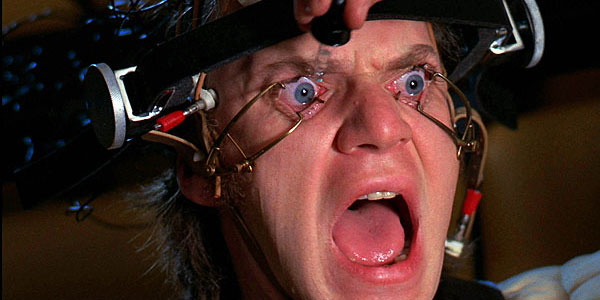
10. A Clockwork Orange (1971)
9. Last House On The Left (1972)
 Banned: UK, Singapore, Iceland, New Zealand, Norway, Germany, Australia. Wes Cravens debut feature is reckoned to be based on Ingmar Bergmans mighty The Virgin Spring winner of The Best Foreign Film Oscar in 1960. Bergmans refined aesthetic sensibilities are blown to pieces in Last House on the Left as the viewer is bombarded with brutality, rape and torture. The level of violence is as shocking today as it was back in 1972 with the sick son of a b***h Krug leading the mayhem as he vents his sadism on two teenage girls Phyllis and Mari along with his equally heinous acolytes Weasel and Sadie who are both perverted and violent deviants. Krug is such a degenerate, he gets his own son addicted to heroin so he can control him, and in the later stages of the film, he goads him into shooting himself in the head. Krug, Weasel and Sadie lead an obscene glut of violence upon the two girls, and several scenes of extreme humiliation, for example where they force the girls into lesbian activity and force one of the girls to wet herself, are extremely distasteful. Added to that are scenes where Krug carves his name into Maris neck, violently rapes and shoots her and a particularly troubling scene where Sadie reaches into Phylliss abdomen and gleefully pulls out her intestines when she is being stabbed to death. This latter scene in particular did not go down well with the BBFC in the UK. Into the bargain, there are all of the scenes in which Maris parents get their revenge on the thugs. The mother bites off Weasels wiener, Sadie gets her throat slashed in the pool and Krug rather satisfyingly gets chainsawed to death. It is not hard to see why Last House on the Left ended up with so many censorship problems around the world. You would be hard pressed to find a more violent film but in fairness to Wes Craven, he presents violence in all of its raw and ugly facets. There is absolutely no glamorisation of violence in the film and its effects are starkly rendered. For example, the thugs are rather sheepish looking after they dispatch of Mari, as if they know they have gone too far. And Maris parents, when they exact their revenge on Krug & Co, do not look like they have enjoyed doing it or it has redressed the balance of losing their daughter. A piping hot potato of a film which has only had the censorship relaxed in very recent years after it was released. Incidentally, the remake of Last House on the Left was on ITV4 the other night. It is Mickey Mouse compared to the original.
8. Last Tango In Paris (1972)

7. Monty Python's Life Of Brian (1979)

6. I Spit On Your Grave (1978)
 Banned: Australia, Finland, UK, Ireland, Germany, Norway, Iceland, Canada, Malaysia, Singapore, China Meir Zarchi filmed this notorious slice of Rape/Revenge exploitation back in 1978. Apparently based upon his own experiences of encountering a young woman who had been raped in Central Park, New York and Zarchis disgust with the way the police handled the young woman, I Spit on Your Grave is certainly uncompromising viewing. Recently reappraised as a piece of feminist triumphalist cinema indeed, its original title was Day of the Woman - in which the female rape victim takes spectacular and ultra violent revenge upon her assailants, I Spit on Your Grave proved to be very problematic for film censors around the globe. The main bone of contention would be the films astounding level of sexual violence. The scenes featuring Camille Keaton (who plays the heroine Jennifer) being raped and sodomised by four local yokels are extremely brutal, harrowing and realistic. Her degradation seems to last for an eternity and it is horrific to watch. Jennifer wreaks vengeance in fantastic violent style. One scene that likely raised the censors hackles worldwide is the scene in which Jennifer pretends to get sexy with the yokel ring leader in a nice soapy bath. She feels him up a bit before sneaking a knife into the tub which she uses to slice off his knackers. Agonising scenes of blood spurting from the castrated man and his howling are juxtaposed with scenes of a stony faced Jennifer staring into the fire and playing opera music. The other three men are respectively hanged, hit with an axe and ploughed into with a boat engine. While not as egregious as the castration scene, their deaths are not particularly pleasant to watch. One of the notorious Video Nasties which was prosecuted for obscenity in Britain, I Spit on Your Grave really invoked the ire of the Irish censors who refused to pass it as late as 2011. It was also very controversial in Canada. It got into a lot of trouble in the territory of Nova Scotia. Certainly one of the worlds least feel good films, I Spit on Your Grave retains its power to shock and appall all of these years later.
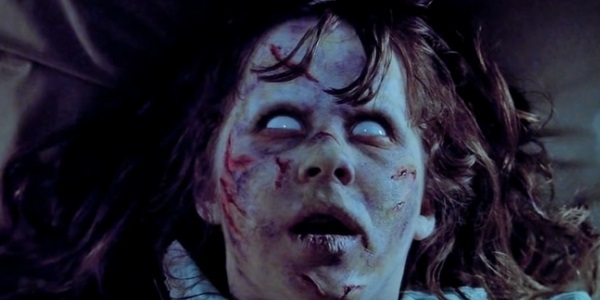
5. The Exorcist (1973)
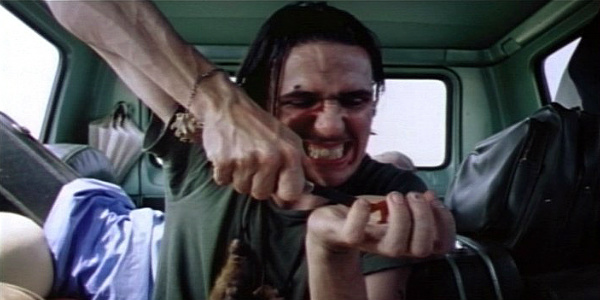
4. The Texas Chainsaw Massacre (1974)
3. Cannibal Holocaust (1980)
 Banned: UK, Singapore, Australia, Norway, Finland, Ireland, Iceland, New Zealand, Germany, Italy, Malaysia Poster child of the Video Nasty scare, Cannibal Holocaust has a very complicated past when it comes to film censorship around the world. The uncut version of the film is an effective horror film which is infinitely disgusting and disturbing. The first film to use the found footage story arc, Cannibal Holocaust features an anthropologist venturing deep into the Amazon jungle to find out what happened to a Mondo-type documentary film crew who were shooting footage there. He gains the natives collective trust and finds film reels which he takes back to NYC and watches... The atrocities that the film crew either filmed or perpetrated include: lots of animal snuff, a native killing a woman with a stone dildo, a native woman having her foetus forcibly aborted and buried in mud, the crew raping a native girl, the crew torching the huts of the natives to get good footage, the crew coming across a woman impaled on a pole which enters her vagina and exits her mouth, and to top it all off, the natives wreak a terrible revenge on the crew which is captured to the bitter end. So it is pretty hardcore stuff which fooled a lot of people into thinking it was a snuff movie including the alarmed Italian authorities who, when they saw the film, forced director Ruggero Deodato to parade his actors around an Italian court to prove that they hadnt been killed. Cannibal Holocaust stands head and shoulders above all of the films that constitute the salubrious Italian Cannibal subgenre of Italian Exploitation. Its verisimilitude is further enhanced by the inclusion of real life death footage which Deodato has culled from various Mondo Movies. Basically, the whole film is an indictment of the Italian Shockumentary particularly the films of the Godfathers of Mondo Jacopetti & Prosperi which include such subgenre epics as Mondo Cane, Addio Zio Tom and the infamous Africa Addio. Regarding the latter film, Jacopetti & Prosperi were accused of staging executions for the camera. They were eventually exonerated by an Italian court after a lengthy investigation. Cannibal Holocaust plays around with the accusations laid on Jacopetti & Prosperi to create a bunch of fame hungry, unscrupulous Mondo movie makers who would do anything to get good footage. Unfortunately Deodato was too successful in this endeavour and ended up being landed with the same accusations as Jacopetti & Prosperi! A film which continues to shock and awe all those who watch it, there is no denying the cleverness or complexity of Cannibal Holocaust. In fact, it was probably too clever for its own good and thats what got it banned in so many countries.
2. South Park: Bigger, Longer & Uncut (1999)
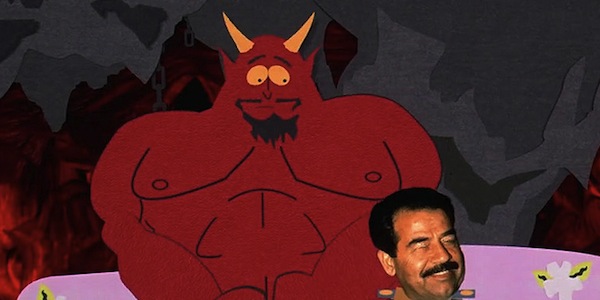 Banned: Burma, Cambodia, Indonesia, Iran, Iraq, Kuwait, Lebanon, Morocco, Pakistan, Philippines, Russia, Saudi Arabia, Sri Lanka, Thailand, Vatican City, Vietnam Matt Stone and Trey Parker, the men behind South Park, are probably the worlds most savage and funny satirists. They seem to have absolutely no sacred cows, an ultra sick sense of humour and a way of capturing what is going on in the world which is very skewed but totally on the money. Parker and Stone produced the feature length movie South Park: Bigger, Longer and Uncut in 1999 which really deals with ideas of freedom of speech and censorship. The film received a Best Song nomination at the Oscars but it would go on to offend and be banned in much of Asia and the Middle East. Hilariously released intact by the British censors with only a 15 certificate, it certainly rubbed up much of the world, especially in countries where the TV series is banned anyway as culturally offensive. So what is in the movie that renders it worthy of being banned? Well Saddam Hussein is portrayed as Satans gay lover. It is said that Hussein was played this film over and over again as a form of torture when he was caught, which is a delightful story but probably fabricated. There is Stans quest for the c******s, Uncle F**ker, Kenny sent to hell for using swear words, an American-Canadian war, the proposed execution of Terrance and Philip and much, much more. Given the scale of the satire and the fact that it deals directly with censorship, the controversy surrounding the film is unsurprising and it and it is not a big shock to see the film so widely banned.
1. Cannibal Ferox (1981)
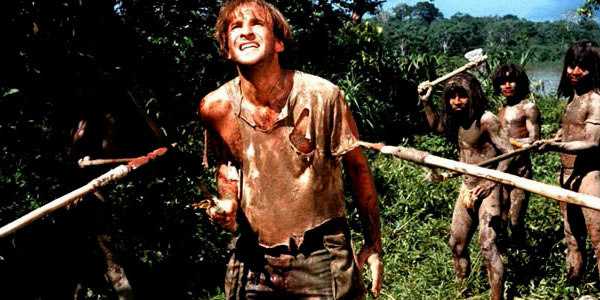 Claimed to be banned in 31 Countries Boldly proclaiming to be the most banned film in the world, Cannibal Ferox is still only available in the UK after six minutes of cuts. When the ban was first rescinded in the UK and the film had been cut so heavily, there was virtually no gore at all and what was left was a silly jungle adventure. Watching the uncut version of Cannibal Ferox, one can see that the film had aspirations to be Cannibal Holocaust in the level of brutality and nastiness it displays Director Umberto Lenzi crafts his story somewhat implausibly. A hoodlum drug dealer called Mike has fled some serious bother in NYC to hang out in the jungle, snorting coke and tormenting the natives. Also entering the jungle is a researcher called Gloria who is here to disprove the idea that cannibals exist for her PhD thesis. She is accompanied by her friend Pat and brother Rudy. Who should they run into in the jungle but Mike? Mike is very cruel towards the natives and eventually they get ticked off at him and chop his hand off. He manages to escape, and this time they chop off his wang in agonising detail. The most tenacious escapee ever, Mike absconds again and this time the natives chop off his head like a boiled egg and feast on his brains. Rudy is killed by ravenous piranha fish and Pat is suspended from hooks in her breasts and left to die in agony. There is also liberal animal snuff in this movie. At the end, Gloria presents her findings: There is no such thing as cannibals. Apparently Gloria is guilty about the white mans treatment of natives and wants to hush the whole thing up lest further interference occur. Cannibal Ferox is not a particularly good film but it is more heavily censored than Cannibal Holocaust. Probably due to the disgusting treatment of animals in this movie. Whilst repugnant, the animal slaughter sort of fits into the narrative of Cannibal Holocaust, but it is just a sadistic free for all in Cannibal Ferox. Cannibal Ferox is vicious but not compelling viewing. But brain eating, penis removal and gratuitous violence against animals got it banned in 31 countries, or so the cover of the DVD proudly proclaims. Thus it retains the ignominious title of the world's most banned movie. https://www.youtube.com/watch?v=moYbTH0QhDY