15 Best Films Of 2015 (So Far)

No, Terminator Genisys isn't on here.
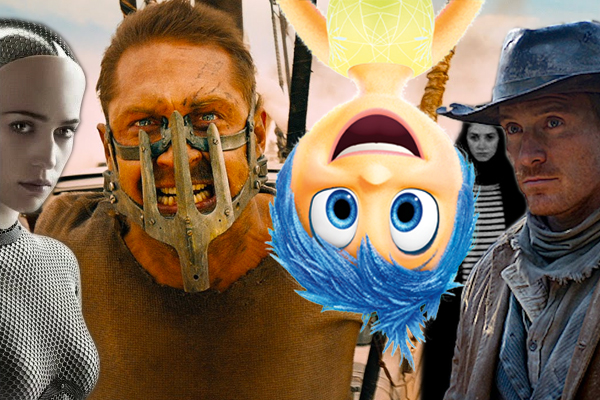
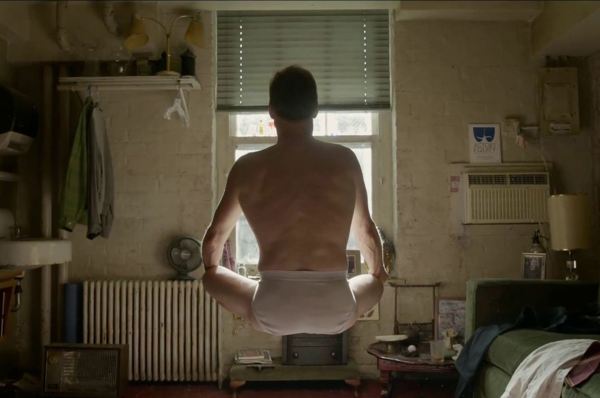
Before it actually rolled around, people couldn't be more excited for 2015 (in movie terms at least). The year boasted more high-profile nostalgia pictures than ever before (it even originally hosted Batman V Superman: Dawn Of Justice before there was release date change) and the Oscar race saw the two most deserving contenders in years vying for Best Picture. Now we're halfway through and it's been... OK. Oh, there's been a lot to like, but the sheer amount of swill that's populating screens is ridiculous. The annual January lull was one of the worst ever, with the likes of Tak-three-n and The Woman In Black: Angel Of Death stinking up cinemas, and the month after was dominated by the abhorrent Fifty Shades Of Grey (still the year's worst film). The in-between months brought more variety, at the very least, even if many hopefuls (Chappie, Child 44) turned out to be duds. Thus far, the Summer of Reboots has been a mixed bag, with many returns from great franchises underwhelming and the occasional more original properties dead on arrival both at the box office and critically (what the heck happened, Tomorrowland). But, for every high-profile disappointment, there's been an interesting, artistically challenging film to wash out the bad taste; 2015 may have given us some of the worst that cinema has to offer, but also some of the best. And, as we pass the mid-point of the year, it's time to take a look back and pick out the fifteen best films of '15. Disclaimer: The films on this list are based off their UK release dates, so some may have been in cinemas internationally before 2015 (and others may yet to have screened elsewhere).

15. Mr. Holmes

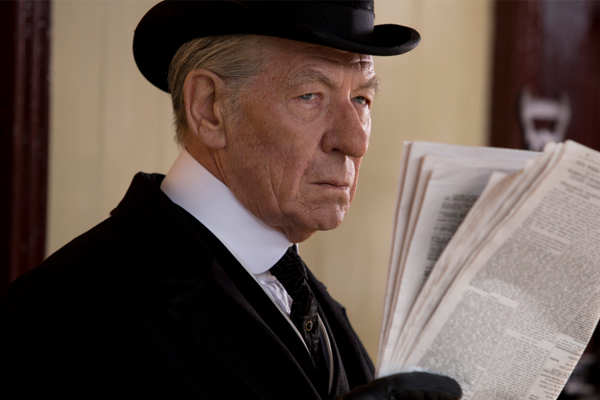
There's a lot to love about Mr. Holmes, the latest reimagining of Arthur Conan Doyle's super sleuth. Bill Condon makes up for his two-part Twilight finale by taking the immortal fictional character and presenting him as a frail old man losing his memory in forced exile, leading to a visually beautiful film that looks at the very nature of storytelling itself. But above all that, its single greatest strength is the casting of Ian McKellen. Without him the film would have still had the same introspective themes, but it wouldn't have had the same emotional grounding that sees it rise above a plot that, for all its semantics, isn't really up to those crafted by Doyle. The stage great's Holmes is, by design, totally different to all previous incarnations, a melding of the original Doyle character and the legend popular culture built him up to be, a conscious portmanteau of a character that McKellen sells as a real, psychological human being. This deftness is essential, because Mr. Holmes is only partially a Sherlock yarn. While the detective's near-mythical status is essential to each of the plot threads, as a whole the movie is dealing with old age as a broader concept, with failing memories and grief its real target.

14. Wild

When we're first introduced to Cheryl Strayed in Wild she's feebly ill-equipped and unprepared for the 2,650-mile Pacific Crest Trail trek she's undertaken. She's also played by Reese Witherspoon. Boy, could she be any more instinctively irritable? And yet, despite all of that (or, more accurately, because of it), over the film she develops - physically and mentally - into a new person, winning the audience just as she spiritually redeems herself from her troubled past (which is, as the motivation for the whole trek, a mystery in itself). After Dallas Buyers Club dominated the acting categories of last year€™s awards season it€™d be easy to think Jean-Marc Vallée was a director who was getting by more on smart casting that his own actual skill behind the camera. And while his latest, Wild, does benefit from Witherspoon in a role that isn€™t just relying on her looks, Vallée is certainly in control, showing he is as essential in giving what could be sappy message movies an edge as his actors are - it's his strong eye that makes Strayed's journey so cathartic. The film has been trumpeted as a major feminist piece, and while it's certainly refreshing to see a performance as mentally open as Witherspoon's, the film is more a humanist story. The overall message of learning from your mistakes and moving past them is a universal one, which applies irrespective of gender (or whatever else).

13. Kill The Messenger

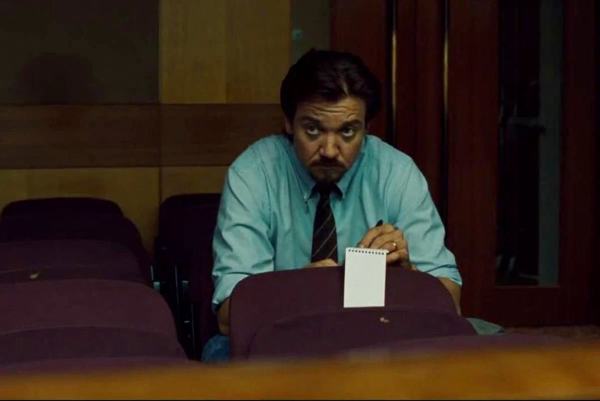
Kill The Messenger hinges on the audience's familiarity, or lack thereof, with Gary Webb and his Dark Alliance expose on the CIA funding the Nicaraguan contra rebels with drug money; the final title card even points out how the discovery was overshadowed in the press because of The Lewinsky Scandal. It is somewhat ironic, then, that Jeremy Renner's passion project, in which he plays Webb during the investigation, has been so totally ignored by audiences. Using the little-known story to craft an All The President's Men-style thriller, Kill The Messenger is primarily dealing with the journalistic process and the extent integrity can be pushed to. It's a smart way to tackle the story, allowing the audience to see not only the details, but also the barriers that needed to be overcome to bring them to light. As the key proponent behind the project (he also produces), this is clearly Renner's film. He is much more at home in character-driven dramas rather than big budget blockbusters, which is incredibly clear here - anyone who blames the actor for the snubbing of Hawkeye in The Avengers would change their tune after seeing Kill The Messenger. It also boasts the best use of Mott The Hoople's Sea Diver in a film imaginable, using its final flourish to present Webb's modest dreams, which alone is enough to make it a worthy watch.

12. Kingsman: The Secret Service

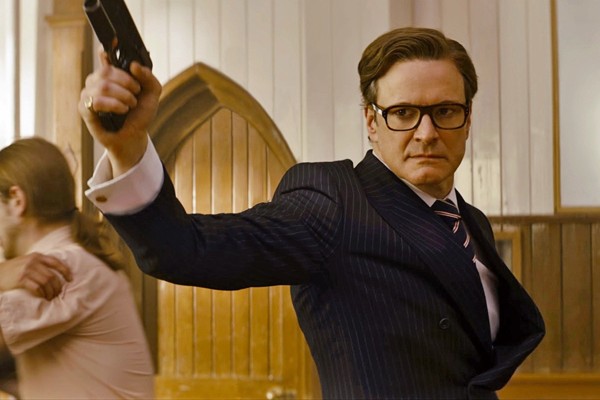
Barack Obama's head explodes in a flurry of colour. Colin Firth goes crazy and murders a bunch of white supremacists in a church. The hero celebrates beating the bad guy by having anal with a princess. Yep, this is Mark Millar and Matthew Vaughn through and through. Kingsman (gifted a sequel enabling subtitle late in production) is hyper-violent and goes to some pretty dark psychological and social places, but is so unashamed about it all it's hard not to be won over. The deep-south massacre might be a bit too on-the-nose, engineered to get the audience cheering at the perceived justice of the bloodbath, but given how unpolitical the rest of the film is, it you can't really fault it. The overall message - that being a gentleman and one's social class are unrelated - even borders on wholesome. There is the question of originality - Kingsman is fresh as a spy spoof, but its narrative (regular guy from the "real" world becomes an unexpected hero) bears a strong resemblance to Kick-Ass. You hope that, as Vaughn features various action moves that are direct parallels to those executed by Hit Girl, that this is a conscious nod by the director to his previous film, rather than showing him and co-screenwriter Jane Goldman falling into type. But even if it is, there's no escaping the unbridled joy that went into presenting it all.

11. Enemy

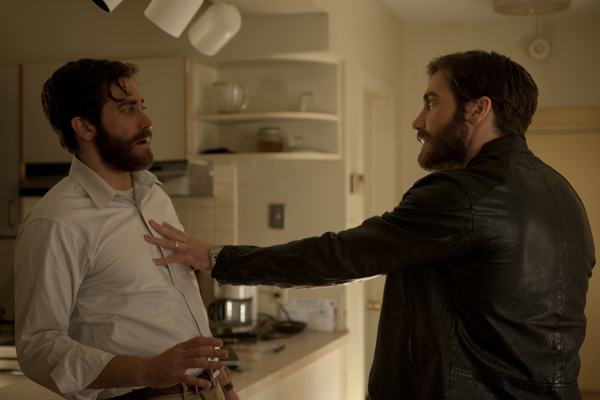
The contentious Blade Runner sequel is set to be directed by Denis Villeneuve, and while it'd be better to leave LA 2019 alone, based on his work thus far he's probably the best man for the job. Prisoners and the upcoming Sicario (Cannes review here) showed he could find distinct character nuance within well-worn narratives, although it's really Enemy, which finally made its way to a UK release in 2015, that shows he might actually be able to deliver a film metaphysically worthy of the original. Far more off-kilter than his other English-language releases, Enemy is a doppelgänger drama that goes even more abstract than the sub-genre's weirdest entries. Jake Gyllenhaal is both meek teacher Adam and cocky actor Anthony, whose meeting causes unease that slowly makes way for psychological horror. From early on it's clear something a little off-kilter, with Adam only realising his lookalike was in a film he just watched through an intense dream sequence, and the confusion only deepens as things go on. Not only are there clear signposts - Adam's mother refers to him as an actor, Anthony's professions - but there's a underlying sense that the whole thing is unreal (aside from giant spiders stalking through the skyline, this Toronto feels purposely fake). The most logical reading of the film is that the entire movie is figurative, showing an internal conflict between two personality fragments of a fractured brain, but rather than providing an answer to all the film's weirdness, that's really only the beginning to understanding the web it weaves.

10. Ex Machina

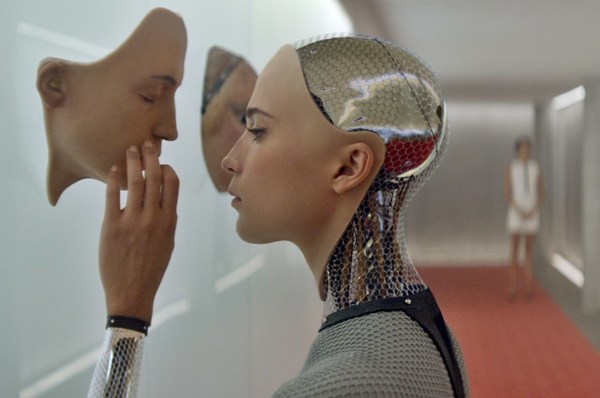
It seems like a week can't go by in 2015 with a new film starring Alicia Vikander being released. The Swedish actress has had a meteoric rise after key roles in off-kilter period pieces Anna Karenina and A Royal Affair, but this year she's become unavoidable - at one point she had three separate films in cinemas at once. But while the likes of The Man From U.N.C.L.E. and The Danish Girl will no doubt be the biggest boost to her career, possibly offering up a box office smash and Academy attention respectively, it's unlikely that she's going to top her performance in Ex Machina. Alex Garland's sci-fi is incredibly modern in its trappings, pushing age-old AI theories like the Turing Test into a high-tech casing, but with its tiny cast and singular location, it's not dissimilar to the cerebral genre offerings of the seventies. As thus, while Domhnall Gleeson and Oscar Isaac get ample opportunity to explore human trickery, the real focus is Ava, Vikander's ground-breaking artificial intelligence, which requires the actress to play a robot that can act human pretending to have actually developed its humanity. Or perhaps the other way round. The film is, essentially, an elaborate, purposely flawed Turing test, at first asking the audience to assess Ava's humanity before jumping the gun and providing its own solution, making her physically indistinguishable from a real person.

9. It Follows

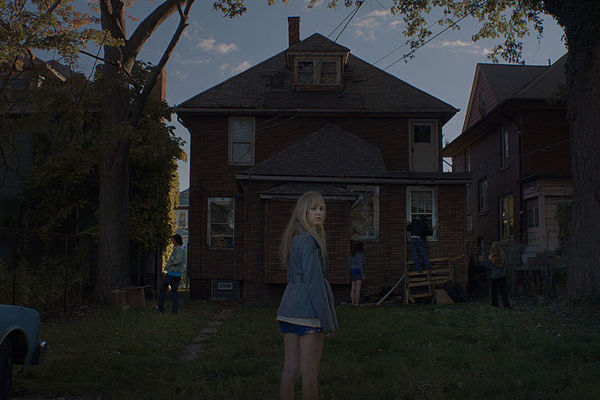
There's a nice little movement going on in horror at the moment, with rising directors crafting films stylistically homage the genre movies of the early-eighties, chiefly the work of John Carpenter. Last year we got The Guest, and now there's It Follows, which is, if anything, even better. David Robert Mitchell doubles down on this element, with a suburban setting that looks directly lifted out of Halloween (along with the slow, creeping camera), while a synth-score owes a heavy debt to Vangelis' work on Blade Runner. It's a genre fan's dream, oozing style but never feeling too indebted to what inspired it. But the film isn't just a pulpy throwback piece; rather, it's a naked look at the one true, unavoidable horror. The set-up, with Jay contracting the haunting follower through intercourse, makes the film feel like it's an STD fable, somewhat looking at the innate dangers in everyday life, yet as the third act kicks into gear it becomes apparent the unfaltering spectre is actually a metaphor for death. It's always there, looming just out of reach, soldiering forward irrespective of any mortal intervention and destined to inevitably catch you. The final scene, with Jay and a now-contracted Paul calmly walking down a street as the figure stalks just behind their pace in the distance, is a creepily delivered, surprisingly weighty conclusion; death is inescapable, but together they can at least accept it.

8. A Girl Walks Home Alone At Night

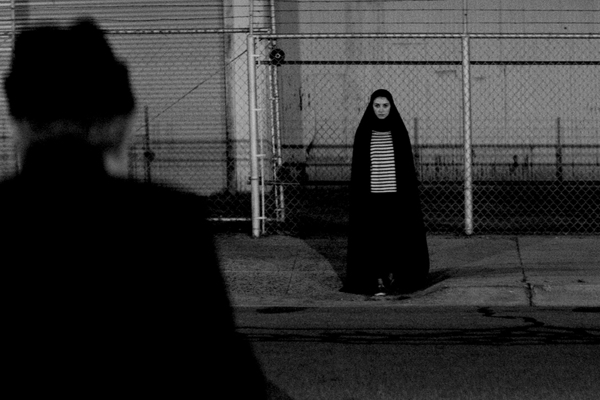
Thanks to endless parodies, countless cheap actioners and, biggest of all, Twilight, the general consensus is that the vampire movie is spent. The logic is outdated, the subtext no longer relevant and the terror utterly neutered. Yet flying in the face of that is a run of incredible movies that take the blood-sucking figures and find totally new ground. And, sitting right alongside modern classic likes Let The Right One In is this year's A Girl Walks Home Alone At Night, the self-proclaimed "first Iranian vampire Western". It's a mash-up that works, thanks in no small part to it not feeling like a mash-up at all. There's stylistic similarities to various other auteurs, but in a macro sense the film is one of the most unique pieces we've had a good long while, with a cool air to the eerily-empty fictitious Bad City making it, and thus the film, incredibly alluring. It's never clear if you're supposed to be scared, elated, sickened or touched by The Girl, with scenes juggling all those feelings at once, and that's entirely the point. A pivotal scene sees young man Arash goes back to her home, where the pair slowly give themselves to each other to. The audio fluctuates and the bodies move with an ethereal slowness, making it tense and romantic in equal measure.

7. Slow West

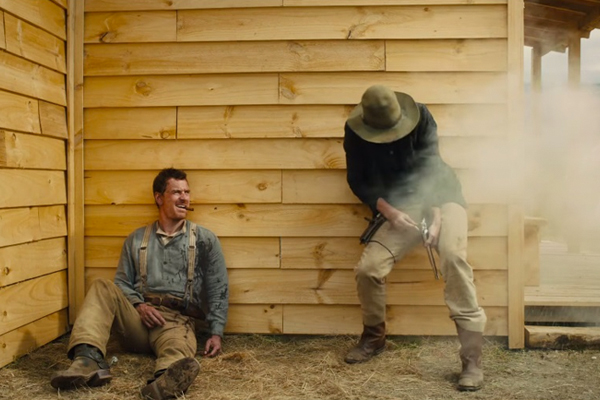
Coming in at only 84 minutes long, Slow West in lean film with a simple drive. It's well shot, brilliantly edited and moves at such a pace that its semi-episodic nature is hardly noticeable. Not bad from a first-time feature. Michael Fassbender plays Silas, who is pretty much an embodiment of the end of the Old West. He is cold, violent and uncompromising, a man who puts his vague morality aside in favour of money. But, in coming into contact with the idealistic Jay Cavendish (Kodi Smit-McPhee), he gradually eventually breaks down his personality, winding up a typically civilised man in the process. Many modern takes on the oft-ignored Western genre have toyed with the end of days, but few have it running so firmly through the entire film as John Maclean's impressive directorial debut. The people who populate the desolate landscape are all too self-aware of the shifting times and how the ruthlessness they surround themselves with isn't going to survive. It's almost sad. Maclean has a particular skill when it comes to crafting story and dream sequences, letting audio bleed over and allowing the camera to linger on increasingly purposeful details. Like several rising directors on this list, it'll be very interesting to see what he does next. At the very least, Tarantino's The Hateful Eight has some serious competition.

6. The Theory Of Everything

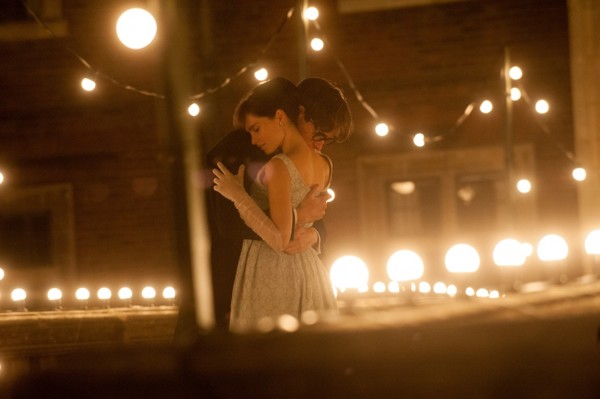
The Theory Of Everything should have been Oscar bait of the highest order, a box-ticking mix of biopic and tissue-wrangling drama, and yet while it inadvertently does all that (Eddie Redmayne won the Oscar for Best Actor, after all) it transcends such materialistic goals. As much as James Marsh's first non-documentary is a Stephen Hawking biopic, charting his rise to become the world's most widely-respected physicist, juxtaposed with the onset of increasingly debilitating motor neurone disease, The Theory Of Everything is at its core about his relationship with first wife Jane. The initial elation of a first kiss, the emotion-driven decision to fight the disease, the eventual wearing down as years become decades; it all plays out like you'd expect, but there's something more burrowing underneath the incredible subtle performances of Redmayne and Felicity Jones (who never gets a proper "show" moment, but is just as brilliant as her award winning acting partner in her purposed restraint). This is a film that takes a look at love in its brilliance and messiness, coming out as a timeless romance drama as much as it is a biopic. Using a true-life story to do such theoretical swipes is always a risky move, especially when the parties involved are still alive, but this balances it all perfectly.

5. Mad Max: Fury Road

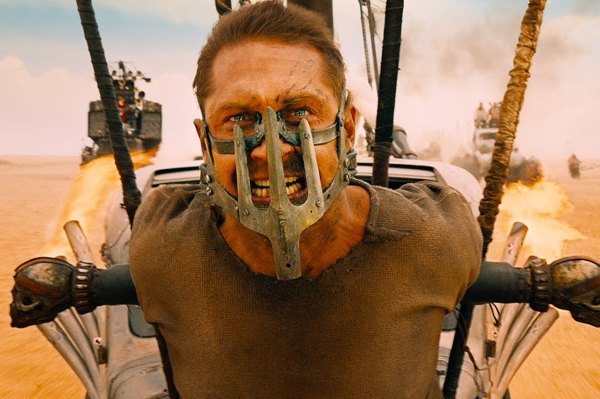
Mad Max: Fury Road - blockbuster of the year? J.J. Abrams and Sam Mendes may have something to say about that in the coming months, but at the mid-way point it's certainly looking that way. And it's not a consolation prize thanks to the likes of Avengers: Age Of Ultron and Tomorrowland not living up to expectations - George Miller's fourth entry in the post-apocalyptic series, the first in thirty years, is a thrilling spectacle with more innate adrenaline than a whole herd of Indominus Rexes. Primarily, the action is stupendous, over the top and grounded in all the right, respective ways. Clear vehicle designs make a driver's allegiance immediately obvious and the sequences are so meticulously choreographed that you instinctively know what's going on. That sounds like it should be a given for a big budget release, but so many modern action flicks mess up this very simple facet, leading to visually busy, but ultimately empty scenes. It's not just heart-pumpingly real though. Each beat has a clear purpose within the story, either progressing the narrative or telling you more about the characters. Miller is telling a story first and foremost, but has simply chosen to do so using cars and explosions instead of dialogue and raised voices.

4. A Most Violent Year

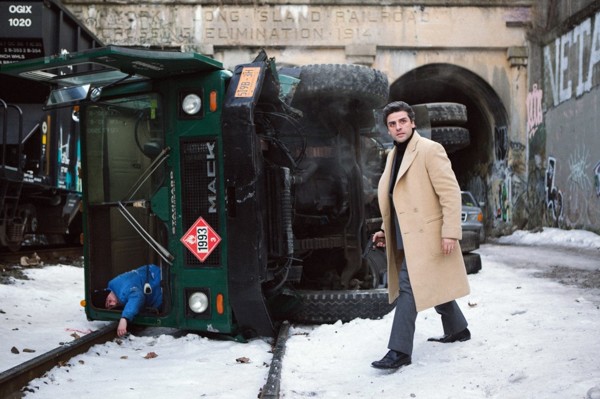
By the time the year comes to a close, everyone's going to be calling Oscar Isaac a breakout star for his part in Star Wars: The Force Awakens, which is quite frankly ridiculous. Not in that his performance as X-Wing pilot Poe Dameron will be anything less than excellent, but that he's been one of the most consistent screen actors for the past few years. He wowed in the Coen's Inside Llewyn Davis as the titular folk singer willing himself into a rut and flirted with the relativity of amorality in The Two Faces Of January, but his standout role thus far came in A Most Violent Year. His Abel Morales is a character at once familiar and new. By background stereotypical gangster (his origin is a few minor details away from Tony Montana), he strives to toe the straight and narrow, making a name for himself without diving into the muck that plagues 1981 NYC. Alternatively troubled and confident, it's never fully clear just how safe and in control Abel ever is. It's not just Isaac's show though. J. C. Chandor's third film solidifies him as the most versatile up-and-coming talent in American cinema; after market crash drama Margin Call and one-man survival thriller All Is Lost, his subversion of the idealistic rug-pull of Goodfellas shows there's no genre he can't embody and twist with expert precision.

3. Whiplash

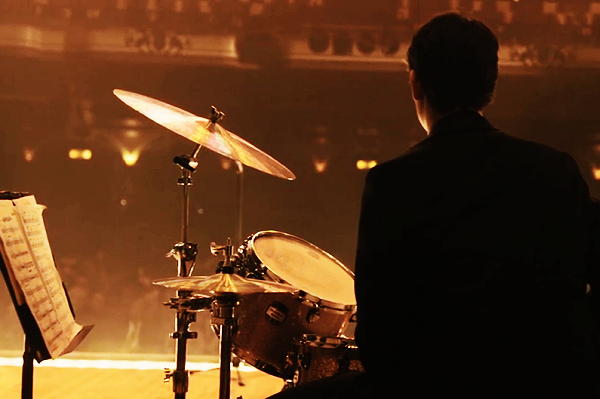
On the face of it, Whiplash could have been a rather typical aggressive mentor/put-upon student narrative, with a hopeful drummer clashing with his ideologically opposed teacher. And while it shares all the broad narrative elements with that sort of story, Damien Chazelle brings heightened stakes and involved intensity that push the film to unique greatness. Andrew isn't just some student trying hard to excel. Ge is, without compare, the best; an incredibly talented drummer at the best music school in the country, knowingly capable of greatness. And yet, even with natural talent and a self-destructive drive he still has to put himself through emotional and physical trauma to even be in with a shot of making it. It's an extreme look at fame and success. J.K. Simmons is more than deserving of his mantlepiece busting plaudits, as is Miles Teller as the brutalised Andrew. The pair share an abusive relationship that feeds on the desire for respect The film takes drumming, for all its kineticism a hard sound to appreciate, and makes it instantly engaging, tuning the audience into what makes the music so lyrical. All this culminates in the final scene, where Andrew and Fletcher showdown on stage at Carnegie Hall. The tensest scene from this year (and that includes Mad Max), it gives new, literal meaning to the term "edge of your seat".

2. Birdman

Birdman is a triumph on every single level. The script is both razor sharp in its satire and a well-pitched documentation of a mental breakdown, realised by a collection of actors totally immersed in their send-up roles and set against a technically flawless production, with effortlessly fluid cinematography and a minimalist drum soundtrack expanding the hallways of the off-broadway theatre setting. You could focus on a single one of those elements and wind up making a pretty great film, but Alejandro González Iñárritu doesn't skimp on artistry once, bringing them all together in a blackly comic dissection of the ego. Whether it's creating a vast mental delusion of a superhero action finale or berating critical bias, The Unexpected Virtue Of Ignorance hits every single one of its targets. And, for all its contemporary elements (the casting of Michael Keaton as a past-it superhero actor chief among them), the broader strokes are incredibly timeless. The film is the most deserving Best Picture Oscar winner since The Lord Of The Rings' clean sweep over a decade ago, but that hasn't stopped some from claiming that it's "overrated". But if a film is going to suffer from extreme levels of hype, isn't it rather fitting that it's one so inward looking?

1. Inside Out

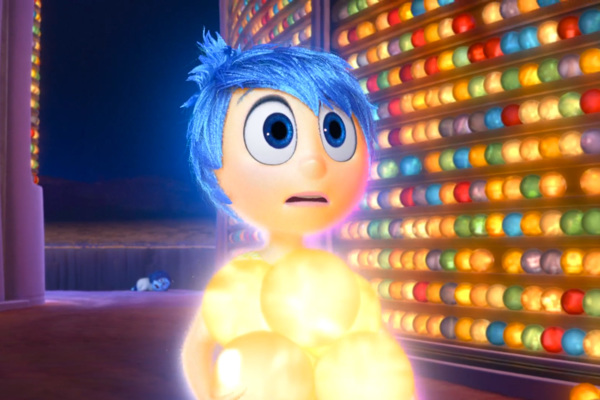
A film set inside the mind of an eleven year old girl, looking at her various emotions as she moves from Minnesota to San Fransisco, that expands to become an alternatively touching and heart-breaking look at the process of growing-up and the inevitable changing of memory. Oh, it's good to have you back Pixar. With Inside Out, Pete Docter cements himself here as Pixar's premiere talent. His films - as well as Inside Out he's directed Monsters, Inc. and Up - are among the studio's very best (and with their track record that's saying something), each taking ideas so simple in their genius and turning them into something purposeful and accessibly complex. They're the sort of films kids will obsess over upon release and get that joy of realising they're actually masterpieces when they grow up. There's been a massive question mark of the studio recently, with a distinct lapse in quality - they've only dipped into out-right bad territory once (Cars 2), but the 2010's has seen them lacking that same spark that made their name. This throws all those concerns away with sheer joy and emotive sadness. If Inside Out isn't the best film of the year when 2015 comes to an end, then there must be something absolutely incredible coming in the next six months. What's your favourite film of 2015 so far? Share your pick down in the comments.

Contributor
Contributor

Film Editor (2014-2016). Loves The Usual Suspects. Hates Transformers 2. Everything else lies somewhere in the middle. Once met the Chuckle Brothers.