15 Bravest Creative Decisions In Comic Book Movie History

Ultra ballsy ideas that went against the grain and somehow worked.
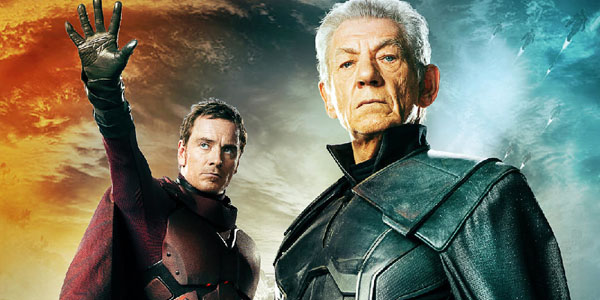
Making a comic book movie is so much more challenging than just adapting any regular book: comic book fans are famous for their near-insane level of devotion to their most beloved characters, and their unrivaled ability to nitpick everything from plot points to the most mundane details hidden in the background. As a result, it's typically the most meticulous and respectful filmmakers who rise to the top of the pile, while those who don't care to indulge the fanboys end up on the receiving end of hateful Internet bile. That said, sometimes a creative choice is just a huge, even irresponsible gamble, regardless of the talents of the people involved. Sometimes no matter how skillful and respected the writer or director might be, it's just difficult to see how an idea can work, though of course, only when the lights go down and the movie starts do we find out once and for all. Some of these ballsy ideas went against the grain and worked, while others were admirable failures, and some just outright sucked, but they all at least earn a point for their ridiculous, often idiotic bravery, even if fans didn't always appreciate the effort. Did we miss any hugely daring creative decisions in comic book movies? Let us know in the comments!

15. Killing Off Cyclops, Jean Grey & Professor Xavier - X-Men: The Last Stand
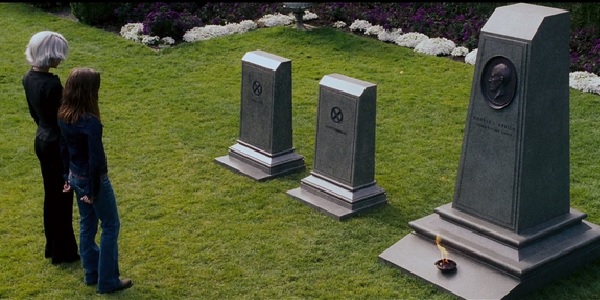
Brett Ratner's X-Men: The Last Stand was nothing if not a brave movie, perhaps stupidly so. Ratner clearly didn't care too much about rattling comic book fans, and decided to kill off three of the franchise's most beloved characters in one fell swoop. Cyclops (James Marsden) is the first on the chopping block, being disintegrated by Jean Grey aka Phoenix (Famke Janssen) at Alkali Lake and essentially dying off-screen, before she later disintegrates Professor Xavier (Patrick Stewart) as well. Finally, Jean urges Wolverine (Hugh Jackman) to kill her and stop her destructive path, causing him to fatally stab her. Did It Work? Not at all. The Last Stand majorly angered fans of the series, because, for one, Cyclops lamely died off-screen, and these were simply characters we didn't want to see written out of the X-Men mythos. Ratner at least knew that killing Xavier was a terrible idea, because he confessed in the DVD commentary that the comatose patient we see in the post-credits scene is supposed to be Xavier's twin brother, allowing him to be resurrected. Thankfully Bryan Singer retconned this mess of a movie with the recent Days of Future Past, but we'll get onto that later...

14. Full-Frontal Male Nudity - Watchmen

Zack Snyder's Watchmen prided itself on being a totally different type of superhero movie: it was a movie about the very notion of superheroes and how they exist in society. The most literally colourful character is surely Dr. Manhattan (Billy Crudup), a nuclear-powered, blue-hued superhuman who helps the U.S. win the Vietnam War and becomes instrumental in the movie's climactic events. One of the most eyebrow-raising aspects of his character, though, is the fact that he appears naked at all times (though CGI pants were added for the trailer). Did It Work? Define "work". It's faithful to Alan Moore's source comic for Dr. Manhattan to be naked, though given the movie's disappointing box office gross, it's possible that audiences just weren't ready to see a giant, blue dong taking up a decent portion of the screen. Granted, the movie was already a pretty tough sell, and even if you're a fan of the comic, the nudity is relatively distracting at times, so perhaps throwing it into the mix might have been just too much weird for one movie.

13. Idris Elba As Heimdall - Thor

Race is always going to be a big issue with comic book movie casting, as we learned arguably no better than when Idris Elba was cast as the guardian of the Bifrost, Heimdall, for Kenneth Branagh's Thor. Much like when Michael Clarke Duncan was cast as Kingpin in Daredevil, many fans were up in arms that the black actor was cast as a character who is usually about as white as white can be, even being nicknamed "the whitest of the gods". Did It Work? Absolutely. Elba did well to confront the criticism prior to the movie's release, and while Heimdall isn't exactly a huge part of these movies, Elba did a great job in the role, which for most fans was probably enough to calm the controversy down anyway. Huge Thor fans might still take umbrage with the choice, but given how Heimdall isn't a massively well-known comic book character to casual audiences, it's not exactly tantamount to changing the race of Superman or something...

12. No Lex Luthor Or Kryptonite - Man Of Steel

Say what you want about Zack Snyder and his Superman movie, but it certainly went in a number of brave, new directions in an attempt to distinguish itself from what had come before. Along with the gritty, Christopher Nolan-inspired style, the movie was the only Superman movie other than Superman III not to feature Lex Luthor in some capacity. Given how iconic Luthor is, allowing the movie to rest instead on the shoulders of General Zod (Michael Shannon) was a palpable risk, considering how lesser-known he is to casual audiences. Then there's the total absence of Kryptonite, the pesky green rock that turns Superman (Henry Cavill) into a helpless wad of cookie dough. Instead, the atmosphere of Zod's Kryptonian vessel afflicts Superman in a Kryptonite-like manner, albeit without anyone having to utter the word. Did It Work? Pretty much. Luthor as a character has been done to death, so it's nice to see a director try to tackle a different villain, and thanks to Shannon's performance, Zod pretty much works. Kryptonite appearing in the movie wouldn't have been a problem, but props to Snyder and David S. Goyer for trying something a little different. No complaints here.

11. Recasting The Hulk Three Times In A Decade

No comic book character has been through as many troubled iterations in such a short time as The Hulk. In 2003, Eric Bana took the helm for Ang Lee's divisive Hulk, and though Bana was generally praised for his part, it was felt that the script and lethargic pacing let him down. 2008's The Incredible Hulk featured Edward Norton placing Bruce Banner, and the movie was generally seen as a huge improvement over 2003's effort, with Norton being praised as a strong Banner. However, Norton's creative clashes with Marvel led to him not being invited back for The Avengers, with Mark Ruffalo instead getting the part and ultimately stealing the show away from Robert Downey Jr's Iron Man. Did It Work? In the end, yes. It was certainly frustrating that the part had to be switched out so many times, especially considering that all three actors played the part well, but Marvel managed to land on the best of the three at the end. Hopefully this means they have secured the fate of the big green guy for the considerable future, even if a standalone Hulk movie isn't looking likely anytime soon.

10. Hugh Jackman As Wolverine - X-Men
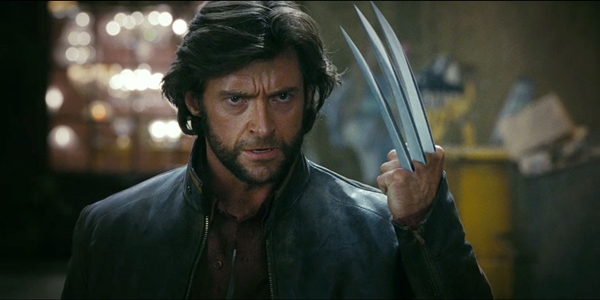
It's hilarious to consider now, but back in 1999, there was a lot of ambivalence over the casting of relatively unknown Australian actor Hugh Jackman as one of the comic medium's most beloved characters, X-Men's Wolverine. After all, Jackman had virtually no significant acting credits outside of Australia, and was better known for working on musicals: what could he possibly bring to the role of a grizzled superhero with metal blades that protrude out of his hands? Did It Work? Of course. Need we say anymore? Jackman was an instant hit with fans, and has been the one true constant of the X-Men franchise to date, to the point that some cynical viewers like to refer to the movies as "Wolverine and friends". Despite Jackman now being in his mid-40s, the actor is showing few signs of slowing down: hopefully we can get at least another decade of him in a role that truly is one of the all-time great matches of player and part.

9. Basically Remaking Sam Raimi's Spider-Man - The Amazing Spider-Man

After negotiations broke down with Sam Raimi and Tobey Maguire for a fourth Spider-Man movie, the decision was made to simply reboot the property with a new director and lead actor before the rights ended up reverting back to Marvel. Cue The Amazing Spider-Man, which hit cinemas in 2012, starring Andrew Garfield as Peter Parker, with (500) Days of Summer director Mark Webb taking the reins. What's most surprising about this movie is that, rather than simply begin with Peter Parker in situ as Spider-Man, the movie retreads most of the origin story plot beats we'd seen just a decade earlier in 2002's original Spider-Man movie, namely the spider bite, Uncle Ben's (Martin Sheen) death, and Peter's acquisition of the suit. Did It Work? Not really. It again depends how you define the movie's level of success. It was a huge hit at the box office and did well with critics, though many decried the movie's inherent laziness in so brazenly regurgitating an hour's worth of story that we'd already seen executed perfectly fine in Sam Raimi's movies. Some have argued the necessity of repeating these iconic moments, but for viewers with Raimi's movie still relatively fresh in the mind, it stinks of taking the most safe, unimaginative route possible for a reboot.

8. The Gritty Style Of Batman Begins

Compare The Amazing Spider-Man reboot with one that absolutely cannot be called lazy, and that's Christopher Nolan's gritty re-working of the Batman franchise. His Batman Begins reboot was everything that Joel Schumacher's two movies (Batman Forever and Batman & Robin) were not: it was serious, dark, brooding, and didn't have a scrap of camp to speak of. Stylistically, the movie was a complete breath of fresh air: the sickly neon visuals of the last two movies were substituted for a more pared-down, "realistic" depiction of Gotham, while Hans Zimmer and James Newton Howard's electronic score was again something totally new. In addition to that, the all-star cast was certainly an upgrade from the rather dubious casting decisions made in the last two movies. Did It Work? Hell yes. Pretty much every aspect of the movie is first-rate: the cinematography, set design, score, acting, script and direction were all widely praised, and of course, helped make Batman a pop-culture staple once again. Nolan's style also proved massively influential, with many blockbusters tending to favour this more downcast, formalist aesthetic over cartoonish bombast.

7. Retconning The X-Men Franchise - X-Men: Days Of Future Past

Time travel can be both a blessing and a curse, but given that a) this movie was being adapted from a beloved comic book story and b) it gave director Bryan Singer a chance to fix everything he didn't like about the previous X-Men movies, it was most certainly a blessing. For starters, the movie abandons Professor Xavier's death in X-Men: The Last Stand from the outset, refusing to explain how he came back to life and just asking audiences to go with it. However, the most prominent changes come once Wolverine has convinced past Mystique (Jennifer Lawrence) not to kill Bolivar Trask (Peter Dinklage) at the end of the movie, preventing the green-lighting of the Sentinel program and essentially pressing the reset button on all of the X-Men movies to date. Wolverine wakes up, and though he's still fallen in with Professor Xavier and his crew, most of the events of the previous movies simply haven't happened. Most importantly, we see that Jean Grey and Cyclops are still alive, and as such, The Last Stand can simply be a distant memory. Did It Work? Emphatically yes. While we're not at all clear on what exactly has and hasn't happened in the new timeline, Singer came up with an artful and intelligent way to fix those plot elements from The Last Stand that fans totally hated. Now we can put The Last Stand and Origins: Wolverine out of our minds and look forward to what the franchise has to offer us next...

6. Batman Breaks His No-Kill Rule - Batman (1989) & The Dark Knight Trilogy

One of the distinguishing aspects of Batman is his no-kill policy, that no matter how far a villain pushes him, he won't take the life of anyone in the pursuit of "justice". However, a number of times throughout his cinematic tenure, Bats has found himself betraying that rule, often under dubious or debatable circumstances. Firstly, we have Tim Burton's 1989 Batman, where the Caped Crusader (Michael Keaton) grappling-hooks The Joker's (Jack Nicholson) leg to a concrete statue, causing him to fall to his death when the helicopter he's trying to escape on pitches upwards. Then there's Christopher Nolan's Batman movies. Bruce Wayne (Christian Bale) is against killing, though in Batman Begins, he explodes the League of Shadows' temple, surely killing a number of people. Then there's the much-discussed case of leaving Ra's al Ghul (Liam Neeson) to die when the train derails ("I won't kill you, but I don't have to save you"), his tackling of Two-Face (Aaron Eckhart) in The Dark Knight, causing him to fall to his death, and then firing missiles at Talia al Ghul's (Marion Cotillard) Tumbler in The Dark Knight Rises, causing her to die as a result of the crash damage. Did It Work? It depends. Not really in the Tim Burton movie, because Burton clearly had no regard for the no-kill rule and just went with whatever he wanted. There's a greater sense of ambiguity in the Nolan movies, though Nolan's stance is clearly that Batman has never actually killed anyone directly, which, really, is total bull. The Joker (Heath Ledger) provoking Bats and promising he'll have to break his rule is great fun, and it's a shame the rather awkward nature of this rule wasn't explored more in the trilogy.

5. The Mandarin Twist - Iron Man 3

Director Shane Black and co-writer Drew Pearce pulled a fast one over comic book fans everywhere with the hugely-anticipated Iron Man 3. One of the main attractions was the prospect of seeing Ben Kingsley playing one of Iron Man's most feared enemies, The Mandarin. After roughly an hour of build-up, the truth is revealed to us, that Kingsley's character is in fact a drug-addicted, slumming actor by the name of Trevor Slattery, a goon hired by the "real" Mandarin, Aldrich Killian (Guy Pearce), to act as a visual figurehead. Did It Work? Not really. It's an incredibly brave decision to essentially make a joke character out of a major comic book villain, and though the means in which Black and Pearce played with audience expectations was certainly surprising and hilarious, it's not really what the trailer had sold us, nor what fans of the comics really wanted. The backlash was so severe that in the follow-up short film All Hail the King (again starring Kingsley as Slattery), we find out that there is another real Mandarin, surely in an attempt to console those who felt that Black and Pearce completely wasted the character. It was an incredibly ballsy move, and despite the laughs it generated, probably not worth the negative reaction it received. Still, Iron Man 3 made $1.2 billion at the box office and opened to solid acclaim, so you can't knock it too much.

4. Michael Keaton As Batman - Batman

Unless you're of a certain age, you probably won't remember the backlash that followed the casting of Michael Keaton as Batman for Tim Burton's 1989 movie. Archived articles such as this give us a clear picture of just why nobody could take the actor seriously as one of comic lore's quintessential superheroes: fresh off working with Burton on his quirky comedy Beetlejuice and sporting a "less-than-heroic chin", many just couldn't see the relatively ordinary-looking Keaton as nailing the tortured complexity of Bruce Wayne and Batman. Did It Work? Absolutely. Many automatically defer to Christian Bale as being the best Batman simply because he got the best pick of the movies, but Keaton is easily up to par as well, delivering a stoic, thoughtful and restrained rendition of the character even as Burton layered on the camp and outlandishness. As with a few cases on this list, it's proof that even when a casting decision seems totally insane, it's best to keep an open mind, at least until a trailer shows up.

3. Superman Kills Zod - Man Of Steel

Though Batman is the superhero best known for having a no-kill rule, Superman isn't particularly thrilled about ending lives either, though in fairness he doesn't seem quite as strict about it as Bats. This nevertheless led to a highly controversial moment at the end of Man of Steel, as General Zod aims his heat vision at some innocent civilians, essentially committing "suicide by cop" by forcing Superman to kill him in order to save lives. Supes snaps his neck in one of the most shocking moments in recent comic book history. Did It Work? Snyder and David S. Goyer received massive criticism for the scene, and even Christopher Nolan fiercely objected to it, but in the end, it's the high emotional peak of the movie, and isn't flippantly used as a fast way to dispatch Zod: Supes anguishes over the decision and is clearly distraught at having to kill one of his own. Basically, Snyder made it count, and though some might like to cling to their cherished visions of superheroes with one-dimensional sets of rules that aren't really applicable in the real world, Snyder confronted it head-on.

2. Heath Ledger As The Joker - The Dark Knight

Much like when Michael Keaton was cast as Batman, the vitriol surrounding Heath Ledger's casting as The Joker for The Dark Knight cannot be exaggerated. The collective consciousness that is the Internet came out in full force, unable to believe that a pretty-boy actor known for starring in comedies and dramas could pull off something as savagely grotesque as the Clown Prince of Crime. Did It Work? Needless to say, those Internet commentators all felt mightily stupid once the first trailer for The Dark Knight was released, and a virtually unrecognisable Ledger soon enough became the movie's major talking point. His untimely death a few months later naturally coloured the movie and his performance in particular in a totally different light, but Ledger was almost universally singled out as the greatest aspect of the film, even becoming the first actor in a superhero movie to win an Academy Award for his work. In addition, Ledger has set an intimidating benchmark for The Joker that few actors will want to attempt to top. What do we learn from this? No matter how sure you are that an actor is wrong for a part, they all have the ability to surprise us, and along with fantastic make-up and an awesome wardrobe, can transform themselves beyond anything we'd ever dreamed of.

1. Ben Affleck As Batman - Batman v Superman: Dawn Of Justice

Last summer, the shock announcement of a Batman vs. Superman movie was followed-up by the even more jaw-dropping revelation that the new Batman was going to be played by...Ben Affleck. Cue an Internet meltdown and a massive collective groan from comic book fans everywhere: after all, how could the guy who ruined Daredevil be any good as the Caped Crusader? Affleck may have made a great career for himself as a director, but he's never exactly been singled out as a particularly skilled actor, and after failing as a superhero once, what could possibly possess him to get back in the saddle, especially after Christian Bale's excellent rendition of the character? Did It Work? We'll have to wait and see. The single official image released of Affleck in the Batsuit looks, frankly, awesome, and gives us plenty of hope that Affleck's version of the character will simply be something very different from what we've seen before. If Affleck can figure out a Bat-voice that doesn't sound totally ridiculous, then there's even the potential for him to out-Batman Bale, though there are admittedly few expectations that Batman v Superman: Dawn of Justice will be able to measure up to Nolan's vision of the character. What's your take on these brave comic book movie choices? Let us know in the comments!

Contributor
Contributor

Stay at home dad who spends as much time teaching his kids the merits of Martin Scorsese as possible (against the missus' wishes). General video game, TV and film nut. Occasional sports fan. Full time loon.