15 Classic Things Most Modern Movies Are Missing

Call us old fashioned...
Cinema in the form it is known today is undeniably extraordinary: if George Melies, David Lean, Stanley Kubrick and so many other departed champions of the medium could have feasted their eyes on, say, Alfonso Cuaron's Gravity, surely they would support the notion that film has never been better than it is right now. That said, as exemplary as the very best of contemporary cinema can be, progress does result in the loss of some classic aspects of film which many aren't quite so eager to let go of. As digital technology has grown, more movies than ever are being made and studios are more accountable for their mistakes than ever. The industry has changed substantially over the last two decades in particular, mostly for the better, albeit at the cost of many things older cineastes still hold dear. This refers to the convenience of modern life bleeding into cinema itself (and making plots inherently less believable), some unsavoury, controversial stylistic trends, and other common elements nowadays that have become tired and boring in comparison to the classic model of narrative and filmmaking. Here are 15 classic things that most modern movies are missing, and whether it's possible for them to make a surprise comeback.

15. Hand-Drawn Posters

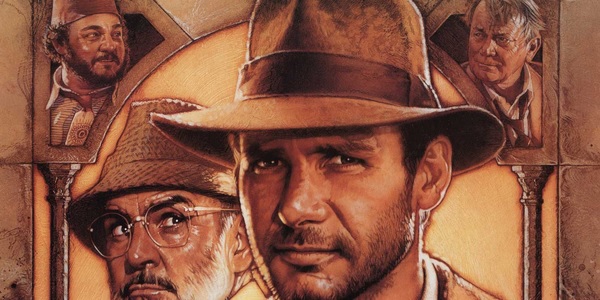
When you think of a classic movie, there's a good chance the image of one of Drew Struzan's amazing hand-drawn posters comes to mind. He created the iconic promotional art for films such as Blade Runner, Big Trouble in Little China and Back to the Future, and is probably the best-known of the Hollywood poster artists. Regardless of whoever designed the piece, though, the fact is that hand-drawn movie art has an otherworldy texture to it that Photoshop just can't replicate: it adds another layer to the image, separating it from, say, Harrison Ford just playing dress-up, and helping sell the idea of him as a legendary adventure-hungry explorer before you even get in the movie theater. Modern poster art is sadly almost entirely digital, and though there are plenty of extremely talented computer artists, studios too often defer to generic drag-and-click templates, complete with hilariously awful airbrushing. Can It Make A Comeback?: Not a chance. The beautiful work of Struzan and his colleagues is just too expensive and time-consuming compared to the snappy designs that can be mocked up in 15 minutes on Photoshop. Nowadays, hand-drawn poster art is confined to a specialist novelty that collectors are forced to pay over the odds for due to the low demand from consumers at large and the studios themselves.

14. Smoking

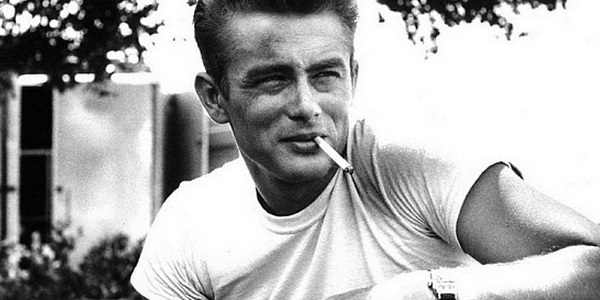
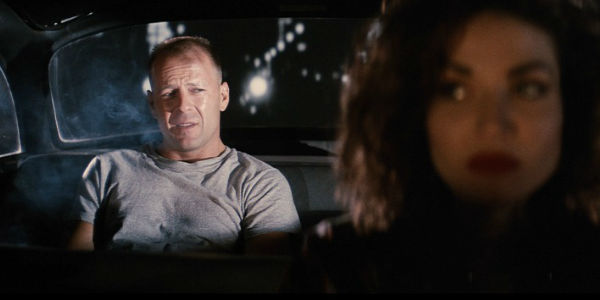
Smoking in movies is indicative of one era in particular, and that's the so-called "Golden Era" of classical Hollywood cinema, from the late 1920s to the early 1960s. When you think of smoking in cinema, there's a good chance you conjure up imagery in your mind of Humphrey Bogart or one of his femme fatales sucking on a cancer stick, or perhaps James Dean, a defiant symbol of rebellion, having a sneaky smoke. If not, then perhaps it's Audrey Hepburn's Holly Golightly, fancy cigarette holder and all. Smoking has always been a cinematic signifier that someone is either troublingly sexy or an awesome bada**, though as the perception of smoking has changed over the decades, now viewed by most as a dirty, undesirable habit, it's unsurprising that cinema has followed along the same path. With tobacco companies mostly prohibited from promoting their products in movies these days, it's unsurprising that they rarely appear in modern films unless somehow central to the plot, and even if there is a shot of the cool protagonist taking a drag, the brand will almost never be alluded to (again, unless it's somehow important to the plot, because the film won't be making any money from it). Few are going to argue with the health hazards of heavy smoking, though it was an easy way to make a character look cool... Can It Make A Comeback?: No way. Public opinion has shifted so substantially over time that there's absolutely no way to reverse it. Alcohol advertising is at an all-time high, though, so Mr. Jack Daniels appears to be the new Marlboro Lights.

13. The Feeling That Anything Can Happen

Before the advent of broadband Internet in every home, there was a greater veil of mystique and intrigue around the film industry. Audiences didn't get to see 5 trailers, 11 TV spots and 9 clips on YouTube before the movie hit cinemas, nobody had a camera phone to snap set pics out of their apartment window, and there weren't any popularly-visited web forums where extras could leak that secret cameo they saw while filming. Nowadays, it's a genuine shock if filmmakers manage to get anything past cinemagoers, hence why J.J. Abrams has been so fiercely protective on the set of Star Wars Episode VII, making everyone involved with the production sign iron-clad non-disclosure agreements on threat of being thrown into a Sarlacc pit if they break it. In decades past, this immediacy of information just wasn't possible, and as such, audiences only really saw what studios wanted them to see, while the studios themselves didn't have the wide-open advertising space of the Internet to inundate people with material. Until about the late 1990s, cinema still felt mysterious and enigmatic: nowadays so little feels unpredictable and shocking, and if you have to cut yourself off from the Internet to achieve that, it's not something most are willing or even able to do to remain unspoiled. Can It Make A Comeback?: Unless the Internet somehow breaks, nope. With Internet speeds only getting faster and allowing for the transfer of even more high-quality video, expect the promotional feeding frenzy to get even more ridiculous in years to come. It probably won't be long before studios end up hyping "teaser trailers for teaser trailers for teaser trailers". If only the neuraliser from Men in Black were a real thing. Maintain your sanity by reading all the spoilers and set leaks you want before going to see Interstellar, only to wipe your mind once you arrive at the cinema. Yeah, there's nothing problematic about that at all...

12. Traditional 2D Animation

With the undeniably brilliant Pixar revolution of the mid-1990s came the popularisation of 3D, computer-generated animated films, while the classic art of traditional 2D hand-drawn animation had practically died a death by the 2000s. Nowadays, the overwhelming majority of animated films are computer-generated, while the occasional forays into traditional animation nowadays (The Princess and the Frog, Winnie the Pooh, and The Wind Rises) are merely novelty outings that never reach the popularity of CGI cartoons. Can It Make A Comeback?: Traditional animation has been marginalised to such an extent that this just isn't possible. CGI animation is typically faster and cheaper than drawing by hand, and as this process becomes cheaper year by year, old-school animation is likely going to become even more relegated to the sidelines. It will, however, always have its fans, that's for sure.

11. Good Roles For Robert De Niro & Al Pacino
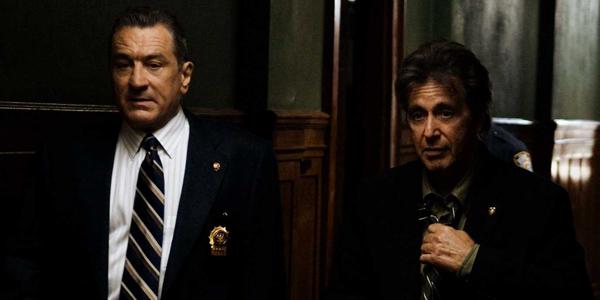
In the 1970s and 80s in particular, Robert De Niro and Al Pacino were absolutely untouchable performers: they routinely delivered excellent performances in daring, imaginative projects, though in the last decade especially, they've not really contributed much of interest to the art of cinema. De Niro at least earned himself a Best Supporting Actor Oscar nod for 2012's Silver Linings Playboook (his first nomination in over 20 years), while Pacino hasn't had a nomination since 1993, and is these days known best to an entire generation for starring in the likes of...Adam Sandler's Jack and Jill. These guys clearly haven't totally lost their luster for acting, yet why are they not starring in more worthy projects? They seem to get offered far too much tripe that shouldn't even be in cinemas (Righteous Kill, anyone?), and so many great hard-boiled thrillers and dramas have passed the pair by that they clearly should have been offered. Unless, perhaps, the pair are simply content to work for the quick money roles these days, happy with the body of work they amassed in their younger days? Can It Make A Comeback?: Most film lovers are always going to have time for these two, no matter how badly they embarrass themselves. It's probably not very realistic to expect either of them to enjoy a Matthew McConaughey-esque resurgence, especially considering their ages, but it's certainly possible that either could surprise viewers with a string of critically-acclaimed, artistically worthy projects, though perhaps don't hold your breath.

10. Reasonable Running Times

Doesn't it just feel like movies are far too long at the moment? This is particularly aimed at blockbusters, of course: when Michael Bay is allowed to make a Transformers movie that runs dangerously close to 3 hours, something, somewhere is wrong. Is this necessary? Absolutely not. Do most audiences want this? Probably not. Would the film be infinitely easier to tolerate were it an hour shorter? Totally. Back in the 1930s, the average length of a movie was around 90 minutes, and today, it's just north of 120, with some particularly overstuffed blockbusters no doubt bloating that number out. It's fair to say that the longest films also tend to have the highest profiles, such as The Hobbit series, The Amazing Spider-Man 2 and Interstellar, because were these projects not particularly well known, few studios would trust the directors with such meaty run-times. Still, a film should get in and out telling its story in the most efficient way possible, and today, it doesn't feel like mainstream cinema is particularly good at this. When Judd Apatow is able to make comic dramas lasting close to two-and-a-half hours, things have gone too far. Can It Make A Comeback?: Doubtful. While it's unlikely that blockbuster run-times will begin regularly pushing the 3-hour mark any time soon, as long as these long movies keep printing money, studios won't feel the need to rein them in even a little bit. In short, you're never going to see a Captain America or Superman film running in at a sleek 100-110 minutes.

9. Practical Visual Effects

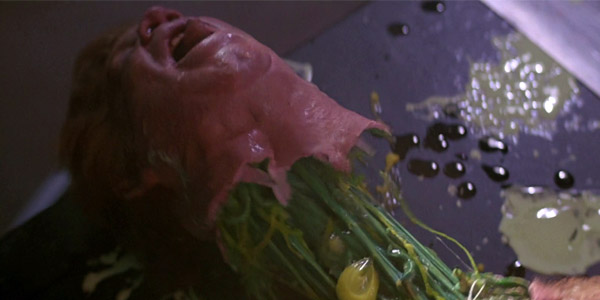
One of the most disappointing aspects of modern cinema is the overt reliance on needless visual effects. There's a certain visceral charm to pre-90s movies, where a gory scene is all the more terrifying because a part of our brain is acutely aware that the scene was filmed with real props, whereas ropey CGI completely removes our investment from the scene, as viewers are totally aware that they're watching a cold, computerised fabrication. The 2011 prequel to The Thing is a fine example of this: the movie was, like the 1982 classic, shot with practical creature effects, though these were eventually ditched in favour of unconvincing, gaudy CGI creations which didn't hold a candle to the incredible effects in Carpenter's classic. Though films like Avatar, Gravity, Interstellar and Dawn of the Planet of the Apes categorically prove the power of CGI when used in a controlled and artful manner, far too many movies merely use visual effects as a quick and easy substitute for the hard graft of tangible make-up work, which sucks. Can It Make A Comeback?: No way. On one hand, CGI allows filmmakers to achieve so much more, but for all but the auteurs, it can easily become a corner-cutting tool that distances viewers from the product. Still, it's easier and cheaper than doing it for real most of the time, so it's unsurprising that CGI is even replacing physical set design, lighting and stunt work these days.

8. Comprehensible Editing & Camerawork
A number of unsavoury stylistic trends in recent years have proven controversial with film buffs. One is the tendency for directors to "overshoot" their movies, that is, to film so much coverage of a scene in order to avoid reshoots that, in the editing room, it allows the quick-cutting of numerous takes together in what often becomes a blurry mess of incomprehensible images. Sure, many great directors avoid this by meticulously story-boarding action sequences, though less-assured hack filmmakers will often lean back on quick cutting to imply a fast pace and excitement, even when audiences have little idea who is punching who. The other major bugbear, and one that can exacerbate choppy editing, is the in-vogue "shaky cam" technique, one popularised by Paul Greengrass during his work on the latter two Matt Damon-starring Bourne films. Though Greengrass undeniably creates an immersive, visceral style, many have complained of motion sickness and disorientation after watching the film, a frequent complaint that also assails shaky found footage films such as Cloverfield. Can It Make A Comeback?: In fairness, there are always going to be great action directors like James Cameron and Edgar Wright who always provide clear coverage of what's taking place at all times, though they're inevitably going to be outweighed by the countless hacks releasing dumb action movies they don't have any real investment in beyond a paycheque. As such, expect this style to dominate the action arena for the foreseeable future, though as ever, it's the cream that rises to the top and will endure for decades.

7. Conclusive Endings

If there's one thing modern movies are horribly non-committal about, it's how they end. The ambiguous ending with a compelling cut to black has become particularly fashionable over the last decade, with movies like The Wrestler and Inception using it in provocative means, whereas numerous inferior movies have attempted to capture the same magic and failed. Then there's the fact that blockbuster films just can't resist setting themselves up for a sequel, even if in the most tacit and "subtle" of ways. It's tacky and presumptuous, and in the case of the "to be continued..." associated with any two (or thanks to Peter Jackson, three) part movie, it's just an obnoxious way to part viewers with more cash. Can It Make A Comeback?: These cut-to-black endings are always going to be popular to a point if writers and directors can use them imaginatively, though abrupt endings are often complained about, and with good reason. Given that splitting movies into parts has proven to be a genius financial calculation for studios, don't expect these cliffhanger endings to go away any time soon. In short, no.

6. A Lack Of Cynicism

It's incredibly difficult to make an earnest film that people don't just scoff at these days: instead, everything's got to be sarcastic, ironic and subversive or critics and audiences will just take a dump on it. The vast majority of blockbusters have to be grimdark because, with just a few exceptions (The Avengers, which is still plenty sarcastic), it's not enough for a blockbuster to just be fun anymore. Movies that show an ounce of heart without drawing attention to this conceit or throwing in some mocking one-liners are frequently ribbed for it: look at the vast majority of Steven Spielberg's family-centric movies over the last decade or so, and how brutally they've been pummeled in our cynical, post-9/11, Freedom of Information society. Can It Make A Comeback?: Doubtful. The world is a different place now, and snark isn't just a fashionable trend: young cinemagoers are bred to be skeptical and suspect an agenda in anything genuine, so these sorts of movies really need to wear post-modernism like a badge in order to succeed.

5. Political Incorrectness

Now, nobody is saying that Mickey Rooney's performance as the Chinaman in Breakfast at Tiffany's was a hallmark of cinematic greatness, but it came from a time where studios weren't terrified about a Twitter campaign resulting in a mass bycott and media circus for their film. Nowadays everyone has a voice, and studios need to ensure their products don't offend anyone for any reason, which can result in these films playing it safe, leading to a more homogenised final product. Nobody wants a racist joke in a Marvel film, for instance, but on the whole, in an attempt to part as many people with as many bucks as possible, it feels like as viewers have gained more agency, creative types in Hollywood have been forced to tailor their project to an agreeable, inoffensive center point, completely free of provocation and daring. Banality is itself offensive, and shocking for the sake of shock does little to alleviate that, but that previous generations seemed to walk less on egg shells is an admirable, if occasionally embarrassing facet of classic cinema. Can It Make A Comeback?: On the other hand, there is always going to be Michael Bay's films for those in need of a dose of casual sexism and racism, so hey, it's not all bad, right!? Some films, namely dark comedies, are always going to happily push the envelope, though these efforts will forever be in the minority, of course. When audiences will pay to watch Adam Sandler in drag or Melissa McCarthy fall over a dozen times in a row, why even bother being edgy?

4. The Magic Of Shooting On Film

One of the biggest ongoing debates is about how the death of shooting on film has affected the film industry. Digital filmmaking presents directors with so much more freedom, in that they can shoot as much coverage as they like quickly and at low cost, while an entire digital infrastructure exists for young filmmakers to make a movie and post it on YouTube or Vimeo for all to see. The downside is that digital just doesn't look as good as film most of the time. Movement is particularly troublesome on some digital cameras: take this summer's X-Men: Days of Future Past, which was filmed on digital and looks like absolute garbage whenever there's a crowded fight scene (the "smoothness" of the image creates a motion blur and makes it look like a kid filming something in their garden with their dad's old camera). Can It Make A Comeback?: Impossible. Film has very nearly ground to a halt now, with only specialist, trusted directors like Christopher Nolan still being allowed to use it (and in the case of Interstellar, even have the film screened in 70mm in select locations). Digital has won, and its proliferation will only continue to intensify in the years to come.

3. The Absence Of Mobile Phones

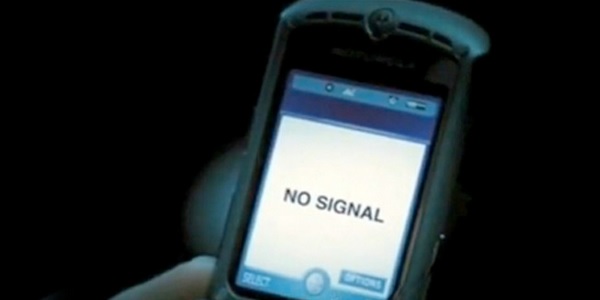
Back in the day, horror and thriller films were so much easier to conceive plausibly. Nobody had mobile phones, and so, the big-breasted college student wouldn't be able to just get out her iPhone and call the cops. Instead, she'd have to keep running (inevitably in the wrong direction) and fall victim to her assailant. However, the genre has had to evolve significantly over the last two decades, as it's become common for even children to be kitted out with the latest smart phone. Lazier efforts have simply opted for the insulting "no signal" get-out, whereas others have opted to create tech-centric thrillers that engage directly with the existence of mobile phones (terrible though most of them have been). Suspense practically bled off the screen when Laurie Strode wasn't able to get her phone out and call the cops in Halloween, but nowadays, the convenience of technology at our fingertips has also created a huge narrative road block for movies of this type. Can It Make A Comeback?: Other than setting a film back in the 1980s, there's no good way to combat this, because if a character forgets or loses their phone, it just makes audiences groan at the contrivance of it. This is another reason why so much modern horror is focused on the psychological aspect rather than the simplicity of a masked killer offing everyone.

2. Classy Monochrome

Though it originally started out as a necessity, there's something to be said for the beauty of watching, say, Alfred Hitchcock's Psycho in its monochromatic glory. Attempts to colourise classic films such as this and Casablanca are mostly misguided, because they create an image that the original director and cinematographer did not consent to: they framed and lensed the film within the context of this black-and-white colour scheme. Now, black-and-white cinematography is largely used for novelty purposes in films like The Artist and Nebraska, though given how over-produced and visually garish a lot of modern movies can be, it's easy to dream of a return to the original pared-down monochrome style, even if nobody wants to watch The Avengers in black and white... Can It Make A Comeback?: Never. Colour represents undeniable progress, though it's a shame that so many audiences would never dare watch a black and white film because they associate it with something being old and boring. Tragic.

1. Originality

It's not so much that "everything has been done" in the world of cinema, but these days, aside from the occasional Tarantino or Nolan film, pretty much everything has to be a franchise tie-in, a sequel, a remake, or an adaptation. In the post-recession context especially, studios would rather reboot a dead franchise than roll the dice on something new and exciting unless it's from a tested filmmaker. The problem, then, is that countless inferior filmmakers attempt to ape the style of Nolan and Tarantino in particular, resulting in a glut of boring grimdark blockbuster flicks and self-consciously witty action comedies. What cinema is really crying out for is a greater abundance of original voices, and studios brave enough to actually bankroll something that could certainly be called a gamble. Can It Make A Comeback?: Absolutely. The Netflix model is fascinating and has the potential to change the way movies are made from the ground-up, fostering the potential for greater creativity. The voices are undoubtedly out there, they're just not getting any money to have their movies made, and that's nothing short of devastating. Of all the issues on this list, this is one that could change the most over the next few years. The digital revolution has certainly helped young filmmakers get their projects seen and rise up the ranks, and other innovative models of distribution and funding could be the next step forward. What do you miss from the cinema of decades past? Shout it out in the comments!

Contributor
Contributor

Stay at home dad who spends as much time teaching his kids the merits of Martin Scorsese as possible (against the missus' wishes). General video game, TV and film nut. Occasional sports fan. Full time loon.