15 Most Dehumanizing Moments In Stanley Kubrick's Films

The great man sure did love a bit of dehumanization.

15 years ago, Stanley Kubrick's death left a hole in the film world the size of a crater. No other filmmaker has been able to fill the void, and the chances of anyone ever doing so are slim to none. Kubrick was a singular genius who kept raising the bar with each and every film he made, examining the human psyche with surgical precision. Credited for mastering every major genre, the truth of the matter is that almost every one of Kubrick's 13 films contains aspects of war, horror, comedy, and crime - all connected by a single thread, which just happens to be one of the director's greatest themes: dehumanization. In its simplest terms, dehumanization is the loss of that which makes us human. It's the dark side of human nature, and the harsh environment, conquering reason and manipulating man€™s psychological makeup to the point of crushing creativity, compassion, and individualism. Kubrick was obsessed with this concept, and there's evidence of it all over his filmography. Of course, because Kubrick was an artist above all else, his brand of dehumanization was often more symbolic than scientific, in certain moments implying it alone was enough to make us lose faith in humanity. So join us as we revisit one of cinema's greatest minds and count down the 15 most dehumanizing moments in Stanley Kubrick films, one for each year he's been dearly missed...

15. A Buyer€™s Market €“ Spartacus (1960)

Spartacus begins proceedings and, being the only film where Kubrick didn't have complete artistic control, its position at the bottom of this list seems fitting. Nevertheless, the legendary story of the Thracian gladiator who was sold into slavery, forced to fight for Roman amusement, and led the slave uprising, is classic dehumanization and the picture is full of examples. None are perhaps so casually menacing and powerful than the moment when Spartacus is sold. Peter Ustinov€™s slave trader Batiatus €“ a role that won him an Oscar €“ has more concern with getting sunburnt than with the human lives he€™s browsing to buy. As if checking for cracked eggs in the grocer€™s shop, he examines teeth for signs of strength and is confused when subjects don€™t obey their masters. Soon enough, it€™s clear that every action and piece of dialogue in this scene symbolizes centuries of oppressed human dignity.

14. Humbert€™s Breakdown €“ Lolita (1962)

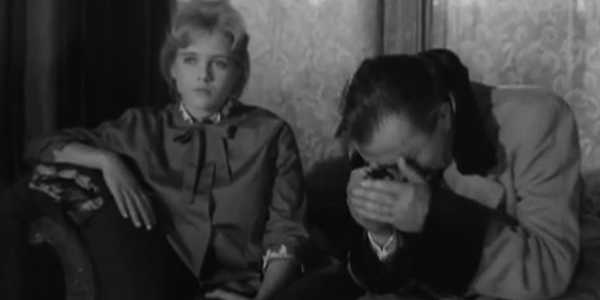
Kubrick€™s first commercial success is an adaptation of Vladimir Nabokov€™s controversial novel about a middle aged man€™s obsession with a prepubescent teenager. Starring the demure James Mason as Humbert Humbert and a 14-year-old Sue Lyon as Lolita, the two of them have the kind of uncomfortable chemistry perfectly suited to the plot. While dehumanization might not be the first thing that pops into mind when thinking about Lolita, there's no doubt that Humbert's sickening obsession cripples his higher faculties, and brings him to psychological breaking point. After running away from him, Lolita contacts Humbert a few months later to tell him that she's married, expecting a child, and needs money. Humbert rushes to see her and, completely ignoring the reality of the pregnant Lolita and her kindhearted husband, begs her to run away with him so that they can be together forever. After she rejects him, the grown man breaks down and sobs like a child while giving her a good chunk of his money. The scene is a tragicomic climax of one man's decent into madness, and it's utterly dehumanizing.

13. Money Flies €“ The Killing (1956)

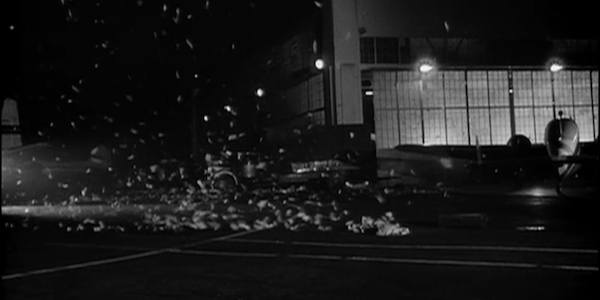
One of Kubrick's earliest entries has grown quite a cult following throughout the years, even though it wasn't much of a box office success when it premiered in 1956. The Killing tells the story of Johnny Clay, a criminal who is one big heist away from retirement. Underneath this surface is a story of a man trapped by his corrupt surroundings and his criminal nature, with money as his only salvation. The moment when it all blows away now hangs in the hall of fame of Kubrick's classic scenes. After stuffing his money in an over-sized suitcase that he can't lock properly, Clay grabs his lady and rushes off to the airport. Minutes away from getting away with it all, he is waiting to board the plane, and watches as his suitcase falls from the luggage pile and bursts open. Sterling Hayden's expression, as he stares at his life getting blown away by misfortune, is that of a man crushed by his surroundings and ready to accept the death sentence.

12. Bill€™s Mask €“ Eyes Wide Shut (1999)

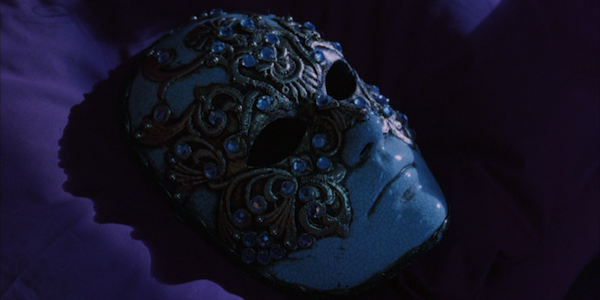
Like all of Kubrick's films, Eyes Wide Shut has grown in appreciation. The story of a wealthy New York couple, played by Tom Cruise and Nicole Kidman, is a psychological study in the natures of monogamy and fidelity, so the dehumanizing aspects are not quite in-your-face as they are with some other Kubrick films. Nevertheless, another Kubrick film - another character breakdown. When Bill finds out that his wife contemplated leaving him and their daughter for a stranger, he goes on an odyssey of self-discovery and gets sucked into a masked underworld. After various events convince Bill that he's way in over his head, he goes back home to find the mask perfectly placed on his pillow, next to his sleeping wife. Did he subconsciously "take his mask off"? Was somebody in his house while his family slept? No matter what, Bill succumbs to the psychological implications, and breaks into tears - waking up his wife with promises that he'll tell her everything.

11. "Viddy Well, Little Brother" €“ A Clockwork Orange (1971)

Undoubtedly one of Kubrick's most popular outputs, A Clockwork Orange is one of three films from the man's filmography which looks to the theme of dehumanization in its most concentrated form. Before he gets caught, Alex DeLarge and his band of brothers went around having a real horror show with the old ultra-violence, starting off with some public vandalizing and working their way up to home invasions, and worse. After successfully convincing an unassuming couple to let them in their house, it doesn't take long for Alex and his droogs to make their true intentions known. They proceed to beat the couple - while Alex sings Singin€™ In The Rain - and rape the woman in front of her husband. Malcolm McDowell's close up, wearing that grotesquely exaggerated mask, as he commands the man to "viddy well" summarizes everything that's wrong with humanity in Kubrick's dystopian future.

10. "Do You Fail To Comprehend The Meaning Of My Order?" €“ Paths Of Glory (1957)

Before laughing at the apocalypse in Dr. Strangelove, or venturing into the Vietnam War in Full Metal Jacket, Kubrick's first anti-war film is often called his first masterpiece. Paths Of Glory is set during World War I, and sees Colonel Dax defending his men from charges of cowardice. The inciting incident in this case was a refusal to obey a direct order from General Mireau, who - tempted by a promotion - had instructed Dax to capture an enemy stronghold. When the men realize how suicidal the mission is, they are unwilling to leave the trenches. Mireau, watching them from a safe distance, gives a direct order to another squad to start firing at the men, in order to force them into moving. This motif of pitting the same team against each other is one that Kubrick will come back to, but in this example it effectively shows how hubris distorts a man's rational mind, making him order the death of his own men for the sake of a promotion.

9. The Sniper Prays €“ Full Metal Jacket (1987)

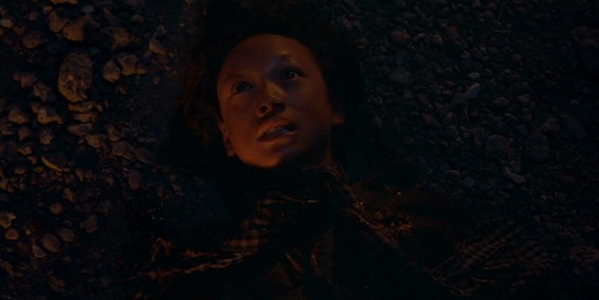
Another Kubrick classic that deals with the theme of dehumanization head-on, Full Metal Jacket is an anti-war film split into two parts. In the first part, a group of boys go through boot camp to become marines, and in the second part some of their stories continue into the Vietnam War. Having already covered World War I and the Cold War, it is with the senseless Vietnam War that Kubrick hit the nail on the head with most force. Towards the end of the film, Joker and the squad he's in are ambushed by a hidden sniper. After almost shooting Joker, the sniper - who turns out to be a young girl - gets wounded. The men surround her, and their faces express apathy of the worst kind. As the sniper prays and begs for death, Joker hesitates and (for the first time in the film) kills a human being up close. This mercy killing is one of the most humane acts in the film, which only serves to highlight how dehumanized the soldiers have become.

8. €œDepending On The Breaks€ €“ Dr. Strangelove (1964)

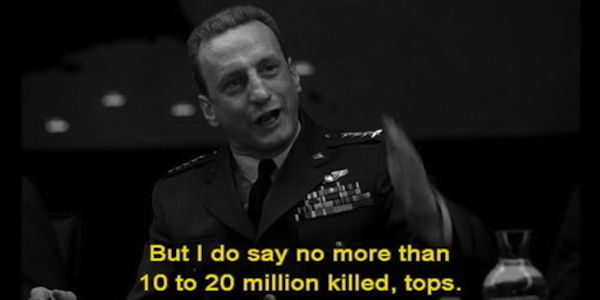
Dr. Strangelove or: How I Learned To Stop Worrying And Love The Bomb, is Stanley Kubrick's brand of humour. In other words, it's dark satire of the highest order. The Cold War governed the attitudes of two superpowers for the better part of a century, and became putty in Kubrick's hands in this picture, with the help of Peter Sellers and George C. Scott. During one of the funniest exchanges, General Turgidson (Scott) tells the President (Sellers) to face the facts. Reports just confirmed that a general lost his mind and sent out an attack order on Soviet targets. An emergency meeting is called in the War Room and, after covering all of the logistics, General Turgidson advocates for a complete nuclear attack on the Russians, in order to prevent any retaliation. "Mr. President, I'm not saying we wouldn't get our hair mussed. But I do say no more than ten to twenty million killed, tops. Uh, depending on the breaks." Satire doesn't get much darker than hinging the lives of millions on a mechanical function.

7. HAL 9000 Deactivation €“ 2001: A Space Odyssey (1968)

If there's one Stanley Kubrick film that turned critics around 180 degrees, from hatred to adoration, it is 2001: A Space Odyssey. The theme of dehumanization is deeply layered, but assuredly present - especially when it comes to the relationship between man and machine. Who can forget the chilling scene when the supercomputer HAL 9000 gets deactivated? The scene is draped in red, and astronaut Dave's laboured breathing punctuates the soundtrack. Realizing what he must do, he enters the pod and proceeds to deactivate HAL, a computer that is scarily conscious of what is happening. HAL (flawlessly voiced by Douglas Rain) systemically degenerates into his prototype phase, while saying lines like "the mind is going", "I'm afraid" and repeating "I can feel it" numerous times. Finally, he sings "Daisy Bell" - the first song he was programmed to know. Allowing a machine to have such a "human" death is the kind of reverse dehumanization that is chillingly symbolic and profound.

6. €œIt Needn€™t Be A Costume€ €“ Eyes Wide Shut (1999)

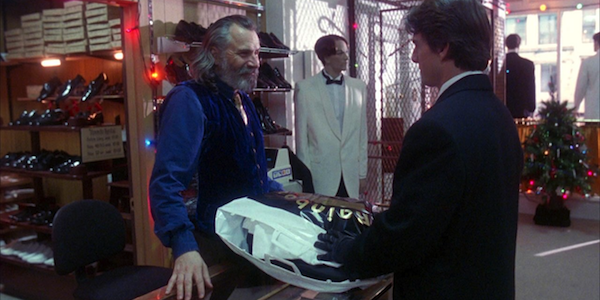
As noted already, Eyes Wide Shut doesn't scream dehumanization on first viewing. But even with a 12-year gap between Full Metal Jack and his final film, Kubrick never lost grip of his most cultivated theme. Bill's breakdown and unmasking was entered in at number 12, but the moment he first realizes his mask is missing in the costume store is one of the most perverted twists in a Kubrick film, ever. After gatecrashing the private sex party, Bill goes back to the "Rainbow" store to return his costume and finds the store owner, Mr. Milich, in a slightly different mood than when he last left him. Earlier, Mr. Milich found two Asian men with his young daughter and ran them out of his store in furious fashion, condemning them for their lack of decency. This time however, not only has Milich come to an understanding with the two Asian men, but he urges Bill to come back for anything, hugging his young daughter and saying "it needn't be a costume". The implication makes Lolita look like a slapstick comedy and is a scathing remark on a degenerative society.

5. Peace Is Our Profession €“ Dr. Strangelove (1964)

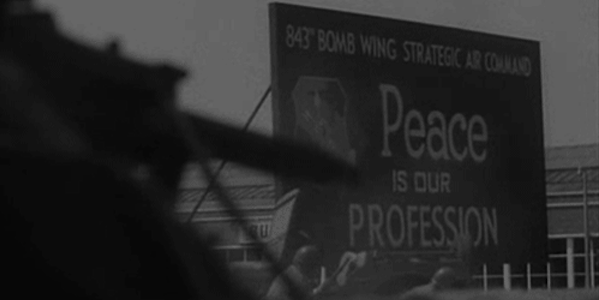
The list wouldn't be complete without this last Dr. Strangelove entry, which is a great example of a wordless scene that speaks volumes about man's folly. While events are heating up in the War Room, General Jack Ripper - the man who started it all - has barricaded himself inside his Air Force base, awaiting Soviet retaliation. The President orders United States forces to capture Ripper and the ensuing battle is theater of war at its most absurd. Ripper orders his men to fire at anyone who attempts to take over the base, even if they look like American troops because they'll just be Soviet soldiers in disguise. As predicted, and against Turgidson's advice, the American forces land on the base and Ripper's men start firing. Amidst this gunfight, while the same team shoots at each other because of one man's delusional notions, the sign "PEACE IS OUR PROFESSION" hangs in the background. Satire at its dehumanizing best.

4. "Heeere€™s Johnny!" €“ The Shining (1980)

Together with A Clockwork Orange, and Full Metal Jacket, Stanley Kubrick's turn to horror with Stephen King's adaptation of The Shining sees the director tackling his favorite theme in full force. The story of a man who becomes the caretaker of the Overlook Hotel, is as matter-of-factly as Kubrick ever got when it came to capturing a human€™s decent into madness. Jack Nicholson gives an unforgettable performance as Jack Torrance, who is convinced that he must murder his wife and son. In a scene that spawned countless dorm-room posters, and became a staple of the horror genre, Wendy has locked herself in the bathroom and is attempting to escape through the window. Jack, wielding an axe, threatens to "huff and puff" and blow the house down right before he starts chopping at the door. When he gets enough room to peer inside, he does so referencing Johnny Carson's one-liner. With the most demented music you'll hear in a Kubrick film, and the cultural references to fairytales and comedy shows, humanity absorbed by madness has rarely been this haunting.

3. The Ludovico Technique €“ A Clockwork Orange (1971)

There was no way this wasn't making the cut. While Kubrick's efforts in turning the audience against Alex are successful thanks to scenes like the aforementioned rape, the story takes a surprising turn once Alex gets caught. After spending some time in jail, Alex readily agrees to a new government funded experiment called "The Ludovico Technique" which promises to transform no-do-gooders like him into upstanding citizens of the state. Once the treatment starts, however, the experiment is revealed to be much nastier than anticipated. Strapped to a chair, head locked into place, and eye-lids propped open - an assistant at the ready with eye-drops - Alex is forced to endure hours of the most horrendous footage imaginable. From Nazi atrocities, to animal slaughter, to rape - the moment when Alex can't take it anymore is when he hears his favourite Beethoven symphony on the soundtrack. Knowing that he will become physically sick every time he hears the song, he begs them to stop and, of course, they don't listen. Alex is stripped of his individuality, and violently forced into submission by his environment. The rest is cult history.

2. Pyle Is In A World Of Sh*t €“ Full Metal Jacket (1987)

The second half of Full Metal Jacket is set during the Vietnam War, with practically every scene - especially, the sniper from the ninth spot - an example of a desensitized and programmed humanity. But, the first half is set in a boot camp and shows the brainwashing first hand. With the help of two characters - Drill Instructor Hartman and Private Leonard "Gomer Pyle" Lawrence - Kubrick strategically builds up to one of his most emotionally charged, and dehumanizing, cinematic moments. Surviving months of brutal physical, verbal, and psychological abuse, Pyle successfully graduates from camp - thanks to his shooting skills. But, it's already too late because Hartman's inhuman treatment has snapped Pyle beyond repair. On graduation night, Pyle declares that he's "in a world of sh*t", loudly recites the Rifleman's Creed, kills Hartman, and commits suicide in front of Joker. Everything in the scene - Vincent D'Onofrio's crazed gaze, the chilling music, etc. - is a bone-chilling example of how high the price of turning men into killing machines really is.

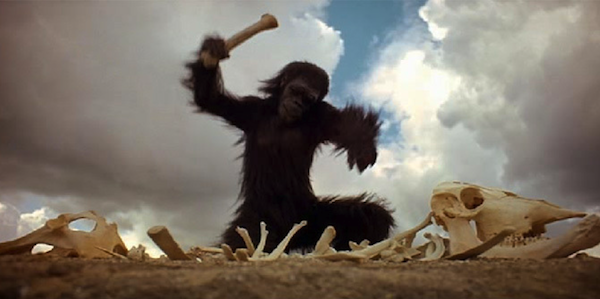
1. The Dawn Of Man €“ 2001: A Space Odyssey (1968)

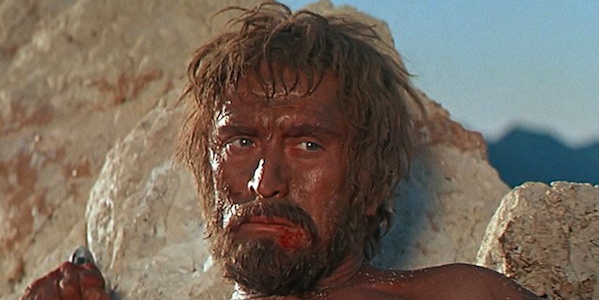
The opening segment to 2001, titled "The Dawn Of Man", begins with a tribe of hominids in the Palaeolithic Era who are forced away from their watering hole by a rival tribe. After the mysterious emergence of a black monolith, one of the man-apes discovers that he can use an object, such as a bone, to take action and control over his harsh environment. The montage and the music have been parodied to excess, but this scene of man's realization is forever powerful. And with realization, comes violence. The tribe, feeling less intimated, go back to reclaim their watering hole. The leader uses the bone to murder his rival, and in a fit of animalistic fervour, the watering hole is reclaimed. The match cut, from the bone floating in the air to the space ship millions of years into the future, is a cinematic marvel. But it also signifies Kubrick's greatest dehumanizing moment; from the dawn of man, tools have been used for violent means to justify ends, starting the evolutionary process of man's loss of control, and loss of self. Kubrick's biggest message on dehumanization is that it's irrevocably part of human nature. Think you have a better example of a dehumanizing scene or moment in a Stanley Kubrick film? Perhaps there's a scene from Barry Lyndon, or one of Kubrick's earlier films, that we missed? Sound off on the comments below!

Contributor
Contributor

Nik's passions reside in writing, discussing and watching movies of all sorts. He also loves dogs, tennis, comics and stuff. He lives irresponsibly in Montreal and tweets random movie things @NikGrape.