15 Great Italian Horror Films You Must See Before You Die
Cheesy, suspenseful, dreamlike or bloodthirsty - it's all absolutely glorious.

Often dripping in atmosphere, often rather silly, but almost always incredibly stylish – the Italians are a very distinctive presence in classic horror history. From the stunningly shot Gothic tales of Mario Bava (Lisa and the Devil; The Whip and the Body), to the cheesy, low-budget American imitators that are naff in the most brilliant way, it’s all well worth visiting. The most loved Italian horror classics, whether they’re plot driven gialli (mystery-thriller whodunnits), or supernatural fairy tales, are united by one thing – beautiful visuals. Even if often these films are style over substance, who cares when they’re as pleasing to the eye as Inferno or Blood and Black Lace?
Of course, the sleazier side of Italian horror has its merits, too. Nasty little films like Macabre, Torso and Beyond the Darkness are thoroughly enjoyable if you can set aside your inner horror snob for a couple of hours.
15. Demons (Lamberto Bava, 1985)

"I don't know how to explain it, but it's the movie that's making this happen!"
Lamberto Bava and his contributions to the genre are understandably overshadowed by those of his father, the great Gothic legend Mario Bava. However, he proved himself to be a talented horror filmmaker in his own right when he gifted fans with one of the most unrelenting and enjoyable cult classics of the 1980s. While at first glance Demons may appear to have been conceived as a glaringly obvious cash-in of The Evil Dead with a quirky, meta setting (you decide), it's one hell of a fun ride regardless. What he lacks in the style that made his father such a master storyteller, he more than makes up for in childish enthusiasm - and we appreciate it every bit as much. A surreal, carefully paced and beautifully shot ghost story is always appreciated, of course, but sometimes it's nice to be able to switch off your brain for a while and indulge in some cheesy, delightfully gruesome carnage.
The make-up design of the titular demons is grotesque, and the film features one of the most repulsive and satisfying transformation sequences in horror history - complete with exploding pustules and all. The heavy rock soundtrack, wonderfully crappy acting and diverse cast of characters (I guarantee that you'll be rooting for Tony the pimp) all make Demons a must-see horror landmark of 80s Italian horror cinema.
14. Kill, Baby... Kill (Mario Bava, 1966)
"It's a chain of bloodshed that there's no use trying to break."
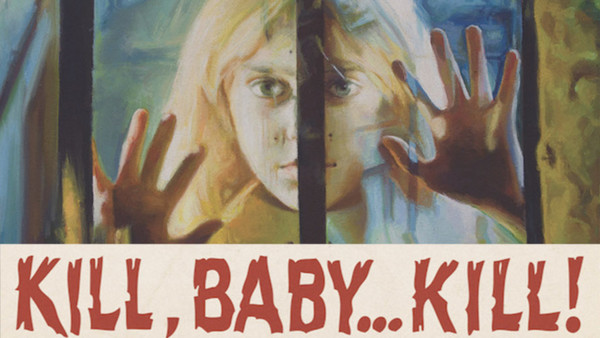
The misleadingly titled Kill, Baby... Kill sounds like a Torso-esque slasher flick (okay, it does begin with an impaling), but it is in fact nothing short of a sublime work of art, saturated with rich, beautiful colours and nightmarish imagery. Its lead, and audience representative, is an outsider and a man of unfaltering logic, who is slowly but surely drawn in and seduced by local superstition and the other-worldliness of his surroundings, as we are.
The sinister, mischievous-looking spectral child at the heart of the mystery, Melissa, is one of the most effective ghosts in horror cinema. She appears at several points during the film, lurking down a hallway or alley, or peering menacingly through a window, but it's not overdone. Bava builds tension and paces his story in such a way that when she appears it never feels silly, which in lesser hands it likely would. He often gets creative with these appearances, such as a very effective POV shot from a swing in a graveyard, which is just as unsettling.
13. Inferno (Dario Argento, 1980)

"Have you ever heard of the Three Sisters?"
The second installment of Dario Argento's Three Mothers trilogy is often overlooked in favour of its iconic predecessor. Although it isn't quite as stylistically impressive as Suspiria, it comes pretty damn close. You will no doubt hear the word "dreamlike" associated with many of Argento's films, but for none is it more accurate than for Inferno. The famous underwater ballroom scene, in particular, is every bit as breath-taking as any scene in Suspiria. Like any other supernatural Italian horror film, don't go in expecting a compelling plot, or even remotely interesting characters. In a way, the protagonists being such blank slates works in the film's favour - it's the stunning sets that are the true stars of Inferno, so why on Earth do we need complex characters?
Also, if I may offer a quick word of warning: don't waste your time with the third installment, 2007's Mother of Tears. It's an insult and an abomination.
12. Black Sunday (Mario Bava, 1960)

"Cover her face with the mask of Satan! Nail it down! May the cleansing flames reduce her foul body to ashes!"
1960 was a very important year in horror history: it was a landmark year for voyeuristic horror-thrillers with Psycho and Peeping Tom, and people's sensibilities were being challenged with Franju's controversial Eyes Without a Face. But while these guys were breaking boundaries and experimenting with ways of depicting horrors of the real world, the likes of Roger Corman and Vincent Price (who released their first Poe adaptation, The Fall of the House of Usher, in this year), and Hammer were finding great international success with the good old-fashioned period Gothic. Bava firmly established himself as a part of the latter camp with his first and perhaps most beloved film, Black Sunday.
The film kicks off with a brutal opening scene, in which a vampiric witch (played to perfection by horror goddess Barbara Steele) swears revenge on future generations before having a mask of metal spikes driven into her skull. From here on, Bava bombards us with dark crypts, grand cemeteries and ghostly, ghoulish visages every few minutes; each scene is positively dripping with Gothic imagery and atmosphere.
11. The Beyond (Lucio Fulci, 1980)

"And you will face the sea of darkness, and all therein that may be explored."
When watching almost any Lucio Fulci film, it becomes quickly apparent that his only aim is to find new and exciting ways of repulsing you. With The Beyond, however, he proved that he didn't necessarily have to compromise on atmosphere in order to satisfy the gore hounds. It goes without saying that, being a Fulci zombie movie, the death scenes do not disappoint. He gives us graphic eyeball plucking, death by tarantula army (yes, it's magnificent), and a woman lying with her face directly underneath a dripping beaker of corrosive acid (of course she's in no hurry to move out of the way, which makes it all the more hilarious).
Even by the standards of Italian supernatural horror, The Beyond is essentially plot-less. Instead, it plays out like a compilation of loosely connected, frightfully bloody scenes, accompanied by a gorgeous Fabio Frizzi score and a moody Louisiana setting. The highlights of the film are its bleak, sepia-toned opening and its even bleaker final shot, which bookend the film perfectly. While the other two films of the Gates of Hell trilogy have famously ridiculous endings which feel nonsensically tacked on, this one genuinely leaves you with a parting feeling of dread that lingers.
10. The House Of The Laughing Windows (Pupi Avati, 1976)
“Do you think that I’m scared just because of a painting in a church?”
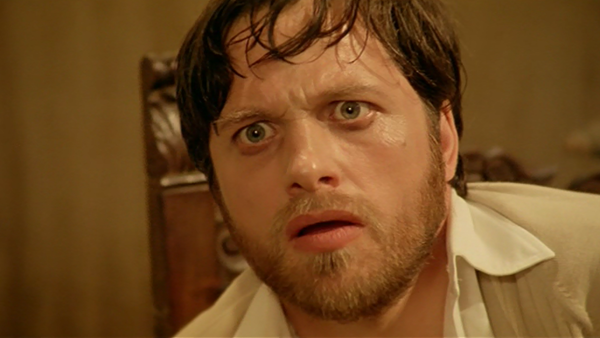
Avati’s stylish Gothic mystery has what is possibly the most unpleasant and sinister atmosphere in all of Italian horror cinema. While some of the more popular gialli are as fun as they are bloodthirsty, The House of the Laughing Windows is played very straight indeed, and is genuinely frightening as a result. In many ways, this film feels like Italy’s answer to Don’t Look Now. Unfortunately, it is rare that an Italian horror movie offers both style and substance in equal measure; often one is lost at the expense of the other in these films. Avati delivers both incredibly effectively. The isolated, rural setting of this film is also a welcome change from the typical big city giallo backdrop.
This film does also boast some of the most chilling images that I can recall in a horror film; most notably in the final payoff which, while utterly bonkers, is absolutely flipping nightmare inducing. The House of the Laughing Windows is noticeably lacking in the grand theatrics of other famous gialli, but its sheer, overwhelming dread is a more than satisfying substitute.
9. Salo, Or The 120 Days Of Sodom (Pier Paolo Pasolini, 1975)

“Nothing is more contagious than evil.”
You’ll might hear A Serbian Film called the most extreme, horrifying and unwatchable horror film ever made. Or perhaps you’ve heard the same said of Deodato’s infamous Cannibal Holocaust. The horror and depravity of Pasolini’s Salo is in another league entirely. It requires a very sturdy stomach to make it through, but if you are able to stick it out, it’s a thoroughly rewarding watch. Unlike A Serbian Film, which is essentially shock for its own sake, Salo is actually a damn incredible film that will linger with you long after the credits roll. Zombies, sinister covens and black leather gloved killers are all very well and good, and all have their well-earned place in Italian horror cinema - but none come close to matching the terror and helplessness of Salo.
The best endorsement I can give is this: Salo is simply the greatest film that I hope to God I will never have to watch again.
8. StageFright: Aquarius (Michele Soavi, 1987)

“You know that people have a morbid curiosity about murder.”
Ignore those niggling little plot inconsistencies and irrational character decisions; don’t over-analyse the story, and you’ll have an absolute blast with Soavi’s unconventional slasher film, StageFright. While at first glance StageFright looks like a standard American inspired stalk-and-slash flick, to write it off as such would do the film a huge disservice. It's a very self-aware slasher movie, with glimmers of what we would later see in the likes of Scream. The murders, which are carried out by an escaped lunatic in an owl mask, are gratuitous and entirely over-the-top; yet the dismembered bodies of the butchered dance company are arranged on the stage like a piece of art.
While admittedly there might not be that much going on with the story, Soavi’s unique style more than makes up for it. The film is also far more suspenseful than a lot of the American slasher movies it tries to imitate. The big chase in the final act, in particular, is reason enough not to cast StageFright aside as simply another cheap, by-the-numbers slasher movie.
7. Burial Ground: The Nights Of Terror (Andrea Bianchi, 1981)
“Mother, this cloth smells of death!”
There was no shortage of shoddy, low-budget Italian zombie flicks shamelessly attempting to recreate the success of Romero’s Dawn of the Dead from the late 70s, but Bianchi’s offering deserves your attention more than most. I won’t lie to you – this film is utter garbage. It’s unapologetically sleazy, dirty and cheap looking… and I love every damn second. Although the zombie make-up is noticeably lacking in places, the design is actually strangely effective.
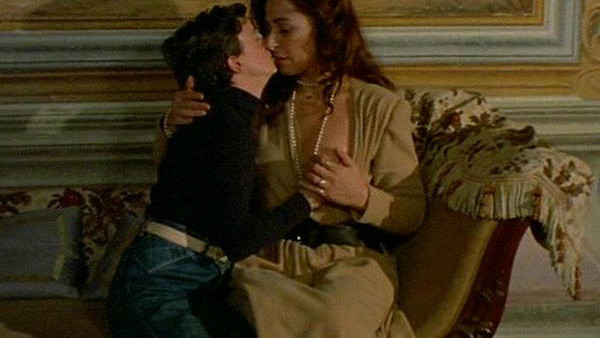
But as anyone familiar with the film will tell you, Burial Ground is worth watching purely for one character alone, Michael: the obviously (and hilariously) twenty-something year old dwarf portraying a pre-adolescent boy with a seriously unnerving Oedipus complex. Trust me, it really is every bit as wonderful as it sounds.
Dawn of the Dead it most certainly is not. Even some of Romero’s other blatantly shameless imitators displayed at least some degree of competence. That being said, Burial Ground is an absolute treat. Have a couple of drinks, order a takeaway, and enjoy.
6. Phenomena (Dario Argento, 1985)

“She’s not normal. She’s diabolic! […] Look at her, the Lady of the Flies!”
Chimps armed with scalpels; deformed children; decomposing corpses; revolting cesspits… and Donald Pleasance. Phenomena, or Creepers in the US, plays out like a bizarre compilation of drug-induced nightmares, and strangely beautiful ones at that. At times it’s easy to forget that there’s even a plot. But hell, we’re watching a peak Dario Argento film – does anyone actually care about the damn story? Yes, it’s a whodunnit, but unlike his more straightforward gialli, the mystery aspect of the film completely takes a back seat to all of the seemingly random what-the-f**kery that’s unfolding in front of your eyes. If you’re giving me baby Sloth from The Goonies and a telepathically controlled insect swarm, I’m certainly not going to complain about the absence of a coherent story line. I’m already sold.
As with any Argento classic, there is one true star of Phenomena: Goblin’s fabulous soundtrack. The grand, operatic, over the top score is entirely unlike any other, and it honestly makes the film. The film also kicks off with one of Argento’s characteristically gruesome and theatrical opening murder sequences, set against a gorgeous Swiss backdrop. He never does settle you in gently.
5. City Of The Living Dead (Lucio Fulci, 1980)

“The night of the dead begins […] The dead will rise up all over the world and take over the Earth!”
Along with Mario Bava and Dario Argento, Lucio Fulci is considered one of the [un]holy trinity of Italian horror filmmakers. Bava is the class, Argento is the style, and Fulci is the sleaze. He is quite harshly regarded as the lesser of the three directors, a reputation which, in all honesty, is probably justified. However, even his harshest critics cannot rightly claim that his films are not bloody well entertaining. City of the Living Dead is the first installment of Fulci’s Gates of Hell trilogy of zombie films, preceding the often more highly regarded The Beyond and The House by the Cemetery. While I highly recommend all three of these films as worthy introductions to Italian horror, City of the Living Dead best exemplifies what is so great about Fulci’s work.
Fulci could almost rival Argento in the death department. Although he doesn’t come close to matching his contemporary’s style and visual flair, Fulci packs City of the Living Dead with plenty of memorable and gut-wrenchingly satisfying death scenes: from the pervert getting his head drilled open in graphic close-up, to that now iconic intestine puking scene. Have I put you off yet?
4. Black Sabbath (Mario Bava, 1963)

“You are about to see three tales of terror and the supernatural. I do hope you haven’t come alone…”
Boris Karloff hosts a trilogy of gorgeously shot horror stories, in what is one of the all-time greatest horror anthologies. The first story, The Telephone, plays out like an early giallo prototype and, while admittedly predictable, is a worthy enough opening if only for its beautiful cinematography. It is with the next two stories, however, that Bava really demonstrates why he is the master of Italian horror. The Wurdalak, a Gothic vampire tale featuring Karloff himself as a bloodsucking patriarch, is arguably the strongest of the three stories. This would be one of Karloff’s final big horror projects, and he is deliciously evil in this segment.
However, it is the final story, The Drop of Water, that everyone rightly remembers: the story of a dead old woman tormenting her thieving nurse from beyond the grave. This story features a truly memorable and terrifying climax, in which the decrepit old corpse slowly descends upon the cowering nurse, with a hideously bone-chilling expression on her face.
Black Sabbath is not only Bava’s best film, but is also his most important and influential film. Even Quentin Tarantino has identified it as a key inspiration.
3. Suspiria (Dario Argento, 1977)

“Susie, do you know anything about…witches?”
To most fans of the genre, Suspiria is considered to be the definitive Italian horror film. I would certainly struggle to argue with that consensus (although I’ll give it a damn good shot defending my number one pick). Suspiria is famously one of, if not the most beautiful of the Italian horror classics, perhaps rivaled only by Mario Bava’s Blood and Black Lace and Kill, Baby… Kill. Although the great man seems to have unfortunately lost his way in recent years, he has given us some of the most memorable and beautifully orchestrated murders ever put to screen. Look no further than the opening 15 minutes of Suspiria for the most visually gorgeous death scene you will ever see. And just when you think the film has peaked, it throws even more insanity your way, keeps you captivated, open-mouthed and on the edge of your seat until the grand finale. This is a film that you simply must see on the big screen at least once in your lifetime.
In its early conception, Suspiria was intended to feature very young children as its protagonists, rather than grown women. The childlike dialogue wasn’t changed along with the characters’ ages, however, which really works in the film’s favour and contributes to its overall dreamlike quality.
Argento’s dark fairy tale is absolutely compulsory viewing for anyone who calls themselves a horror fan. Surprisingly, the 2018 Luca Guadagnino remake starring Dakota Johnson and Tilda Swinton is also well worth your time, but don’t trust anyone who tells you it’s every bit as incredible as the original! Nothing has come close to recreating the magic of Suspiria, and I highly doubt that anything ever will.
2. Dellamorte Dellamore (Michele Soavi, 1994)

“Mind your business! I shall be eaten by whoever I please!”
Dellamorte Dellamore, or Cemetery Man, is still criminally underappreciated and under-seen. It has all the components of a horror-comedy destined to become a major cult classic, rather like Italy’s answer to Stuart Gordon’s Re-Animator, but somehow it never seemed to find its audience. Soavi’s film boasts some highly quotable one-liners, as well as a thoroughly entertaining relationship between graveyard caretaker Francesco (Rupert Everett) and his oafish man-child assistant Gnaghi (Francois Hadji-Lazaro), who make for a brilliant comedic duo. It’s refreshing in a zombie film when your leading characters are more watchable than the zombies. The sets are probably the highlight of Dellamorte Dellamore (Soavi filmed in an actual ossuary with real bones).
Don’t go into this film expecting The Return of the Living Dead or Braindead; yes, it’s very funny and thoroughly grotesque, but it’s also deeper and more poetic than it has any right to be.
1. Deep Red (Dario Argento, 1975)

“I can feel death in this room! I feel a presence, a twisted mind sending me thoughts! Perverted, murderous thoughts… Go away! You have killed! You will kill again!”
Argento fans are divided into two separate camps: those who prefer his giallo mystery thrillers (like Tenebrae or Opera) and those who appreciate his more nightmarish and supernatural works (like the Three Mothers trilogy or Phenomena). Deep Red is the film that best unites his two styles. While not exactly supernatural, the film does have an other-worldly quality to it that no other giallo has ever quite matched. Of course, the film is visually gorgeous, but surely that goes without saying (even Argento's appalling later efforts were still beautiful to look at).
What impressed me the most on first viewing was that Argento gives his audience all of the tools and clues they need to solve the mystery for themselves, long before the big reveal. It blew my mind to think that had I just been a bit more observant in the first twenty minutes of the film, I would have solved the mystery right away. It had me eagerly rewinding the film after the big reveal to try and catch what I had missed. That’s pretty damn ballsy, and I respect that. Deep Red is not only Argento’s strongest film, or even the best horror film to come out of Italy – it is easily one of best horror films of the 1970s.